











When most people hear the term "core training," their minds drift to visions of high-intensity gym sessions, sweat-drenched sit-ups, and the elusive quest for a "six-pack." However, for adults over the age of 50, the narrative surrounding core health is undergoing a necessary paradigm shift. It is no longer about aesthetics; it is about architecture.
A resilient core serves as the internal scaffolding of the human body. As we age, prioritizing core stability becomes the single most effective strategy for maintaining independence, enhancing mobility, and ensuring a higher quality of life. By shifting the focus from vanity to vitality, we can unlock the secret to healthy aging.
The Science of Stability: Why the Core Matters After 50
The core—a complex network of muscles including the rectus abdominis, obliques, transversus abdominis, and the muscles of the lower back and pelvis—is the powerhouse of human movement. Scientific research underscores that as we traverse our fifth decade and beyond, the strength of these muscles is inextricably linked to our physical autonomy.
According to various studies published in clinical journals, robust core strength is directly associated with improved balance, a significant reduction in the risk of falls, and enhanced gait performance. For older adults, the core acts as the body’s "natural corset," protecting the spine from the wear and tear of daily living. Furthermore, a stable core is a powerful antidote to chronic lower back pain, a condition that plagues millions of seniors globally.
When your core is weak, your body compensates by placing undue stress on the joints and the spine. Conversely, a strong core ensures that forces are distributed evenly, making everyday tasks—such as carrying heavy grocery bags, navigating a flight of stairs, or safely rising from a chair—feel effortless rather than exhausting.
Expert Insight: Building the Foundation
To understand how to train the core safely and effectively in the later stages of life, we consulted James Bickerstaff, CPT, a seasoned personal trainer at OriGym. Bickerstaff emphasizes that the approach to training must change as we age.
"The goal is not to exhaust the muscles to failure with high-impact movements," Bickerstaff explains. "Instead, we want to focus on building functional strength while teaching the body how to stabilize the spine under pressure. These moves are designed to engage the deep abdominal muscles, which provide the structural integrity necessary for daily activities. By training the body to stabilize through the spine, we are essentially ‘future-proofing’ our movement patterns."
The Essential Five: Trainer-Approved Moves
The following five exercises are selected for their focus on functional movement, spinal safety, and deep core recruitment. They require minimal equipment and can be performed in the comfort of your own home.
1. The Dead Bug: Mastering Spinal Neutrality
Despite its somewhat whimsical name, the Dead Bug is a gold-standard exercise for developing deep core stability. It trains the brain to coordinate upper and lower body movements while keeping the spine pressed firmly against the floor, preventing the "arch" that often leads to back strain.
- How to perform: Lie flat on your back with your arms extended toward the ceiling and your legs in the air, knees bent at a 90-degree angle (the tabletop position). Slowly lower your right arm behind your head while simultaneously extending your left leg straight out, keeping it just above the floor. Return to the starting position and switch sides. Ensure your lower back remains in contact with the mat throughout the entire movement.
2. The Bird Dog: Symmetry and Balance
The Bird Dog is a staple in physical therapy and functional training because it simultaneously addresses stability, balance, and coordination. By moving opposite limbs while maintaining a steady torso, you strengthen the muscles that protect your vertebrae.
- How to perform: Start on your hands and knees in a tabletop position. Keep your spine neutral and your gaze toward the floor. Simultaneously reach your right arm forward and your left leg back, creating a straight line from your fingertips to your heel. Hold for two seconds, focusing on not letting your hips tilt. Return to center and repeat on the opposite side.
3. The Glute Bridge: The Core-Pelvic Connection
Many people fall into the trap of training only the front of the body. However, the glutes are an essential component of the "posterior chain," which is critical for core health.
- How to perform: Lie on your back with your knees bent and feet flat on the floor, hip-width apart. Engage your glutes and core to lift your hips toward the ceiling until your body forms a straight line from your shoulders to your knees. Pause at the top, squeezing your glutes, then slowly lower back down. This movement improves pelvic stability and strengthens the lower back.
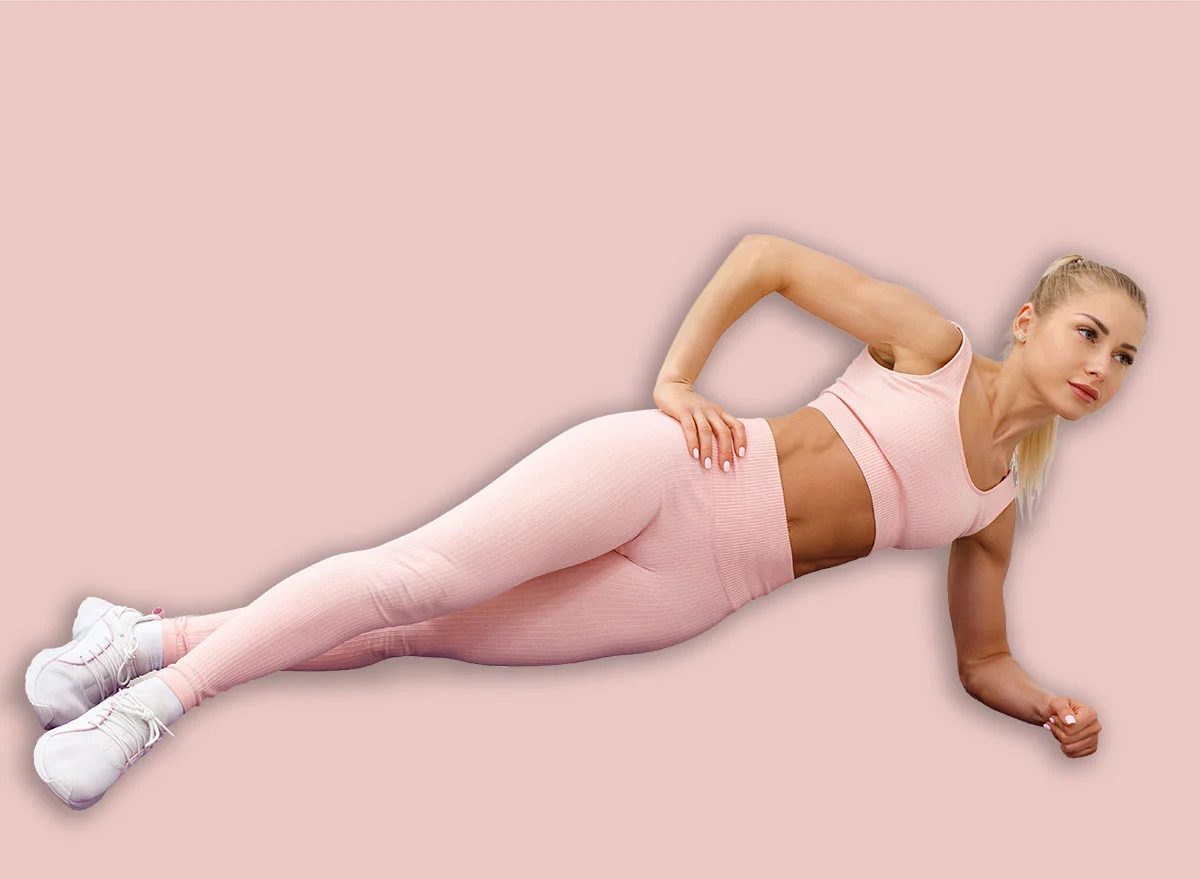
4. The Side Plank: Targeting the Obliques
Traditional planks are excellent, but they often neglect the lateral muscles. The side plank is the most effective way to engage the obliques and quadratus lumborum, muscles that are vital for side-to-side stability.
- How to perform: Lie on your side with your legs stacked. Prop yourself up on your forearm, ensuring your elbow is directly under your shoulder. Lift your hips off the floor until your body is in a straight diagonal line. Hold this position, keeping your core braced and your neck neutral. If holding a full plank is too difficult, you can perform this with your bottom knee bent and touching the floor.
5. The Pallof Press: Anti-Rotation for Daily Life
The Pallof Press is a "hidden gem" of functional fitness. It is an anti-rotation exercise, meaning it trains your body to resist twisting forces—a skill that is essential for preventing injuries during chores like gardening, reaching for objects, or turning while walking.
- How to perform: Stand perpendicular to a cable machine or a resistance band anchored to a sturdy post. Hold the handle or band with both hands at your chest. Step away from the anchor point to create tension. Keeping your core braced, press your hands straight out in front of you. The band will try to pull your torso toward the anchor; your job is to resist that pull and keep your chest facing forward. Bring your hands back to your chest and repeat.
Implications for Long-Term Health
The commitment to a consistent, core-focused routine has profound implications. Beyond the obvious physical benefits, there is a psychological boost associated with feeling capable and strong. When an individual over 50 realizes they can move with confidence—without the constant fear of losing balance or throwing out their back—their entire world opens up.
The integration of these five exercises into a weekly routine can take as little as 15 to 20 minutes, three times a week. However, the cumulative effect over months and years is significant. By prioritizing the internal strength that keeps us upright, we are not just adding years to our life; we are adding life to our years.
Conclusion
As we look toward the future of aging, it is clear that the secret to a high quality of life is not found in a pill or a complex medical procedure, but in the simple, deliberate act of strengthening our core. By embracing exercises like the Dead Bug, Bird Dog, and the Pallof Press, we provide our bodies with the tools they need to stay resilient. Start today—your future self will thank you for the foundation you are building right now.
Disclaimer: Before beginning any new exercise program, it is essential to consult with a physician or healthcare provider, especially if you have pre-existing spinal conditions or health concerns.