






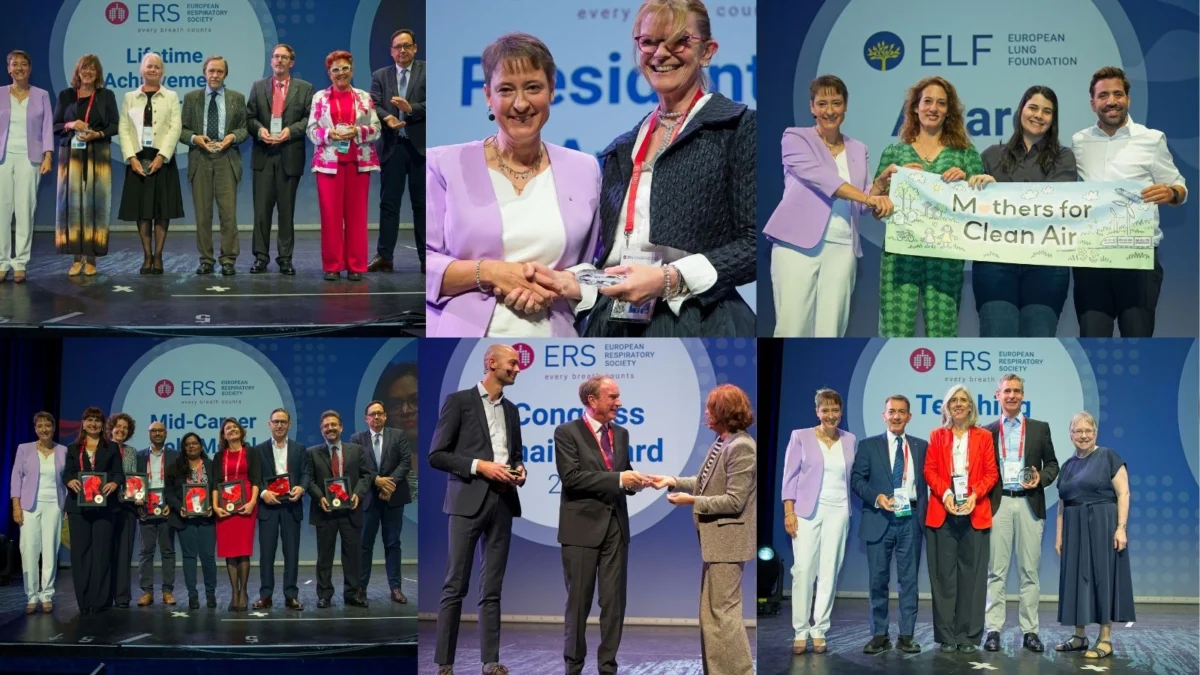
The European Respiratory Society (ERS) has officially announced its roster of scientific award recipients for 2026, marking a pivotal moment in the global respiratory health calendar. These accolades, which represent the pinnacle of achievement within the field, recognize the tireless dedication of researchers, clinicians, educators, and advocates whose work continues to push the boundaries of pulmonary medicine.
As the global community faces an increasingly complex landscape of respiratory challenges—ranging from the long-term sequelae of viral pandemics to the rising burden of chronic obstructive pulmonary disease (COPD) and the urgent need for innovation in thoracic surgery—the ERS awards serve as a vital mechanism for honoring those who lead the charge in research, clinical care, and policy advocacy.
Main Facts: A Diverse Spectrum of Clinical and Scientific Mastery
The 2026 awards ceremony is characterized by an unprecedented breadth of recognition. From basic science breakthroughs to the implementation of life-saving clinical practices, the winners represent the interdisciplinary nature of modern medicine.
The ERS has bestowed its most prestigious honors, the Presidential Award and the Congress Chair Award, upon Sylvia Hartl and Alvar Agustí, respectively. Both figures have been instrumental in the global advancement of respiratory medicine, fostering international collaboration and standardizing care practices that transcend borders.
The "Mid-Career Gold Medals" remain a highlight of the ERS program, designed to celebrate researchers who have not only established a formidable track record but who also demonstrate the potential for long-term influence. This year’s recipients span critical sub-specialties:
- Basic and Translational Sciences: Reinoud Gosens
- Sleep-Disordered Breathing: Manuel Sanchez De-La-Torre
- Airway Diseases, Asthma, COPD, and Chronic Cough: Hitasha Rupani
- Thoracic Surgery and Transplantation: Laurens Ceulemans
- Respiratory Infections: Aran Singanayagam
Chronology: The Evolution of ERS Recognition
The history of the ERS scientific awards is a reflection of the society’s growth over the past several decades. Originally established to encourage academic rigor in a field that was rapidly expanding post-World War II, the award program has evolved from simple abstract prizes into a comprehensive recognition system that encompasses the entire career trajectory of a respiratory professional.
In the 1990s and early 2000s, the focus was predominantly on clinical research. However, as the understanding of respiratory physiology became inextricably linked to molecular biology, genetics, and epidemiology, the ERS expanded its portfolio to include the "Mid-Career" and "Lifetime Achievement" categories.
The introduction of the Sadoul Lecture Award, which commemorates the legacy of French scientist Paul Sadoul, represents a bridge between the historical foundations of the field and its future. By honoring senior scientists with global reputations, the society maintains a lineage of excellence that ensures the wisdom of the past informs the research of the future.
Supporting Data: Why These Awards Matter
The impact of these awards is measurable not just in prestige, but in the advancement of public health. Data from the European Lung Foundation and ERS member surveys indicate that recipients of these awards often go on to lead major international research consortiums.
For instance, the Assembly Lifetime Achievement Awards—awarded this year to Matthias Griese (Paediatrics), Sally Singh (Allied Respiratory Professionals), Marion Delcroix (Pulmonary Vascular Diseases), and Venerino Poletti (Clinical Techniques, Imaging, and Endoscopy)—are a testament to the specialized expertise required to navigate the complexities of specific patient populations.
Furthermore, the Scientifically Developing Countries (SDC) Lifetime Achievement Award, presented this year to Carlos Luna, highlights the society’s commitment to equity. By recognizing senior scientists who have made a lasting impact in under-resourced regions, the ERS is actively working to bridge the global divide in respiratory health outcomes. As of 2026, global mortality rates for chronic respiratory diseases remain a significant burden, and the work championed by individuals like Dr. Luna provides the necessary framework for local capacity building in low-to-middle-income countries.
Official Responses and Educational Advocacy
A cornerstone of the ERS mission is education. The 2026 Educational Award, presented to Anita Simonds, acknowledges her extraordinary contributions to shaping the next generation of pulmonologists. Her work in curriculum development and standard-setting has been pivotal in maintaining the quality of care across European borders.
Similarly, the Teaching Awards, bestowed upon Apostolos Bossios and Esther Irene Schwarz, underscore the importance of pedagogy. In an era where clinical guidelines change with increasing frequency, the role of educators who can synthesize complex, evidence-based data into actionable teaching tools is paramount.
The ERS has also prioritized advocacy as a core pillar of its professional recognition. The Advocacy Mid-Career Award (James Chalmers) and the Advocacy Lifetime Achievement Award (Luke J. Clancy) honor those who have successfully translated clinical evidence into policy. Whether lobbying for cleaner air or pushing for national smoking cessation programs, these winners exemplify the "physician-advocate" model that the society aims to cultivate in all its members.
Implications for the Future of Respiratory Medicine
The 2026 ERS awards are more than a celebration of individual excellence; they are a strategic map of where the field is heading.
Bridging the Gap Between Science and Practice
The recognition of researchers in basic and translational sciences—such as Reinoud Gosens—signals a shift toward precision medicine. As we move away from "one-size-fits-all" treatments for asthma and COPD, the integration of molecular diagnostics into everyday clinical practice will become the standard. The awardees are the architects of this transition.
The Rise of Early Career Engagement
The inclusion of the Early Career Member Award, presented to Amy Hai Yan Chan, is a deliberate effort to retain young talent. The ERS recognizes that the sustainability of respiratory medicine depends on fostering an environment where young researchers feel empowered to pursue high-risk, high-reward inquiries. By providing a platform for these individuals, the society is ensuring that the "pipeline" of talent remains robust.
Global Health Equity
The continued focus on the SDC award and the recognition of global contributors confirms that the ERS views respiratory health as a universal human right. The implications are clear: the society is moving toward a model where global partnerships are not just encouraged but are an essential metric of professional success.
Conclusion: A Legacy of Innovation
The 2026 ERS scientific award winners represent a diverse group of professionals united by a singular goal: to alleviate the burden of respiratory disease. As the society prepares to celebrate these individuals at the upcoming Congress, the broader medical community is reminded of the power of dedication and the importance of scientific rigor.
These leaders have not only contributed to their specific niches—be it thoracic surgery, pediatric pulmonology, or sleep medicine—but have also elevated the stature of the entire profession. They serve as mentors to the next generation, catalysts for policy change, and the primary drivers of clinical innovation.
As we look toward the remainder of the decade, the work recognized by these awards will undoubtedly form the basis of new clinical guidelines, technological advancements, and public health initiatives that will define the quality of life for millions of patients worldwide. The ERS remains steadfast in its mission to support these pioneers, ensuring that the flame of scientific inquiry continues to burn brightly in the pursuit of a world where everyone can breathe more easily.
For more information on the 2026 award winners, their research backgrounds, and the specific impact of their work, please visit the official ERS website.