








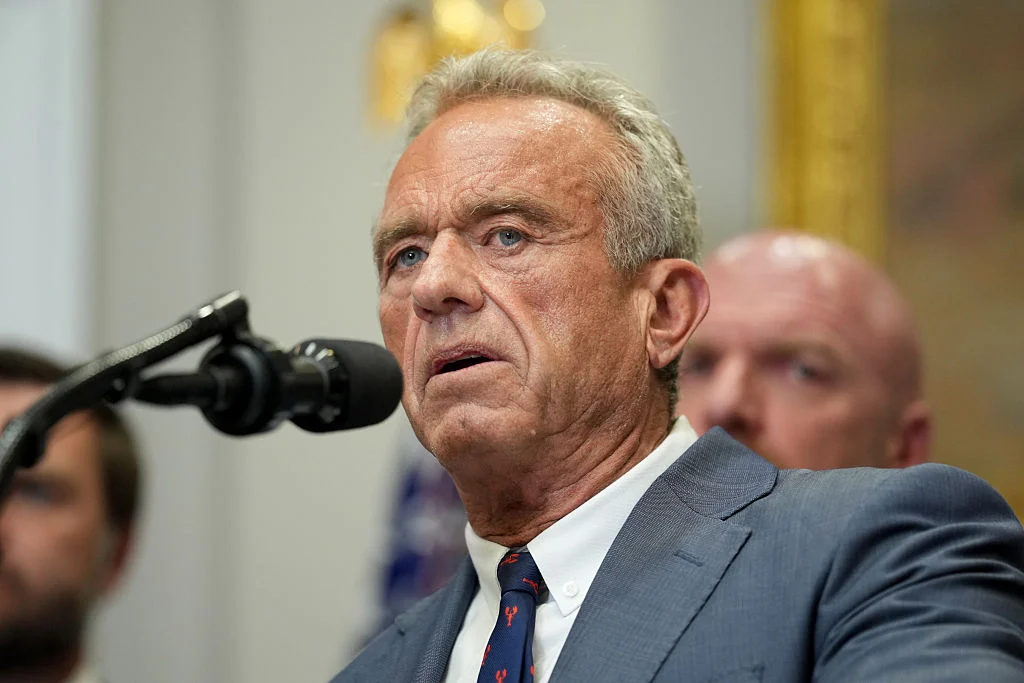
The U.S. healthcare community is in a state of deepening alarm following the decision by Health and Human Services (HHS) Secretary Robert F. Kennedy Jr. to terminate the vice chairs of the U.S. Preventive Services Task Force (USPSTF). The move, characterized by critics as a politically motivated encroachment on scientific autonomy, has ignited a fierce debate over the future of evidence-based medicine in the United States.
For over four decades, the USPSTF has served as the bedrock of preventive health, providing the rigorous, data-driven recommendations that dictate which screenings, counseling services, and medications are considered standard of care. By ousting key leadership, the HHS has effectively signaled a shift toward centralized control, leaving medical providers and patient advocates questioning whether the politicization of clinical policy has reached a critical threshold.
The Anatomy of the USPSTF and Its Mandate
To understand the gravity of these recent developments, one must recognize the statutory importance of the USPSTF. Established as an independent, volunteer panel of national experts, the Task Force is tasked with reviewing the best available evidence to provide recommendations for clinical preventive services.
Under the Affordable Care Act (ACA) of 2010, the role of the USPSTF was codified into the financial architecture of American healthcare. The law requires private insurers to provide full coverage—without cost-sharing—for any service that receives an "A" or "B" rating from the Task Force. This creates a direct pipeline between scientific consensus and patient access. When the USPSTF recommends a colonoscopy for cancer screening or a statin regimen for cardiovascular health, those services become mandatory, zero-cost benefits for millions of Americans.
By targeting the leadership of this body, the HHS is not merely changing personnel; it is potentially destabilizing the mechanism that ensures millions of patients have guaranteed access to life-saving preventive care.
A Chronology of Increasing Friction
The firing of the vice chairs did not occur in a vacuum. It represents the culmination of a year-long campaign of friction between the HHS and the independent scientific bodies that oversee public health guidance.
- Summer 2025: Tensions reach a boiling point as reports surface that Secretary Kennedy is considering a wholesale dismissal of all USPSTF members, citing concerns that the panel’s guidance is too "woke"—a term used by the administration to signal dissatisfaction with the panel’s focus on health equity and social determinants of health.
- July 2025: In an unprecedented move, the USPSTF’s scheduled meeting is abruptly canceled by the Secretary with only four days’ notice. No justification is provided, leaving the panel in a state of administrative limbo.
- Late 2025 to Early 2026: The panel remains effectively paralyzed, having not convened for over a year. The silence from the HHS regarding the panel’s future creates a vacuum of leadership and guidance.
- May 2026: The administration formally terminates the two vice chairs, John Wong of Tufts University and Esa Davis of the University of Maryland. The termination letter, later obtained by the New York Times, cites a need to ensure "clarity, continuity and confidence" in HHS oversight—a justification that many in the medical establishment have rejected as vague and insufficient.
The "ACIP Precedent" and the Erosion of Expert Panels
The removal of the USPSTF vice chairs is widely viewed by industry experts as a continuation of a pattern established by the administration’s earlier dismantling of the Advisory Committee on Immunization Practices (ACIP). The ACIP, which historically dictated the nation’s vaccine schedules, underwent significant upheaval under the current HHS leadership, leading to similar concerns regarding the sidelining of clinicians in favor of political appointees.
By stripping these committees of their long-standing leadership, the HHS is effectively breaking the firewall between political mandates and clinical practice. Critics argue that when the process for selecting members shifts from "peer-reviewed expertise" to "administrative loyalty," the reliability of the resulting medical advice is irrevocably compromised.
Official Responses: A United Front of Concern
The reaction from the medical establishment has been swift and overwhelmingly critical. The American Medical Association (AMA), the nation’s largest physician organization, issued a blistering statement on Wednesday.
"Today’s changes were foreshadowed by the earlier dismantling of the Advisory Committee on Immunization Practices," said AMA President Bobby Mukkamala. "We strongly urge HHS to restore the USPSTF’s long-standing, transparent process for selecting members, specifically clinicians with expertise in the fields of preventive medicine and primary care. We also implore HHS to commit to once again holding regular task force meetings to ensure its important work can continue without further delay. Our patients’ lives depend on it."
Similarly, AcademyHealth, a premier organization for health services research, voiced profound concern regarding the timing of the moves. With a critical nomination deadline for new members approaching, the organization noted that the lack of an independent review process means that the future composition of the board is entirely at the discretion of the Secretary. "The free preventive services that millions of Americans rely on could be compromised, delayed, or reversed," AcademyHealth warned in a formal statement.
Implications for the Future of American Healthcare
The ramifications of this leadership purge extend far beyond the offices of the USPSTF. The implications are multi-layered, affecting everything from insurance policy to the patient-provider relationship.
1. Risk to Insurance Mandates
Because insurance coverage for preventive services is tied directly to the "A" and "B" ratings of the USPSTF, any delay in the panel’s output or a shift in its recommendations could trigger massive insurance volatility. If the Task Force is unable to issue new guidance, or if the board is reconstituted with members who prioritize different clinical outcomes, insurers may find themselves in a legal and operational gray area, potentially leading to the denial of coverage for essential services.
2. A Chilling Effect on Clinical Research
The USPSTF relies on a vast network of academic researchers to synthesize evidence. If those researchers perceive the Task Force as a tool of political influence rather than an independent arbiter of science, they may be less inclined to contribute their expertise. This "brain drain" would degrade the quality of the evidence base, making it harder for doctors to make informed decisions for their patients.
3. Erosion of Public Trust
Perhaps the most significant long-term consequence is the impact on public trust. Preventive care relies on the patient’s willingness to participate in screenings and follow medical advice. If the guidance provided by the USPSTF is perceived as being filtered through a political lens, patients may become more skeptical of vaccines, screenings, and standard preventive medications. In an era where health misinformation is already rampant, the destruction of a trusted, non-partisan institution is a dangerous gamble.
Conclusion: The Path Forward
As of this writing, the HHS has not announced interim replacements for the ousted vice chairs, nor has it provided a clear roadmap for when the USPSTF will resume its meetings. The medical community remains in a state of high alert, with many professional societies preparing to lobby Congress to intervene in the preservation of the Task Force’s independence.
The conflict between the HHS and the USPSTF is more than a bureaucratic dispute; it is a fundamental clash over the philosophy of public health. Whether the administration will back down or continue its push to reshape federal medical panels in its own image remains the central question facing the U.S. healthcare system. For now, physicians and patients alike are left to navigate an increasingly uncertain landscape, where the evidence-based standards that have governed American health for decades are no longer guaranteed.