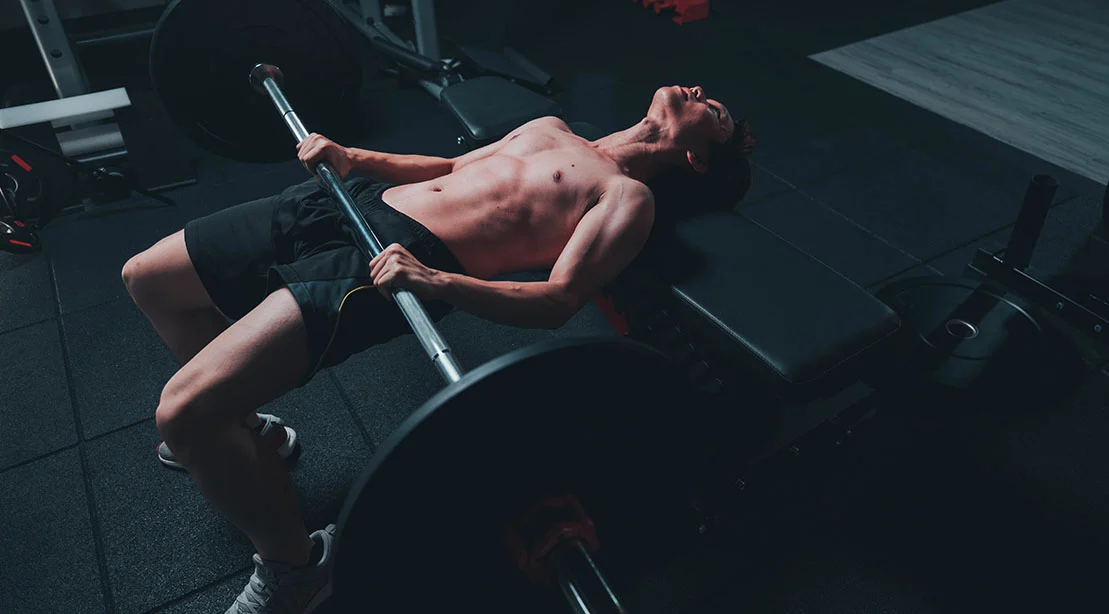
For years, the hip thrust has reigned supreme as the gold standard for glute development. It is a staple in the routines of powerlifters, bodybuilders, and fitness enthusiasts alike, touted for its ability to isolate the gluteus maximus—the body’s primary hip extensor—more effectively than the squat or deadlift. Yet, despite its popularity, a common frustration persists among gym-goers: they perform the movement faithfully, week after week, only to find their glutes remain underwhelming, while their hamstrings, lower back, or quads take the brunt of the workload.
According to Chris Martin, head coach at Boston Barbell, this lack of progress isn’t due to a lack of effort. It is a fundamental failure of mechanics. In a recent, brutally honest breakdown shared across social media, Martin identified a widespread technical flaw that is sabotaging potential gains for thousands of lifters.
The "Leaking Force" Phenomenon
The primary culprit behind ineffective hip thrusting is what Martin describes as "leaking force." In a standard barbell hip thrust, the weight is positioned across the pelvis, creating a unique biomechanical challenge. Because the load is not resting on the back—as it is during a back squat—many individuals fail to properly brace their core and stabilize their joints.
"Most people who struggle with hip thrusts aren’t weak—they’re leaking force, everywhere," Martin explains. "Because the bar isn’t on their back, they don’t brace. Their joints aren’t stabilized, so every muscle except the glute picks up the slack. The glute ends up sharing the work with muscles we were never trying to grow."
When the core remains soft and the joints are loose, the body instinctively seeks the path of least resistance. Instead of the glutes driving the hip extension, the body compensates by over-recruiting the adductor magnus, the hamstrings, or even the lumbar spine. This results in a movement that feels "heavy" but ultimately fails to stimulate the target tissue.
Chronology of the Correction: Moving Toward Precision
To address these mechanical leaks, coaches and trainers have begun shifting their focus from raw volume—simply adding more weight—to internal tension and structural integrity. The evolution of the hip thrust has moved away from the "load at all costs" mentality and toward a more nuanced, isolation-based approach.
In recent demonstrations alongside IFBB Pro and certified trainer Deborah Assuncao, Martin introduced a corrective variation: the Hand-to-Knee Hip Thrust. While it might appear to be a regressive step because it often requires dropping the heavy barbell, it is, in reality, a high-intensity progression designed to force glute engagement.
The chronology of this technique is simple:
- The Setup: Begin in the standard hip thrust position, but move to a unilateral (single-leg) stance.
- The Connection: Place the hand on the opposite knee.
- The Resistance: Push the knee into the hand while simultaneously pushing the hand into the knee. This creates a state of "opposing pressure."
- The Execution: Perform the thrust while maintaining that isometric tension, ensuring the joints are locked into a fixed, rigid chain.
Supporting Data: Why Biomechanical Tension Matters
The efficacy of this method lies in the principle of irradiation. By creating tension in the upper body and core through the "hand-to-knee" contact, the lifter creates a fixed point of stability.
"That tension locks every joint in the chain into a fixed position," says Martin. "When the chain is fixed, only the glute has anywhere to go."
Research into gluteal biomechanics consistently shows that when the pelvis is properly stabilized and the core is braced, the gluteus maximus is forced to function as the primary motor for hip extension. When the chain is not fixed, the pelvis often tilts anteriorly (forward), which disengages the glutes and places excessive stress on the lower back. By utilizing the hand-to-knee technique, the lifter effectively prevents this pelvic tilt, ensuring the glute is not merely an "optional" muscle in the movement, but a mandatory one.
Official Responses and Expert Insights
The consensus among top-tier strength coaches aligns with Martin’s assessment: the shake you feel at the top of a well-executed repetition is not a sign of failure; it is the hallmark of success.
"Rock down to about halfway," advises Martin regarding the eccentric phase of the movement. "Squeeze and tuck the glute at the bottom. Drive up from that squeeze—not from momentum, not from your lower back, not from the hip flexor pulling the leg through. The shake you feel at the top is real. That’s tension. That’s the muscle working the way it’s supposed to."
This "shake" represents maximal motor unit recruitment. When the muscle is working in isolation under significant tension, the neurological demand increases, leading to higher levels of metabolic stress—a key driver of muscular hypertrophy.
Implications for Your Training Protocol
The most significant takeaway from this shift in philosophy is the realization that weight is not the primary indicator of progress in glute training. In fact, adding weight to a broken movement pattern only serves to exacerbate the "leaking" of force.
The New Standard of Progressive Overload
Martin proposes a new standard for those seeking to maximize their glute growth:
- Master the Bodyweight Rep: If you aren’t feeling the glutes during bodyweight repetitions, you aren’t ready for a barbell.
- The "Pain" Test: "Once you make it so every bodyweight rep hurts, you get strong," Martin argues. "And then, and only then, you add weight. That’s the standard."
- Mandatory Engagement: If you reach the end of a workout and your lower back is pumped but your glutes are silent, your technique requires an immediate audit.
By adopting the Hand-to-Knee approach, lifters can move away from "ego lifting" and toward "precision training." This is particularly beneficial for those who have hit a plateau in their glute development. The shift from a heavy, unstable barbell thrust to a controlled, unilateral, high-tension thrust provides a fresh stimulus that the muscles have likely never experienced.
Final Thoughts: A Call to Action
The path to a more developed posterior chain is not necessarily paved with heavier plates. It is paved with better control, more focused bracing, and the strategic application of isometric tension. Whether you are a competitive athlete or a recreational lifter, the lessons offered by the Boston Barbell team serve as a vital reminder: in the pursuit of hypertrophy, how you move is infinitely more important than how much you move.
By implementing these changes, you effectively close the "leaks" in your force production, turning a standard exercise into a potent, muscle-building machine. Next time you step up to the bench, leave your ego at the door, focus on the opposing pressure between your hand and your knee, and finally force your glutes to do the work they were designed to handle.
For more advanced training techniques and to keep up with the latest from the Boston Barbell coaching staff, you can follow their progress on their official Instagram channel. For additional insights on biomechanics and training, follow IFBB Pro Deborah Assuncao here.