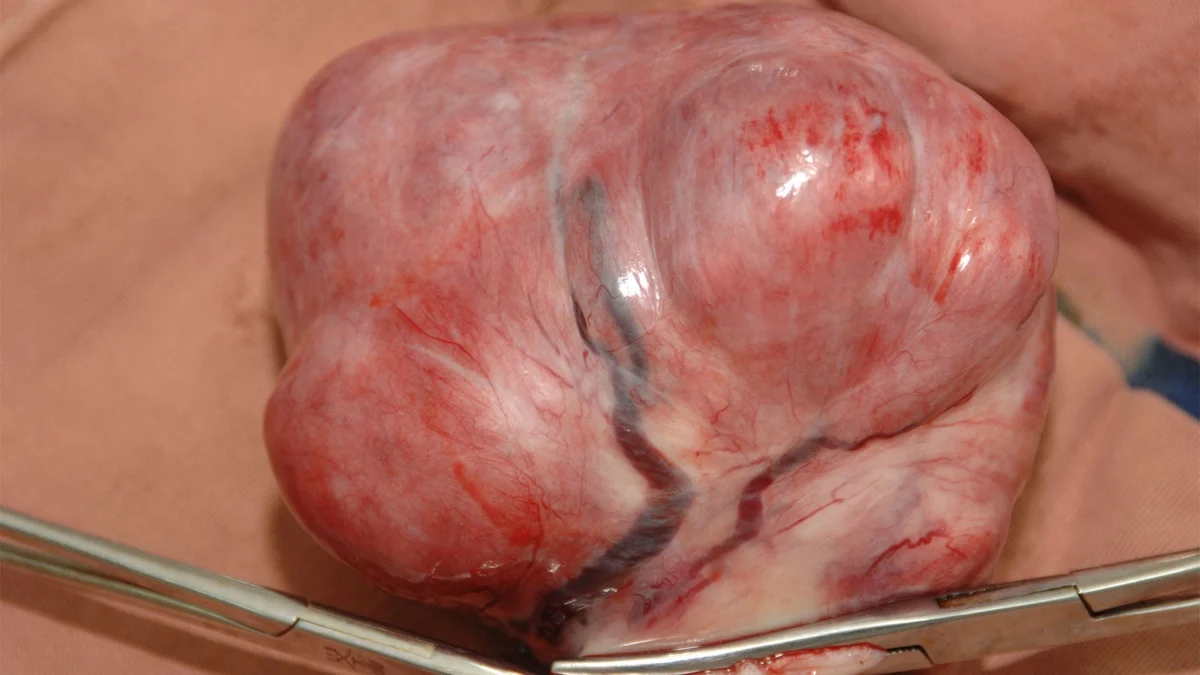
For millions of women worldwide, uterine leiomyomas—commonly known as fibroids—are more than just a medical diagnosis; they are a significant source of chronic pain, heavy menstrual bleeding, and diminished quality of life. Affecting an estimated 70% to 80% of women by age 50, these benign pelvic tumors represent one of the most common gynecological conditions. While hysterectomy has long been considered the definitive surgical solution, the medical community has increasingly pivoted toward uterine-preserving procedures for patients who desire to retain their fertility or avoid the long-term metabolic and cardiovascular risks associated with uterus removal.
A major new study published in Obstetrics & Gynecology has shed light on two prominent uterine-preserving surgical options: laparoscopic radiofrequency ablation (RFA) and myomectomy. The findings suggest that while both procedures offer substantial, long-term relief from symptoms, they provide patients with different recovery trajectories and clinical considerations.
Main Facts: A Comparative Look at Uterine Preservation
The multicenter prospective cohort study, known as the ULTRA trial, sought to bridge a significant knowledge gap in gynecological surgery. For years, clinicians and patients have debated the comparative efficacy of laparoscopic RFA—a technique that targets and shrinks fibroids using thermal energy—versus myomectomy, the surgical removal of the fibroid tissue itself.
The study followed 401 premenopausal women across the United States, all of whom presented with symptomatic uterine leiomyomas and a desire for surgical intervention that would preserve the uterus. The research team, led by Dr. Antoinette Allen of Weill Cornell Medicine, analyzed outcomes over a 24-month period, focusing on two primary metrics: the Uterine Fibroid Symptom Severity Scale and health-related quality of life (HRQOL) measures.
The headline finding is one of overall parity. Both procedures proved highly effective, yielding significant and sustained improvements in patient well-being over two years. While myomectomy showed a statistically superior performance in the initial months following surgery, those differences narrowed over time. By the two-year mark, both groups reported outcomes that were clinically indistinguishable in terms of their impact on daily life.
Chronology: The Journey of the ULTRA Study
The ULTRA study (NCT02100904) began in 2014, reflecting a decade-long commitment to understanding the real-world performance of these interventions in both academic and community medical settings.
Baseline to 6 Months: The Initial Advantage
In the immediate postoperative phase, the data favored myomectomy. At the six-month follow-up, patients who underwent myomectomy reported modestly greater improvements across multiple symptom domains compared to the RFA group. Patients described a more rapid resolution of bulk-related symptoms, likely due to the immediate physical removal of the fibroid tissue.
6 Months to 24 Months: The Convergence
As the study progressed to the one-year and two-year marks, the initial clinical advantage of myomectomy began to wane. The radiofrequency ablation process, which relies on the gradual shrinkage of the ablated fibroid tissue over time, appeared to catch up. By the 24-month assessment, the gap between the two cohorts had essentially closed. The researchers observed that while the myomectomy group maintained a slight edge in raw numerical scores, the difference was no longer statistically significant or clinically meaningful.
Supporting Data: Examining the Metrics
The rigor of the ULTRA study lies in its use of propensity-weighted models, which allowed researchers to account for baseline differences in patient demographics and fibroid characteristics.
Symptom Severity and Quality of Life
In the final analysis of the 24-month follow-up:
- Symptom Severity: The myomectomy group saw a reduction of 33.0 points on the severity scale, compared to a 27.7-point reduction in the RFA group. While this represented a difference of 5.27 (P=0.028), it remained below the 10-point threshold generally accepted as a "minimally clinically important change."
- HRQOL Improvements: Similarly, HRQOL scores showed a 34.92 improvement for myomectomy versus 28.29 for RFA. The 6.62-point difference (P=0.011) was well below the 20-point threshold for clinical significance.
Diverse Patient Cohort
The study’s demographic diversity adds significant weight to its conclusions. The cohort was 53% Black, 20.2% white, 13.4% Hispanic, and 7.1% Asian. Given that Black women are disproportionately affected by fibroids—often presenting with larger tumors at a younger age—this data provides essential guidance for a population that has historically been underserved in reproductive health research.
Official Responses and Clinical Perspectives
Dr. Antoinette Allen, the lead investigator, emphasized that the choice between these two procedures should not be dictated by a search for "the best" option, but rather by the individual patient’s life goals.
"Longitudinally, they both work really, really well," Allen noted in an interview with MedPage Today. She acknowledged the nuances of the data, stating, "I do think that myomectomy does have its initial advantage," particularly for patients whose primary goal is the immediate removal of a large, symptomatic mass.
However, the authors’ official conclusion in Obstetrics & Gynecology highlights a broader medical philosophy: "These findings suggest that both procedures provide substantial and durable improvements in symptoms and HRQOL, supporting individualized treatment selection based on patient goals, clinical characteristics, and shared decision-making."
The study also addressed the critical issue of future delivery. Myomectomy, which involves cutting into the uterine wall to extract fibroids, often results in the necessity of a cesarean delivery for future pregnancies. In contrast, laparoscopic RFA is often favored by women who hope to maintain the possibility of a vaginal delivery, as it does not involve the same degree of structural uterine disruption.
Implications: The Future of Fibroid Management
The findings of the ULTRA study have profound implications for the current standard of care in gynecology.
Moving Beyond Hysterectomy
For decades, the standard response to symptomatic fibroids was hysterectomy. While effective at ending symptoms, the procedure is irreversible and carries long-term metabolic and cardiovascular risks. By proving that minimally invasive, uterus-preserving techniques like RFA and myomectomy yield comparable long-term outcomes, the study provides clinicians with the evidence needed to advocate for conservative surgical management.
Shared Decision-Making
The results emphasize that there is no "one-size-fits-all" solution. The "advantage" of myomectomy is primarily in the speed of relief, while the "advantage" of RFA may lie in its recovery profile and potential impact on future obstetric outcomes. Surgeons are now better equipped to present these trade-offs to patients. A patient who is currently experiencing severe, debilitating pain may prioritize the immediate removal offered by myomectomy. Conversely, a patient who is planning for a pregnancy in the near future or who requires a faster recovery time for work may be an ideal candidate for RFA.
Limitations and Future Research
The researchers were transparent about the limitations of the study. As a nonrandomized prospective cohort study, it is subject to residual confounding. For instance, the myomectomy group tended to enter the study later than the RFA group, and baseline leiomyoma characteristics differed between the two populations. Despite these limitations, the large sample size and the multi-year follow-up make it one of the most reliable comparative studies to date.
A New Standard of Care
As medicine moves toward more patient-centered models, the ULTRA study stands as a cornerstone for evidence-based gynecological care. It reassures both clinicians and patients that, provided the correct diagnosis is made, there are viable paths to symptom relief that honor the patient’s desire for uterine preservation.
In conclusion, the study validates both laparoscopic radiofrequency ablation and myomectomy as robust interventions. The path forward for gynecology involves continuing to refine these techniques while placing the patient’s specific lifestyle goals, fertility aspirations, and tolerance for recovery times at the center of the treatment plan. With these results, the conversation between surgeon and patient becomes significantly more informed, shifting the focus from "what is the surgery" to "what is the best surgery for this woman’s life."