









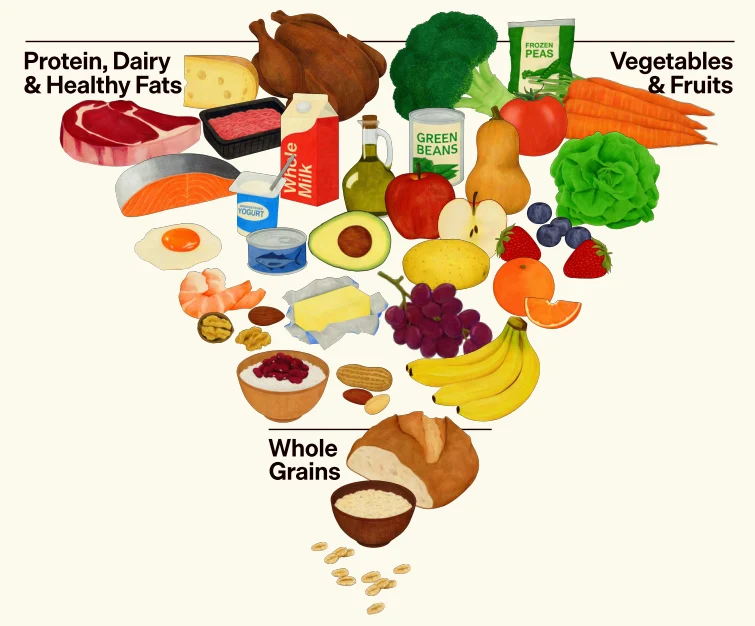
The release of the 2025–2030 Dietary Guidelines for Americans (DGAs) was met with immediate intrigue and skepticism from the nutrition community. Promoted with the catchy, consumer-friendly tagline "Eat Real Food," the document aims to address the escalating public health crises of obesity and metabolic disease. However, beneath the polished, accessible branding lies a document that has ignited a firestorm of controversy among public health experts. While the Guidelines take an unprecedented stance against ultra-processed foods and added sugars, they simultaneously introduce a "New Food Pyramid" that appears to prioritize animal-based proteins and saturated fats, creating a jarring disconnect between the text’s written advice and its visual communication.
Main Facts: The Core of the New Guidelines
At their heart, the 2025–2030 DGAs maintain the foundational scientific consensus that Americans should limit their intake of saturated fats to no more than 10% of their total daily caloric intake. This threshold remains a cornerstone of cardiovascular health recommendations. The document also provides stricter guidance regarding added sugars, stating that no amount of added sugar or non-nutritive sweetener is part of a healthy diet—a shift that marks a more aggressive approach than previous iterations.
Perhaps the most significant departure from past editions is the explicit call to reduce "highly processed foods." This includes a broad category of items, specifically highlighting sugar-sweetened beverages, refined carbohydrates like white bread, and various packaged, shelf-stable snacks. By advocating for whole, fiber-rich grains and prioritizing minimally processed items, the Guidelines align with the long-held positions of organizations like the Harvard T.H. Chan School of Public Health.
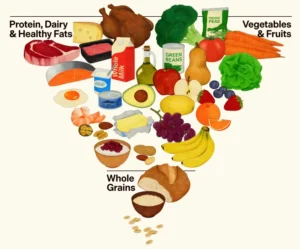
Yet, the primary point of contention is the reintroduction of a pyramid-style graphic. Unlike the traditional USDA MyPlate—which emphasized balance—this new visual is inverted in its messaging, placing items like steak, full-fat dairy, and butter in prominent positions. For the average consumer, the visual weight given to these foods directly contradicts the written advice to monitor saturated fat, leading to a "mixed-message" effect that critics fear will erode public trust and exacerbate cardiovascular risks.
A Controversial Chronology: From Advisory Committee to Final Policy
To understand the friction surrounding these guidelines, one must look at the process by which they were formed. Historically, the DGAs are drafted following an extensive, transparent review by an independent Dietary Guidelines Advisory Committee (DGAC), consisting of preeminent nutrition scientists. These experts synthesize the current state of nutritional science, free from industry influence.
For the 2025–2030 cycle, the DGAC completed their comprehensive Scientific Report, which followed the rigorous, replicable, and transparent methodology established by the Department of Health and Human Services (HHS). However, in a move that blindsided many in the scientific community, the current administration ultimately rejected the Committee’s final report.
In its place, a supplemental scientific analysis was commissioned, managed through a private federal contracting process. This decision has sparked significant backlash. Dr. Deirdre Tobias, an assistant professor at the Harvard T.H. Chan School of Public Health and a member of the 2025–2030 DGAC, has been vocal about the lack of transparency. "There is no transparency in the methodology and rigor that was employed, or why certain topics were selected to be relitigated," Tobias noted. "The reviews themselves deviate significantly from the rigorous process that ensures the evidence base is unbiased and free from non-scientific influences."
Compounding these concerns are reports indicating that some of the reviewers selected for this supplemental analysis maintained financial ties to the beef and dairy industries. This disclosure, while included in the document’s appendices, has fueled speculation that the "New Food Pyramid" was designed to satisfy industry stakeholders rather than reflect the totality of current nutritional evidence.
Supporting Data: The "Saturated Fat Math" Problem
The tension between the visual recommendations and the nutritional limits becomes glaringly apparent when one performs the "saturated fat math." In a standard 2,000-calorie diet, the 10% limit equates to approximately 22 grams of saturated fat per day.
If an individual follows the DGAs’ suggested daily servings—which include three servings of dairy—the math quickly becomes untenable. A single cup of whole milk (5g), three-quarters of a cup of full-fat Greek yogurt (6g), and one ounce of cheddar cheese (6g) bring the daily total to 17 grams of saturated fat before the day is even half over. Adding a single tablespoon of butter (7g) or beef tallow (6g)—both of which are suggested as cooking fats in the guidelines—pushes the consumer over the recommended limit.
This creates an environment where even a person trying to adhere to the guidelines is set up for failure. Dr. Frank Hu, chair of the Department of Nutrition at Harvard, emphasizes that the grouping of animal-based saturated fats with plant-based, unsaturated fats is a critical error. "There is no mention as to which of these foods should be chosen more or less often," Dr. Hu explains. "The mixed messages surrounding saturated-fat-rich foods may lead to a higher intake of saturated fat and increased LDL cholesterol."
Furthermore, while the Guidelines promote olive oil as a healthy option, they categorize it alongside other fats without highlighting the superiority of oils rich in essential fatty acids—such as canola or soybean oil—for cardiovascular health. By failing to distinguish between types of fat and their long-term health outcomes, the DGAs miss a vital opportunity to educate the public on the quality of calories.
Official Responses and Expert Critique
The scientific community’s response to the new guidelines has been one of tempered alarm. While there is broad support for the pivot away from sugar and ultra-processed products, the "protein hype" has drawn significant criticism. The new guidelines recommend 1.2 to 1.6 grams of protein per kilogram of body weight, an increase of up to 100% over previous minimums.
Critics argue that for the average American—who is already consuming more than enough protein—this recommendation lacks nuance. "Substantially raising overall protein intake without distinguishing between different protein sources may have unintended long-term health implications," says Dr. Hu. The "protein package"—the fiber, vitamins, and minerals that accompany protein—matters as much as the protein itself. By failing to prioritize plant-based proteins or fish over red meat, the guidelines perpetuate an outdated view of nutrition that ignores the "package" effects on metabolic health.
Additionally, the omission of environmental and socioeconomic factors has been noted as a glaring oversight. Food production and consumption are inextricably linked to the health of the planet and the affordability of food in marginalized communities. By ignoring the environmental impact of their recommendations, the DGAs have failed to evolve in alignment with modern global standards of sustainability.
Implications: The Future of Public Health Messaging
The implications of the 2025–2030 DGAs are far-reaching. As the primary policy document guiding federal nutrition programs, school lunches, and clinical practice, its influence is immense. If the guidelines are seen as confusing or driven by industry interests, their credibility will suffer. Historically, research from the CDC confirms that Americans struggle to adhere to dietary guidelines; creating a document that is internally inconsistent—with a pyramid that seems to promote the very saturated fats the text warns against—is unlikely to improve these outcomes.
For the average citizen, the disconnect is confusing. When a government agency suggests limiting saturated fat but visually promotes butter and beef, it creates a "choose your own adventure" approach to health that rarely leads to optimal outcomes.
In the face of this ambiguity, experts suggest that consumers look toward more evidence-based resources. The Healthy Eating Plate, developed by researchers at the Harvard T.H. Chan School of Public Health, remains a robust alternative, providing clear, visual guidance on balancing macronutrients and choosing high-quality fat and protein sources.
Ultimately, the 2025–2030 DGAs serve as a reminder of the power of food politics. While the document makes strides in acknowledging the dangers of added sugar and ultra-processed foods, its failure to provide clear, science-backed guidance on fats and proteins highlights the ongoing battle between nutritional science and industry lobbying. For those seeking to optimize their health, the takeaway is clear: look beyond the glossy graphics and, when in doubt, consult with a registered dietitian who can help navigate the nuances of the "protein package" and the true impact of dietary fat on long-term wellness.