











Introduction
The United States Navy, long considered the premier projection of American global power, is currently facing a profound internal crisis. As geopolitical tensions in the Middle East escalate—specifically regarding operations against Iran—the burden of sustained naval presence has fallen heavily upon the shoulders of the sailors serving aboard the USS George H.W. Bush and the USS Abraham Lincoln. Reports emerging from family members, congressional inquiries, and investigative outlets reveal a harrowing reality: crews are operating in a state of exhaustion, grappling with severe supply shortages, deteriorating living conditions, and a mounting mental health epidemic that threatens the very readiness of the fleet.
The Human Toll: Conditions Aboard the Carriers
At the heart of the current controversy are the daily lived experiences of the 5,000-plus sailors aboard these capital ships. According to accounts shared by family members and documented by organizations like MeidasTouch, the standard of living has collapsed to a point that many describe as untenable.
The Breakdown of Logistics
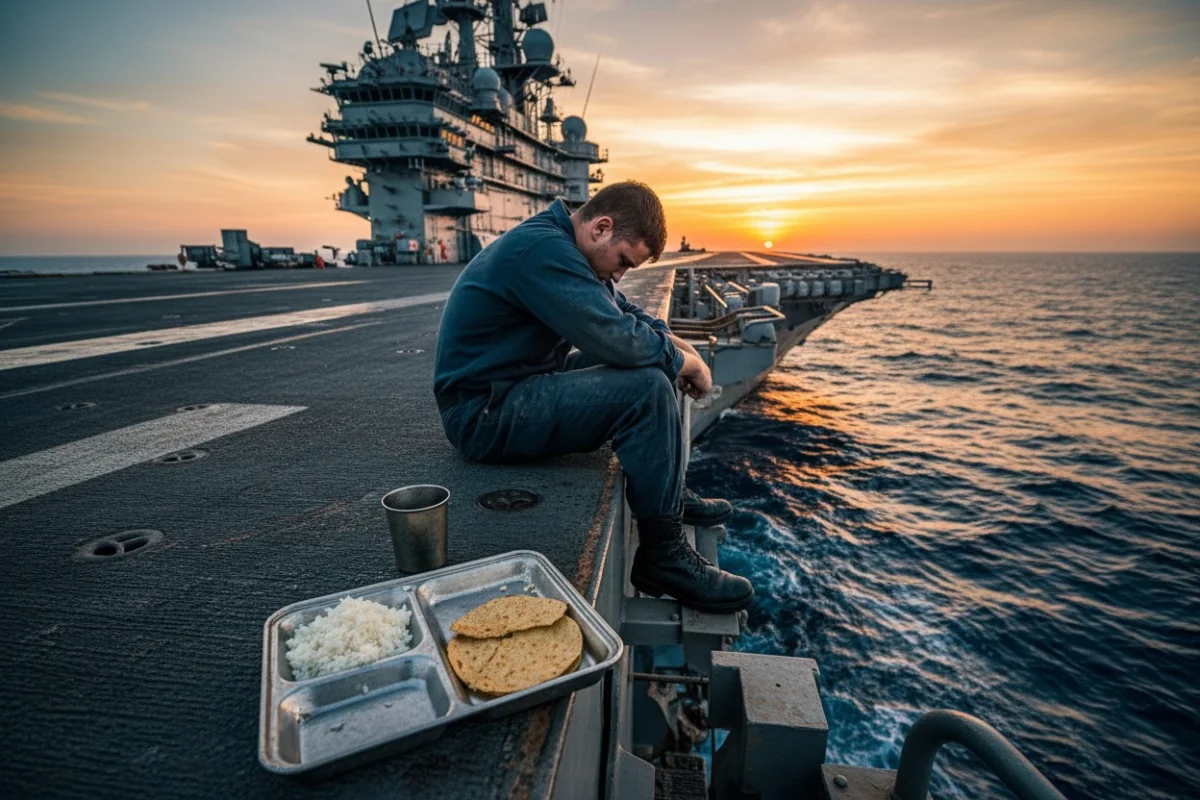
Sailors have reported a critical lack of basic necessities, including clean water, soap, and sufficient nutrition. At a town hall meeting convened by Congressman Mike Levin, families recounted stories of "moldy showers" and broken plumbing systems that left sailors without hot water for weeks at a time. The nutritional situation has been described as "famine-level rationing," with some crew members reportedly subsisting on meager portions—such as half a cup of rice and two tortillas—to compensate for supply chain failures during these extended periods at sea.
The logistical strain is not confined to food and water. The USS Gerald R. Ford, the Navy’s most technologically advanced and expensive carrier, has become a lightning rod for criticism. Frequently dubbed the "Floating Biosludge Hauler" by critics, the vessel has suffered from systemic failures in its wastewater and toilet systems. These habitability issues are compounded by safety hazards; in March, a 30-hour fire in the laundry room left 200 sailors sickened and forced 600 others into damaged, subpar quarters.
The Strategic Context: Operations and Extensions
The current crisis is inextricably linked to the evolving military posture in the Middle East. Since February, the U.S. has engaged in heightened naval operations against Iran, culminating in what Secretary of War Pete Hegseth has termed an "ironclad blockade" under Operation Epic Fury.
A Deployment Without End
The USS Abraham Lincoln has been at sea since November, with its deployment originally slated to conclude in May. However, the exigencies of the regional conflict led to an indefinite extension. The USS George H.W. Bush has reportedly reached 136 days of continuous deployment with no clear return date in sight.
This lack of a defined timeline is cited by families as a primary driver of plummeting morale. As one wife of a Lincoln sailor noted, the crew is being told to "just worry about today," a directive that offers little comfort to those facing months of exhaustion with no scheduled respite. President Donald Trump’s directive to escort commercial oil tankers through the Strait of Hormuz has further stretched the operational capacity of these carrier strike groups, keeping them in high-threat environments where an Iranian drone recently penetrated the airspace near the Lincoln.
The Mental Health Emergency
The physical deprivation has catalyzed a severe mental health crisis. Family members have reported that at least two sailors have attempted suicide by jumping overboard in recent weeks.
A Culture of Fear
The psychological weight of the deployment is exacerbated by a culture that, according to families, discourages seeking help. Annabelle Loma, whose husband serves on the Lincoln, shared that her husband attempted to jump overboard due to extreme burnout. Her account highlights a pervasive fear among the crew: that admitting to mental health struggles or exhaustion will lead to a dishonorable discharge and the forfeiture of a decade-long career.
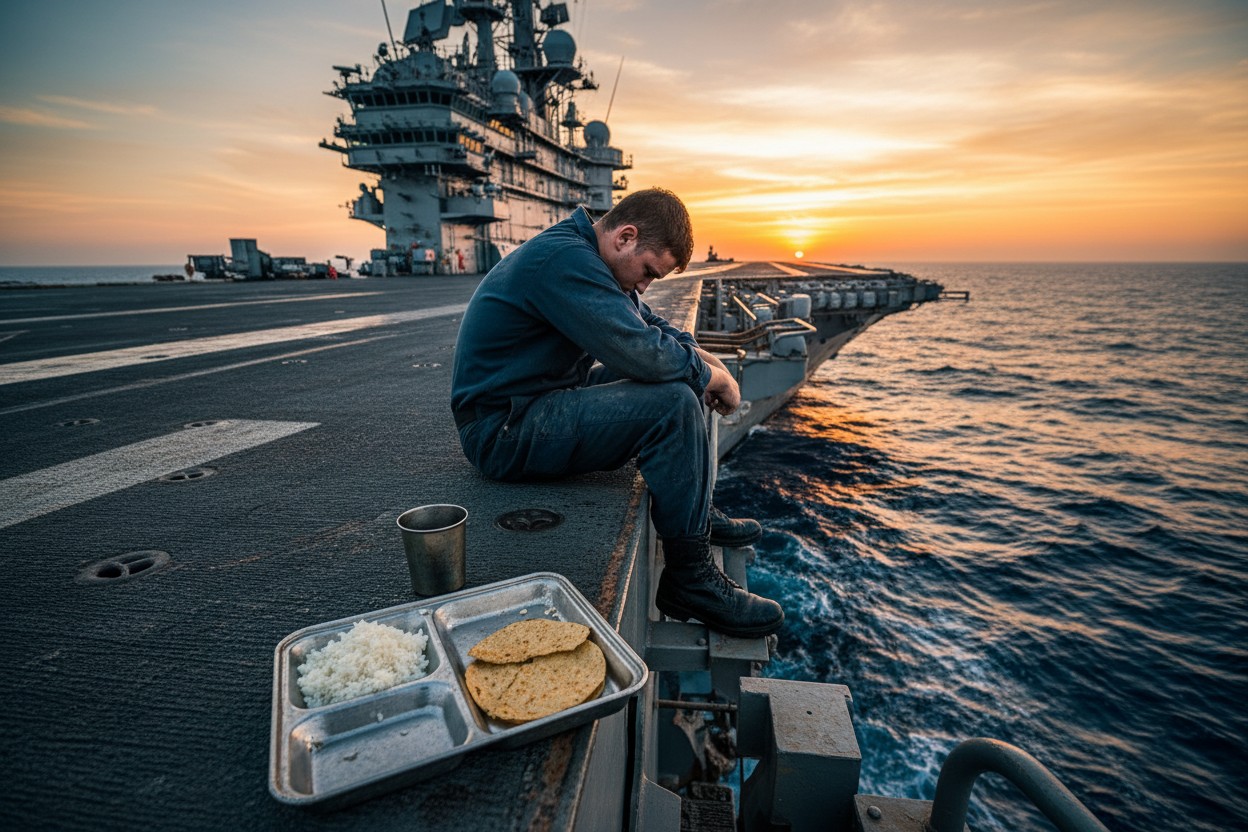
Medical personnel aboard these vessels have reportedly warned leadership that the crew is reaching a breaking point. One family member relayed that a ship’s doctor explicitly warned that if the vessel did not reach port soon, "people are going to start losing their minds." Despite these warnings, the operational tempo remains high, leaving little to no time for sleep or recovery.
Congressional and Institutional Oversight
The gravity of these reports has finally reached the halls of Congress. Senator Richard Blumenthal has formally reached out to Secretary of War Pete Hegseth and the Acting Secretary of the Navy, expressing "serious concern" regarding the reported conditions.
The Scope of the Inquiry
Blumenthal’s letter specifically cites:
- Widespread shortages of essential supplies.
- Water contamination and persistent plumbing failures.
- The precipitous decline of crew mental health.
- Safety concerns on the flight deck and within the ship’s interior.
Congressman Mike Levin, who has been a vocal advocate for the families of the affected sailors, emphasized that the current situation is unsustainable. The failure to align the mission’s operational goals with the basic welfare of the personnel has created a disconnect that is now being scrutinized by legislative oversight committees.
Institutional Silence and the Path Forward
Despite the mounting evidence and public outcry, the Navy and the War Department have remained largely silent regarding specific allegations of supply shortages and the mental health incidents. This silence has fueled frustration among the families of the deployed.
Accountability and Readiness
The irony of the current situation is not lost on observers. While the U.S. continues to commit significant defense spending to maintain its global naval dominance, the operational readiness of its most vital assets is being hollowed out by a failure to manage human capital. Historical literature on naval leadership—such as Navigating the Seven Seas by Melvin Williams Sr.—stresses that the success of a fleet is dependent on aligning individual goals with the organizational mission. Currently, the disconnect between the command’s strategic imperatives and the sailors’ survival needs suggests a fundamental breakdown in this leadership principle.
Implications for Future Naval Policy
The crisis aboard these carriers serves as a warning for future military planning. As the Navy moves toward smaller, more frequent, and highly technical deployments, the "human factor" cannot be treated as a secondary concern to equipment maintenance and regional blockade objectives.
The return of the USS Gerald R. Ford to Virginia for extensive repairs, following a 309-day deployment, marks the end of one cycle, but it does not resolve the systemic issues. The question remains whether the Navy will shift its focus toward sustainable deployment cycles that prioritize the health, safety, and psychological well-being of its sailors. Without a change in course, the U.S. Navy risks not only the physical loss of its ships to mechanical failure but the irreversible erosion of its most valuable asset: the men and women who crew them.
Conclusion
The reports emerging from the USS George H.W. Bush and the USS Abraham Lincoln paint a sobering portrait of a military stretched to its limit. The combination of extended, undefined deployments, supply chain collapses, and an unchecked mental health crisis has created a "perfect storm" that demands immediate accountability. As the Department of War faces mounting pressure from Congress and the public, the path forward must involve more than just a return to port; it requires a radical reevaluation of how the United States sustains its naval power in an era of constant, high-intensity competition. The sailors who sustain the fleet are, at this moment, the ones being broken by it—a reality that is becoming increasingly impossible to ignore.