











If you have kept even a passing interest in the modern wellness zeitgeist, you have likely encountered the name Bryan Johnson. The tech billionaire, currently the subject of the Netflix documentary Don’t Die, has become the face of a high-stakes, multi-million-dollar experiment: the quest to "reverse" the human aging process.
At the center of Johnson’s methodology is the obsession with "biological age" (or bio age). While your chronological age is simply the number of candles on your birthday cake, your biological age represents the functional status of your cells and organ systems. Johnson claims his rigorous regimen—involving dozens of daily supplements, hyperbaric oxygen therapy, and controversial plasma infusions—has slashed his biological age by over five years. Yet, the scientific community remains divided, with reports—including a notable New York Times exposé—suggesting his biological markers may actually be trending in the opposite direction.
As the "Don’t Die" movement gains traction, fueled by popular health podcasts from the likes of Peter Attia, Joe Rogan, and Andrew Huberman, the public is left with a pressing question: Should you or your clients invest in biological age testing?
Defining the Biological Clock: Chronology vs. Physiology
To understand the utility of these tests, we must first distinguish between chronological and biological aging. Imagine two 50-year-old men: "Chang" and "Jabari." Chang leads a sedentary, high-stress life in a polluted urban center, fueled by poor nutrition and smoking. Jabari, conversely, lives in a mountain environment, prioritizes strength training, eats a nutrient-dense diet, and practices consistent meditation.
Even without genetic testing, the physiological reality is clear: Jabari is "younger" at a cellular level than Chang. Biological age testing attempts to quantify this difference by measuring biomarkers—molecular indicators of cellular function.
The Chronology of the Bio-Age Boom
The rise of bio-age testing didn’t happen overnight. It is the culmination of decades of research into telomeres (the protective caps on chromosomes) and DNA methylation (chemical modifications to DNA that serve as a molecular clock).
- 2013: Steve Horvath introduces the "Horvath Clock," a multi-tissue predictor of age based on DNA methylation.
- 2018–2020: The commercialization of bio-age kits accelerates, moving from research labs to direct-to-consumer mail-order services.
- 2023–2024: The "Bryan Johnson Effect" pushes bio-age testing into the mainstream, with influencers and biohackers using these metrics as primary KPIs for their health.
Supporting Data: What Do the Tests Actually Measure?
Commercial kits generally rely on three primary methodologies, each with varying levels of scientific validation:
1. DNA Methylation (The "Epigenetic Clock")
Tests like the DunedinPACE analyze the rate of DNA methylation. While these are the gold standard in research for understanding how environmental factors impact aging, they are not diagnostic tools for individual health. A blood-based methylation test provides a snapshot of systemic aging, but it cannot tell you if your liver is aging faster than your heart.
2. Telomere Analysis
Telomeres shorten every time a cell divides. While extremely short telomeres are associated with specific genetic pathologies, the qPCR tests sold to the public are often criticized for their lack of clinical utility. They provide a general metric, but they are rarely enough to guide medical decision-making.
3. VO2 Max and Fitness Metrics
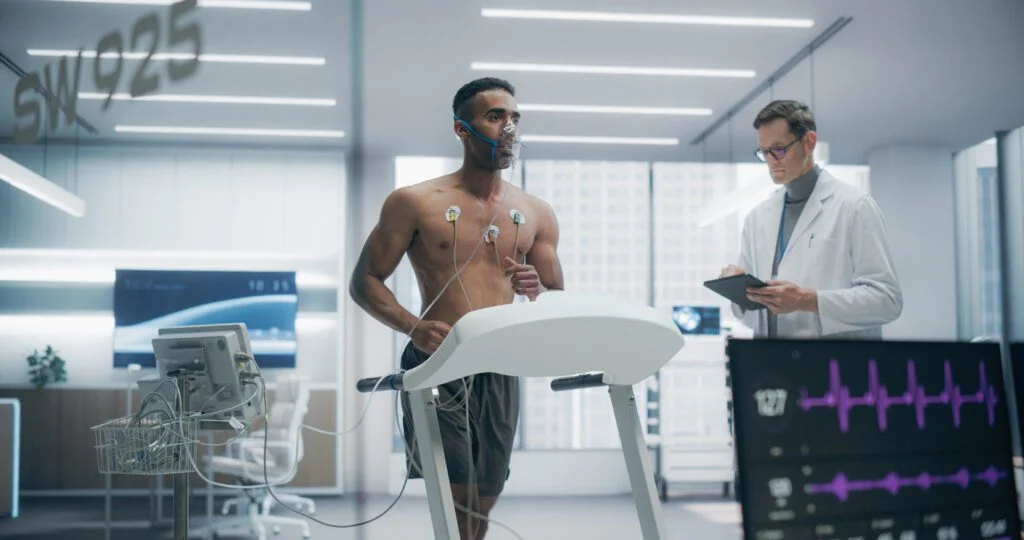
VO2 Max—the volume of oxygen your body can utilize during intense exercise—is perhaps the most robust indicator of longevity. Studies of over 5,000 individuals have shown that those with higher VO2 max levels in middle age live significantly longer. It is the "canary in the coal mine" for cardiovascular health, reflecting the efficiency of the heart, lungs, and muscles.
The "Budget" Approach: Five Free Biomarker Tests
You do not need a million-dollar budget to assess your biological age. Researchers often use simple functional tests that correlate strongly with long-term survival:
- The Sitting-Rising Test (SRT): A measure of balance and musculoskeletal strength. The inability to rise from the floor without support is a significant predictor of future cardiovascular risk.
- Grip Strength: A better indicator of longevity than blood pressure in some cohorts. Weak grip strength is a precursor to frailty and loss of independence.
- Single-Leg Balance: A test of the integrated function of the brain, inner ear, and skeletal muscles. An inability to hold a pose for 10–20 seconds (depending on age) warrants a visit to a specialist.
- The Pittsburgh Fatigability Scale: Persistent mental and physical exhaustion—even after accounting for sleep and stress—is a validated marker for underlying health decline.
- Body Composition via Tape Measure: Waist-to-hip ratios and total body composition provide a more accurate picture of metabolic health than a simple scale reading.
Official Responses and Medical Implications
The medical establishment remains cautious. Most physicians argue that bio-age testing should be secondary to standard clinical markers: Lipid panels (ApoB), HbA1c, C-reactive protein, and blood pressure.
"The danger of commercial bio-age tests is that they encourage people to chase a number rather than a lifestyle," says one clinical researcher. "If a test tells you that you are 40 years old, but your blood pressure is 150/95, you are not ‘young.’ You are at high risk for a cardiovascular event."
The consensus is clear: Use these tests as a baseline, not a destination. If you decide to undergo testing, do so under the guidance of a qualified medical professional who can interpret the data within the context of your broader health history.
Turning Data into Action: The "Evergreen" Strategy
The primary pitfall of the "Don’t Die" era is the tendency to prioritize novel, expensive interventions over "boring" but effective health practices.
If you are looking to lower your biological age, the data suggests that behavioral interventions far outperform supplement protocols:
- Prioritize Sleep: Quality, consistent sleep is the single most effective "anti-aging" tool available.
- Muscle Maintenance: Strength training combats the metabolic decline that characterizes aging.
- Nutritional Density: Minimizing ultra-processed foods and maintaining a healthy body composition remains the most potent way to reduce inflammation.
- Stress Management: Chronic activation of the stress response (the "fight or flight" mode) is directly linked to accelerated telomere shortening.
Conclusion: The Mirror and the Spinach
Data is only as valuable as the action it inspires. If you perform a series of tests, identify a deficit, and then fail to change your lifestyle, you have merely performed an expensive exercise in self-awareness.
Think of biomarker testing like looking in a mirror and seeing a piece of spinach in your teeth. The mirror (the test) doesn’t clean your teeth; it only provides the information you need to do so. If you choose to engage with bio-age testing, ensure that you are ready to "remove the spinach" by committing to the fundamental, evidence-based lifestyle changes that define the true science of longevity.
For health and fitness professionals, the takeaway is equally clear: Your clients do not need more gadgets to track their decline. They need coaching on how to manage the variables—stress, recovery, movement, and nutrition—that ultimately determine the rate at which they age.