









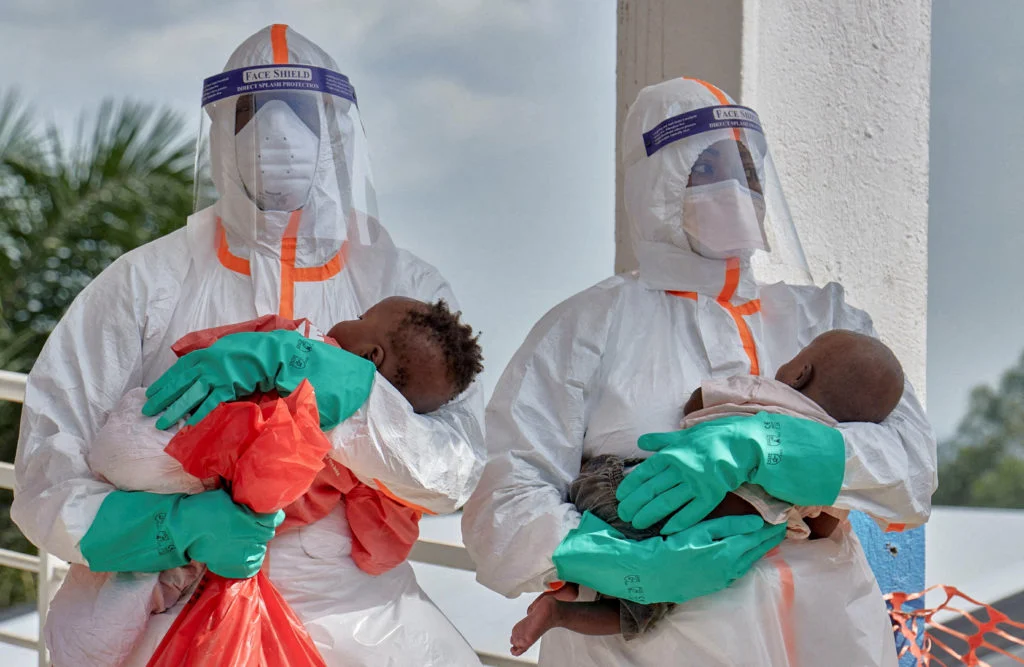
BUNIA, Democratic Republic of Congo — Under the heavy, humid canopy of an afternoon sky in Ituri, a small, solitary coffin was lowered into the earth this Friday. The scene was stark and clinical: mourners stood at a distance, barred by the invisible perimeter of contagion, as health workers—clad in full, suffocating layers of personal protective equipment (PPE)—performed the final rites. The deceased was only six months old, the third infant to succumb to the Ebola virus at a local orphanage in eastern Congo this week.
As Father Innocent Ndogo offered prayers for the child, his voice echoed a sentiment of profound resignation: "It is a feeling of sadness because we have lost one of our own, a daughter of the church. As we have always said, the Lord gives, and the Lord takes away."
This tragedy is not an isolated event but a harrowing indicator of a deepening health crisis. As of June 19, 2026, the region finds itself in the grip of a virulent Ebola outbreak that is straining an already fragile infrastructure, testing the limits of international aid, and exposing the deadly consequences of a pathogen that has caught the global medical community largely off-guard.
The Core Facts: A Pathogen Without a Shield
The current epidemic is characterized by the Bundibugyo strain of the Ebola virus. Unlike the more common Zaire strain, which has been the focus of international vaccine development and therapeutic research for years, the Bundibugyo variant presents a unique, terrifying challenge.
There are currently no approved vaccines or specific treatments for this strain. This clinical vacuum has meant that in the early, critical days of the outbreak, the disease spread undetected, as local testing protocols were not calibrated to identify this specific variant.
The human cost is mounting rapidly. With 894 confirmed cases and over 200 deaths reported, the mortality rate remains a point of intense concern for health officials. According to the Africa Centres for Disease Control and Prevention (Africa CDC), the potential for further transmission is vast, with approximately 35,000 individuals identified as suspected contacts who must now be monitored for symptoms.
Chronology of a Worsening Crisis
The trajectory of this outbreak has been marked by a series of missed opportunities and escalating friction.
- Early Detection Failure: Due to the prevalence of the Zaire strain in the Democratic Republic of Congo’s previous 16 outbreaks, medical resources were initially geared toward identifying that specific virus. The Bundibugyo strain effectively "slipped through the net," allowing it to establish a firm foothold in Ituri.
- Rapid Expansion: Within weeks, the virus moved beyond its epicenter in Ituri, infiltrating the North and South Kivu provinces. The geography of the region—marked by dense forests, displacement camps, and porous borders—has served as a highway for the disease.
- The Spillover: The crisis officially became a regional threat when it crossed the border into Uganda. To date, Uganda has confirmed 19 cases and two deaths, prompting urgent border health screenings and international alarm.
- Institutional Strain: As the death toll climbed past 200, the lack of basic protective equipment—gloves, masks, and gowns—has become a flashpoint for health workers, many of whom are now refusing to enter high-risk zones without the necessary safeguards to protect their own lives.
Supporting Data and Comparative Analysis
While this outbreak is devastating, it is essential to contextualize the severity of the situation through historical data.
- Compared to Uganda (2000): The current outbreak is three times more lethal than the 2000 Bundibugyo outbreak in Uganda, signaling a more aggressive transmission pattern.
- Compared to the 2014 West Africa Epidemic: While the current death toll of 200+ is significant, it remains far below the 2014 outbreak in West Africa, which claimed over 11,000 lives. However, experts warn that the trajectory could mirror that disaster if the current response remains underfunded and under-resourced.
- Geographic Concentration: Ituri remains the primary site of the disease, accounting for over 90% of all confirmed cases. The density of orphanages and displacement centers in this region has turned them into "hot zones," where the virus finds easy transmission paths among vulnerable populations.
Official Responses and the Challenge of Trust
The battle against Ebola is as much about sociology as it is about virology. In eastern Congo, the response has been repeatedly disrupted by local resistance. Residents, wary of authorities and fearful of the "impersonal" nature of safe burial practices, have clashed with healthcare professionals.
These clashes are exacerbated by the "militarized" nature of the response in some areas. When medical workers appear in full protective gear accompanied by security forces, the local population often views the intervention as an encroachment rather than a public health effort.
Alex Lock, a Communications Officer at the International Federation of Red Cross and Red Crescent Societies (IFRC), emphasized the human element of this tragedy: "She was a baby. She had her whole life ahead of her. Unfortunately, she was taken by the disease, a disease that is transmitted from one person to another. We must resist the temptation to become indifferent to these numbers."
The Red Cross and other NGOs are currently attempting to pivot their strategy toward community-led interventions, aiming to explain the importance of safe burials without the alienation caused by excessive force or cold, clinical detachment. However, the lack of international funding and the weakening of key support structures like USAID have left these organizations with fewer resources than they had in previous, smaller outbreaks.
Implications: A Looming Regional Threat
The implications of this outbreak extend far beyond the borders of Ituri.
The Medical Gap
The most immediate implication is the urgent need for a vaccine. The medical community is currently in a race to adapt existing protocols to target the Bundibugyo strain. Until such a solution is found, the strategy remains restricted to "ring vaccination" (if possible), strict quarantine, and contact tracing. However, in an area as unstable as eastern Congo, contact tracing is an Herculean task.
The Economic and Social Toll
The economic impact on the region is already being felt. Markets are closing, movement is restricted, and the fear of infection is stifling local trade. For families already living on the margins, the quarantine of a household can mean the difference between food security and starvation.
Geopolitical Stability
The spread into Uganda underscores the reality that Ebola does not respect national sovereignty. If the response continues to be hampered by local distrust and lack of equipment, the virus could potentially move toward more densely populated urban centers, which would make containment exponentially more difficult.
Conclusion: A Call for Global Vigilance
The burial of a six-month-old in Bunia serves as a sobering reminder of the gaps in our global health architecture. When a virus like the Bundibugyo strain emerges, the speed and adequacy of the initial response determine whether the event becomes a contained localized tragedy or a regional health catastrophe.
As the Congolese authorities and international partners scramble to secure the necessary PPE and establish more effective communication with local communities, the world watches. The lesson of 2014 was that early, robust intervention is the only way to prevent a pandemic. As the death toll creeps higher in the shadow of the eastern Congo forests, the question remains: will the international community provide the necessary support before this crisis spirals beyond the point of control?
For the people of Ituri, the priority is not global policy; it is the simple, desperate hope that the next burial will not be for a child.