







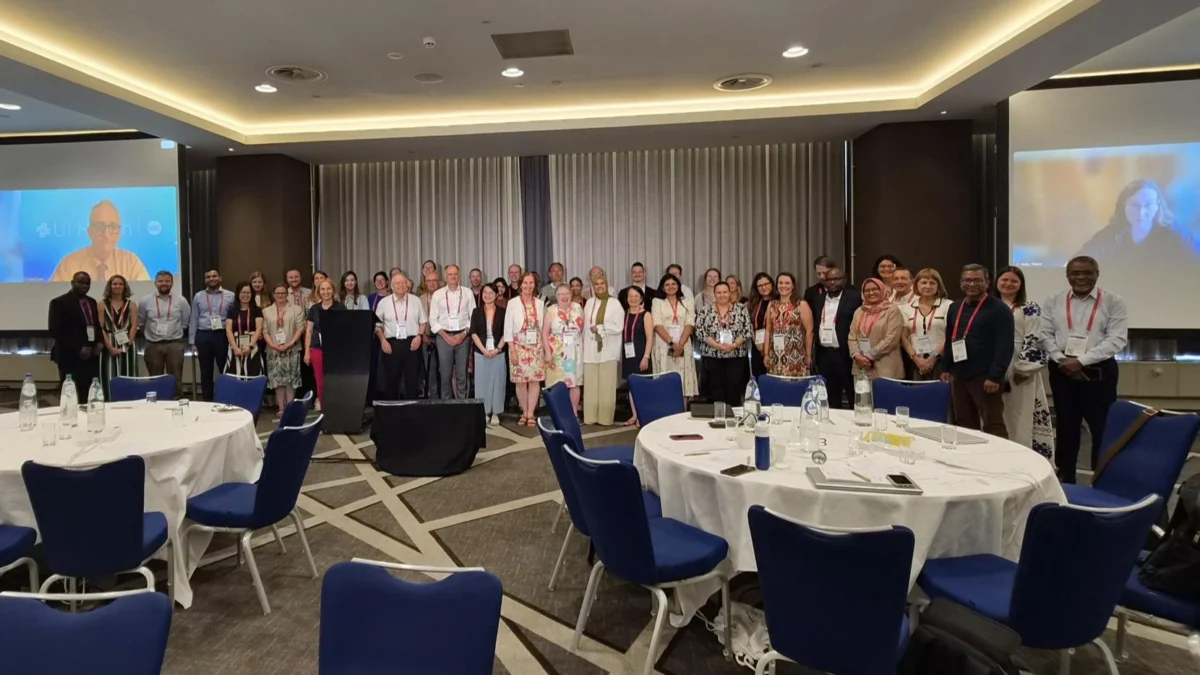
The landscape of European respiratory health is undergoing a critical transition. While decades of scientific inquiry have yielded robust data on the prevention, diagnosis, and management of lung diseases, a significant chasm remains between laboratory breakthroughs and the realities of clinical practice. Recently, the European Respiratory Society (ERS) and the European Lung Foundation (ELF) brought together leading experts, policymakers, and patient advocates to address this "implementation gap."
Through a series of flagship initiatives—including JARED, LungHealth4Life (LH4L), FRESHAIR4Life (FA4L), JA-SAFE, and SOLACE—the conference served as a clarion call for a new era of health policy: one defined not by theory, but by tangible, measurable impact.
The “Cinderella” of Global Health: A Call to Action
The conference was anchored by a sobering assessment from José Luis Castro, the WHO Director-General’s Special Envoy for Chronic Respiratory Diseases. In his opening address, Castro labeled respiratory ailments as the "Cinderella disease" of the global health agenda.
"Respiratory diseases remain the Cinderella disease of global health: common, costly, devastating, and too often left in the shadows," Castro noted. His remarks underscored a painful reality: respiratory issues do more than compromise lung function; they erode a patient’s dignity and frequently drive individuals into profound social isolation.
Castro’s message was blunt: while political recognition of chronic respiratory diseases has grown, "recognition without implementation changes nothing." He challenged delegates to move beyond the comfort of academic discourse and into the complex, often messy, territory of systemic change. For Castro, policy declarations are merely the precursors to the real work, as he famously reminded the audience: "Policy declarations create possibilities. Implementation creates impact."
Chronology of the Implementation Shift
The push for operationalizing health data did not happen in a vacuum. It follows years of advocacy by the ERS and ELF, who have sought to move respiratory health from the periphery to the center of European public health strategies.
- Phase 1: Knowledge Generation. For years, European research councils prioritized the identification of biomarkers, diagnostic tools, and therapeutic regimens for COPD, asthma, and lung cancer.
- Phase 2: The Advocacy Bridge. Recognizing that research was sitting idle, the ERS and ELF pivoted toward public awareness and policy-level lobbying to ensure that governments acknowledged the economic and social burden of lung health.
- Phase 3: The Implementation Era. The current phase, exemplified by the conference, focuses on the "last mile" of care—ensuring that a patient in a rural clinic in Portugal or an urban center in Poland has the same access to state-of-the-art care as a patient in a major metropolitan hospital.
Flagship Projects: Translating Research into Practice
The heart of the conference was a deep dive into five specific projects that are actively closing the gap between evidence and patient outcomes.
JARED: Strengthening Coordinated EU Action
Professor Ildikó Horváth presented the Joint Action on REspiratory Diseases (JARED). This initiative is designed to harmonize respiratory care across EU member states. By fostering coordinated action, JARED aims to eliminate the fragmentation of care that often results in unequal health outcomes depending on a patient’s geography.
LungHealth4Life (LH4L) and Early Intervention
Cláudia Sofia de Almeida Vicente Ferreira introduced LungHealth4Life, a project rooted in the belief that the foundations of lung health are laid in childhood. By implementing pilot programs in Portuguese schools, the project aims to establish healthy habits early, demonstrating that prevention is the most cost-effective and humane way to manage long-term respiratory health.
FRESHAIR4Life (FA4L) and Environmental Determinants
Rianne van der Kleij showcased the FRESHAIR4Life initiative, which focuses on the intersection of environmental quality and individual health. FA4L works to mitigate the external factors that exacerbate lung conditions, advocating for healthier environments that act as primary preventative measures against disease onset.
JA-SAFE: A Tobacco-Free Future
Constantine Vardavas presented the Joint Action on Health Promotion and Disease Prevention (JA-SAFE). This project is at the forefront of the fight against tobacco and aerosol exposure. By uniting countries in the pursuit of smoke-free and aerosol-free environments, JA-SAFE is providing the structural framework necessary to raise a tobacco-free generation.
SOLACE: Equitable Lung Cancer Screening
Rounding out the presentations, Professor Martina Koziar Vašáková discussed Strengthening the screening of Lung Cancer in Europe (SOLACE). The project addresses a critical disparity in oncology: access to screening. SOLACE is developing pathways to ensure that lung cancer screening is not a luxury afforded only to the wealthy, but a standard, equitable service available to all at-risk citizens.
Equity: The Human Element of Healthcare Policy
A pivotal panel discussion focused on the concept of equity, arguing that the true measure of a healthcare system is its ability to serve its most vulnerable members.
Kjeld Hansen, former Chair of the European Lung Foundation, delivered a compelling argument for the democratization of healthcare policy. "Successful healthcare policies cannot simply be designed by experts and handed down to patients," Hansen stated. He argued that top-down mandates often fail because they lack the nuance of lived experience.
The Principle of Meaningful Involvement
Hansen emphasized that true progress requires a seat at the table for everyone: patients, clinicians, researchers, and policymakers. This "meaningful patient involvement" is not merely a token gesture; it is a strategic necessity. When patients are involved in the design of healthcare initiatives, they feel a sense of ownership, which drastically increases adherence to new policies and clinical protocols.
The panel concluded that equity in respiratory health means recognizing that geography, socioeconomic status, and personal circumstances should never dictate one’s ability to breathe freely.
Supporting Data: The Burden of Neglect
The urgency of these projects is backed by overwhelming data. Respiratory diseases remain among the leading causes of mortality and morbidity in Europe.
- Economic Impact: The cost of lost productivity due to chronic respiratory disease is measured in the billions of Euros annually.
- Preventability: A significant portion of these costs is tied to preventable conditions caused by air pollution and tobacco use.
- Diagnostic Latency: Data presented at the conference highlighted that for many patients, the time between the first onset of symptoms and an accurate diagnosis remains unacceptably long, leading to more advanced disease states and poorer prognosis.
Implications for the Future of European Health
The conference concluded with a clear roadmap for the coming years. The transition from "research-led" to "implementation-led" healthcare has profound implications:
- Systemic Integration: Governments must treat respiratory health as a pillar of public health, alongside cardiovascular and metabolic health.
- Education and Advocacy: Clinical professionals must be trained not only in the latest medical treatments but also in the principles of implementation science—how to navigate bureaucratic, cultural, and logistical barriers to change.
- Continuous Feedback Loops: Implementation is not a "set and forget" process. It requires constant monitoring and adjustment, with patients serving as the ultimate auditors of success.
For the millions of Europeans living with lung disease, these initiatives represent more than just bureaucratic projects. They represent the promise of earlier diagnosis, better-managed conditions, and a societal shift toward cleaner, healthier environments.
As the conference drew to a close, the consensus was clear: the era of simply "knowing" is over. The era of "doing" has arrived. By prioritizing implementation, the European respiratory community is not only working to clear the air—it is working to restore the dignity and health of every citizen, one policy, one patient, and one breath at a time.