




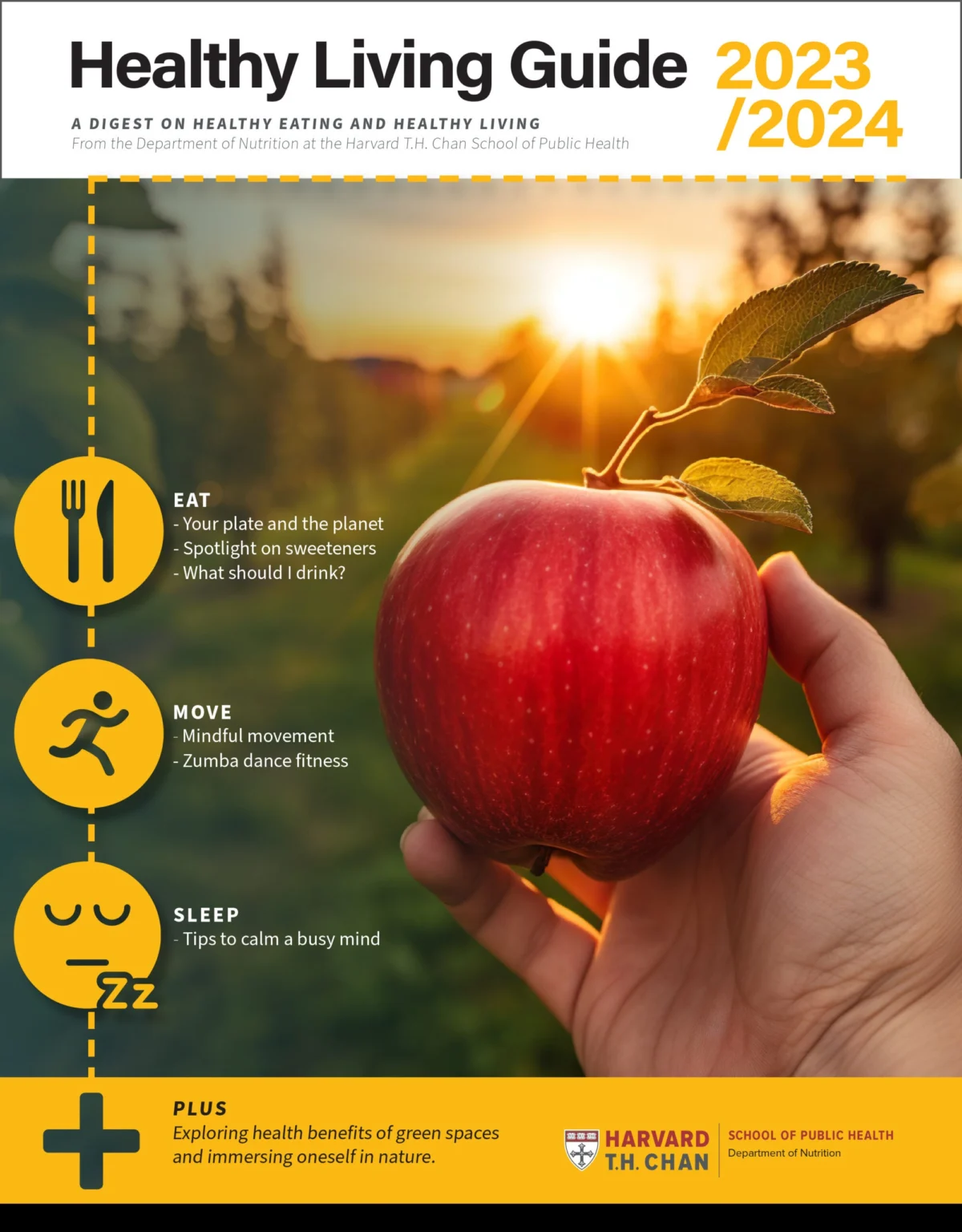
As we step into 2024, the global discourse surrounding health has shifted from a narrow focus on physical fitness to a holistic integration of mental, environmental, and physiological well-being. Signaling this evolution, the Department of Nutrition at the Harvard T.H. Chan School of Public Health has released its fourth annual Healthy Living Guide. This year’s edition is more than a collection of dietary tips; it is a manifesto for the modern era, emphasizing the intersection of mindfulness, planetary sustainability, and evidence-based nutrition.
Main Facts: A New Paradigm for Public Health
The centerpiece of this year’s release is the profound influence of the newly established Thich Nhat Hanh Center for Mindfulness in Public Health. By grounding the Healthy Living Guide in the philosophy that "the apple in your hand is the body of the cosmos," the researchers are bridging the gap between ancient meditative practices and contemporary nutritional science.
The core mission of the guide is to disseminate actionable, research-backed information that addresses three pillars of health: nutrition, physical activity, and sleep. Unlike previous editions, the 2023-2024 guide places a unique emphasis on "mindful eating." This concept suggests that how we consume food—our awareness of its origin, the speed of consumption, and our emotional state—is as critical as the nutritional density of the food itself.
The guide is designed to be a practical tool, featuring printable tip sheets and comprehensive summaries that allow individuals to translate complex academic findings into daily routines. Whether it is navigating the controversial landscape of ultra-processed foods or understanding the biological importance of sleep chronotypes, the guide serves as a bridge between Harvard’s rigorous laboratory research and the dinner tables of the general public.
Chronology: The Evolution of the Healthy Living Guide
The journey toward this fourth edition reflects the Department of Nutrition’s broader commitment to adapting to an ever-changing health landscape:
- 2020-2021 (The Inception): The inaugural Healthy Living Guide was launched as a response to the global pandemic, which highlighted the urgent need for accessible, science-based health guidance in an era of rampant misinformation.
- 2021-2022 (The Expansion): The second edition focused on solidifying foundational habits, moving from crisis response to proactive health management.
- 2022-2023 (The Integration): The third edition began incorporating deeper insights into sleep architecture and the long-term impact of dietary patterns on chronic disease prevention.
- 2023-2024 (The Mindful Shift): The current edition marks a milestone with the integration of the Thich Nhat Hanh Center. It represents a pivot toward "Public Health Mindfulness," looking at how individual habits ripple outward to affect planetary health and societal well-being.
Supporting Data: Science at the Forefront
The 2023-2024 Healthy Living Guide is anchored by emerging data that challenge conventional health wisdom.
The Crisis of Ultra-Processed Foods
Perhaps the most urgent section of the guide concerns the prevalence of ultra-processed foods (UPFs). Current research highlighted in the guide suggests a strong correlation between high consumption of UPFs and the decline of mental health markers. By analyzing the "chemical architecture" of modern snacks—often designed to bypass natural satiety signals—Harvard researchers provide data-driven pathways to reduce dependency on these foods.
Physical Activity and Rhythmic Movement
Moving beyond traditional aerobic exercise, the guide explores the efficacy of "rhythmic movement." Specifically, the inclusion of programs like Zumba is not framed merely as calorie-burning exercise, but as a mechanism for mood regulation. The guide cites studies demonstrating that combining music with movement increases adherence to exercise routines, particularly for populations who find standard gym environments isolating.
The Science of Chronotypes
The guide provides a nuanced look at sleep, moving away from the "one-size-fits-all" eight-hour rule. By categorizing sleep patterns into "chronotypes"—the biological predisposition to wakefulness or sleepiness at certain hours—the researchers provide a framework for individuals to align their professional and social lives with their internal circadian rhythms. This alignment, the data suggests, is the primary key to metabolic health and cognitive clarity.
Official Responses: The Philosophy of Mindfulness
The establishment of the Thich Nhat Hanh Center for Mindfulness in Public Health has fundamentally changed the tone of the Department of Nutrition. In an official capacity, the Center has stated that its goal is not to promote mindfulness as a boutique wellness trend, but as a clinical and public health intervention.
"Researching mindfulness at the population level is the final frontier," noted a representative from the Department. "When we consider that our eating habits impact not only our blood sugar but also the carbon footprint of our food systems, we realize that mindfulness is a prerequisite for a sustainable future."
The guide emphasizes that mindful eating is not about restriction, but about presence. By slowing down and engaging with the sensory experience of food, individuals are statistically more likely to choose whole, nutrient-dense foods over highly processed alternatives. This, according to the Center, is the most effective way to combat the current epidemic of metabolic syndrome without relying solely on pharmacological interventions.
Implications for Global Health
The implications of the 2023-2024 Healthy Living Guide extend far beyond individual weight loss or muscle gain. By linking personal habits to "planetary health," the guide challenges readers to consider the systemic impact of their choices.
Impact on Population Health
If adopted on a macro scale, the recommendations—specifically the shift away from ultra-processed foods and the prioritization of restorative sleep—could significantly reduce the burden of chronic diseases such as Type 2 diabetes, hypertension, and clinical depression. The guide posits that the "democratization" of this information is a public health necessity.
The Sustainability Nexus
A core implication discussed in this year’s guide is the relationship between the health of the gut microbiome and the health of the environment. The guide advocates for diets that are naturally higher in plant-based whole foods, noting that these choices are often the most sustainable for the planet. By making the connection between the "apple in the hand" and the "cosmos," the guide empowers individuals to feel that their personal health journey is a constructive contribution to a larger, healthier global ecosystem.
Call to Action: Knowledge as Empowerment
The guide concludes with a challenge to the reader: a test of healthy living knowledge designed to assess how well they have integrated the findings from previous years. This gamified approach to health literacy underscores the Department’s belief that knowledge must be active and iterative.
For those looking to transition into 2024 with a scientifically grounded strategy, the Healthy Living Guide is an essential resource. It does not promise overnight transformation. Instead, it offers a sustainable, compassionate, and evidence-based roadmap for living a life that is as fulfilling for the individual as it is supportive of the global community.
As the guide suggests, the path to a healthier life is not found in a single diet or a new exercise fad; it is found in the deliberate, mindful, and evidence-informed choices we make every single day.
To access the full suite of resources, including the printable tip sheets and the interactive 2023-2024 PDF, visit the official Harvard T.H. Chan School of Public Health website. By engaging with these materials, readers can contribute to the ongoing dialogue surrounding public health and the future of sustainable living.