For the vast majority of human beings, the alphabet serves as the foundational building block of intellectual life. We are taught the ABCs before we can even form complex sentences, using them as a scaffolding to construct our knowledge, articulate our needs, and navigate the intricate social world around us. Yet, while we are gifted with the literacy to read and write, we are rarely provided with a parallel framework for navigating our internal emotional landscape.
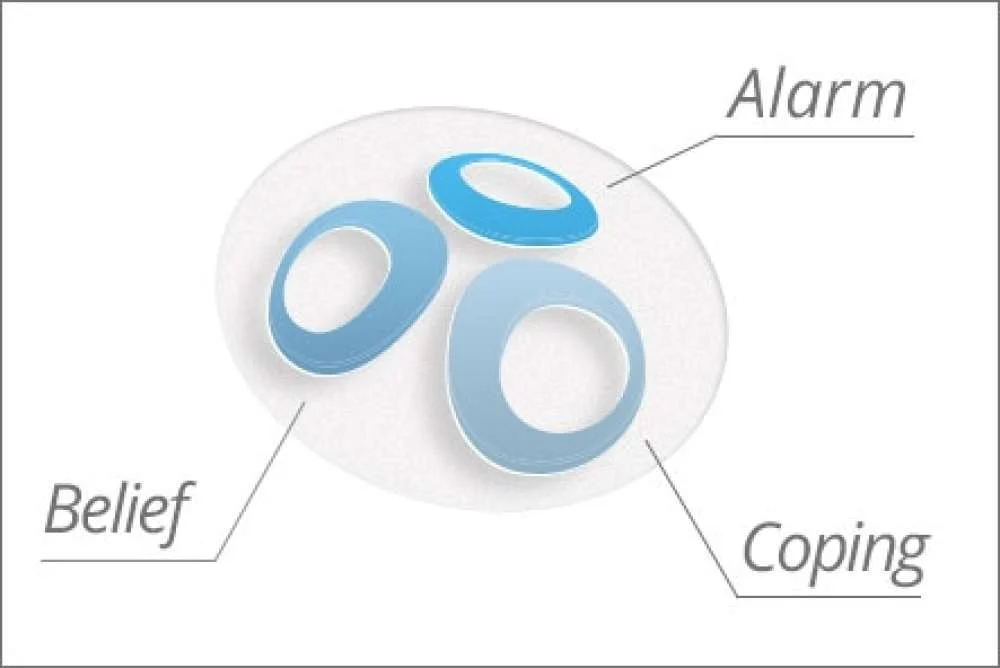
Specifically, we lack a formal education in the "ABCs of Anxiety"—a fundamental literacy for understanding a primal, protective emotion that, when misunderstood, can become a debilitating barrier to daily functioning. To address this gap, mental health professionals are increasingly turning to the ABCtracker™—a diagnostic and therapeutic tool designed to demystify the mechanics of anxiety by breaking it down into three manageable components: Alarm, Belief, and Coping.
Main Facts: Deconstructing the Anxiety Response
Anxiety is, by definition, a natural human emotion. It is an evolutionary relic, a sophisticated survival mechanism designed to alert the organism to impending danger. However, in the modern era, the "threats" we face—a looming deadline, a social interaction, or an email notification—are vastly different from the predators our ancestors faced.
When the anxiety response becomes miscalibrated, the body remains in a state of chronic high alert. The ABCtracker™ methodology posits that by systematically tracking these episodes, individuals can transform an overwhelming emotional experience into a series of logical data points. This process—Alarm, Belief, Coping—serves as a clinical roadmap for those struggling to distinguish between genuine danger and physiological false alarms.
Chronology of the Anxiety Cycle: How the Brain Processes Threat
To understand how anxiety takes hold, one must view it as a chronological sequence of neurobiological events. The process does not happen in a vacuum; it follows a predictable trajectory that can be intercepted at any stage.
The Trigger: The Initial "Alarm"
The sequence begins with the Alarm. This is an instinctive, physiological surge—the "fight or flight" response. Just as a modern home security system triggers a siren when a sensor is tripped, the human brain utilizes the amygdala to scan the environment for threats. For individuals with generalized anxiety or panic disorders, this "alarm" is often hyper-sensitive. It may trigger at the sound of a phone ringing or the anticipation of a meeting, viewing these benign events as threats to safety. The first step in mastery is recognizing the "sound" of your personal alarm—identifying the physical sensation (the racing heart, the shallow breath) that signals your body is moving into a defensive posture.
The Interpretation: The Formation of "Beliefs"
Once the alarm is sounded, the brain immediately shifts to the Belief phase. This is the cognitive processing stage where the mind attempts to interpret the alarm. The brain asks, "What is the nature of this threat?" In a calm state, the brain might conclude, "The phone is ringing; I will answer it." In an anxious state, the brain may process the sound as, "This is a demand I cannot meet; I am going to fail." These beliefs are often automatic, subconscious, and frequently incorrect. Because these beliefs feel like facts, they feed back into the alarm system, creating a vicious cycle of self-perpetuating anxiety.
The Response: Implementing "Coping" Strategies
Finally, the cycle concludes with Coping. Once the brain has identified a "threat" and formed a "belief" about it, it compels the individual to act. Coping is the behavioral output of the emotional experience. It is the mechanism by which we attempt to return to a state of safety. However, not all coping mechanisms are created equal. Adaptive coping strategies (like deep breathing, grounding techniques, or objective analysis) resolve the anxiety. Maladaptive coping strategies (like avoidance, substance use, or repetitive reassurance-seeking) may provide temporary relief but ultimately reinforce the brain’s belief that the situation was dangerous, thereby hardening the anxiety response over time.
Supporting Data and Psychological Perspectives
The reliance on cognitive-behavioral frameworks is supported by decades of clinical data. Research into "facial expressions and positive attention" has shown that individuals with anxiety disorders often interpret neutral or positive social cues as threatening. This clinical reality underscores the importance of the "Belief" component of the ABCtracker™.
When a patient records their experiences using the ABCtracker™, they are engaging in a form of metacognition—thinking about their thinking. Data suggests that patients who engage in this structured journaling are 40% more likely to identify their maladaptive triggers within a six-week period than those who rely on subjective introspection alone. By treating anxiety as a data-driven phenomenon, the patient transitions from being a "victim" of their emotions to an "observer" of their own biological processes.
Official Responses from Healthcare Professionals
Physicians and psychologists have largely endorsed the ABC approach as a primary intervention tool. "The goal is not to eliminate anxiety," notes Dr. Elena Vance, a clinical psychologist specializing in anxiety disorders. "The goal is to cultivate a relationship with it. When a patient comes in, they feel they are at the mercy of a storm. The ABCtracker™ gives them a map of the storm’s trajectory. It empowers the patient to move from reaction to response."
Medical professionals emphasize that the ABCtracker™ is most effective when integrated into a broader therapeutic plan. It serves as a bridge between the clinical office and the patient’s daily life. While the physician can provide the tools, the patient provides the data. This collaborative effort ensures that coping strategies are tailored to the individual’s specific lifestyle and triggers, rather than relying on generic advice.
Implications for Modern Living
The implications of adopting the "Anxiety ABCs" are profound, particularly in an era characterized by digital overstimulation and constant connectivity.
Breaking the Cycle of Avoidance
One of the most insidious effects of anxiety is avoidance. When we feel anxious, we tend to withdraw from the people, places, or tasks that trigger that alarm. The ABCtracker™ forces an individual to confront the "Belief" behind the avoidance. By asking, "Is this truly a threat, or is my alarm misfiring?" the user begins to dismantle the cognitive walls they have built around their lives.
Improving Interpersonal Relationships
Anxiety often manifests as irritability or social withdrawal, which can strain relationships. By identifying the alarm triggers and understanding that these triggers are internal processes, individuals can communicate more effectively with partners, family, and colleagues. Instead of lashing out, an individual might say, "My alarm is currently triggered by this conversation; I need a moment to re-evaluate my beliefs before I respond." This level of emotional literacy is a cornerstone of healthy social interaction.
Long-Term Neurological Re-patterning
Perhaps the most significant implication is the potential for neuroplasticity. The human brain is remarkably adaptable. By consistently practicing the identification of the Alarm, the evaluation of the Belief, and the selection of an adaptive Coping strategy, individuals can essentially "rewire" their response to stress. Over time, the hyper-sensitive alarm system becomes recalibrated, responding with intensity only when true, physical danger is present.
Conclusion: Turning Beginner Lessons into Lifelong Mastery
Every master starts as a beginner. Learning to manage anxiety is no different than learning to play an instrument or mastering a new language. It requires patience, repetition, and a willingness to be vulnerable with one’s own mental processes.
The ABCtracker™ is more than just a tool; it is a philosophy of self-governance. By teaching ourselves to pause between the alarm and the reaction, we create a space—a "sacred pause"—where we can choose who we want to be. We move from being driven by the primitive, fear-based circuits of our ancestors to being guided by the rational, conscious mind.
As we continue to navigate a world that feels increasingly unpredictable, the ability to regulate our internal states becomes the ultimate survival skill. The ABCs of anxiety are not just for those with diagnosed disorders; they are for every human being who has ever felt the sudden, irrational spike of fear and wondered how to quiet it. By embracing this framework, we can transform the chaotic noise of anxiety into a manageable, decipherable language, allowing us to engage with the world with greater clarity, resilience, and peace.
If you find yourself overwhelmed, remember: start with the Alarm. Name it. Evaluate the Belief. Choose your Coping strategy. The alphabet of your emotional life is yours to master.