
In her seminal book, Me Time Monday, author and corporate gerontologist Sherri Snelling outlines the "7 Wellness Elements" essential for achieving a life of balance and purpose. Among these, financial wellness stands as the bedrock of stability. For the modern caregiver—a demographic Snelling identifies as "Gen C" (Generation Caregiver)—financial wellness is not merely about savings accounts; it is about navigating the precarious intersection of life expectancy, healthcare costs, and the competing demands of multi-generational support.
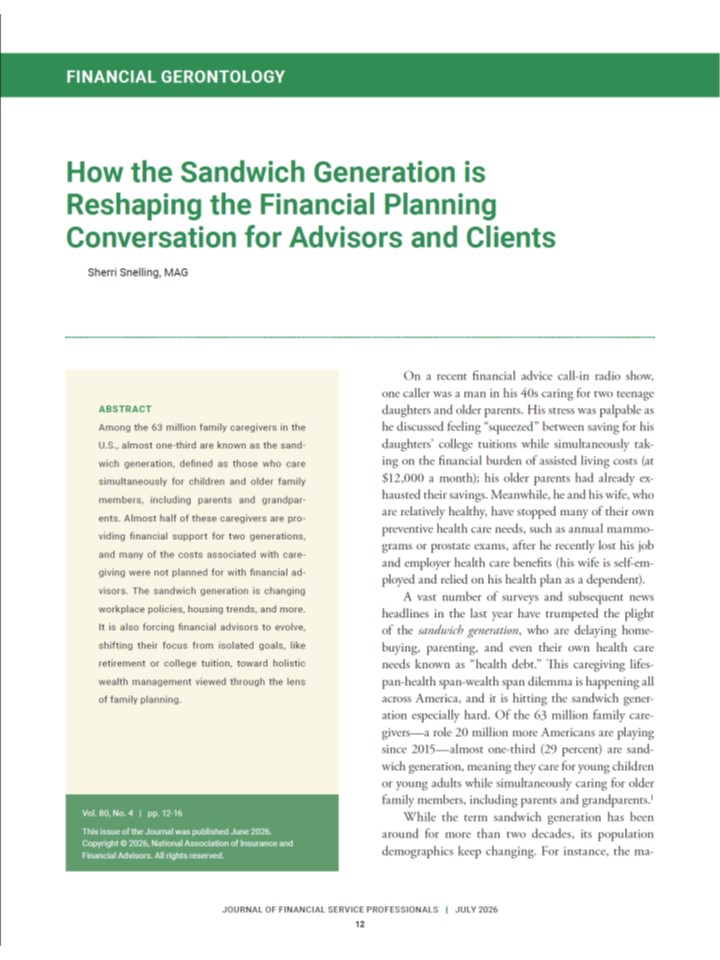
As the "Sandwich Generation" grows—those caught between the fiscal responsibilities of raising children and providing care for aging parents or grandparents—the challenge of maintaining financial resiliency has reached a critical inflection point.
The Financial Realities of the Sandwich Generation
The Sandwich Generation represents a unique economic cohort facing a "triple-threat" of financial pressure: the rising cost of childcare, the ballooning expenses associated with elder care, and the urgent need to fund their own retirement. According to recent industry reports, the mental and fiscal overload of these competing responsibilities is at an all-time high.
Financial resiliency for these caregivers is often compromised by a lack of long-term planning. Without a proactive strategy, many caregivers find themselves dipping into their own retirement savings to cover out-of-pocket costs for their loved ones’ care. This short-term fix creates a long-term deficit, potentially jeopardizing the caregiver’s own future security.

"Preparing and planning for the care of older loved ones is the most effective safeguard against poverty in later life," says Snelling. "It is never too early or too late to initiate long-term care planning. By working with a credentialed financial gerontologist, individuals can ensure they are receiving expert, holistic advice that accounts for the realities of aging."
A Chronology of Financial Gerontology
The field of financial gerontology—a discipline that bridges the gap between lifespan development and fiscal management—has evolved significantly over the past two decades.
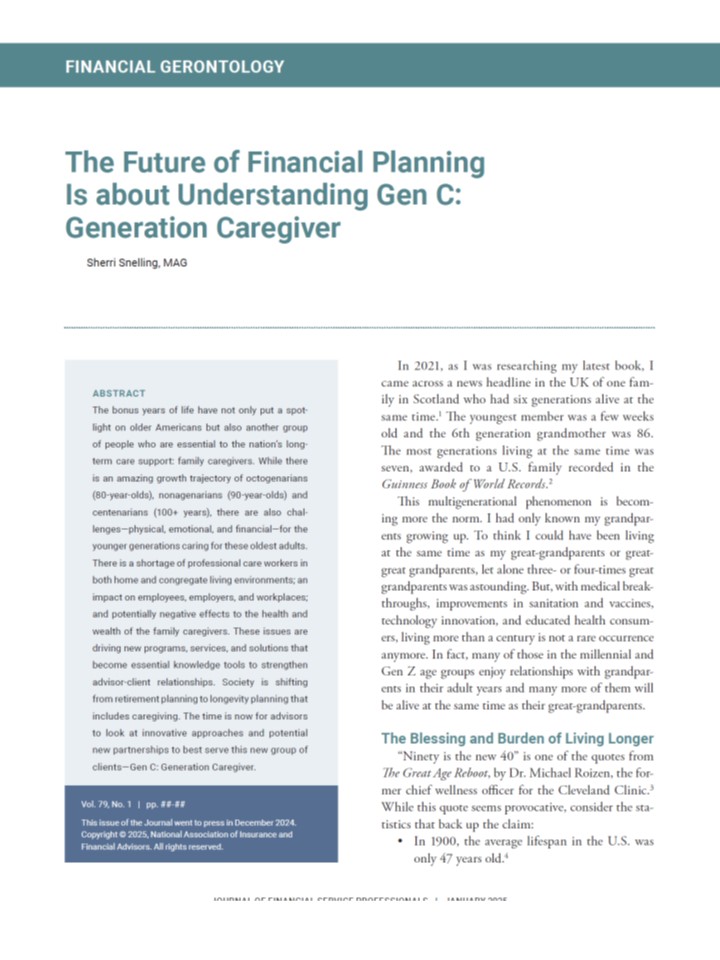
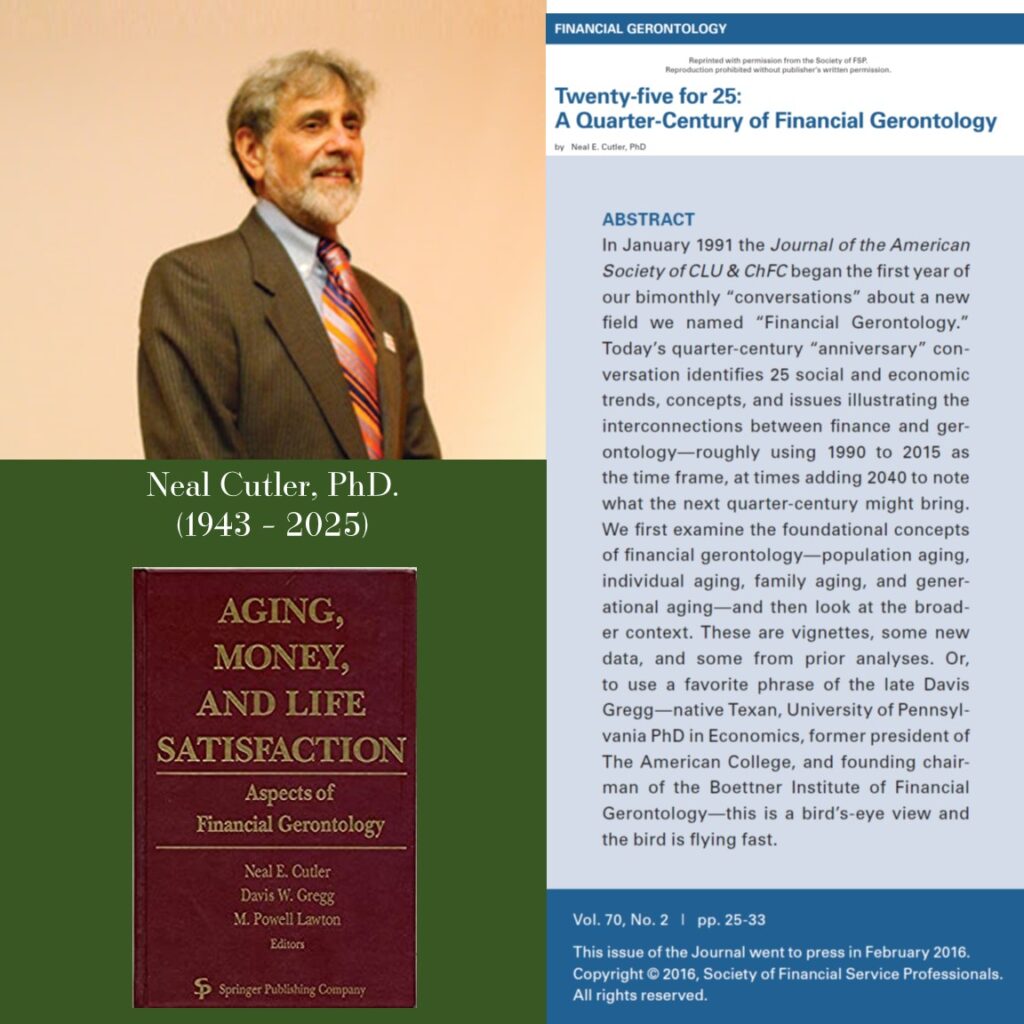
In late 2024, a pivotal collaboration was formed when the late Dr. Neal Cutler, a renowned academic mentor to Snelling at the University of Southern California (USC), invited her to join his team of contributors for the Journal of Financial Service Professionals. This partnership was the culmination of years of professional synergy; Snelling and Cutler had previously collaborated on projects for the Motion Picture & Television Fund, focusing on the intersection of human longevity and financial planning.
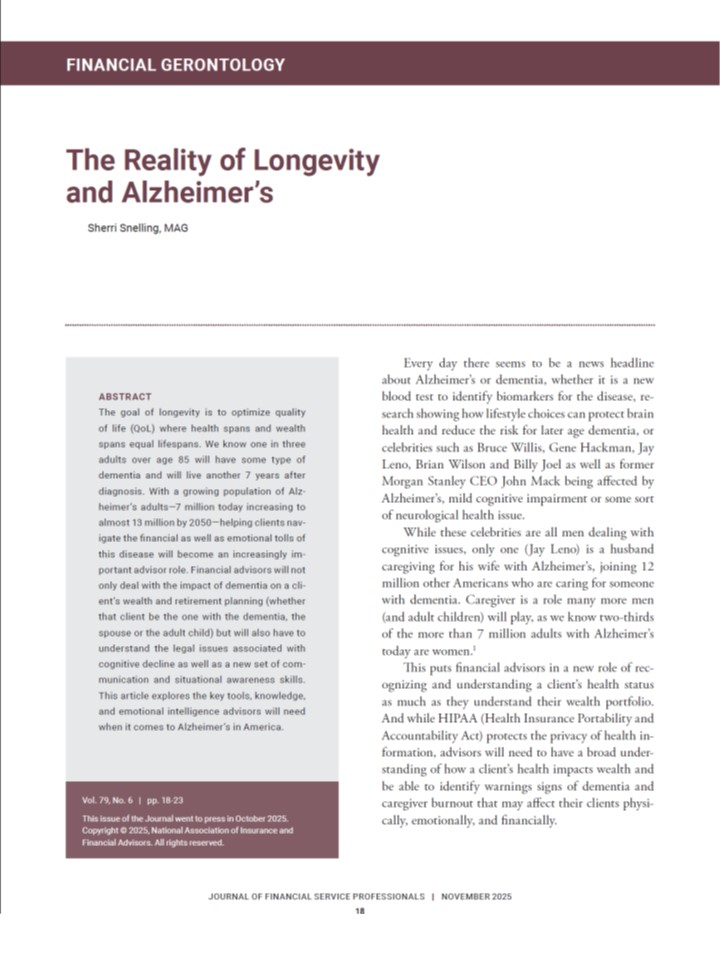
Following Dr. Cutler’s passing in early 2026, his legacy continues to influence the field. His work, which emphasized the importance of the "four lenses of aging"—population, individual, family, and generational—remains the gold standard for financial professionals. Snelling’s ongoing contributions to the Journal serve as a testament to this mentorship, covering critical topics such as the financial realities of Alzheimer’s disease, the evolving nature of home-buying for multi-generational households, and the future of financial planning in an era of extended longevity.
Supporting Data: The Cost of Caregiving
The financial burden on Gen C is quantifiable and staggering. Data from recent surveys, including the AARP Caregiving Out-of-Pocket Costs study, reveals that caregivers spend significant portions of their annual income on care-related expenses. These costs are exacerbated by:
- The Longevity Gap: As life expectancy increases, the "wealthspan"—the ability to maintain financial resources over a longer lifespan—is being severely tested.
- Healthcare Volatility: The costs associated with specialized memory care and chronic condition management often outpace traditional inflation.
- The "Hidden" Tax of Caregiving: Caregivers often experience a decline in their own career trajectory, leading to reduced lifetime earnings and diminished Social Security contributions.
These factors form a "perfect storm" that necessitates a new approach to financial literacy—one that goes beyond basic budgeting and enters the realm of complex geriatric life-planning.
Defining Financial Gerontology: An Official Perspective
To understand why traditional financial planning is often insufficient for caregivers, one must understand the definition and scope of financial gerontology.
What is Financial Gerontology?
Financial gerontology is a multidisciplinary field that integrates academic research on lifespan aging and human development with the practicalities of finance and business. It utilizes the BioPsychoSocial model—examining the intersection of biology, psychology, and sociology—to review a client’s lifespan, healthspan, and wealthspan.

Why Does It Matter for Families?
Families today face a fragmented system of long-term care and end-of-life planning. A generalist financial advisor may be well-versed in market trends, but a financial gerontologist is trained to understand the specific, non-linear needs of the aging population. They understand that "retirement" is no longer a simple exit from the workforce at 65, but a long, often expensive transition that requires fluid, adaptive strategies.
Implications for the Future of Financial Planning
As the population ages, the financial services industry is undergoing a paradigm shift. There is an increasing demand for advisors who can provide guidance on longevity risks.
The Rise of Certification
While a universal, standardized degree in financial gerontology is still an emerging concept, academic institutions like the USC Leonard Davis School of Gerontology are leading the charge. Programs are being developed to bridge the gap between financial services and gerontology, with major institutions like Bank of America already partnering with universities to provide specialized training to their employees.
Hiring for Longevity
Corporate America is also responding. The rise of the "Chief Gerontology Officer" or "Chief Longevity Officer" within large firms signals a move toward valuing expertise in generational aging. These roles are essential for companies that wish to support their aging workforce and the millions of employees currently acting as caregivers.

Expert Strategies for Caregiver Resiliency
For those currently in the "Sandwich Generation," Snelling recommends several actionable steps to foster financial wellness:
- Build Your "Joyconomy": As discussed in Me Time Monday, financial wellness is not just about austerity; it is about allocating resources toward activities that bring joy and reduce the stress of the caregiving journey.
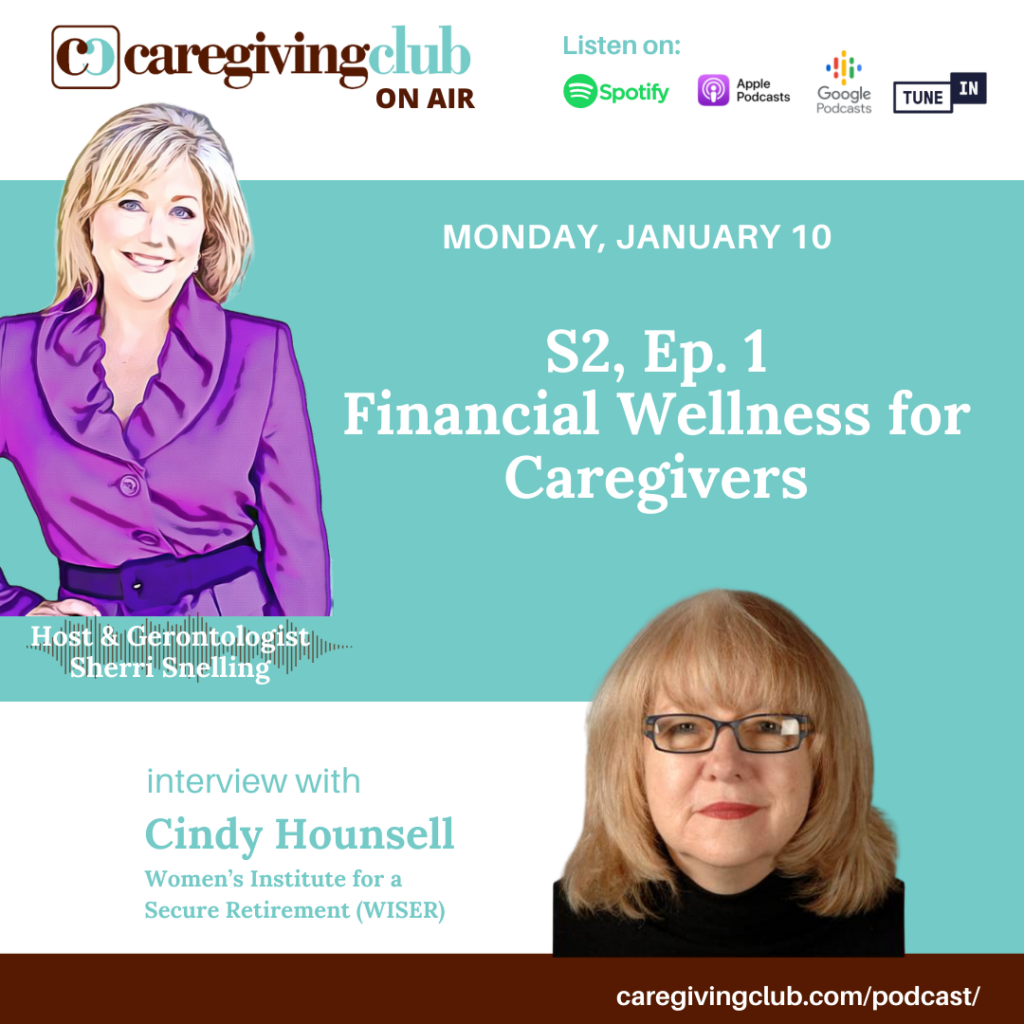
- Leverage Specialized Podcasts and White Papers: Resources such as the Caregiving Club On Air podcast and the Wells Fargo First Clearing Financial Gerontology project provide deep dives into how to navigate these challenges.
- Seek Credentials Over Salesmanship: When interviewing a financial advisor, ask specifically about their training in longevity planning. Ensure they are not merely selling products but are prepared to discuss the complexities of long-term care insurance, Medicaid planning, and family dynamics.
Conclusion
The financial well-being of the Sandwich Generation is a societal issue that requires a more sophisticated, compassionate, and informed approach. By embracing the principles of financial gerontology, caregivers can move from a state of crisis management to a state of proactive resilience. As Sherri Snelling emphasizes, the goal is to plan for the "long-term care" of the entire family unit—ensuring that the act of caring for a loved one does not come at the cost of one’s own future financial independence.

Whether through educating oneself via journals and expert podcasts, or by seeking out a credentialed financial gerontologist, the path forward is clear: planning is the most powerful tool in the caregiver’s arsenal. In the face of an aging population, the ability to integrate our financial lives with the reality of our aging process is not just a benefit—it is a necessity.
References
- Brown, M. (2026). Sandwich generation caregiver report: Navigating the mental overload of caring for kids and aging parents. Care.com.
- CareScout and Genworth (2026). Cost of Care Survey.
- Carstensen, L., et al. (2018). The sightlines special report: Seeing our way to financial security in the age of increased longevity. Stanford Center on Longevity.
- O’Hara, C. (2015). How much money do I need to retire? AARP Magazine.
- Skufca, L. & Rainville, C. (2021). Caregiving out-of-pocket costs study. AARP.
- Snelling, S. (2026). Me Time Monday: 7 Wellness Elements for Caregivers.