






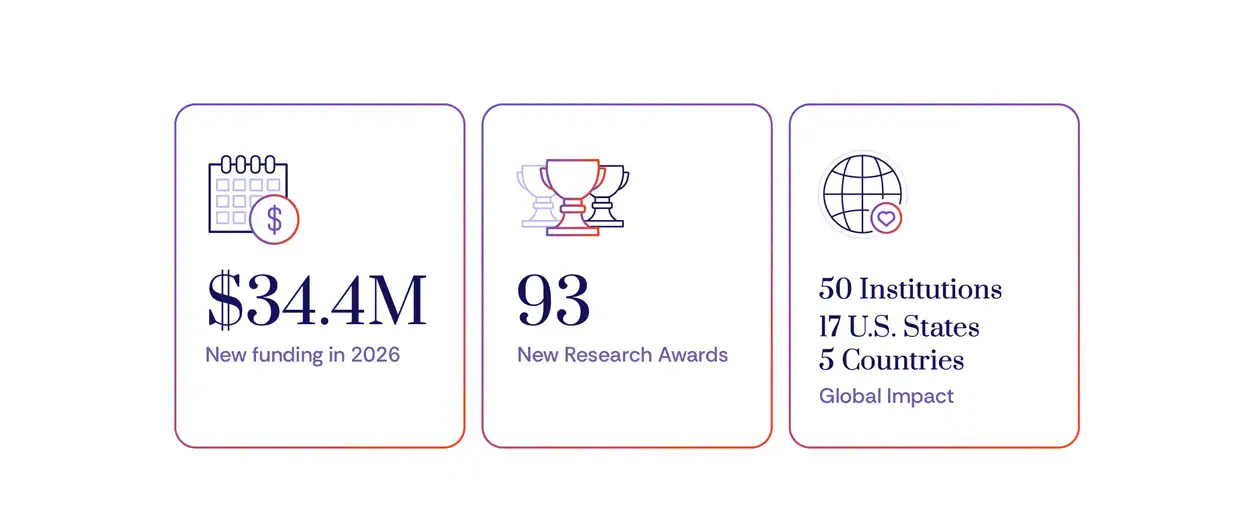
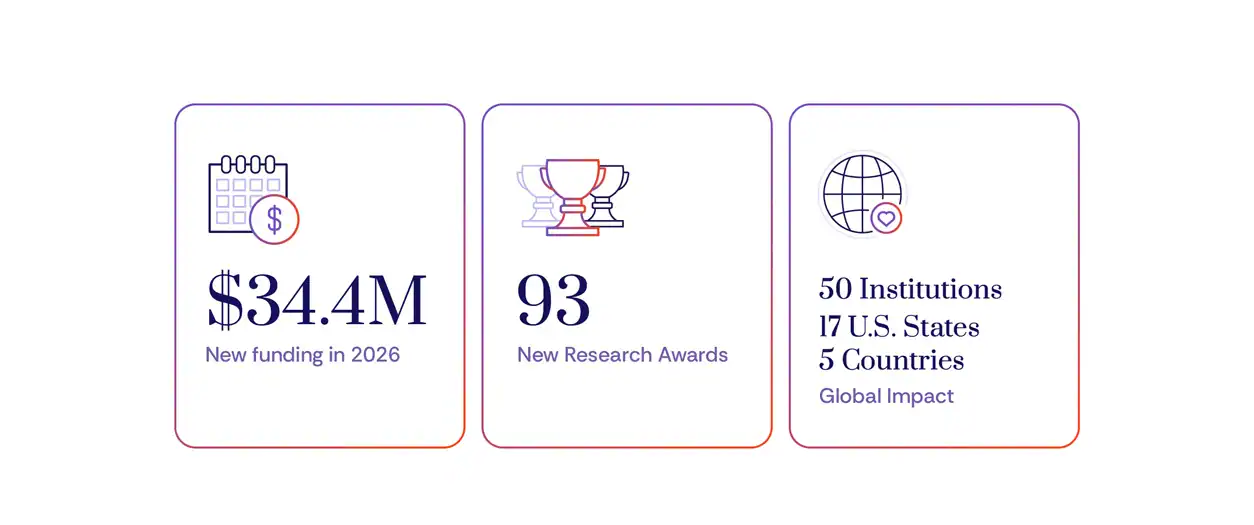
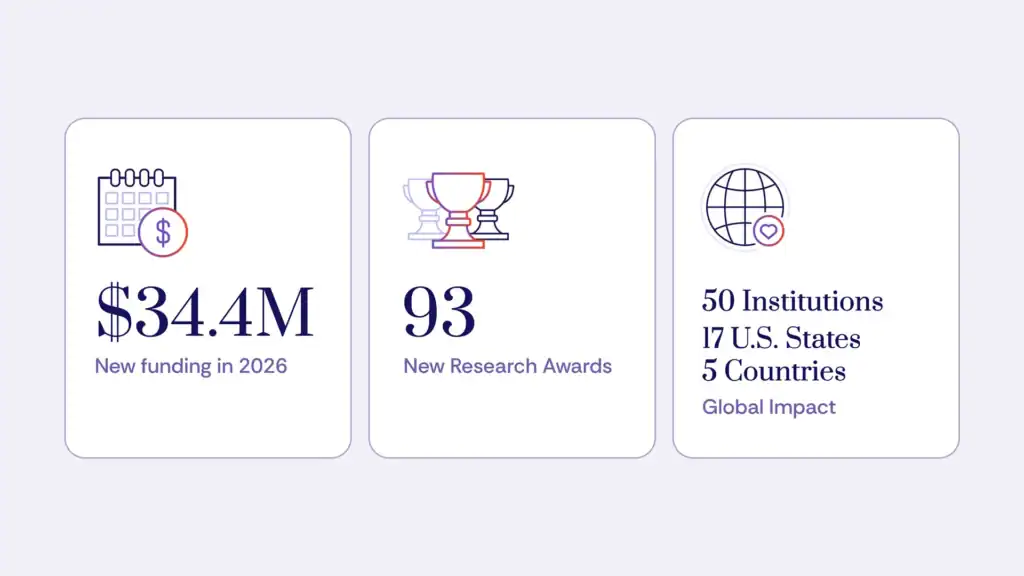
In an era defined by fiscal volatility and shrinking public research budgets, the Cancer Research Institute (CRI) has taken a defiant stance. While many organizations have retracted, CRI has accelerated, marking its 2025–2026 fiscal year with a record-breaking investment in the future of medical science. By committing $34.4 million to 93 distinct awards, the institute is not merely funding research; it is actively stabilizing the career trajectories of the world’s most promising scientists during the most precarious stages of their professional lives.
Main Facts: A Record-Setting Year for Innovation
The numbers behind CRI’s latest fiscal report are historic. With $34.4 million distributed across 50 institutions in five countries and 17 states, the institute has solidified its position as a global pillar of cancer immunology. However, for CRI leadership, these figures are secondary to the human capital they represent.
The core of this year’s mission has been the mitigation of risk. As traditional funding streams have tightened, the "valley of death"—the period between postdoctoral training and the establishment of a fully funded, independent laboratory—has become increasingly treacherous for young investigators. CRI’s strategy has been to fill this vacuum, providing not just capital, but the institutional confidence required to pursue high-stakes, high-reward inquiries that might otherwise be abandoned for safer, more incremental research.
Chronology of Commitment: Seven Decades of Persistence
To understand the weight of the 2026 initiatives, one must look at the organization’s seven-decade history. Since its founding, CRI has operated on the philosophy that the most transformative breakthroughs often arrive when researchers are given the "freedom to follow the science."
- 1950s–1980s: Establishing the foundational understanding of the immune system’s role in recognizing and attacking cancer cells.
- 1990s–2010s: Championing early-stage clinical trials for checkpoint inhibitors, a field that was once dismissed by mainstream oncology but has since become a standard of care.
- 2020–2024: Navigating the complexities of post-pandemic research environments, where supply chain issues and staffing shortages threatened to derail ongoing clinical trials.
- 2025–2026: The launch of the IGNITE Award and the largest grantmaking year in CRI history, responding directly to the current funding crisis in academia.
This longitudinal approach is deliberate. CRI does not view its grants as transactional; they are developmental. By maintaining a pipeline of support—from fellowships for young PhDs to the Lloyd J. Old STAR Awards for established, high-impact investigators—the institute ensures that a researcher’s potential is never stifled by a temporary lack of resources.
Supporting Data: The IGNITE Award and the Bridge to Independence
The centerpiece of this year’s strategy is the IGNITE Award (Inspiring Growth and Nurturing Independence Through Excellence). The data regarding early-career attrition in academia is stark: many brilliant minds leave the field of cancer research simply because they cannot secure the "proof of concept" funding needed to compete for major federal grants.
IGNITE is engineered to solve this. By providing targeted funding during the transition from postdoc to Principal Investigator (PI), CRI is essentially "de-risking" the career of the researcher.
- Target Demographic: Early-career scientists moving into independent faculty roles.
- Objective: Funding original, high-risk, high-impact programs that lack sufficient preliminary data for traditional government grant applications.
- Expected Outcome: Increased institutional stability for young labs and a faster pace of discovery in novel immunotherapy sub-fields.
Case Study: Dr. Simone Park and the Future of Memory T Cells
The efficacy of the CRI model is best personified by Dr. Simone Park of the University of Pennsylvania. A former CRI postdoctoral fellow, Dr. Park is an inaugural recipient of the IGNITE Award. Her work represents the cutting edge of immunotherapy: the study of "tissue-resident memory T cells."
These specialized immune cells act as the body’s "sentinels," remaining in specific tissues long after an infection or tumor has been cleared. Dr. Park’s research is focused on a fundamental biological question: What allows these cells to persist, and how can we manipulate them to provide lifelong surveillance against cancer recurrence?
"The transition to independence is the most vulnerable moment for a scientist," says Dr. Park. "Without the IGNITE Award, the experimental work required to understand the durability of these T cells might have been sidelined for more conventional, shorter-term projects. CRI is allowing me to pursue the questions that actually matter for long-term patient survival."
Her career trajectory illustrates the "continuum of support" that CRI prides itself on. By backing her during her fellowship and again during her transition to independence, the institute has ensured that Dr. Park can focus on high-impact science rather than the constant, exhausting search for short-term administrative survival.
Official Responses and Strategic Implications
The implications of this record-breaking investment reach far beyond the laboratory bench. CRI’s board and scientific advisory committees have emphasized that the current environment requires a shift from "passive funding" to "active ecosystem building."
"Our role is not just to write checks," explains a spokesperson for the institute. "It is to build a robust infrastructure for discovery. This includes clinical study management, data-sharing initiatives, and computational training. When we equip a scientist with new data-analytics skills, we aren’t just helping them finish one project—we are upgrading their capacity to solve problems for the rest of their career."
This holistic approach acknowledges that cancer research is no longer a solitary endeavor. It is a data-heavy, collaborative, and increasingly complex discipline that requires a synthesis of biology, computational science, and clinical expertise.
The Road Ahead: Why Progress Requires Resilience
The 2026 Annual Impact Report is more than a summary of spending; it is a declaration of intent. While global economic uncertainty creates a shifting landscape for scientific advancement, the fundamental requirements for progress remain unchanged: an abundance of exceptional talent, the courage to pursue bold ideas, and the sustained support to connect the two.

As CRI looks toward the next decade, the message is clear: the institute is prepared to absorb the risk that other institutions—and government bodies—are increasingly unwilling to bear. Whether it is through the development of next-generation CAR-T therapies, the exploration of the tumor microenvironment, or the empowerment of the next generation of scientific leaders, CRI maintains that there is "extraordinary work still ahead."
The 93 awards granted this year are just the beginning of a broader, long-term strategy to translate increasingly complex cancer biology into actionable, life-saving treatments. In the face of uncertainty, the Cancer Research Institute has opted for growth, proving that when the stakes are at their highest, the investment in human potential is the most reliable path to a cure.
For more information on the 2026 Annual Impact Report and to learn more about the IGNITE Award program, please visit the Cancer Research Institute’s official digital portal.