








Every July, the global disability community observes Disability Pride Month, a commemorative period that serves as both a celebration of human diversity and a call to political action. More than just a month on the calendar, Disability Pride is a radical re-framing of the disability experience—a deliberate pushback against the historical stigma and shame that have long marginalized disabled individuals. As we navigate the complexities of modern society, the theme for this year’s observance, "The World Works Better With Us," serves as a poignant reminder that true progress is impossible without the inclusion and empowerment of the disabled community.
The Foundation of a Movement: From Activism to the ADA
Disability Pride Month is anchored in the anniversary of the Americans with Disabilities Act (ADA), signed into law on July 26, 1990. However, the ADA did not emerge in a vacuum; it was the hard-won result of decades of protest, litigation, and personal sacrifice by activists who refused to remain invisible.
The legislative milestone prohibited discrimination against disabled people in employment, public accommodations, transportation, and government services. Yet, the history of this movement is often omitted from mainstream education. From the Independent Living Movement of the 1970s—led by pioneers like Ed Roberts, who challenged the institutionalization of disabled people—to the monumental 1977 "Section 504" sit-ins, where activists occupied federal buildings for 28 days to demand civil rights enforcement, the journey has been long.
Perhaps the most visceral moment in this chronology is the 1990 "Capitol Crawl." As activists pushed for the passage of the ADA, dozens of individuals abandoned their wheelchairs and mobility aids to physically pull themselves up the 83 marble steps of the U.S. Capitol. This act of defiance, captured on national television, underscored the physical barriers the community faced and the sheer tenacity required to overcome them.
The "Curb Cut Effect": Why the World Works Better With Us
The theme The World Works Better With Us is not merely a slogan; it is an economic and social reality. When societies design for the most marginalized, the benefits cascade to the entire population. This phenomenon, known as the "Curb Cut Effect," illustrates how infrastructure designed for disabled people—such as sloped sidewalks—becomes indispensable for parents with strollers, delivery workers, and travelers.
Similarly, closed captioning, originally created for the Deaf and hard-of-hearing community, is now a standard tool for millions in noisy environments or for those learning new languages. When we remove barriers to access, we do not just aid a specific group; we foster innovation and improve the functionality of the world for everyone. Disability is not a tragedy to be "fixed"; it is a natural, essential part of the human condition. With 1 in 4 adults in the U.S. currently living with a disability, the CDC notes that most people will experience some form of disability in their lifetime. Ignoring this reality is a failure of policy, infrastructure, and community.
Symbolism and Meaning: The Disability Pride Flag
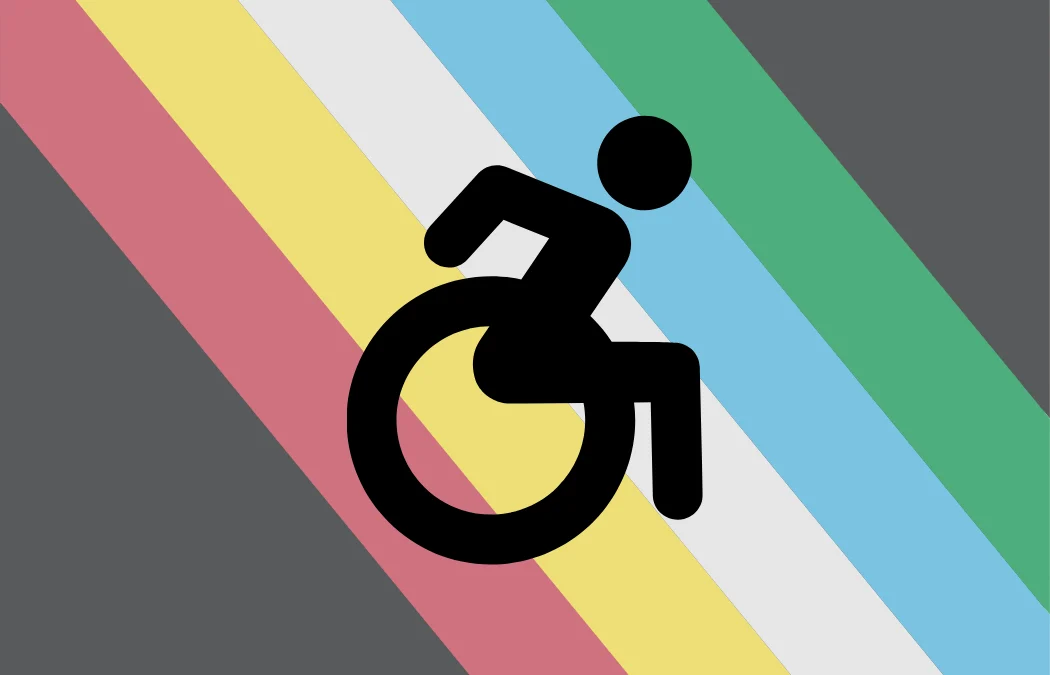
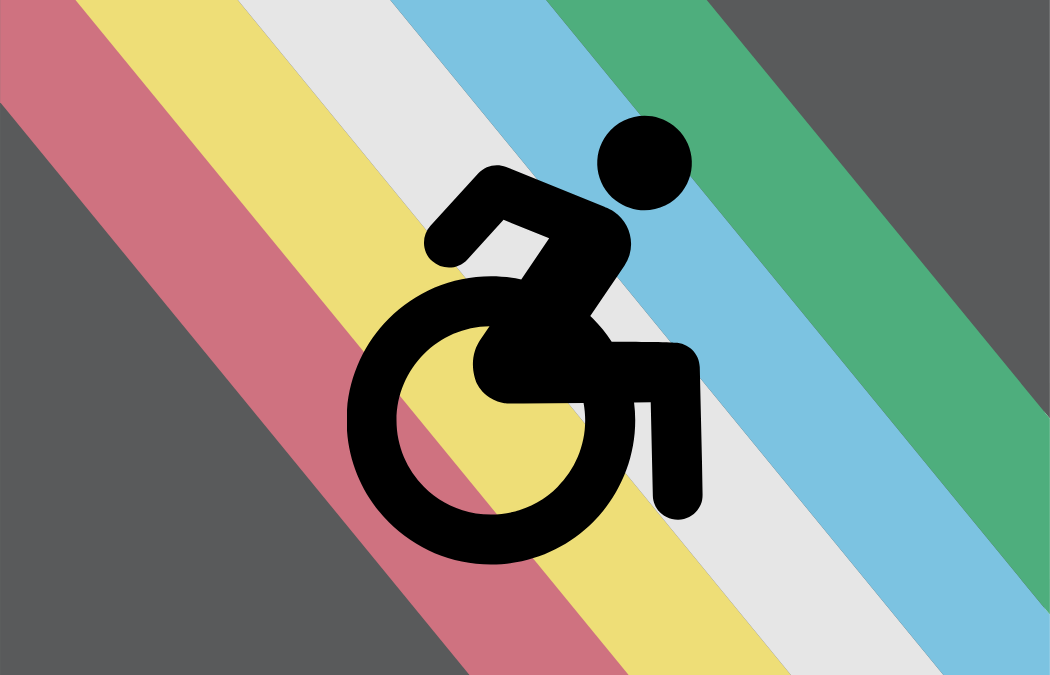
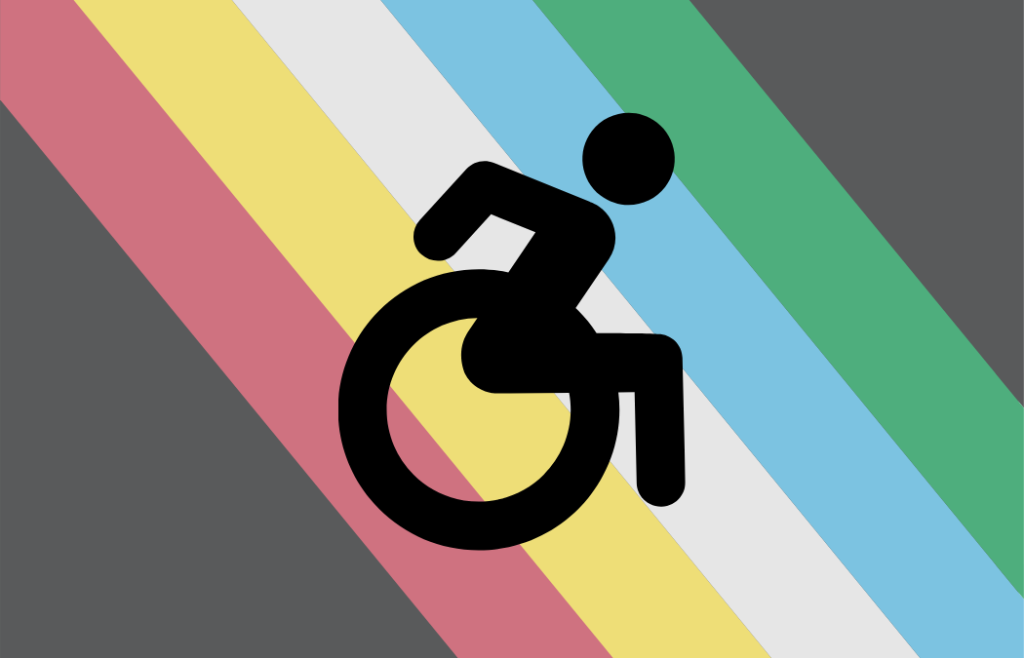
Central to this year’s visual narrative is the Disability Pride Flag, redesigned by Ann Magill to be more accessible. The flag features five diagonal stripes—red, gold, white, blue, and green—set against a charcoal-gray background.
- Red: Physical disabilities.
- Gold: Neurodiversity.
- White: Invisible and undiagnosed disabilities.
- Blue: Emotional and psychiatric disabilities.
- Green: Sensory disabilities.
The dark background serves as a solemn tribute to those lost to violence, neglect, and systemic ableism, while the diagonal stripes represent the community "cutting across" societal barriers. The shift from zig-zag to straight diagonal lines was a deliberate move to improve visual accessibility, ensuring the flag itself reflects the movement’s commitment to inclusive design.
Beyond Rights: The Evolution of Disability Justice
While the early movement focused heavily on legal protections, the modern era has seen the rise of "Disability Justice," a framework pioneered by BIPOC activists. The Disability Justice movement, championed by groups like Sins Invalid, recognizes that ableism is inextricably linked to racism, poverty, and other systems of oppression.
Founders Patricia Berne and Leroy Moore, among others, articulated the 10 Principles of Disability Justice, which center intersectionality. This shift is critical because it acknowledges that the experience of disability is not monolithic; it is shaped by where one lives, their economic status, and their racial or ethnic background. By broadening the scope of the conversation, the movement ensures that the most vulnerable—those often left behind by "mainstream" advocacy—are placed at the center of the policy-making table.
Current Implications: A Fragile Progress
Despite the monumental progress made since 1990, the disability community currently faces significant headwinds. Recent discourse surrounding the role of federal agencies and the potential rollback of protections for community-based living services highlights the fragility of civil rights.
The threats are multi-faceted:
- Institutionalization: Attempts to weaken the Olmstead decision, which protects the right of disabled people to live in their own communities rather than in institutions.
- Resource Access: Ongoing challenges in securing necessary medical supplies, care, and home-based benefits.
- Education: Struggles to maintain essential accommodations within the public school system.
These are not abstract legal debates; they are issues that determine whether a person can live with dignity and independence. The "Pride" in Disability Pride Month is therefore a political act of survival.
Addressing the "Pride" in Disability Pride
"Pride" can be a loaded term, particularly for those who have spent years navigating grief, frustration, and the exhaustion of fighting for basic accommodations. However, the movement frames pride as an antidote to shame. Shame is the tool that keeps the community isolated, quiet, and small.
By embracing pride, disabled individuals assert that their existence has value and that the barriers they face are not personal failures, but systemic ones. This shift in mindset is the catalyst for the next generation of activists. It is a declaration that the community is not "asking for a favor," but rather demanding the equitable access that is a fundamental human right.
How to Engage and Support
Celebrating Disability Pride is a continuous process that extends far beyond the month of July. Whether you are a member of the disability community, a caregiver, or an ally, there are concrete ways to contribute to this mission:
- Educate Yourself: Learn about the history of the movement, the 10 Principles of Disability Justice, and the specific legislative threats currently facing the community.
- Prioritize Accessibility: Advocate for inclusive spaces in your workplace, school, and local government. Do not wait for a formal request to make an environment accessible.
- Amplify Disabled Voices: Follow, support, and promote disabled creators, authors, and activists. Ensure their stories are the ones leading the conversation.
- Practice Community Care: Recognize that independence is a myth; interdependence is the reality of a healthy society. Support programs that provide community-based care and resist efforts to return to institutional models.
Conclusion: A Future Built Together
As we mark Disability Pride Month in 2026, we do so with a clear understanding: the world is not "working" if it is only working for some. The history of the disability movement is a testament to the fact that when we clear the path for the most marginalized, we create a more efficient, equitable, and innovative world for everyone.
The struggle continues, but the pride remains. The disability community is not just a part of the world—it is the catalyst for a better one. By centering our voices, respecting our autonomy, and investing in our inclusion, we move closer to a society that truly functions for all of humanity. As we move forward, let us remember the lesson of the 83 marble steps: barriers exist to be dismantled, and when we move together, there is no obstacle we cannot overcome.