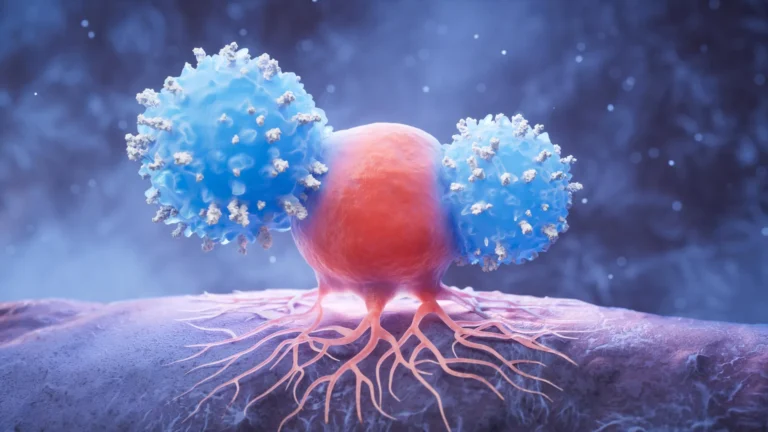









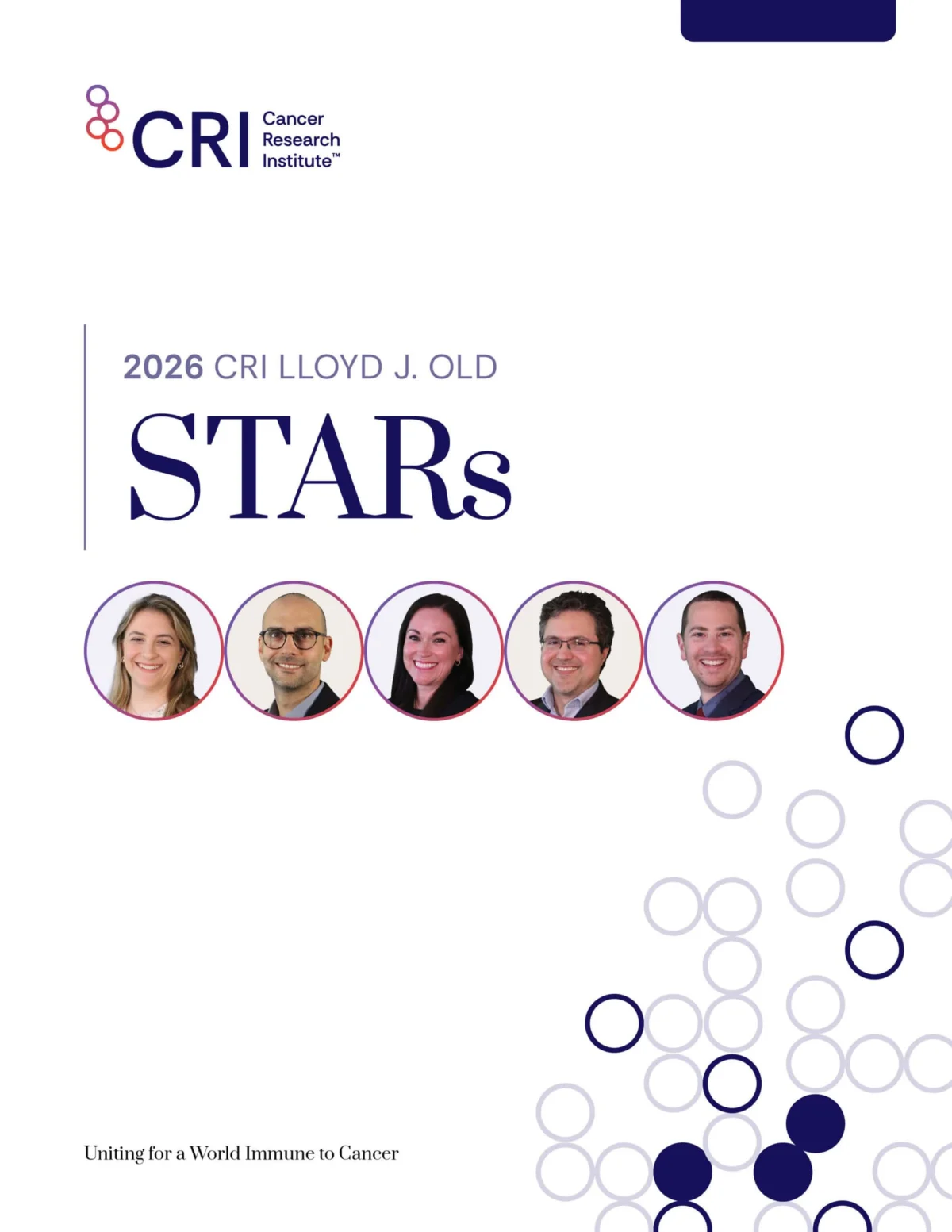
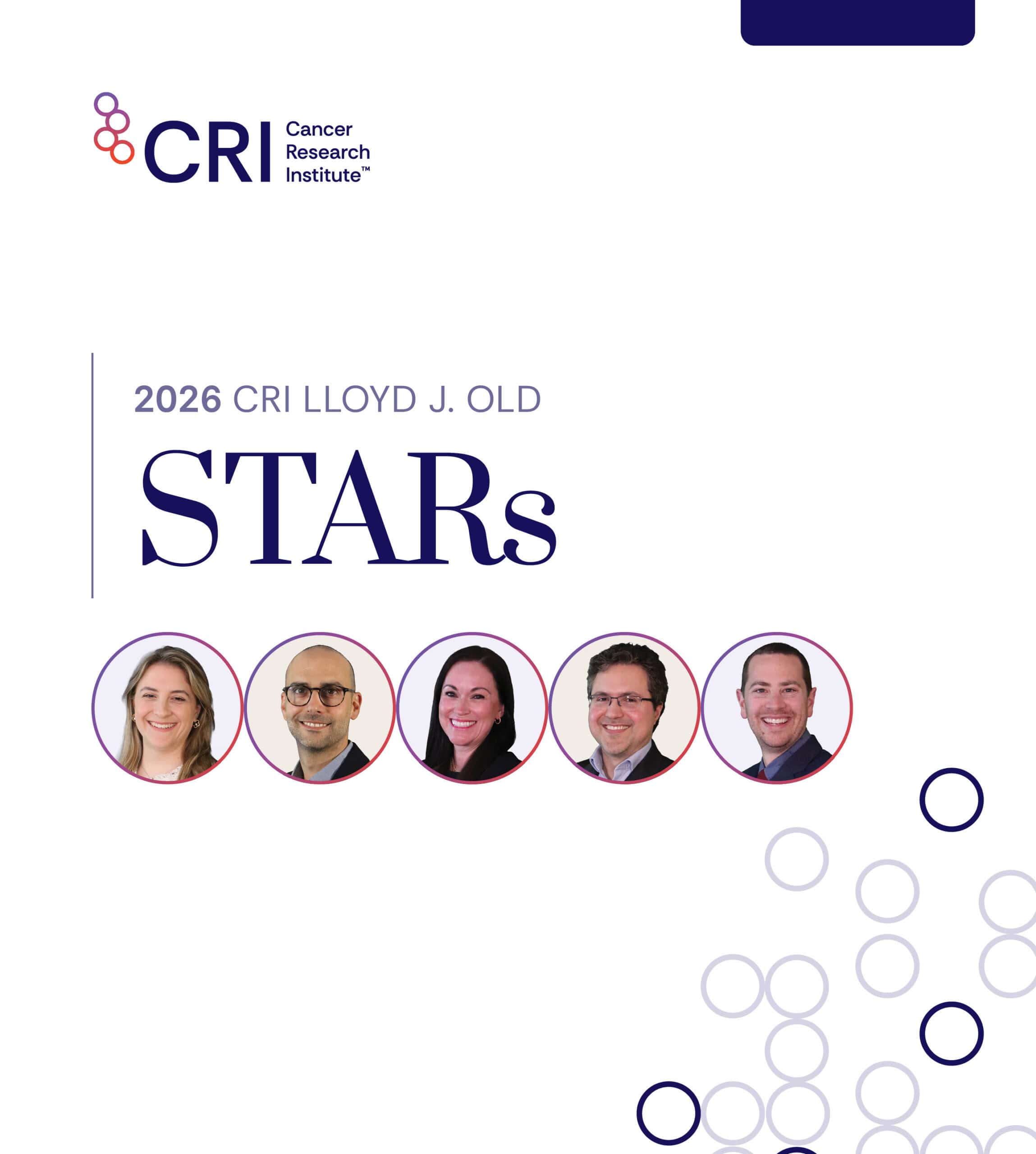
The landscape of cancer treatment is undergoing a seismic shift, moving away from broad-spectrum interventions toward precision-engineered, immune-based therapies. Standing at the vanguard of this transformation is the Cancer Research Institute (CRI), which recently unveiled its 2026 class of Lloyd J. Old STARs—Scientists TAking Risks. This cohort of five visionary researchers represents the future of oncology, each selected for their capacity to challenge existing paradigms and pursue the "high-risk, high-reward" inquiries that traditional grant mechanisms often overlook.
With a commitment of $1.25 million per researcher over a five-year term, the CRI is providing more than just capital; it is providing the intellectual freedom necessary to pursue radical innovation. By untethering these scientists from the rigid constraints of project-specific funding, the CRI is placing a strategic bet on individual talent, fostering an environment where bold ideas can evolve into clinical breakthroughs.
The Genesis of the STAR Program: Honoring a Legacy of Innovation
To understand the weight of the 2026 awards, one must look at the legacy of Lloyd J. Old, MD, a pioneer often referred to as the "Father of Cancer Immunology." Dr. Old’s career was defined by his relentless pursuit of the fundamental mechanisms of how the immune system recognizes and destroys cancer. He championed the idea that the immune system, if properly guided, could be the most effective weapon in the oncological arsenal.
The Lloyd J. Old STAR program was established to perpetuate this spirit of intellectual courage. Unlike conventional research grants that require a pre-defined set of deliverables, the STAR award is fundamentally "people-centric." The CRI operates on the premise that when you empower the most creative minds in the field, the outcomes—while unpredictable—are far more likely to yield paradigm-shifting results.
This approach is rooted in a decades-long track record of success. The CRI has historically supported researchers who were initially viewed as outsiders or "contrarians" but who later went on to receive Nobel Prizes and lead the development of current checkpoint blockade therapies. The 2026 class continues this tradition, acting as a catalyst for the next generation of immunotherapy breakthroughs.
Chronology: The Evolution of Immunotherapy Support
The trajectory of the Lloyd J. Old STAR program reflects the broader evolution of the field of cancer immunotherapy.
- 1953–1970s (The Foundation): Under the guidance of Dr. Lloyd J. Old, the initial seeds of cancer immunology were sown, despite significant skepticism from the broader scientific community.
- 1990s–2000s (The Clinical Proof): The field began to transition from theory to clinical trial, supported by CRI’s early-stage investments in monoclonal antibodies and T-cell research.
- 2010–2020 (The Golden Age): With the success of PD-1 and CTLA-4 inhibitors, immunotherapy moved to the forefront of cancer care, and the need for high-level, flexible funding for mid-career investigators became clear.
- 2026 (The Current Frontier): The launch of the 2026 STAR cohort signifies a shift toward complex, multi-modal research. These scientists are not just studying immune cells; they are studying the tumor microenvironment, metabolic reprogramming, and the intersection of artificial intelligence with cellular therapy.
Supporting Data: Why "Flexible Funding" Matters
In the current academic and clinical research environment, "The Valley of Death"—the gap between foundational discovery and clinical application—remains a significant hurdle. Traditional funding bodies, such as the National Institutes of Health (NIH), often require extensive preliminary data before awarding large grants. This creates a bias toward conservative research.
The CRI’s STAR program acts as a counter-weight to this systemic risk aversion. By providing $1.25 million in flexible funding, the CRI empowers researchers to:
- Pivot rapidly: If a hypothesis proves incorrect, the researcher can redirect resources immediately without waiting for a new grant cycle.
- Invest in "Blue Sky" technology: The funds can be used for novel sequencing technologies, advanced imaging, or hiring high-level interdisciplinary staff that might not fit into a standard grant budget.
- Cross-pollinate: The flexible nature of the grant allows researchers to build collaborations across fields, such as bringing computational biologists into immunology labs.
The internal metrics of the CRI suggest that this model of investment leads to a higher rate of high-impact publications and, more importantly, a faster transition of laboratory discoveries into the clinical trial pipeline.
Voices from the Leadership: Why Now?
The selection of the 2026 class was a rigorous, multi-stage process overseen by the CRI’s Scientific Advisory Council. The goal was to identify investigators who have reached a critical inflection point in their careers.
"These are people who are hitting their stride scientifically and career-wise, and this is where you really want to put some jet fuel in the tank," remarked E. John Wherry, PhD, Associate Director of the CRI’s Scientific Advisory Council. Dr. Wherry’s assessment captures the essence of the STAR philosophy: it is about identifying potential energy and providing the kinetic force necessary for acceleration.
Elizabeth Jaffee, MD, also an Associate Director at the CRI, echoes this sentiment, focusing on the future leadership of the field. "We’re picking people who are really our next leaders in the field of immunotherapy," she stated. "These individuals are not just answering questions; they are asking the right questions that will define the next twenty years of cancer treatment."
For the awardees, the STAR designation serves as both a validation of their past contributions and an obligation to continue the pursuit of high-stakes science. It provides them with the professional capital to take risks that would otherwise be deemed too speculative for traditional funding.
Implications for the Future of Oncology
The 2026 Lloyd J. Old STARs are entering a field that is vastly different from the one their predecessors entered. Today, the focus has shifted from "can we turn on the immune system" to "how can we control it, sustain it, and personalize it."
The Multi-Modal Future
The researchers supported by this class are expected to push into three primary, transformative areas:
- Tumor Microenvironment (TME) Engineering: Moving beyond T-cell infiltration, these scientists are investigating how to physically and chemically re-engineer the tumor environment to make it hospitable for immune cells.
- Metabolic Immunotherapy: Understanding how cancer cells "starve" immune cells and developing methods to revitalize T-cell metabolism within the tumor.
- Synthetic Biology: Developing "off-the-shelf" CAR-T therapies and engineered immune cells that are resistant to the inhibitory signals typically sent by tumors.
Patient Outcomes
Ultimately, the goal of the STAR program is the clinical bedside. While these grants support basic and translational research, the ripple effect is clear: higher success rates in early-phase clinical trials. As these five scientists explore their projects, the expectation is that they will identify new biomarkers for patient stratification, uncover novel therapeutic targets, and refine current protocols to reduce toxicity—all of which lead to improved survival rates and better quality of life for cancer patients globally.
Conclusion: A Call to Fearless Discovery
The 2026 class of Lloyd J. Old STARs stands as a testament to the belief that the greatest scientific breakthroughs are rarely the result of incremental progress. Instead, they arise from moments of intuition, the willingness to embrace failure, and the resources to pursue unconventional paths.
By investing $6.25 million into this cohort, the Cancer Research Institute is making a clear statement about the importance of scientific autonomy. In an era where cancer remains one of the most formidable challenges to human health, the STAR program provides a beacon of optimism. These five scientists are the architects of the future, and their work will, undoubtedly, reshape our understanding of what is possible in the fight against cancer.
As they embark on their five-year journey, the medical community will be watching with anticipation. The questions they answer will likely dictate the next wave of therapeutic protocols, and in doing so, bring us one step closer to a world where cancer is not merely managed, but effectively controlled or cured. The CRI’s investment is, in every sense of the word, an investment in humanity’s future.