



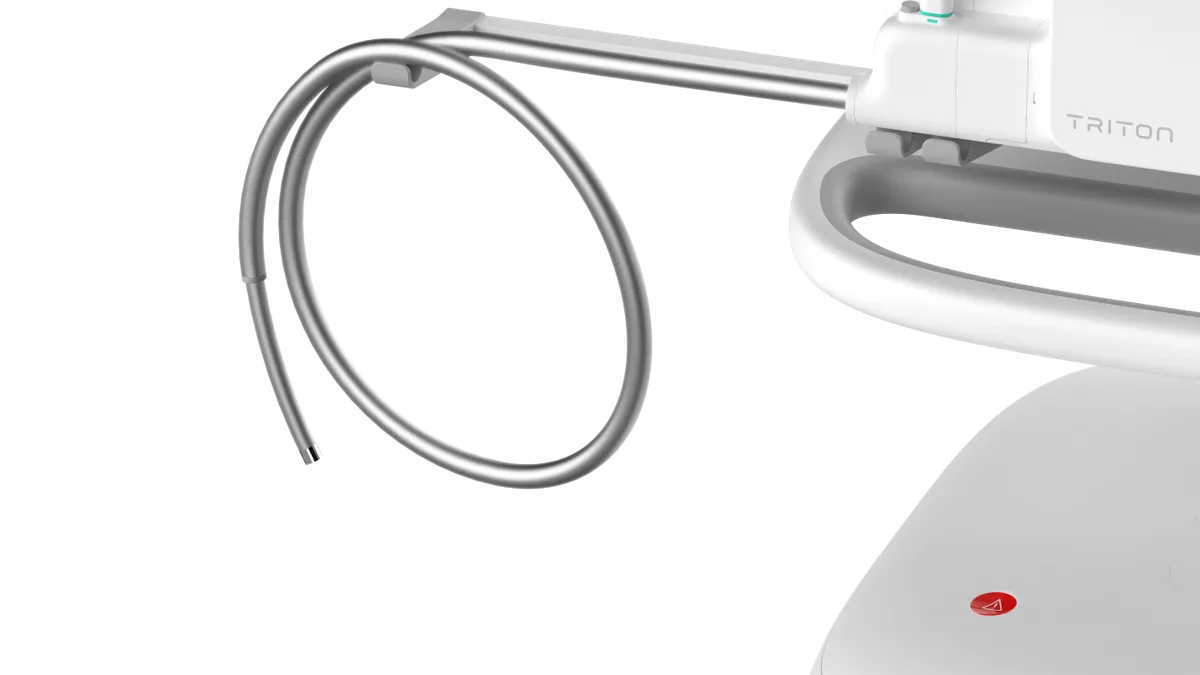
In a significant milestone for gastroenterology and robotic-assisted surgery, Neptune Medical has announced that its innovative Triton robotic system has received 510(k) clearance from the U.S. Food and Drug Administration (FDA). This development marks a shift in how clinicians approach one of the most critical preventive screenings in modern medicine: the colonoscopy. By offering physicians enhanced control and stability during the navigation of the gastrointestinal (GI) tract, the Triton system aims to improve the detection and removal of precancerous lesions, addressing a growing public health crisis involving early-onset colorectal cancer.
The Rising Urgency: Colorectal Cancer in Younger Populations
The timing of the Triton platform’s approval is underscored by a sobering trend in oncology. Research from the American Cancer Society (ACS) has identified colorectal cancer as the leading cause of cancer-related mortality among adults under the age of 50. This epidemiological shift has forced a reevaluation of screening protocols and the tools available to gastroenterologists.
While the ACS has expanded its guidelines to include non-invasive options—such as at-home stool-based tests from manufacturers like Exact Sciences and Geneoscopy, as well as blood-based diagnostics like Guardant Health’s Shield—the colonoscopy remains the undisputed "gold standard." Unlike diagnostic tests that merely indicate the presence of potential biomarkers, a colonoscopy is both a diagnostic and a therapeutic procedure. It allows the physician to identify adenomas and excise them in a single session, effectively preventing the development of malignancy. However, the efficacy of this "gold standard" is entirely dependent on the physician’s ability to navigate the colon effectively.
Understanding the Triton Robotic System
At its core, the Triton robot is designed to mitigate the inherent technical challenges of manual endoscope navigation. During a standard colonoscopy, maintaining endoscope stability is a constant struggle. Loops in the colon, patient anatomy, and the physical limitations of manual insertion can lead to "blind spots" or incomplete visualization of the colon wall.
Neptune Medical’s engineers developed the Triton to provide endoscopists with a higher degree of control. By stabilizing the scope, the system reduces the likelihood of missed adenomas—the pre-cancerous lesions that, if left undetected, can develop into invasive colorectal cancer. The integration of robotics into the GI suite is intended to standardize the quality of the procedure, ensuring that outcomes are consistent regardless of the anatomical difficulty of the patient.
A Chronology of Development and Clinical Validation
The road to FDA clearance was paved with rigorous clinical testing and strategic corporate growth.
- May 2024: Neptune Medical released the results of its CARE 1 study. The 50-patient clinical trial was designed to evaluate the safety and efficacy of the Triton system. The results were compelling: the study met its primary endpoints with zero adverse events reported.
- Performance Benchmarks: In the CARE 1 study, the Triton system demonstrated an adenoma detection rate (ADR) of 54.2%. This figure significantly outperformed the standard industry threshold of 35%, providing a robust data set for the FDA submission.
- August 2024: Building on its technical momentum, the company successfully raised $97 million in a Series D financing round. This capital infusion, which included participation from industry heavyweights like Olympus and Sonder Capital, signaled strong investor confidence in the future of endoluminal robotics.
- Present Day: Following the successful clinical validation and funding, the FDA granted 510(k) clearance, allowing the Triton system to enter the U.S. market.
Insights from Leadership and Future Roadmaps
Alex Tilson, founder and CEO of Neptune Medical, views the FDA clearance as more than just a regulatory win; he sees it as the beginning of a paradigm shift. "Triton has the potential to fundamentally transform colonoscopy, creating a better experience for both physicians and their patients," Tilson stated.
However, the company is not viewing the current iteration of the Triton as a finished product. Tilson noted that the firm is actively collecting feedback from practicing endoscopists to understand how robotics can better integrate into the high-pressure environment of the endoscopy suite. These "real-world" insights are already being funneled into the development of the company’s next-generation platform. The strategy is to evolve alongside the needs of the medical community, ensuring that the technology facilitates rather than complicates the clinical workflow.
The Competitive Landscape of GI Robotics
Neptune Medical is operating in a space that is rapidly heating up. The interest in GI robotics is high, as evidenced by the heavy involvement of established medical device manufacturers.
Olympus, for instance, has been highly aggressive in this sector. Beyond its investment in Neptune, Olympus co-founded Swan EndoSurgical in 2025 to develop specialized endoluminal robots. Additionally, Olympus has entered into a strategic distribution partnership with EndoRobotics to broaden the availability of endoscopic robotic tools.
This environment of collaboration and competition suggests that the GI suite is poised to become the next frontier for robotic-assisted procedures, following in the footsteps of urology and gynecology, which were revolutionized by the Da Vinci surgical system decades ago.
Implications for Healthcare Providers and Patients
The introduction of the Triton system carries significant implications for the broader healthcare ecosystem:
1. Enhanced Diagnostic Accuracy
By increasing the Adenoma Detection Rate, the Triton system directly impacts long-term patient health. Higher detection rates mean more polyps are removed before they can turn malignant, potentially reducing the incidence of colorectal cancer.
2. Standardization of Care
One of the challenges in medicine is the variability of skill across different practitioners and facilities. Robotic systems like Triton aim to "level the playing field," providing an assistive layer that helps less experienced clinicians achieve results comparable to those of highly seasoned experts.

3. Workflow Efficiency
While some might argue that adding a robot to a procedure adds complexity, Neptune Medical’s focus on workflow integration suggests a different narrative. If the system can help navigate the colon faster and with less manual exertion for the doctor, it could lead to higher throughput in endoscopy centers, allowing more patients to be screened in less time.
4. Patient Experience and Reduced Anxiety
For patients, the prospect of a more thorough screening is comforting. If the Triton system reduces the need for "repeat" colonoscopies caused by incomplete examinations or missed lesions, the overall patient burden is significantly reduced.
Conclusion: A New Chapter in Preventive Medicine
The FDA clearance of Neptune Medical’s Triton robot is a testament to the power of targeted engineering in the face of a mounting healthcare challenge. As colorectal cancer rates climb among younger populations, the demand for more accurate, reliable, and efficient screening tools has never been greater.
By combining the precision of robotics with the essential, life-saving nature of the colonoscopy, Neptune Medical is positioning itself at the forefront of a technological revolution in gastroenterology. As the company looks toward its next-generation platform and continues to scale its operations with the backing of major industry partners, the medical community will be watching closely to see how quickly these robotic systems become a fixture in the fight against cancer.
Ultimately, the goal is simple: to make the gold standard of screening better, safer, and more accessible. With the Triton system, that goal is now closer to reality.