It is a sobering realization that a quarter of a century has passed since the morning of September 11, 2001. For those of us who lived through it, the memory remains as vivid and visceral as if it occurred mere hours ago. Yet, we now share our workplaces and communities with a generation that was either in infancy or not yet born when the sky over Manhattan turned black with ash. This generational divide underscores a vital responsibility: we must ensure that the "day of infamy" is never relegated to a mere footnote in a history textbook, but remains a living testament to our national resolve and a warning against the complacency that invites darkness.
The Morning the World Changed: A Chronology of Horror
The events of September 11, 2001, were not merely a series of aviation accidents; they were a coordinated, calculated assault on the heart of American democracy and civilian life.
My own experience was one of sudden, jarring transition. I was in Chicago, leading a Canon advance team for our annual sales conference. We were a group accustomed to the fast-paced, high-stakes environment of corporate travel—dinners, late-night strategy sessions, and the camaraderie of the road.

At approximately 8:46 a.m. ET, the world fractured. Walking toward a local Starbucks, I found the shop silent, save for the hum of a television broadcasting images of a burning North Tower. Like millions of others, I initially grappled with the cognitive dissonance of believing it to be a tragic aviation error. I recall the desperate, instinctual human reaction—hugging strangers and baristas, a collective attempt to find solidarity in the face of incomprehensible horror.
By the time I returned to the hotel, the reality had curdled into certainty. As colleagues gathered in the VP of Sales’ suite, we watched the South Tower, struck by a second plane, collapse into a cloud of pulverized steel and concrete. The shock in the room was absolute, but for one colleague, it was personal—her fiancé was inside that tower. Watching her hope turn to anguish remains one of the most haunting memories of my life.
The Timeline of the Attacks
- 8:46 a.m.: American Airlines Flight 11 crashes into the North Tower of the World Trade Center.
- 9:03 a.m.: United Airlines Flight 175 strikes the South Tower.
- 9:37 a.m.: American Airlines Flight 77 hits the Pentagon in Arlington, Virginia.
- 9:59 a.m.: The South Tower collapses.
- 10:03 a.m.: United Airlines Flight 93, having been diverted by passengers revolting against the hijackers, crashes in a field in Shanksville, Pennsylvania.
- 10:28 a.m.: The North Tower collapses.
The Long Journey Home: Resilience in Motion
In the immediate aftermath, the country entered a state of paralyzed shock. As an industry leader in public relations, my immediate impulse was to reach my family in Southern California. With telecommunications failing and the FAA grounding all commercial air travel, I realized the conventional path home was gone.

Choosing action over paralyzed waiting, a colleague and I rented a car, stocked it with supplies, and began a two-and-a-half-day odyssey across the country via Route 66. It was a journey of profound reflection. The silence of the American landscape, usually bustling with the hum of aviation and commerce, was eerie. We arrived home long before our colleagues who had opted to wait for the airports to reopen, proving that in times of crisis, the ability to pivot and move forward is the only way to survive.
The Human Cost: Beyond the Numbers
While the national trauma was vast, the individual losses were infinite. In the years following the attacks, I learned of personal connections to those lost: a tech journalist I collaborated with and a former colleague whose husband, working on the 102nd floor of the North Tower, would never meet the child they had spent seven years trying to conceive.
These were not just names on a casualty list; they were lives cut short, futures evaporated. The "guttural animal cries" of those who lost their loved ones are the sounds of 9/11 that the history books fail to capture.

The Legacy of the "Pile": A New Health Crisis
For many, the tragedy of 9/11 did not end on that Tuesday. The toxic environment created by the collapse of the towers—a mix of pulverized concrete, asbestos, lead, and jet fuel—has claimed the lives of thousands more in the years since.
As a writer focused on aging, longevity, and family caregiving, I have tracked the slow-motion tragedy of the first responders and volunteers. The "World Trade Center Health Program" currently supports over 150,000 individuals suffering from respiratory illnesses, various cancers, and, increasingly, early-onset dementia. The heroism displayed on the day of the attack has transformed into a long-term caregiving crisis, requiring us to support these brave men and women who gave their health for our nation’s recovery.
Official Responses and Strategic Implications
The United States responded to the attacks by fundamentally restructuring its national security apparatus. The creation of the Department of Homeland Security and the overhaul of intelligence-sharing protocols were direct responses to the systemic failures that allowed the hijackers to succeed.

The hunt for the architect of the attacks, Usama bin Laden, became a global priority that defined a decade of American foreign policy. On May 1, 2011, nearly ten years later, Navy SEAL Team 6 executed a mission in Abbottabad, Pakistan, that brought justice to the mastermind of the plot. However, as we look at the current geopolitical landscape, it is clear that the ideologies that fueled 9/11 remain a persistent threat to Western democracies.
Lessons for the Next Generation
For those who did not experience the morning of September 11, it is imperative to look back not to foster hatred, but to understand the necessity of vigilance.
Why We Remember
- Civilian Vulnerability: Unlike the attack on Pearl Harbor, which targeted military assets, 9/11 targeted the fabric of civilian life. It was a declaration that no one is immune from the reach of global terror.
- The Triumph of Courage: From the firefighters who ran up the stairs of the North Tower, such as the legendary Welles Crowther, to the passengers of Flight 93 who forced their plane down to save the Capitol, the day was a masterclass in human bravery.
- The Necessity of Resolve: Complacency is the primary enemy of peace. History teaches us that threats to our way of life do not dissipate; they wait for us to look away.
Conclusion: The Cross in the Rubble
One of my most poignant memories of visiting the Ground Zero site is seeing the "Steel Cross"—two steel beams found in the debris that formed a cross shape. To many, this was a symbol of the spiritual resilience required to endure such trauma. It served as a reminder that while evil can destroy buildings and take lives, it cannot destroy the fundamental values of a society united by the quest for good.

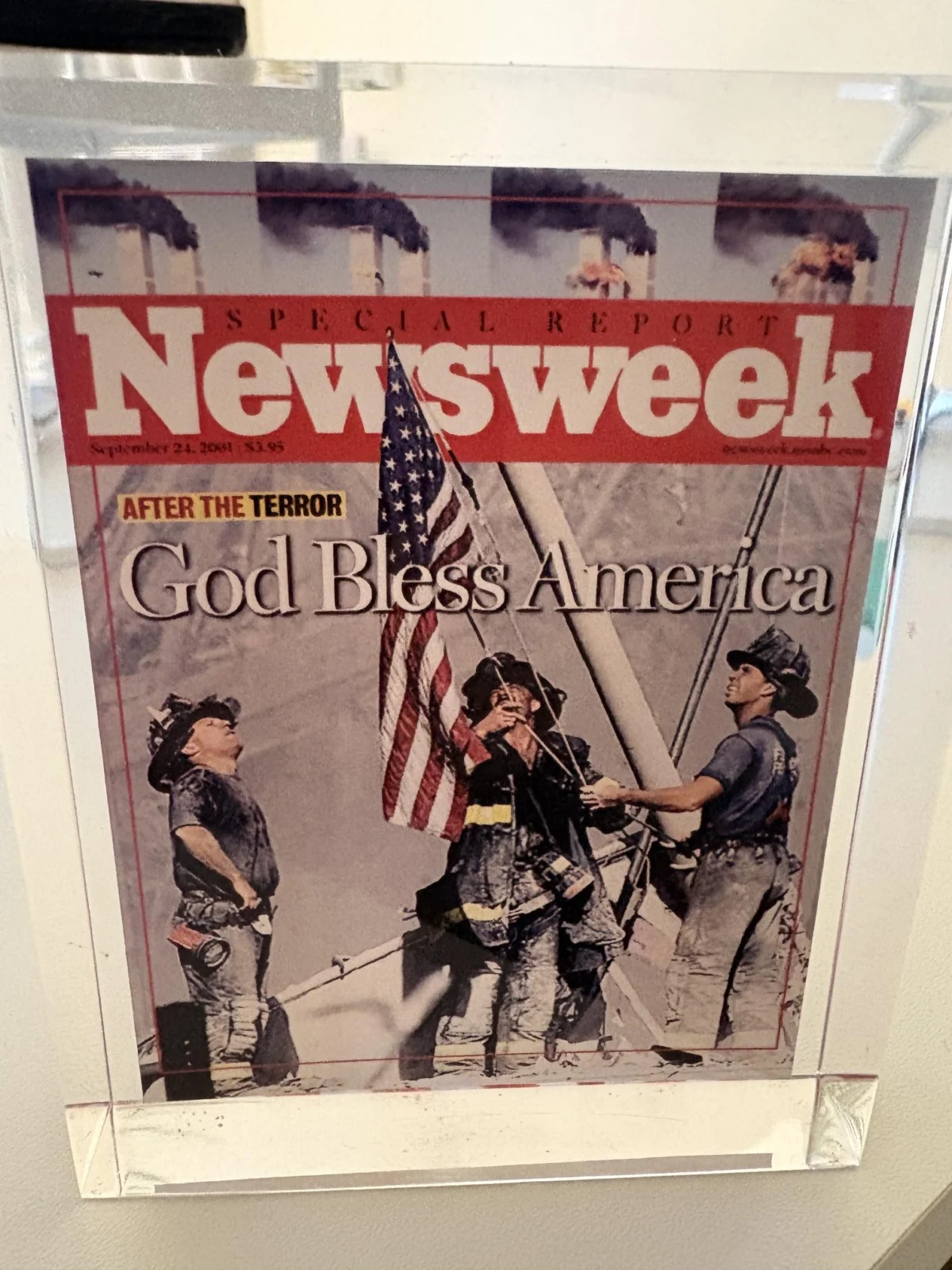
Today, as I keep a commemorative Newsweek cover of the firefighters raising the flag at Ground Zero on my office wall, I am reminded of the iconic image of Iwo Jima. It is a symbol of victory, not necessarily in the sense of ending a war, but in the sense of refusing to be broken.
We will never forget. We will continue to document the stories, support the survivors, and educate the next generation. We must ensure that the resolve born in the dust of lower Manhattan continues to guide our future, ensuring that the light of our way of life continues to burn brighter than the darkness that sought to extinguish it.
For further study, I encourage you to explore:

- The Man Who Knew (Documentary): An essential look at the intelligence failures regarding Al-Qaeda.
- Man in Red Bandana: The story of Welles Crowther, a testament to selfless service.
- United 93 (Film): A harrowing, accurate portrayal of the final stand of the passengers of Flight 93.
© 2026 Sherri Snelling