
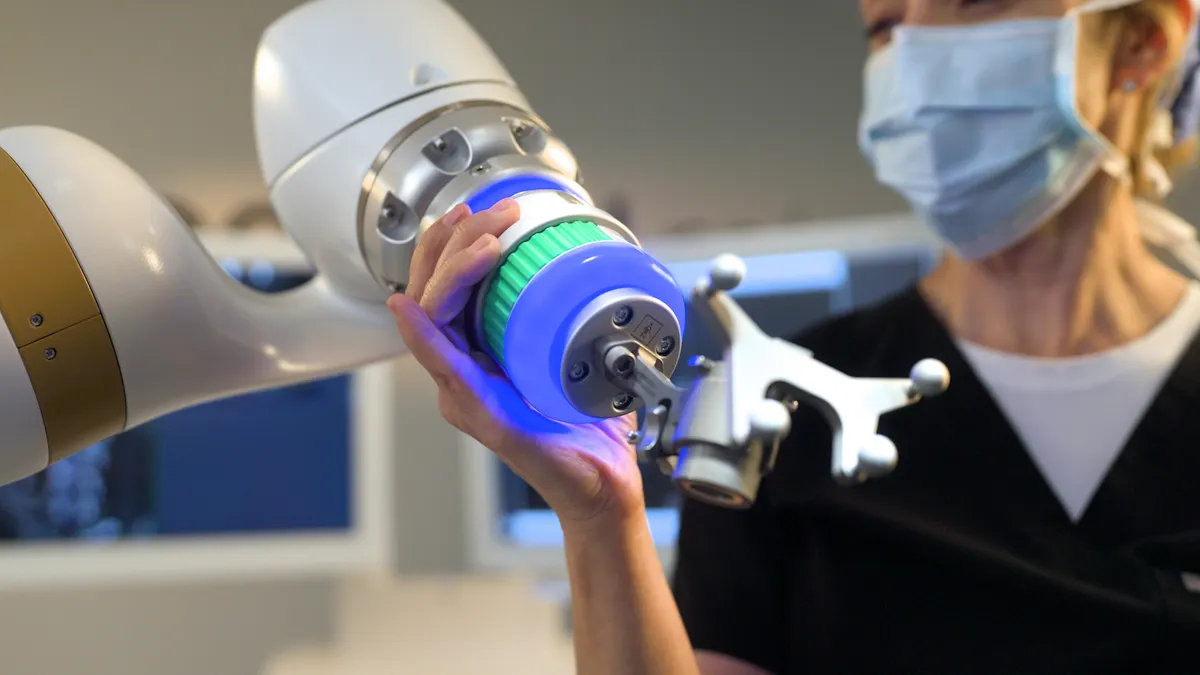
In a high-stakes move to cement its position within the rapidly evolving orthopedics landscape, medical device manufacturer Enovis has announced the acquisition of France-based eCential Robotics. This strategic pivot marks a significant escalation in the company’s efforts to integrate "enabling technologies"—specifically robotics—into its core reconstructive surgery portfolio. As major industry players like Stryker and Johnson & Johnson continue to dominate the robotic-assisted surgery space, Enovis is looking to play catch-up by bringing critical engineering talent and intellectual property in-house.
The acquisition comes at a pivotal time for Enovis. While the company has long been a leader in orthopedic implants and rehabilitation devices, its absence from the surgical robotics market has been a notable gap in its long-term growth strategy. By acquiring eCential, Enovis aims to bolster its "Astra" enabling technology system, effectively bridging the gap between its existing augmented reality (AR) headsets and surgical planning software.
Main Facts: The Strategic Pivot
The deal, which includes an undisclosed upfront fee and up to 35 million euros in performance-based milestone payments, centers on the development of specialized surgical robots. Enovis has set an aggressive roadmap: the company intends to launch a knee-replacement robot by late 2028, followed closely by a shoulder-replacement robot in 2029.
Enovis CEO Damien McDonald has been vocal about the necessity of this acquisition, telling investors during a recent earnings call that "enabling tech will be foundational to our long-term growth strategy." By moving development in-house, Enovis aims to improve its agility, allowing it to iterate on design and respond more effectively to the evolving demands of orthopedic surgeons. The acquisition brings with it a specialized team of approximately 50 experts based in France, covering the full spectrum of engineering, software development, and hardware manufacturing.
Chronology of Strategic Evolution
The path to this acquisition was not overnight. Enovis and eCential Robotics have maintained a collaborative relationship, which provided Enovis with a front-row seat to the French firm’s technical capabilities.
- Pre-Acquisition Phase: Enovis utilized its partnership with eCential to explore the potential of robotic integration within its existing Astra ecosystem.
- The Announcement: Following months of internal review and strategic planning, Enovis confirmed the definitive acquisition agreement to bring eCential’s engineering and manufacturing capabilities under its direct control.
- Late 2028 Target: The projected launch window for the company’s first knee-replacement robotic system.
- 2029 Target: The anticipated debut of a robotic platform specifically designed for shoulder procedures, a segment where Enovis believes it can gain a competitive edge through superior design.
Supporting Data and Market Context
The market for robotic-assisted surgery is currently characterized by high barriers to entry and intense competition. According to market analysts at BTIG, the acquisition is "de-risked" by the fact that eCential Robotics has previously contributed to high-profile systems, including the Velys robotic platform for Johnson & Johnson. This track record provides a level of confidence in the underlying technology that a de novo development program might lack.
Manufacturing Capacity
A key component of the deal is the existing infrastructure in France. According to Louie Vogt, Group President of the Reconstructive Business Group at Enovis, the current manufacturing and assembly team is capable of producing between 75 and 100 robots per year. This provides a solid foundation for scaling, though the company will likely need to expand these facilities as it moves toward its 2028 and 2029 launch goals.
The Financial Toll
The market’s reaction to the announcement was stark. Enovis shares closed down 16.5% at $20.53 on the day of the announcement. This reaction was largely driven by the company’s forecast that the acquisition and subsequent R&D investment will suppress profit margins in 2027. While analysts at BTIG expressed skepticism regarding the short-term margin hit, they acknowledged that the stock’s current valuation may not have been fully pricing in the company’s underlying progress in the "enabling tech" space.
Official Responses: Leadership Perspectives
The leadership at Enovis has framed this acquisition as a fundamental shift in operational philosophy.
CEO Damien McDonald on Agility:
When pressed by analysts on why the company chose to acquire its partner rather than continue the collaboration, McDonald emphasized the need for total control over the development cycle. "The single most important thing for us was about agility and being able to respond to the way clinicians want to engage," McDonald stated. "Bringing these capabilities in-house allows us to accelerate our roadmap and maintain a competitive advantage."
Louie Vogt on Differentiation:
Discussing the technical aspects of the upcoming platforms, Vogt highlighted that the knee robot will feature "subtle nuances" that differentiate it from the current market leaders. However, he was even more optimistic about the shoulder robot. Current offerings in the shoulder space—dominated by systems like Smith & Nephew’s Cori, Stryker’s Mako, and Zimmer Biomet’s Rosa—are viewed by Enovis as having "suboptimal" form factors. The company plans to leverage eCential’s design, which features a robotic arm with seven degrees of freedom, to provide surgeons with a more intuitive and flexible experience.
Implications: The Road Ahead
The implications of this acquisition for the broader medtech industry are significant.

1. Competitive Landscape
The orthopedic robotics market is effectively a three-horse race between Stryker, J&J, and Zimmer Biomet. By entering this space, Enovis is signaling its intent to move from a peripheral player in technology to a direct competitor. The 2028-2029 timeline is ambitious, but it also provides a window of opportunity for the company to refine its software-hardware integration.
2. Operational Challenges
The primary risk for Enovis is the execution of its R&D roadmap. Developing a medical robot involves a gauntlet of regulatory approvals, clinical trials, and training programs for surgeons. With margins expected to be suppressed through 2027, the company must demonstrate consistent progress in its development milestones to maintain investor confidence. The 35 million euro milestone-based payment structure is a prudent hedge, ensuring that additional capital is only deployed as technical and regulatory hurdles are cleared.
3. The Future of "Enabling Tech"
The move confirms a broader industry trend: hardware alone is no longer enough. The value proposition for orthopedic companies now rests on the integration of hardware (implants) with software (planning and robotics). By owning the entire chain—from the AR headset that helps a surgeon visualize a procedure, to the robotic arm that helps them execute it—Enovis is positioning itself to be a "total solution" provider.
4. Investor Sentiment
The volatility in Enovis’s stock price underscores the tension between long-term strategic growth and short-term financial performance. While the market has reacted negatively to the margin compression, the company’s leadership remains focused on the long-term utility of the acquisition. The success of this move will hinge on whether Enovis can successfully translate eCential’s existing robotic expertise into a differentiated product that surgeons actually prefer over the incumbent platforms currently on the market.
Conclusion
Enovis’s acquisition of eCential Robotics is a calculated gamble on the future of surgery. By securing the engineering expertise required to build complex robotic systems, the company has taken the necessary steps to remain relevant in a market where surgical precision is increasingly defined by machine-assisted outcomes. While the financial impact will be felt in the coming years, the strategic value of owning the robotic arm of their future product line could be the catalyst that transforms Enovis into a tier-one competitor in the orthopedics sector. The coming years will be a test of technical execution and market adoption, as the company races to turn its 2028 and 2029 promises into clinical realities.