GENEVA — As a volatile Ebola outbreak deepens within the Democratic Republic of the Congo (DRC), the World Health Organization (WHO) has found itself fighting a two-front war: one against a rare, deadly viral strain, and another against mounting political hostility from the United States.
Following sharp public rebukes from U.S. Secretary of State Marco Rubio, who accused the global health agency of being “a little late” in its detection of the virus, WHO leadership mounted a robust defense this week. The confrontation underscores a widening chasm between international health authorities and the Trump administration, occurring at a moment when global cooperation is arguably more critical than ever.
The Core Conflict: Defining Accountability
At the heart of the dispute is a fundamental disagreement regarding the WHO’s mandate under the International Health Regulations (IHR). The IHR serves as the binding global legal framework that dictates how countries must report and manage public health emergencies of international concern.
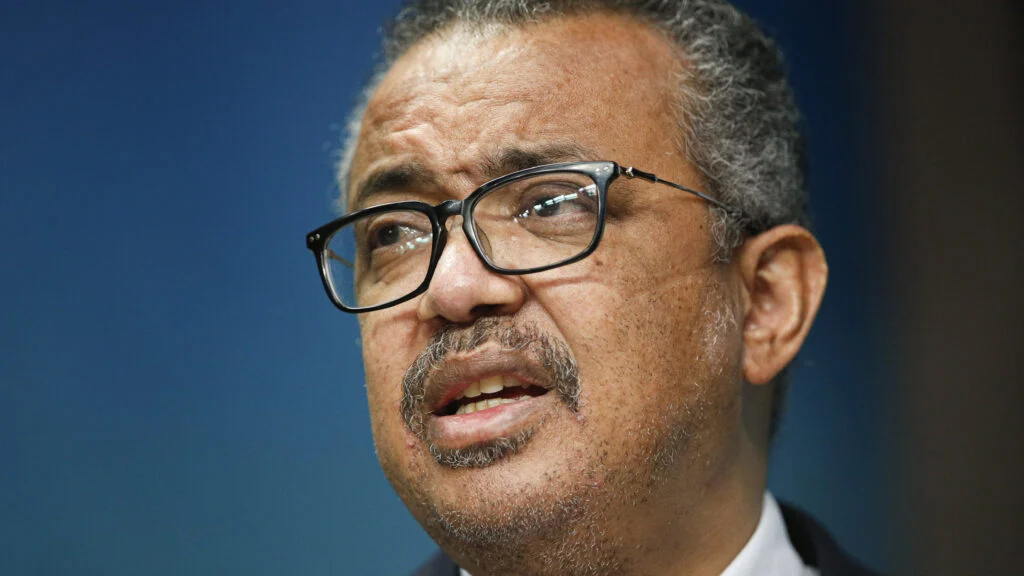
During a high-stakes press briefing in Geneva on Wednesday, WHO Director-General Tedros Adhanom Ghebreyesus dismissed Secretary Rubio’s criticism, suggesting it stemmed from a “lack of understanding” regarding the agency’s operational role.
“We don’t replace the country’s work,” Tedros asserted. “Our role is to offer technical and operational support to national health agencies, which have the primary responsibility for detecting the spread of diseases. We only support them.”
The tension is not occurring in a vacuum. The Trump administration has maintained a consistently combative stance toward the WHO, culminating in the U.S. formal withdrawal from the organization. This “divorce,” paired with sweeping budget cuts, has decimated the agency’s operational capacity in high-risk zones like the DRC. Internal analysts and public health experts have suggested that these fiscal and diplomatic ruptures may have significantly hampered the surveillance networks necessary for the early detection of this current outbreak.
Chronology of an Emerging Crisis
The timeline of the current outbreak reveals the immense logistical and biological hurdles facing health workers in the DRC.
- April 20: The earliest known death associated with the current outbreak occurs. At this stage, the cause remains unknown to local authorities, who are battling a variety of endemic diseases.
- Late April: A suspected “super-spreader” event, potentially linked to a local funeral or a rural health care facility, accelerates transmission chains.
- May 5: The WHO is alerted to a possible cluster of hemorrhagic fever cases. An investigative team is immediately dispatched to Ituri province.
- Early May: Reports of unexplained deaths circulate on social media, prompting increased concern among health officials.
- May 14: Following a complex diagnostic process, samples confirmed at a laboratory in Kinshasa—1,700 kilometers away from the epicenter—identify the culprit as the rare Bundibugyo strain of Ebola.
- May 15: African health officials formally declare the outbreak.
- May 19: U.S. Secretary of State Marco Rubio publicly criticizes the WHO’s response time.
Supporting Data: A Complex Epidemiological Landscape
The scale of the crisis is alarming. With nearly 600 suspected cases and 139 suspected deaths, the infection rate suggests that the virus has been circulating within the community for several months.
The primary complicating factor is the specific strain: Bundibugyo. Unlike the more common Ebola Zaire virus—for which diagnostic tests are widely available and field-ready—Bundibugyo is rare and has only been documented in two previous outbreaks.
“Surveillance starts within communities and starts with the health authorities within every single country,” explained Anaïs Legand, an expert on viral hemorrhagic fevers at the WHO. The initial diagnostic failure in the field was not a result of incompetence, but a mismatch between the diagnostic tools available and the specific viral strain present. Because local testing kits were calibrated for Ebola Zaire, samples had to be transported across the vast, unstable geography of the DRC to the capital, creating a critical window of delay.
Official Responses and the Reality on the Ground
The WHO’s response to Secretary Rubio’s critique was notably intense. In a departure from standard protocol—where one or two experts typically address a specific question—four senior officials, including the Director-General, addressed the U.S. Secretary’s comments directly.
Mohamed Yakub Janabi, the WHO’s regional director for Africa, emphasized the “inherently challenging” nature of the environment. The region of the DRC currently affected is characterized by:
- Conflict and Instability: A long-standing, escalating regional conflict has effectively destroyed health infrastructure and limited the reach of aid workers.
- Geographic Isolation: The remote nature of eastern DRC makes the movement of samples and personnel a logistical nightmare.
- Symptom Overlap: Early symptoms of Ebola—fever, fatigue, and muscle pain—are nearly indistinguishable from endemic conditions such as malaria, typhoid, and yellow fever. In regions where these diseases are common, health workers are less likely to immediately prioritize Ebola as a diagnosis.
“The outbreak is more complex than past Ebola outbreaks,” Tedros noted, directly addressing the U.S. administration. “That is what we should understand.”
The Implications: A Diminished Global Shield
The geopolitical fallout of this outbreak has grave implications for global health security. The U.S. decision to withdraw from the WHO has created a funding vacuum that the agency is struggling to fill.
By pulling financial support from the DRC, the U.S. has effectively weakened the "early warning system" that the WHO relies upon. When national health systems in the DRC lack the funds for basic supplies, training, and communication, the burden on the WHO increases—yet the agency’s ability to respond is simultaneously curtailed by the loss of U.S. contributions.
Experts fear that this cycle of politicization and underfunding will lead to more frequent "surprises." As the virus continues to move through populations in eastern DRC, the lack of a unified, well-funded international response creates a dangerous environment for the disease to gain a foothold.
Furthermore, the rhetoric used by the Trump administration serves to undermine public trust in the WHO. When a global superpower publicly questions the competence of the coordinating agency, it complicates the WHO’s ability to negotiate with local governments and coordinate with other NGOs.
Moving Forward: The Need for Sustained Vigilance
As the investigation into the transmission chains continues, the focus remains on contact tracing and containment. The WHO is working to identify every individual who may have come into contact with the infected, a task made exponentially more difficult by the ongoing migration and insecurity in the region.
The situation in the DRC remains fluid and precarious. The lesson of this outbreak, according to global health observers, is that surveillance is only as strong as its weakest link. If countries like the DRC are left to manage rare, virulent diseases without adequate international support—and if the global health architecture is eroded by nationalistic policy shifts—the world remains fundamentally vulnerable to the next pandemic.
For now, the WHO continues to plead for a nuanced understanding of their role. They maintain that while they are the coordinators of the global response, they are not a substitute for the sovereign responsibility of nations—nor can they perform miracles when their resources have been systematically dismantled. The people of the DRC, caught in the crosshairs of both a virus and a diplomatic dispute, remain the ones paying the ultimate price.