By Investigative Desk
In a development that has reignited fierce debate over the ethics of international military aid, the German government has authorized approximately €800 million ($930 million) in arms exports to Israel for the first half of 2026. According to a report by the German weekly Der Spiegel, this figure—sourced from a government response to a parliamentary inquiry—represents a staggering acceleration in defense cooperation between Berlin and Tel Aviv, even as international scrutiny regarding the humanitarian crisis in Gaza intensifies.
The approved exports for the first six months of 2026 are already four times the total value of all arms exports Berlin greenlighted for Israel throughout the entirety of 2025. This surge underscores a deepening strategic alignment that persists despite profound domestic political friction and mounting calls from human rights organizations for a complete suspension of military supplies.
The Scope of Military Transfers
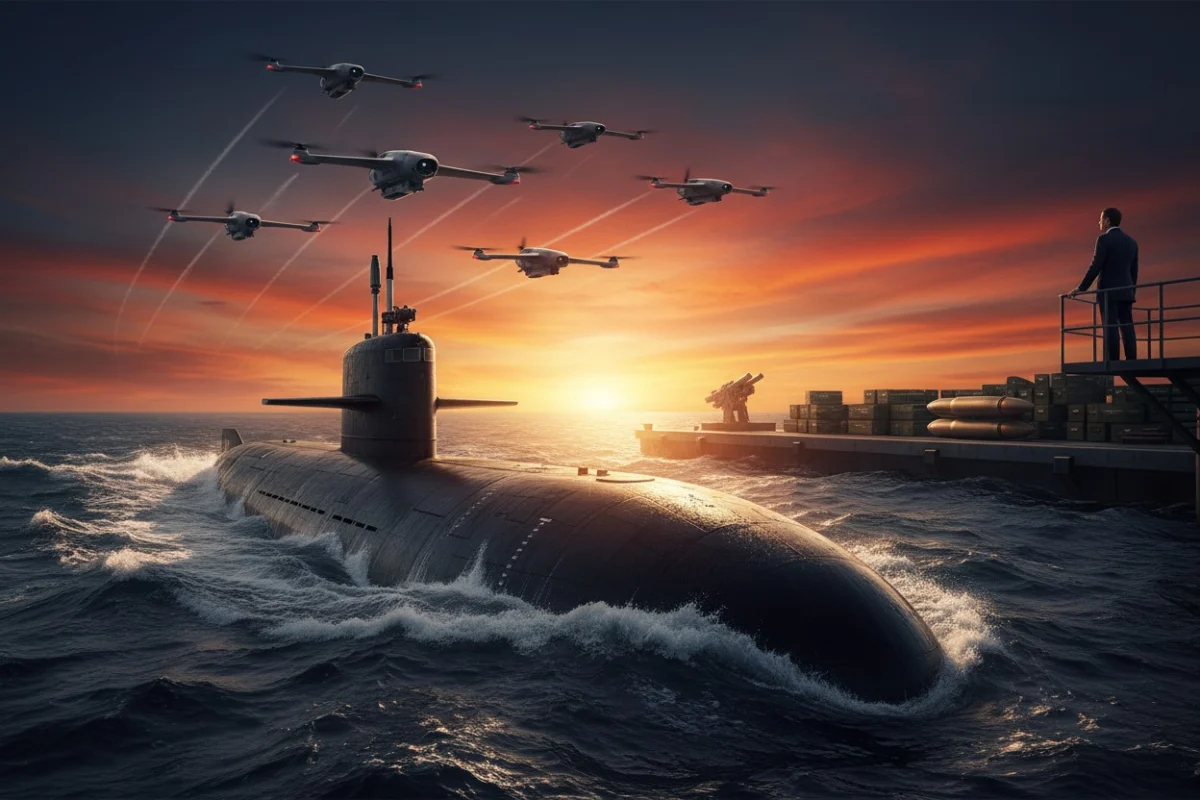
The export licenses encompass a wide array of military hardware, ranging from small arms and ammunition to explosives and sophisticated unmanned aerial vehicles (UAVs). A significant portion of these approvals is tied to long-term defense-industry cooperation.
Notably, the total includes deliveries related to the INS Drakon, a high-tech submarine manufactured by ThyssenKrupp Marine Systems. While the German government has maintained a policy of strategic ambiguity regarding the technical specifications of the vessel, previous reporting by Der Spiegel has indicated that the submarine is capable of being retrofitted for nuclear weapons—a claim that has never been officially confirmed or denied by either the German or Israeli ministries of defense.
According to government data, roughly one-fifth of the total export value is attributed to joint defense projects that benefit the German Armed Forces themselves, highlighting the integrated nature of the two nations’ military-industrial complexes. The remaining two-thirds of the approved exports consist of equipment earmarked for the Israeli Defense Forces (IDF) for independent operational use.
A Chronology of Policy Shifts
The current surge in arms exports marks a significant reversal from the temporary, partial suspension imposed by German Chancellor Friedrich Merz in August 2025. At that time, facing intense public backlash and a deteriorating humanitarian situation in Gaza, the Merz administration announced a freeze on exports of weapons that could be utilized in the Gaza Strip. The decision was prompted by the Israeli security cabinet’s formal approval of a plan to militarily occupy the entire Gaza Strip, beginning with the siege of Gaza City.
The restriction, however, was short-lived. By November 2025, the German government announced it would revert to a "case-by-case" review process, effectively lifting the blanket suspension as of November 24. German government spokesman Sebastian Hille noted at the time that Berlin would "respond to further developments" on an individual basis.
The reversal triggered immediate criticism from the German opposition. Left Party spokesperson Lea Reisner described the move as "cynical," pointing to the hypocrisy of the German government issuing condemnations of Israeli policy in the press while simultaneously facilitating the logistics of its military campaign. Advocacy groups have characterized the lifting of the suspension as a betrayal of human rights commitments, arguing that the government has prioritized defense industrial interests over the mitigation of civilian suffering.
Historical Context and Rising Defense Trade
The $930 million figure for the first half of 2026 is part of a broader, decade-long pattern of volatility in German-Israeli defense relations. After a relative lull in previous years, arms sales saw a tenfold increase in 2023, reaching $380 million, followed by $186 million in 2024 and $302 million in 2025.

The trajectory of these figures reflects a broader trend identified by the Stockholm International Peace Research Institute (SIPRI). According to SIPRI data, Israel has ascended to become the world’s seventh-largest arms exporter between 2021 and 2025, with its share of global exports climbing to 4.4%. Germany has played a dual role in this ecosystem, acting as both a primary supplier and a major client. The purchase of the Israeli-made Arrow 3 missile defense system by the German military has served to cement a mutual dependence that experts suggest makes it increasingly difficult for Berlin to exert leverage over Israeli military policy.
The Strategic Rationale vs. International Law
Berlin has consistently framed its support for Israel as a cornerstone of German foreign policy, rooted in historical responsibility and contemporary security imperatives. In January 2026, the two nations signed a landmark security cooperation agreement in Jerusalem. The accord explicitly targets the "threat posed by Iran and its allies," including Hamas, Hezbollah, and the Houthis of Yemen. The pact commits both nations to expanding cooperation in cybersecurity, counter-terrorism, and the development of "advanced technologies."
However, this strategic framework faces increasing challenges from international observers. A landmark United Nations report released in October 2025 concluded that the scale of the military operations in Gaza would have been impossible to sustain without "global complicity." The report identified 63 states, primarily in Europe, that have sustained the campaign through a combination of arms sales, diplomatic shielding, and economic support.
Critics argue that by continuing to facilitate these transfers, Germany is eroding its own commitment to international law. "The relationship has evolved into one that seemingly outstrips Berlin’s dedication to its own domestic democratic principles," noted one legal analyst familiar with the UN report. "When the supply of arms becomes the primary mechanism of diplomatic engagement, the ability to uphold humanitarian norms vanishes."
Mounting Casualties and the Human Cost
The intensification of military support coincides with a catastrophic death toll in Gaza. The Strip’s Health Ministry reports that at least 73,000 Palestinians have been killed since the escalation of hostilities in 2023, with women and children accounting for the vast majority of casualties.
Independent researchers and international observers suggest the true figure may be significantly higher, given the collapse of medical infrastructure and the difficulty of conducting accurate counts amidst ongoing bombardment. A U.S. Department of War official testified as early as February 2024 that more than 25,000 women and children had already been killed, a number that has grown exponentially since that time.
The Left Party in Germany has renewed its demand for an immediate, comprehensive halt to all arms exports, arguing that continued military aid makes the German state "morally and legally complicit" in the carnage. The party has called for a parliamentary inquiry into the internal decision-making processes that led to the approval of the most recent licenses.
Implications for the Future
The decision to greenlight nearly $1 billion in exports serves as a barometer for the current state of European foreign policy. As the war in Gaza drags on, European governments find themselves caught between their security alliances and the growing demand from their own citizens to halt the flow of weapons to conflict zones.
For Germany, the challenge is two-fold: maintaining its identity as a staunch defender of international rules-based order while simultaneously navigating a "special relationship" with Israel that it views as a strategic necessity. The Der Spiegel report has made it clear that the defense industry remains a powerful lobby in Berlin, and the economic and technical integration of the two nations’ militaries creates a "locked-in" effect that is difficult to disrupt.
As the international community grapples with the fallout of the ongoing crisis, the German government remains under immense pressure. Whether Berlin will maintain its current trajectory or be forced to reconsider its military support in the face of persistent humanitarian outcry remains the most significant question facing the Merz administration in the coming months. The data suggests that for now, the status quo of deep military integration remains the primary driver of policy, regardless of the shifting realities on the ground in the Middle East.