








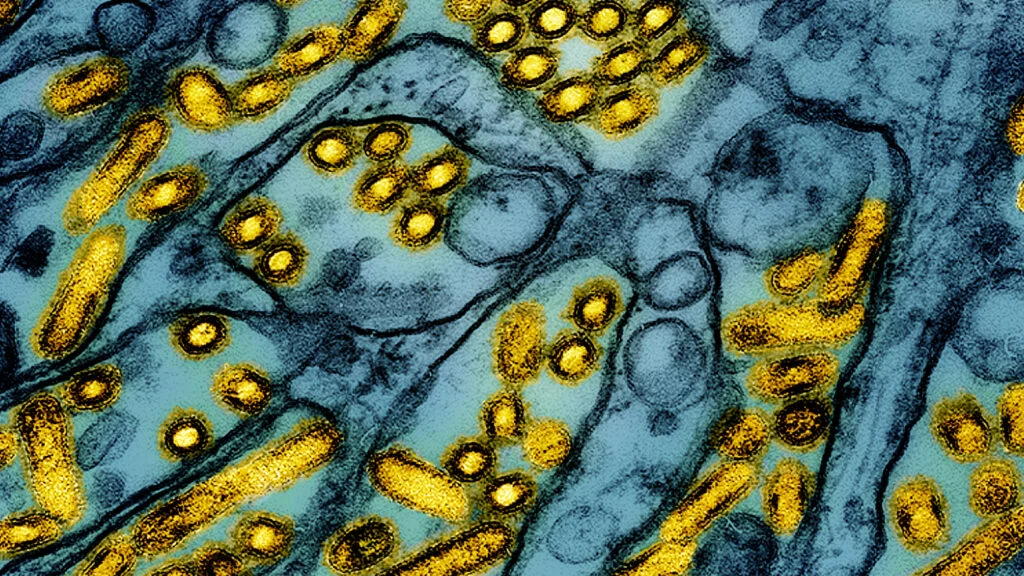
NEW YORK — A resident of Yakima County, Washington, has died following complications from the H5N1 avian influenza virus, marking the first U.S. death attributed to the virus in over a year. The tragedy serves as a sobering reminder of the persistent, multi-year circulation of the virus among wildlife and livestock, and the ongoing efforts by federal and state health authorities to contain its impact.
The individual, who had underlying health conditions, was exposed to the virus while working at a dairy farm where cattle had been diagnosed with the infection. After falling ill, the patient was hospitalized; however, despite medical intervention, they passed away on Sunday. While Yakima County health officials have maintained privacy regarding the identity and specific health history of the individual, the Centers for Disease Control and Prevention (CDC) confirmed that the strain involved was H5N1.
This fatality is the latest in a string of rare but serious human cases that have emerged since the virus began its unprecedented spread across U.S. agricultural sectors in early 2024.
The Chronology of an Evolving Threat
The presence of H5N1 in the United States has been a concern for years, primarily affecting migratory wild birds and domestic poultry. However, the landscape of the outbreak shifted dramatically in early 2024 when the virus began circulating among U.S. dairy cattle, marking a significant escalation in the risk profile for agricultural workers.
A Timeline of Human Fatalities
Since the virus became a heightened national public health priority in 2024, three human deaths have been directly linked to avian influenza:
- January 2025: An elderly individual in Louisiana succumbed to a version of H5N1. This case signaled that the virus was capable of causing severe disease in vulnerable populations beyond direct occupational exposure in certain contexts.
- November 2025: A separate case in Washington state resulted in death, though it was attributed to a rarer, distinct variant of the virus known as H5N5.
- December 2025/Early 2026: The most recent death in Yakima County, confirmed to be the H5N1 strain, follows the hospitalization of a worker exposed to infected dairy cattle.
Throughout this period, the CDC has tracked more than 70 human infections across the United States. While this number is relatively low compared to the total number of animal infections, the mortality events have triggered rigorous genetic analysis by the CDC to determine if the virus is undergoing mutations that could signal a greater threat to human-to-human transmission.
Supporting Data and Epidemiological Context
The situation in Yakima County is currently a focal point for the Washington State Department of Health and the Yakima Health District. Local reports indicate that 33 dairy herds in the region have tested positive for H5N1, highlighting the widespread nature of the pathogen in the local environment.
The Dynamics of Infection
The Yakima Health District has confirmed three human infections specifically tied to exposure at local dairies. In response, health officials have initiated a contact-tracing operation. This involves:
- Identifying individuals who had close contact with the infected patients.
- Implementing a mandatory monitoring period to check for early symptoms of respiratory distress or influenza-like illness.
- Providing guidance on isolation and immediate medical access for those exhibiting symptoms.
Despite these measures, the CDC maintains that the risk to the general public remains low. The virus currently requires direct, prolonged, or high-intensity contact with infected animals—primarily cattle or birds—to transition into a human host.
Genetic Analysis: No "Red Flags" Detected
One of the primary concerns among infectious disease experts is "antigenic drift" or "shift," where a virus adapts to become more transmissible between humans. Following the recent death in Washington, the CDC performed a comprehensive genetic sequence analysis on the virus sample recovered from the patient.
A CDC spokesperson stated on Monday that there is no evidence of mutations that would make the virus spread more easily among humans or cause significantly more severe illness than previously observed. The virus remains well-adapted to avian and bovine receptors rather than human respiratory tracts.
Official Responses and Public Health Strategy
The response to the H5N1 outbreak has been a coordinated effort between the U.S. Department of Agriculture (USDA), the CDC, and state-level agricultural and health departments.
CDC Guidance for High-Risk Groups
The CDC continues to emphasize that farmworkers and those who handle livestock or poultry are at the highest risk. The agency’s current protocols for these groups include:
- Personal Protective Equipment (PPE): Workers are strongly encouraged to wear respiratory protection (such as N95 masks), eye protection (goggles or face shields), and gloves when handling poultry or working in environments with suspected infected cattle.
- Surveillance: Increased testing of dairy cattle herds is essential for early detection. When a herd tests positive, farms are expected to implement biosecurity measures to limit the movement of animals and the exposure of staff.
- Reporting: Rapid notification of symptoms is vital. Agricultural workers are being urged to report any symptoms, even mild ones like conjunctivitis (pink eye), to their employers and local health departments immediately.
State-Level Interventions
In Washington, the state health department has been working closely with local districts to ensure that agricultural workers have access to testing and, if necessary, antiviral treatments like oseltamivir (Tamiflu). The focus is on preventing further spread from livestock to humans by breaking the chain of transmission through better biosecurity and protective measures at the farm level.
Broader Implications and Future Outlook
The persistence of H5N1 in the U.S. dairy industry presents a unique challenge for public health officials. Unlike wild birds, which are transient, dairy cattle are stationary and kept in high-density environments, which can facilitate viral spread.
The Risk of Animal-to-Human Spillover
The "spillover" events—where a virus jumps from an animal species to a human—are the primary concern for pandemic preparedness experts. While H5N1 is not currently spreading person-to-person, the more opportunities the virus has to infect humans, the more chances it has to adapt to the human population.
The medical community is closely monitoring the situation, not out of immediate panic, but out of a need for vigilance. The fact that the recent decedent had "previous health conditions" highlights that even if the virus is not highly pathogenic in a healthy adult, it can be lethal for those with compromised immune systems or underlying vulnerabilities.
Moving Forward: Surveillance and Research
As the country moves forward, the scientific community is advocating for:
- Enhanced Genomic Surveillance: Continued, rapid sequencing of human and animal cases to catch any potential adaptation to human hosts.
- Vaccine Development: While seasonal flu vaccines do not protect against H5N1, the U.S. government continues to support research into pandemic-ready vaccines that could be deployed if the virus’s behavior changes.
- Collaborative Biosecurity: Strengthening the relationship between dairy farmers and public health agencies is critical. The goal is to create a culture of safety where testing and PPE are viewed as standard operating procedures rather than optional hurdles.
Conclusion
The death in Washington state is a tragic reminder that the H5N1 virus remains a potent pathogen. While the risk to the average citizen in a city or suburb remains minimal, the agricultural sector is on the front lines of a slow-moving, complex public health challenge.
Through rigorous surveillance, public education, and the strict adherence to protective guidelines, federal and state agencies hope to keep the virus contained. However, as the virus continues to circulate in the environment, the lessons learned from this incident will be vital in shaping the nation’s ongoing response to avian influenza.
The Associated Press’s health and science coverage receives financial support from the AP Fund for Journalism and private foundations. AP is solely responsible for all content. Find AP’s standards for working with philanthropies, a list of supporters, and funded coverage areas at AP.org.