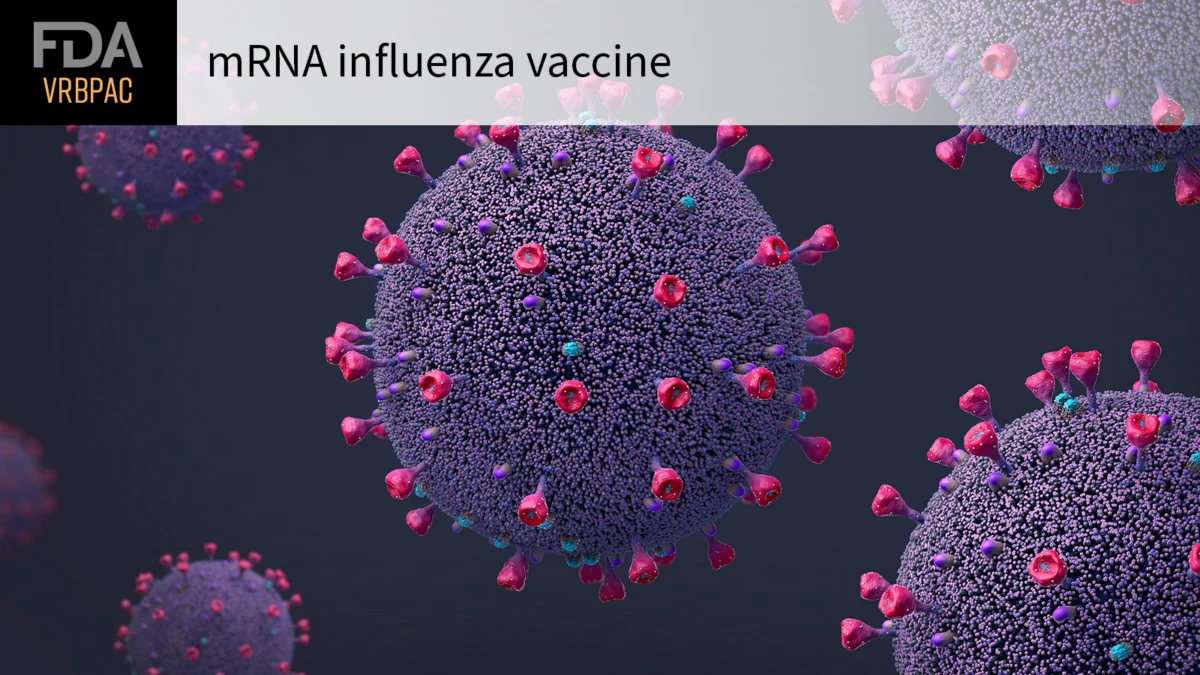
In a significant development for public health and biotechnology, a federal advisory panel on Thursday unanimously endorsed the use of Moderna’s trivalent mRNA influenza vaccine candidate. The Vaccines and Related Biological Products Advisory Committee (VRBPAC) delivered two decisive 9-0 votes, concluding that the benefits of the mRNA-based shot outweigh its potential risks for adults aged 50 to 64 and those 65 and older.
This endorsement marks a potential turning point in the decades-long reliance on egg-based and recombinant flu vaccine production, setting the stage for a new era of rapid-response immunization. However, the path to approval has been marked by scientific debate, regulatory friction, and intense political scrutiny.
The Core Data: Clinical Efficacy and Immunogenicity
The committee’s recommendation was heavily predicated on the results of the phase III "Fluent" randomized trial. In this study, Moderna’s mRNA vaccine—designed to target influenza A/H1N1, A/H3N2, and B/Victoria—demonstrated superior efficacy compared to standard-dose flu shots.
Performance Metrics
The trial reported a relative vaccine efficacy of 26.6% among all participants 50 and older, and a slightly higher 27.4% for the cohort aged 65 and up. While these percentages may appear modest to the layperson, in the context of seasonal influenza, where even small improvements in protection can prevent millions of illnesses, they are considered clinically significant.
Panelist Adam Berger, PhD, of the NIH’s Office of the Director, noted that while the study had limitations—such as a single-season duration and limited data on frail or immunocompromised populations—the immunogenicity data were "very suggestive of potential efficacy clinically."
The "T-Cell" Advantage
Beyond raw efficacy numbers, the panel highlighted the biological mechanisms of the mRNA platform. Hayley Gans, MD, of Stanford Medicine Children’s Health, emphasized that the vaccine’s ability to induce more robust T-cell responses is a major improvement over existing technologies. "We’ve been struggling with the current flu vaccines because they don’t maintain great immunity," Gans explained. By eliciting a broader immune response, mRNA technology could potentially offer more durable protection than current options, which have historically struggled to maintain high efficacy throughout the duration of a flu season.
A Timeline of Regulatory Friction and Policy Shifts
The journey to this endorsement has been anything but linear. The FDA’s relationship with Moderna regarding this vaccine has been marked by a significant reversal of policy and a changing political landscape.
- February 2025: The FDA initially rejected Moderna’s application. At the time, the agency—under the leadership of then-vaccine chief Dr. Vinay Prasad—argued that the application lacked an "adequate and well-controlled trial." The core of the critique was the choice of control group; Moderna had compared its mRNA shot to standard-dose vaccines, whereas the CDC currently recommends high-dose formulations for seniors.
- Spring 2025: Moderna pivoted, providing supplemental data showing that its mRNA vaccine triggered an immune response in older adults that was at least non-inferior to the high-dose vaccines currently considered the "best-available standard of care."
- Mid-2025: The FDA reversed its stance, allowing the application to proceed, provided that Moderna committed to conducting an extensive, multi-season post-marketing randomized study to confirm real-world effectiveness.
- June 2026: The advisory committee hearing resulted in a unanimous endorsement, signaling that the regulatory impasse had been resolved in favor of the new technology.
Political and Policy Context: mRNA Under Fire
The endorsement comes at a time of extreme political tension regarding mRNA technology. Under the leadership of Health and Human Services (HHS) Secretary Robert F. Kennedy Jr.—a long-standing skeptic of mRNA platforms—the federal government has moved to pivot away from the technology that defined the COVID-19 pandemic response.
Secretary Kennedy recently oversaw the cancellation of $500 million in federal funding earmarked for mRNA vaccine research, arguing that the government should prioritize what he terms "safer" or more traditional vaccine platforms.
Despite this political atmosphere, the expert panel maintained a focus on technical utility. Flor Munoz-Rivas, MD, of Baylor College of Medicine, summarized the scientific consensus during the hearing: "Having this technology available puts us in a position to be better prepared for emerging strains or pandemic strains in the future." The panelists argued that regardless of political headwinds, the technological agility of mRNA is a national security asset that cannot be ignored.
Challenges: Reactogenicity and Public Acceptance
While the efficacy data were lauded, the panel raised significant concerns regarding "reactogenicity"—the physical side effects that follow vaccination.
Data presented to the committee showed that participants receiving the Moderna mRNA flu vaccine experienced higher rates of transient local reactions (67.5% vs. 32.1%) and systemic reactions (58.0% vs. 32.4%) compared to those receiving standard egg-based flu vaccines.
Hana El Sahly, MD, also of Baylor College of Medicine, cautioned that these side effects could become a barrier to adoption. "While this is not a safety concern, this is an important acceptability concern," she noted. "If we are to increase the vaccination coverage in our populations, we have to address the reality that even a small percentage of people missing work for 1 or 2 days due to side effects is not trivial when we’re talking about millions of individuals."
The challenge for Moderna and the FDA will be messaging. To ensure high uptake, the public must be prepared for these reactions and understand that they are signs of a robust immune response, rather than indications of a dangerous product.
Future Implications: Why mRNA Matters for Influenza
The potential shift toward mRNA flu vaccines addresses a fundamental flaw in current public health strategy: the "lag time."
Breaking the Egg-Based Bottleneck
Most current flu vaccines are produced using egg-based or cell-culture technologies. These processes are slow, often requiring 6 to 8 months from the moment a strain is selected to the time a vaccine is ready for distribution. This delay often results in "mismatches" where the circulating virus evolves differently than the strain selected for the vaccine.
Furthermore, egg-based manufacturing requires growing the virus in chicken eggs, which can lead to "egg-adaptive mutations" that change the virus’s surface proteins, potentially making the final vaccine less effective against the circulating human virus.
The Speed of Innovation
Moderna’s mRNA platform allows for a turnaround time of 2 to 3 months. In a scenario where a new pandemic strain emerges or a seasonal strain mutates unexpectedly, this speed could save countless lives. The committee’s recommendation to move forward with the vaccine is, in many ways, an investment in this agility.
Addressing the Burden on the Elderly
The stakes are high. According to the latest CDC estimates, the 65-and-older population accounts for approximately 57.4% of all flu-related hospitalizations and a staggering 70.6% of all influenza deaths. Any technology that provides a statistically superior immune response in this vulnerable group—even if it comes with the temporary discomfort of increased reactogenicity—is viewed by many public health experts as a necessary advancement.
Conclusion: A Cautious Step Forward
While the FDA is not legally obligated to follow the recommendations of its advisory committees, it almost always does. The unanimous 9-0 vote provides a strong mandate for the agency to move forward with approval.
However, the road ahead remains complex. The planned post-marketing study—a massive, two-season commitment—will be the final arbiter of whether the mRNA vaccine can deliver on its promise of sustained, real-world protection. As the healthcare community balances the political skepticism of the current HHS leadership against the clear clinical data presented by the VRBPAC, the Moderna mRNA flu vaccine stands as a testament to the ongoing tension between technological advancement and public health communication.
For now, the scientific consensus is clear: the mRNA platform is ready to be deployed as a primary tool against the flu, provided that the logistics of public messaging and the rigor of long-term effectiveness monitoring are handled with equal precision.