








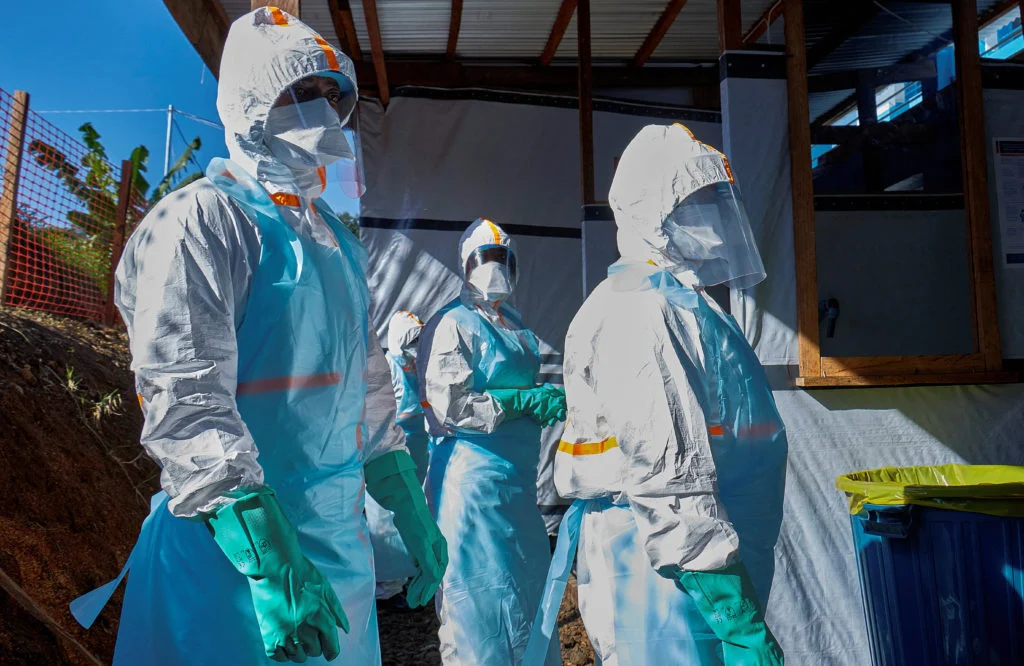
BUNIA, Democratic Republic of the Congo — At the epicenter of one of the most volatile Ebola outbreaks in recent history, the atmosphere inside the Evangelical Medical Center in Bunia is defined by a heavy, palpable urgency. As ambulances pull into the facility’s muddy courtyard and medical personnel vanish behind layers of stifling personal protective equipment (PPE) to enter the isolation wards, a quiet but historic milestone is unfolding. Researchers have officially launched a high-stakes clinical trial, marking the first time patients in this region are being treated with experimental therapies targeting the rare Bundibugyo strain of the Ebola virus.
For a region long battered by conflict, displacement, and now a deadly viral pathogen, these clinical trials represent more than just science; they represent a desperate, flickering light of hope in a tunnel that has grown increasingly dark over the past few months.
Main Facts: A New Front in the Ebola Battle
The current outbreak in the Ituri province has reached a critical threshold. According to data provided by World Health Organization (WHO) Director-General Tedros Adhanom Ghebreyesus, the virus has already infected over 1,400 individuals, claiming 438 lives—a staggering mortality rate that highlights the absence of established, gold-standard treatments for the Bundibugyo variant.
The clinical trial, supported by the WHO, is a sophisticated international collaboration involving Congo’s National Institute of Biomedical Research (INRB), the University of Oxford, and the Antwerp Institute of Tropical Medicine. The study is evaluating the efficacy of three distinct pharmacological approaches:
- Remdesivir: A broad-spectrum antiviral medication.
- MBP134: An experimental antibody treatment specifically designed to neutralize the virus.
- Combination Therapy: A protocol administering both treatments simultaneously to assess if synergy improves patient survival.
Dr. Vasee Moorthy, a research adviser for the WHO, noted that the study will track patient outcomes for 28 days following the initiation of treatment, providing a rigorous framework for determining whether these drugs can effectively reduce the lethality of the disease.
A Chronology of the Crisis
The road to this trial has been fraught with structural and environmental obstacles.
- Initial Outbreak: The emergence of the Bundibugyo strain, a less common but equally virulent relative of the Zaire Ebola virus, caught local health infrastructure off-guard.
- Early Summer: As infection rates climbed, international health organizations recognized that standard supportive care—rehydration and symptom management—was insufficient to stem the rising tide of mortality.
- Early July: Following intense preparatory work by the INRB and its partners, the study was formally launched. The first participant was enrolled on Thursday, signaling the transition from observational response to active intervention.
- The Coming Months: Professor Placide Mbala, the coordinator of laboratory activities for the outbreak, estimates that the trial will run for a duration of three to six months, with the timeline heavily dependent on the velocity of the outbreak’s evolution.
Supporting Data: The Cost of Inaction
The data underpinning the urgency of this mission is grim. Pierre Akilimali, incident manager at the National Institute of Public Health in Congo, reported that nearly 75% of Ebola deaths in this specific outbreak are occurring outside of formal health centers. This statistic reveals a terrifying reality: the virus is claiming lives in homes and villages before victims ever reach the medical care they need to survive.
The barriers to care are multifaceted. Overcrowded facilities, the physical distance between remote villages and treatment centers, and persistent insecurity in conflict-affected zones prevent the rapid identification and isolation of cases. Because the virus is transmitted through contact with bodily fluids, every hour that an infected individual remains in the community increases the risk of further transmission, creating a cycle of infection that is difficult to break.
Official Responses and Strategic Shifts
The response to this outbreak is a study in complexity. According to Professor Yap Boum, head of emergency response at the Africa Centres for Disease Control and Prevention, the current trial is being conducted exclusively within specialized treatment centers for confirmed patients. However, the strategy is designed to be dynamic.
"We are currently focused on those already in treatment, but a second phase is planned," Boum explained. This next phase aims to expand the net to include frontline healthcare workers, family members of the infected, and other high-risk individuals who are currently in the crosshairs of the virus.
The international community, including the Gates Foundation, has provided critical financial support to ensure that these trials can proceed. However, the loss of broader USAID-led health initiatives in the region has left a "weakening effect" on the general public health infrastructure, forcing researchers and local medical staff to do more with significantly fewer resources.
Community Mistrust and the Social Fabric
Despite the scientific potential of the trials, the researchers face a hurdle that no drug can treat: the deep-seated mistrust of medical authorities among the local population.
In Bunia, the reaction to the trials is polarized. For survivors like Gladys Munguro, who was discharged from an Ebola treatment center just two weeks ago, the trial is a necessity. "I watched fellow patients die while I was receiving care," Munguro told the Associated Press. "This experimental phase is necessary for us. I will volunteer as soon as the next phase of the trials begins for high-risk individuals."
However, others remain deeply skeptical. Nelson Dhebi, a local shopkeeper, voiced a sentiment common among those who feel abandoned by their government. "Research should be carried out first and foremost on our elected representatives, as they are the ones who represent us," he said. This cynicism reflects a broader lack of faith in the institutions tasked with managing the crisis. For many, the sight of foreign researchers and high-tech equipment arriving in a community that lacks basic services creates a sense of alienation rather than comfort.
Implications: The Path Forward
The success of these trials could prove to be a watershed moment for the treatment of hemorrhagic fevers in Africa. If either remdesivir or MBP134 proves successful, it could fundamentally alter the mortality trajectory of future Bundibugyo outbreaks.
However, the medical community acknowledges that drugs alone are not a panacea. The implications of this study reach beyond the biological; they challenge the global health community to improve how it communicates with, engages, and protects vulnerable populations during times of crisis.
As the trial progresses, the eyes of the global medical community remain fixed on Bunia. The hope is that the data gathered in the coming months will provide the tools necessary to silence this outbreak. Yet, as healthcare workers continue to work in the shadows of the isolation wards, the reality remains that the fight against Ebola is as much about restoring public trust as it is about clinical innovation.
The struggle continues, measured in 28-day intervals, with every participant in the study serving as a frontline soldier in a war that continues to claim victims in the heart of the Congo. Whether these treatments offer the long-awaited breakthrough remains to be seen, but for the residents of Ituri, the start of the study is a testament to the fact that even in the midst of a lethal pandemic, the pursuit of life-saving science continues.
Reported by Banchereau (Dakar, Senegal) and Constant Same Bagalwa (Bunia, DRC). This report is part of a series on global health and development coverage supported by the Gates Foundation.