









Published: November 3, 2026
In an era defined by relentless digital connectivity and high-pressure work environments, the human nervous system is frequently pushed to its physiological limits. For many, the modern workday—whether performed at a desk or in the field—results in a chronic state of physical tension: tight jaws, shallow breathing, and a mind that struggles to disconnect even when the laptop is closed. As a response to this epidemic of stress, certified yin yoga instructor Katie McGrath offers a specialized approach to finding equilibrium through the practice of yin yoga.
McGrath, a recognized voice in the wellness community and lead instructor for Yin Yoga with Katie, emphasizes that while yoga is not a panacea for life’s complexities, it serves as a powerful mechanism for shifting the body out of "fight or flight" mode. By prioritizing long, gravity-assisted holds, practitioners can signal to their nervous system that they are in a secure environment, facilitating a release of tension that faster, more active forms of movement often overlook.
The Physiology of Calm: Why Yin Works
The core philosophy of yin yoga, as taught by McGrath, lies in its practical simplicity. Unlike vinyasa or power yoga, which focus on heat and cardiovascular exertion, yin yoga asks for nothing more than sustained stillness. By holding poses close to the ground for three to five minutes, the body is permitted to move past the initial resistance of the muscular system and into the deeper connective tissues.
This extended duration is not designed for athletic gain, but for nervous system regulation. When we hold a pose at approximately 50 to 60 percent of our maximum capacity, we create a "line in the sand"—a boundary where we feel the stretch without triggering a distress signal. This intentional deceleration is the gateway to activating the parasympathetic nervous system, the branch of our biology responsible for "rest and digest" functions.
A Chronological Guide to Your Practice
To effectively manage stress, McGrath suggests a systematic, five-pose sequence. Before beginning, gather your equipment: a bolster or firm cushion, two blankets, one or two yoga blocks, and access to a clear wall. If available, an eye pillow can further block out external stimuli.
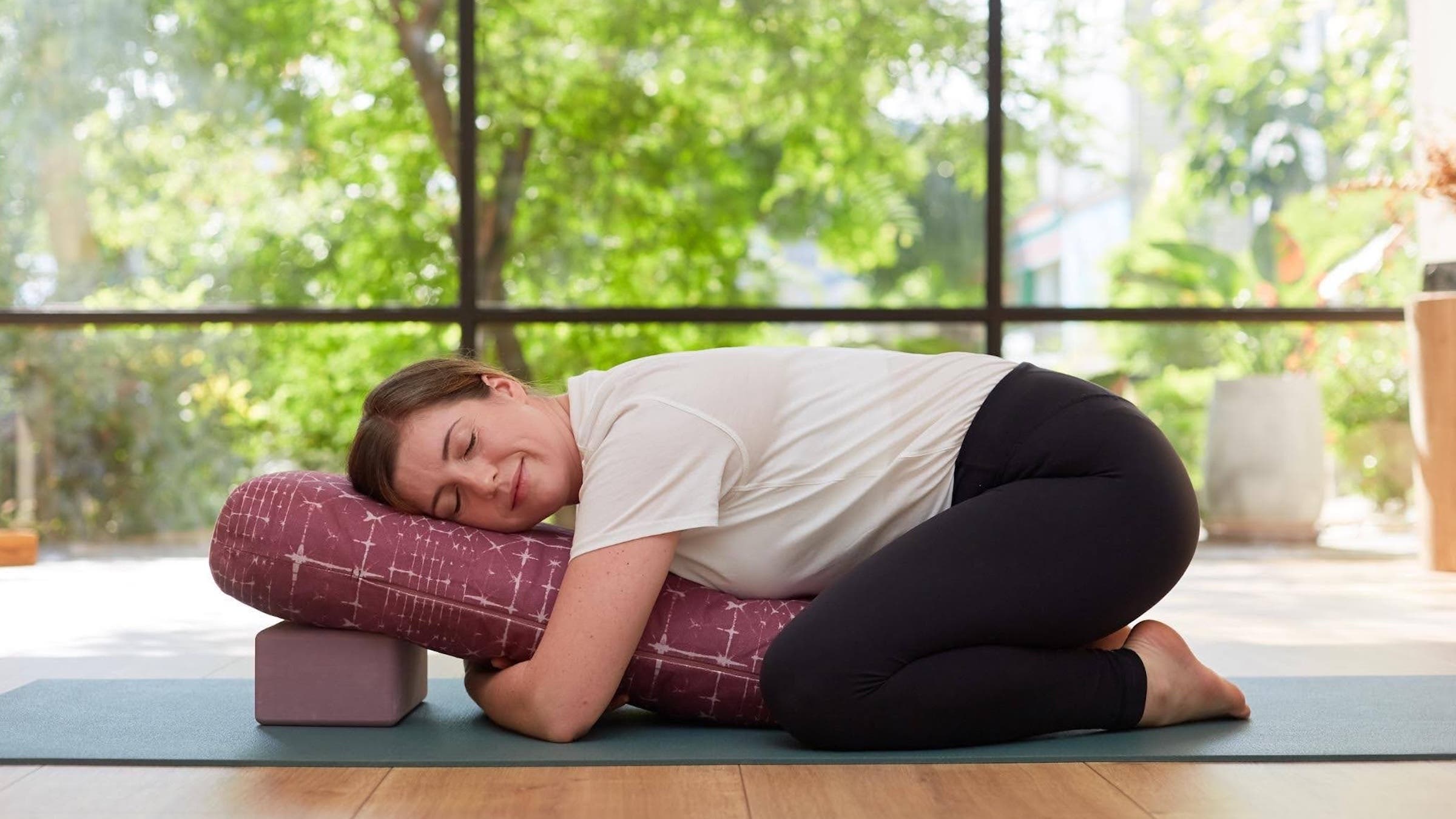
1. Supported Child’s Pose (4 Minutes)
This pose acts as a bridge between yin and restorative yoga. By placing the torso over a bolster, the practitioner closes the body inward, minimizing sensory input.
- The Technique: Kneel with knees wide and big toes touching. Place a bolster lengthwise between the thighs and drape the torso over it. Rotate the head to one side for two minutes, then switch to the other.
- Refinement: If the hips do not reach the heels, use a blanket or block for support. If the knees are sensitive, substitute this by lying on the back and drawing the knees toward the chest.
2. Two-Knee Reclined Twist (3 Minutes per side)
This supine twist addresses the lower back and outer hips, two areas where the body typically "armors" itself against stress.
- The Technique: Lie on your back, drawing knees toward the chest before letting them fall to the right. Keep arms spread wide to ground the shoulders.
- Refinement: Place a bolster under the knees to prevent them from hanging in mid-air, which can cause unwanted strain. If the shoulder lifts, use a folded blanket to bridge the gap between the shoulder and the floor.
3. Supported Fish (4 Minutes)
Chronic stress causes us to hunch, closing off the ribcage and constricting breath. Supported Fish reverses this, opening the heart and chest.
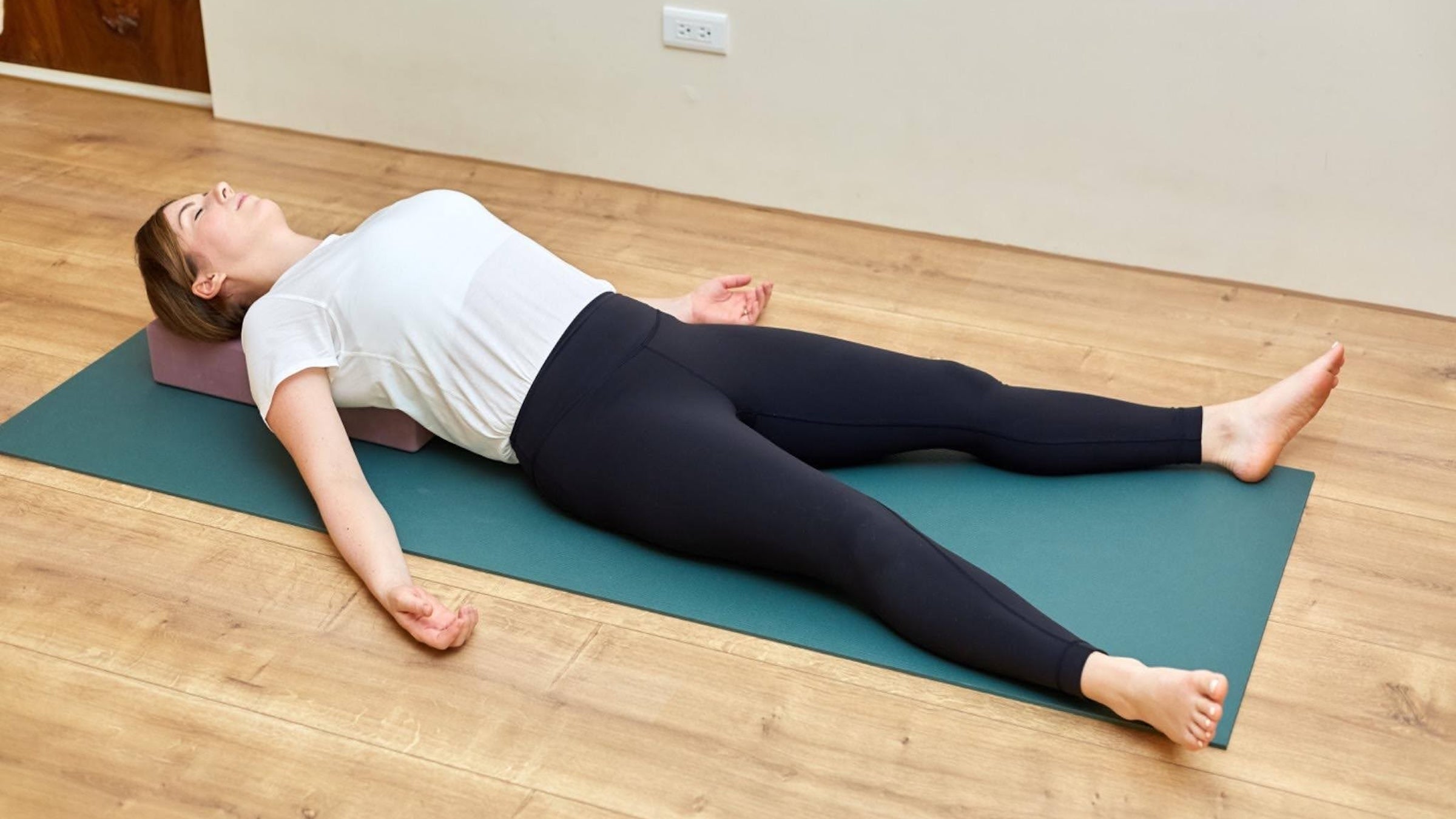
- The Technique: Place a yoga block on its lowest setting behind the shoulder blades. Use a second block or cushion to support the head.
- Refinement: To deepen the hip opening, bring the soles of the feet together and let the knees fall wide, supporting the thighs with cushions.
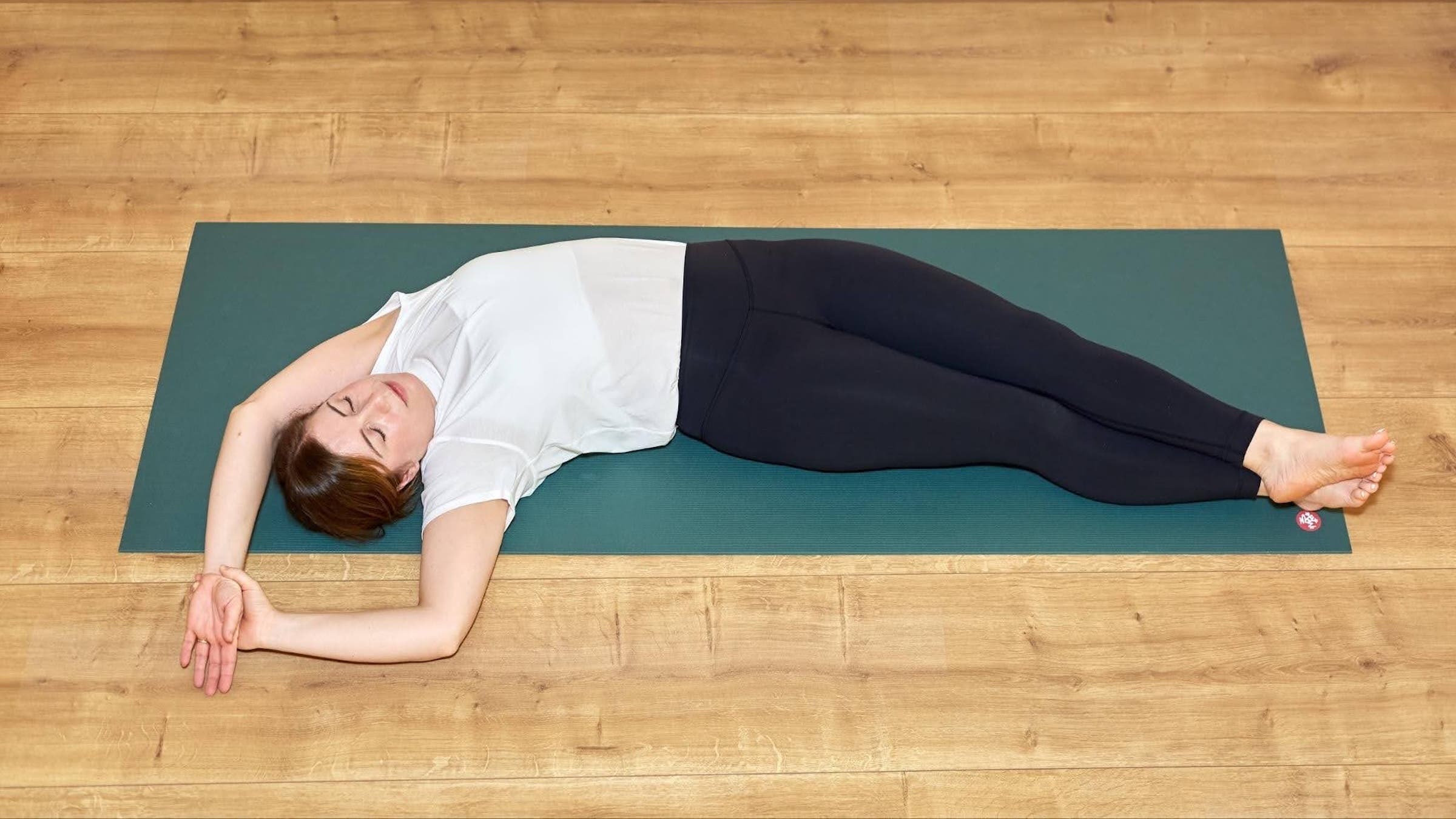
4. Banana Pose (3 Minutes per side)
Often overlooked, lateral flexion—or side-bending—is vital for mobility. Banana Pose expands the ribcage, allowing for deeper, more efficient breathing.
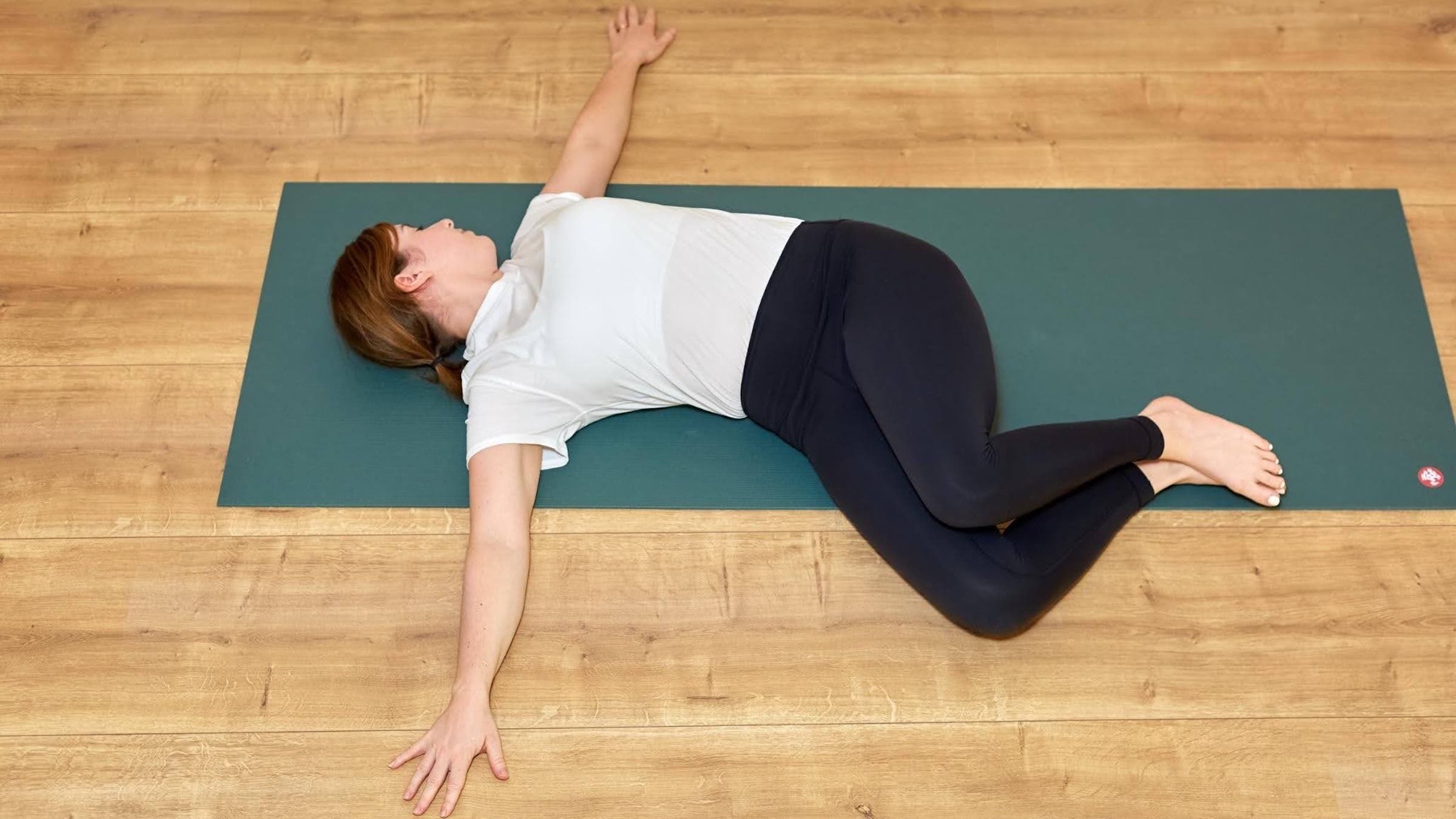
- The Technique: Lie flat, then walk both feet and arms to the right side, creating a crescent shape. Keep the hips centered on the mat to ensure the stretch remains in the torso.
- Refinement: Avoid crossing the ankles if it creates too much intensity in the hips. Keep the jaw soft, focusing the breath into the elongated side of the body.
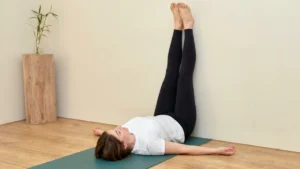
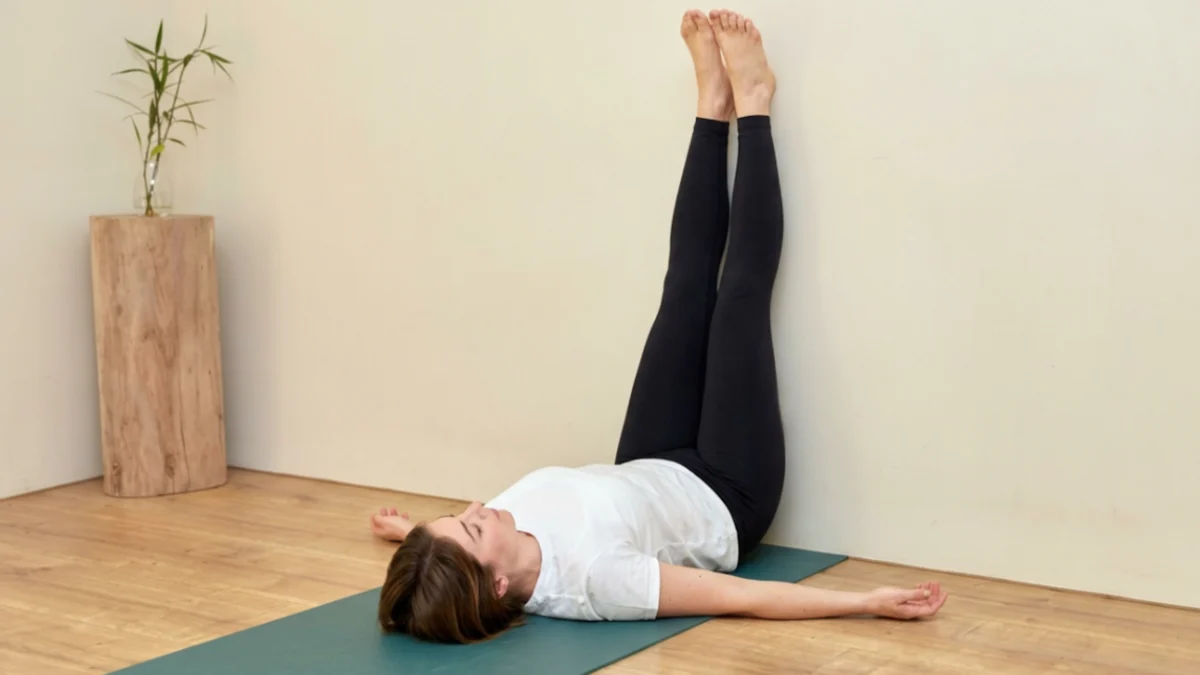
5. Legs Up the Wall (5–10 Minutes)
This is the ultimate "de-stressing" pose. It is a passive inversion that encourages venous return and provides the body with a sense of total security.
- The Technique: Sit with one hip against a wall and swing the legs upward as you recline. Adjust your distance from the wall based on your hamstring flexibility.
- Refinement: Place a blanket under the pelvis for comfort. If your feet begin to tingle, listen to your body and either bend the knees or exit the pose.
Supporting Data: The Science of the Exhale
The effectiveness of this sequence is grounded in the "exhale-dominant" breathing technique. By consciously making the exhale longer than the inhale, practitioners can force a physiological shift. This specific breathing pattern is a well-documented method for stimulating the vagus nerve, which helps slow the heart rate and lower blood pressure.
McGrath notes that the pauses between poses are just as essential as the poses themselves. A one-minute rest period—whether spent in stillness or gentle movement—allows the body to integrate the release. It is within these gaps that the true work of the practice occurs; it is a time to observe the state of the body without judgment.
Expert Perspective: Redefining Success
In discussions regarding modern wellness, there is a common misconception that yoga must be "transformative" or "dramatic" to be effective. McGrath challenges this, noting that "calm usually feels quieter than we expect it to be."
The goal of this practice is not to eradicate the stressors of daily life, but to cultivate a body that is "slightly less braced" than it was before stepping onto the mat. This modest outcome is, in reality, a significant victory. When the body is less braced, it is more resilient, more capable of rational decision-making, and better equipped to handle the demands of the day.
Implications for Daily Living
The implications of integrating a short, 20-to-30-minute yin practice into a weekly routine are profound. For those working from home or in high-pressure offices, the ability to "de-armour" the physical form can prevent the accumulation of chronic pain and anxiety.
McGrath emphasizes the importance of the transition back into the world. After completing the final pose, one should extract themselves from the floor with care, finding a comfortable seat and maintaining a soft, internal focus for several minutes before engaging with technology. This buffer zone protects the nervous system from the immediate shock of incoming notifications and digital noise.
By treating the body as a sanctuary rather than a machine, individuals can utilize yin yoga as a foundational tool for mental health. The practice serves as a reminder that while we cannot always control the environment around us, we can always control the way our body holds that reality. Through patience, stillness, and the simple act of breathing, we can navigate the stressors of 2026 with a greater sense of clarity and ease.