Published: September 1, 2026
As the calendar turns to September, the collective transition from the languid, unstructured pace of summer to the high-octane requirements of the academic and professional year can trigger significant physiological and psychological stress. Whether you are a student navigating a new syllabus, a parent managing household logistics, or a professional contending with an overwhelming Q4 workload, the "back-to-school" season often serves as a catalyst for anxiety.
However, experts suggest that one does not need hours of retreat-style practice to mitigate these effects. Research increasingly highlights that even a short, targeted yoga flow can recalibrate the nervous system, shifting the body from a sympathetic "fight-or-flight" state into the parasympathetic "rest-and-digest" mode.
The Science of the "Micro-Practice"
The challenge for most individuals during high-stress periods is the perceived lack of time. Paradoxically, the moments when we are most overscheduled are the moments when a physical reset is most necessary. A 10-minute yoga practice serves as a "circuit breaker" for the brain. By focusing on breath-synchronized movement, practitioners can interrupt the ruminative thought loops that characterize chronic stress.
Physiologically, these movements help reduce cortisol levels, lower heart rate, and improve circulation. By engaging in controlled breathing—such as the "Woodchopper" or "Humming" breaths included in this sequence—practitioners can stimulate the vagus nerve, the primary component of the parasympathetic nervous system, which promotes feelings of calm and emotional regulation.
Preparing for Your Practice
To maximize the benefits of this 10-minute sequence, accessibility is key. You do not need a studio or specialized equipment. However, keeping a yoga block or a firm cushion nearby is recommended to provide support, especially if you are practicing in a workspace or a room with hard flooring. These props are not "crutches" but essential tools for maintaining proper alignment, which prevents physical strain and allows you to focus entirely on the meditative aspects of the movement.
The Sequential Flow: A Chronological Guide
This sequence is designed to be performed in a specific order to facilitate a gradual "unwinding" of the body and mind.
1. Centering: Thunderbolt Pose (1 Minute)
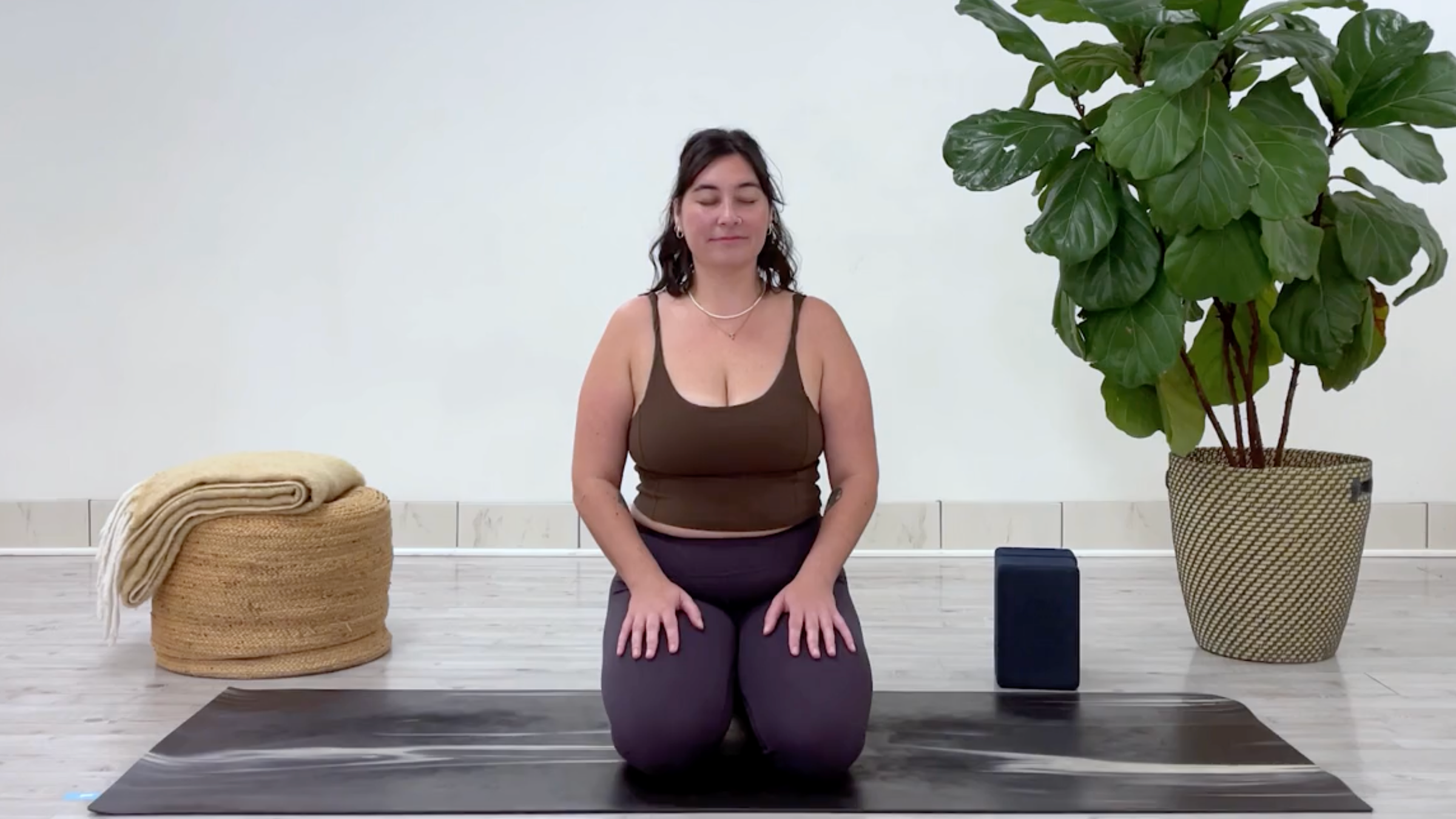
Begin by kneeling in Thunderbolt Pose (Vajrasana). Ensure your toes are tucked beneath you to provide a gentle stretch to the fascia of the feet, or sit cross-legged on a block if this is more accessible. This pose promotes a tall, alert spine, which encourages deep diaphragmatic breathing. Spend the first minute focusing solely on the sensation of your sit bones grounding into the floor.
2. Kinetic Release: Woodchopper Breath (1 Minute)
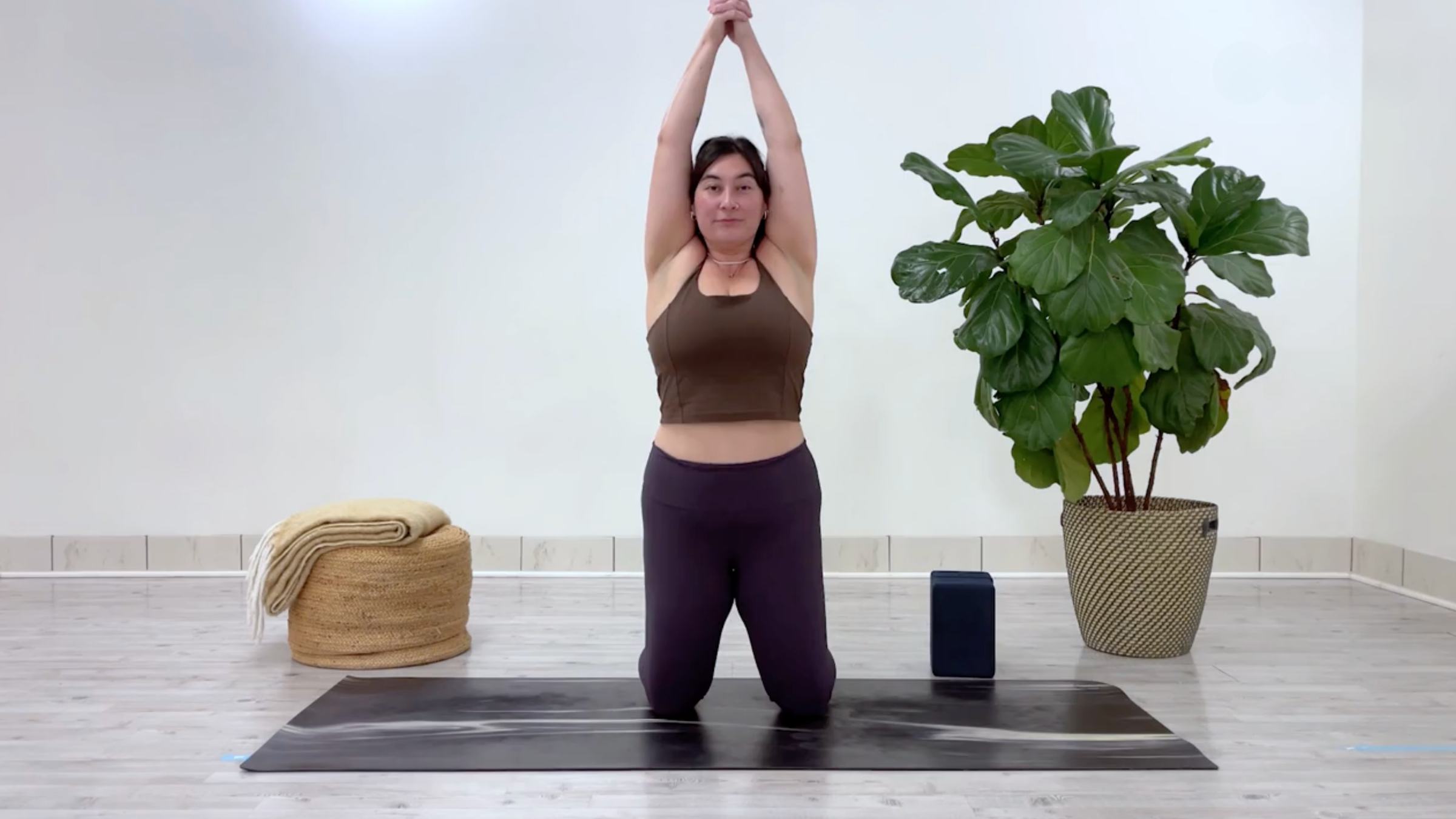
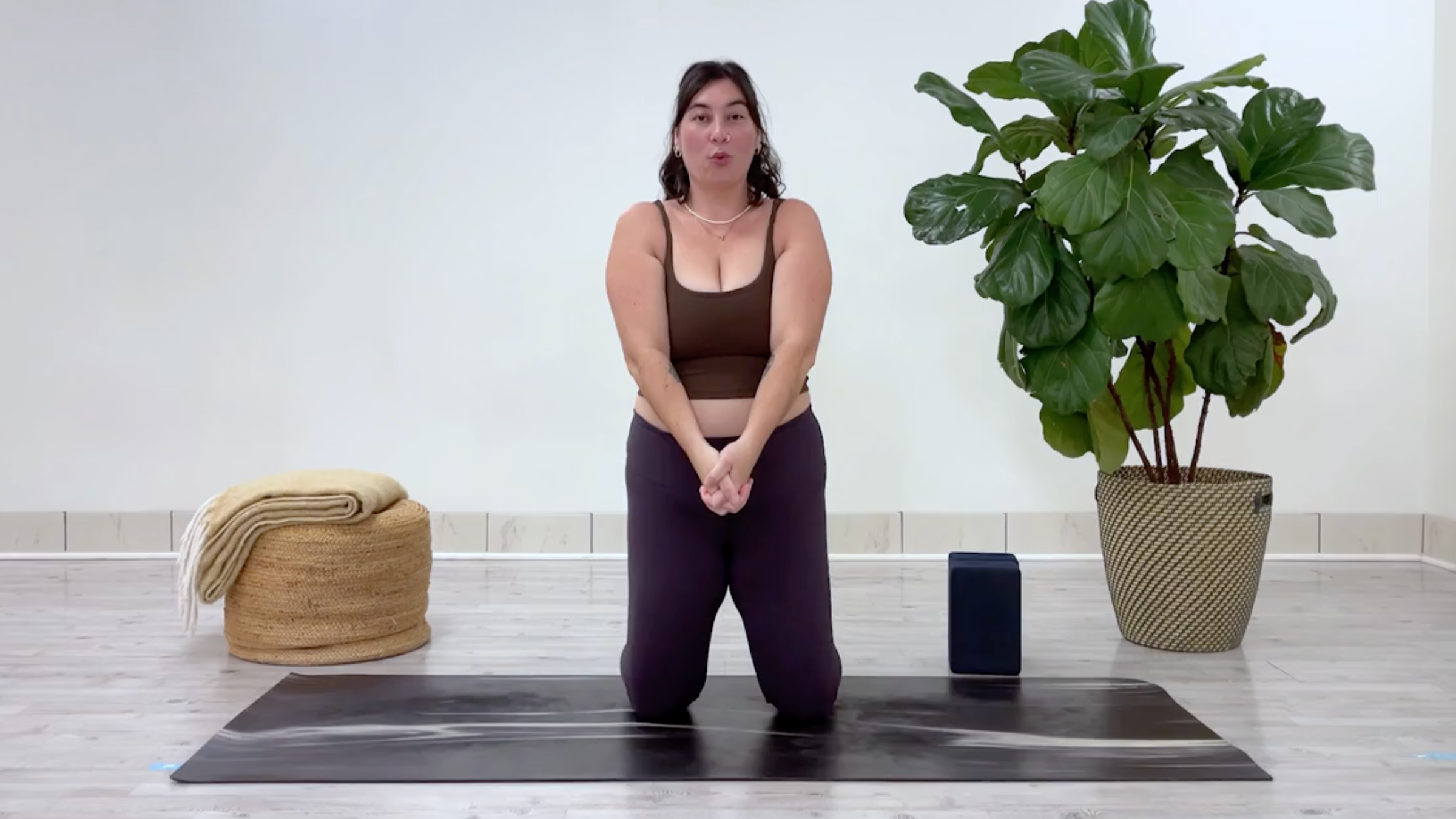
Stand on your knees and reach your arms overhead, interlacing your fingers or pressing your palms together. As you inhale, lengthen the spine. As you exhale, pull your fists down sharply in front of your belly, mimicking the action of chopping wood. This dynamic movement, paired with a forceful, audible exhale, helps expel stagnant air and release pent-up frustration.
3. Transition: Reconnecting in Thunderbolt
Following the intensity of the Woodchopper Breath, return to the stillness of Thunderbolt Pose. Hold your arms overhead for one final inhalation, then lower them as you exhale. Take five deep, unhurried breaths, allowing your heart rate to return to a baseline rhythm.
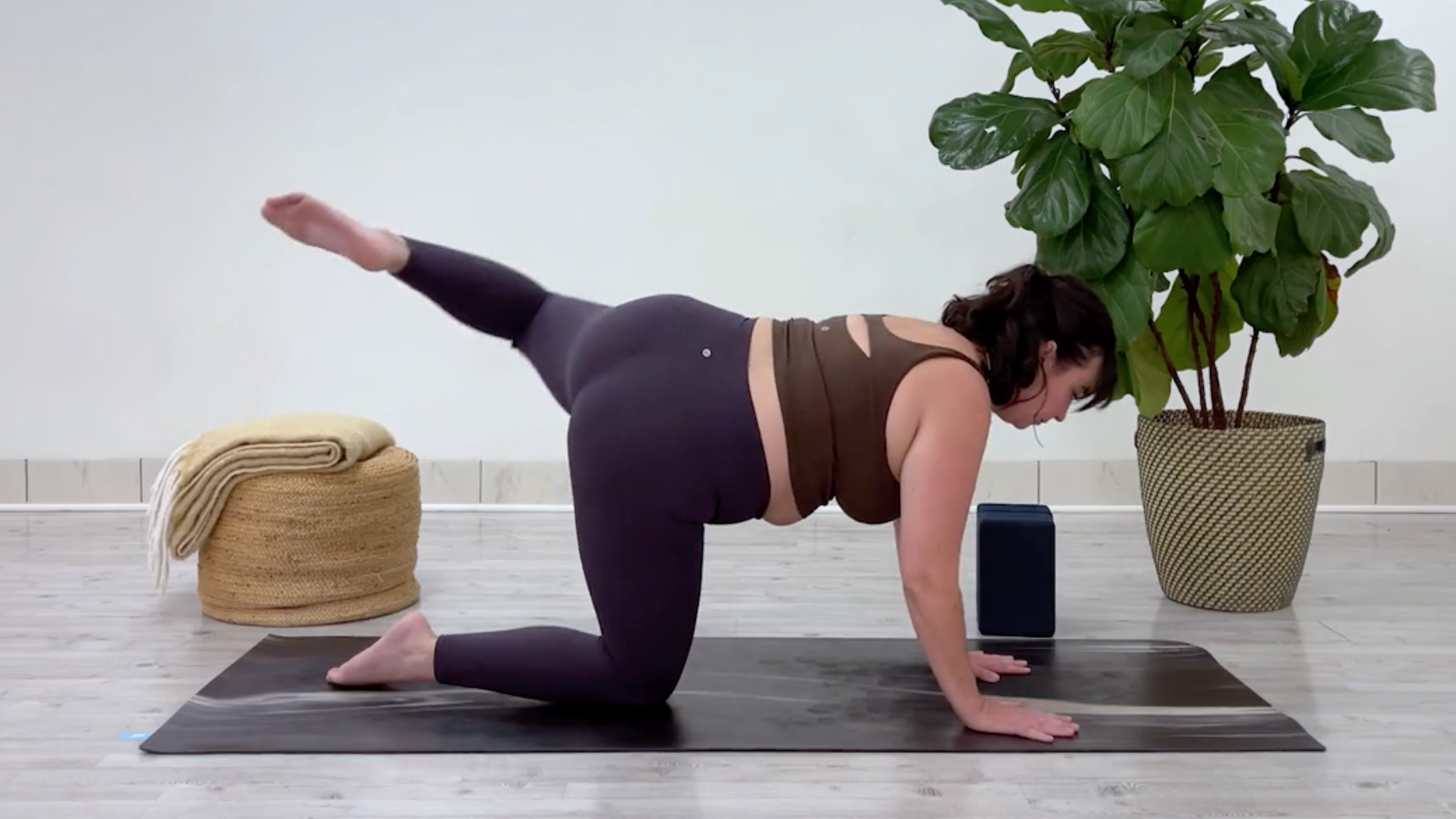
4. Fluid Mobility: Hip Circles and Lizard Pose
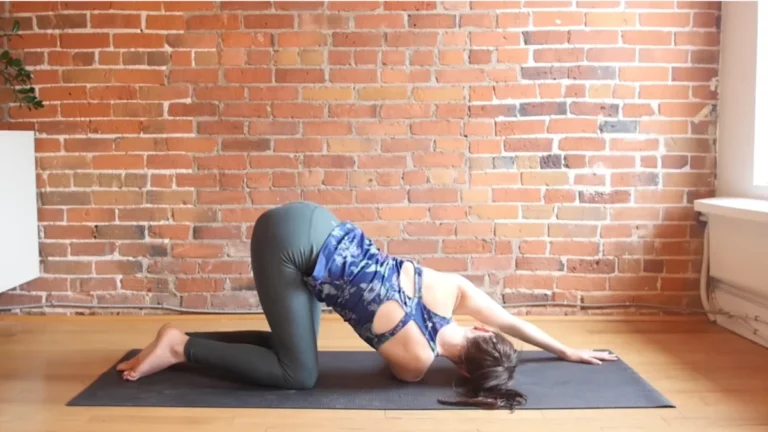
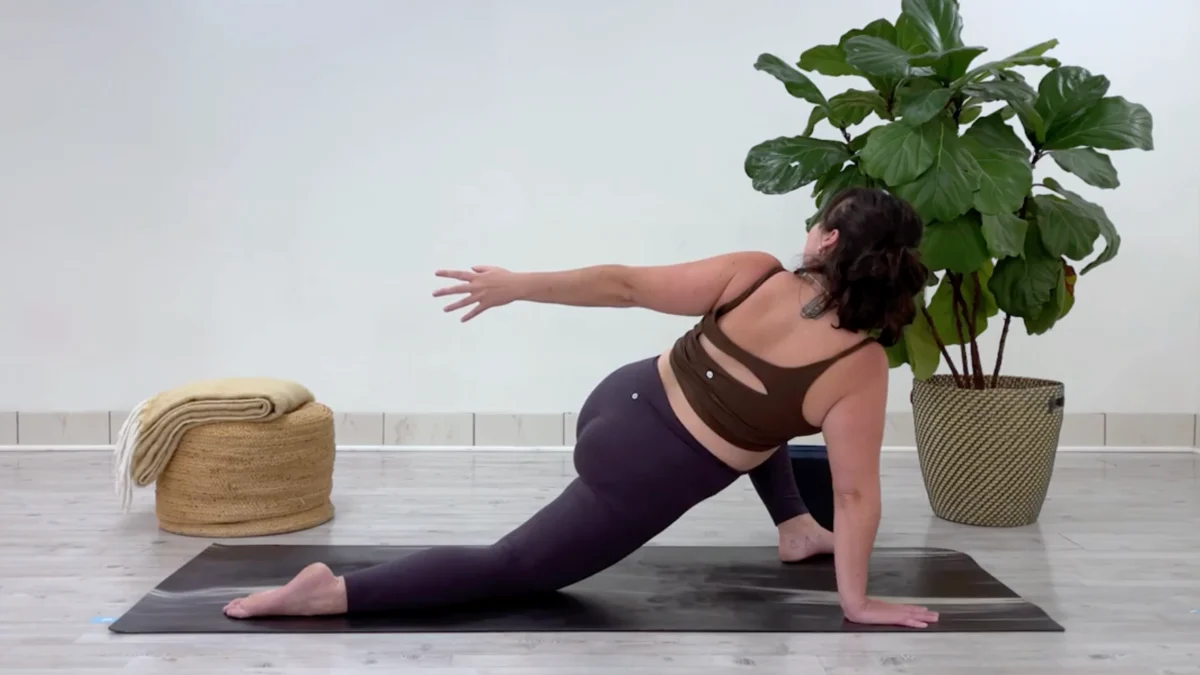
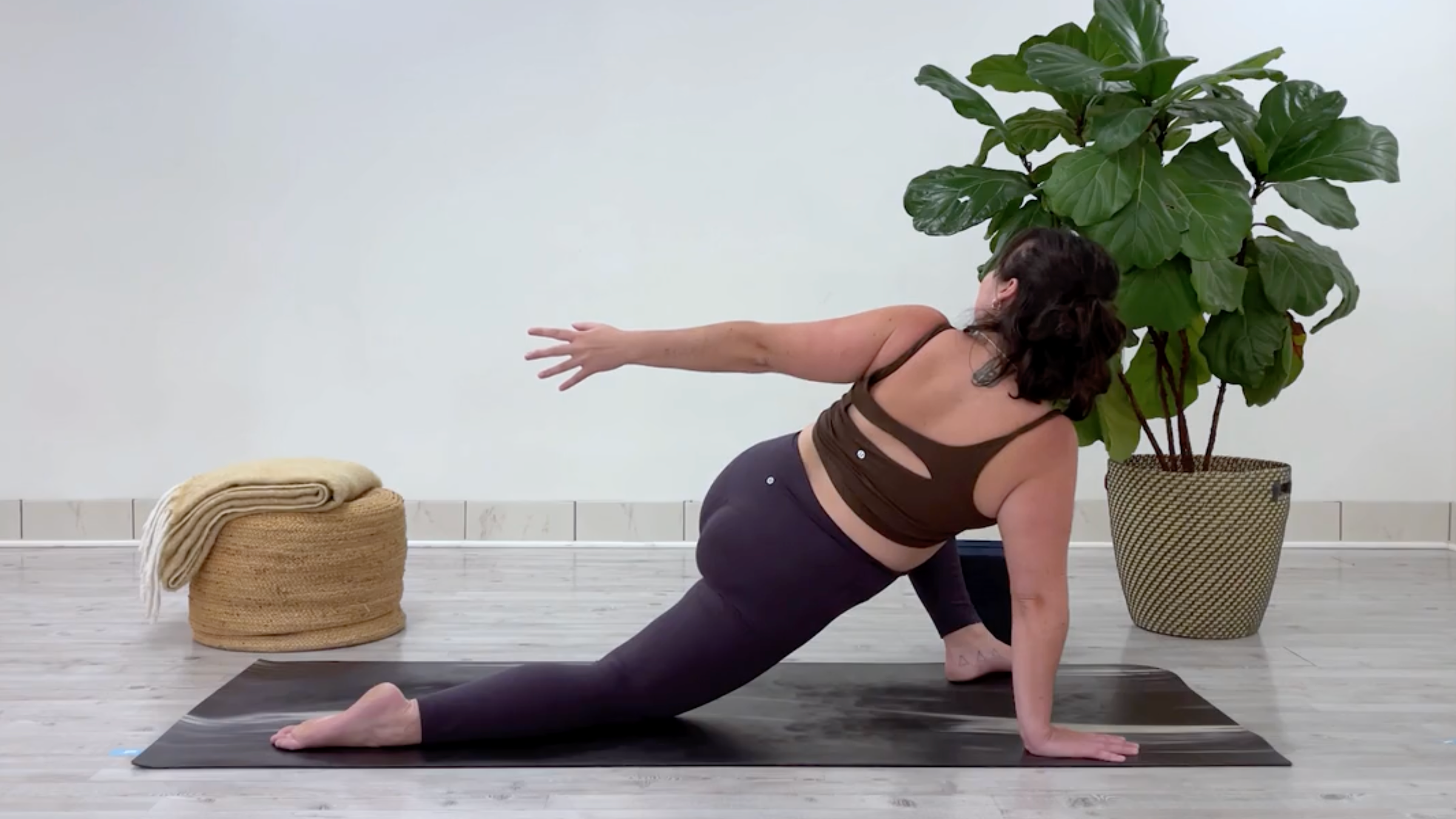
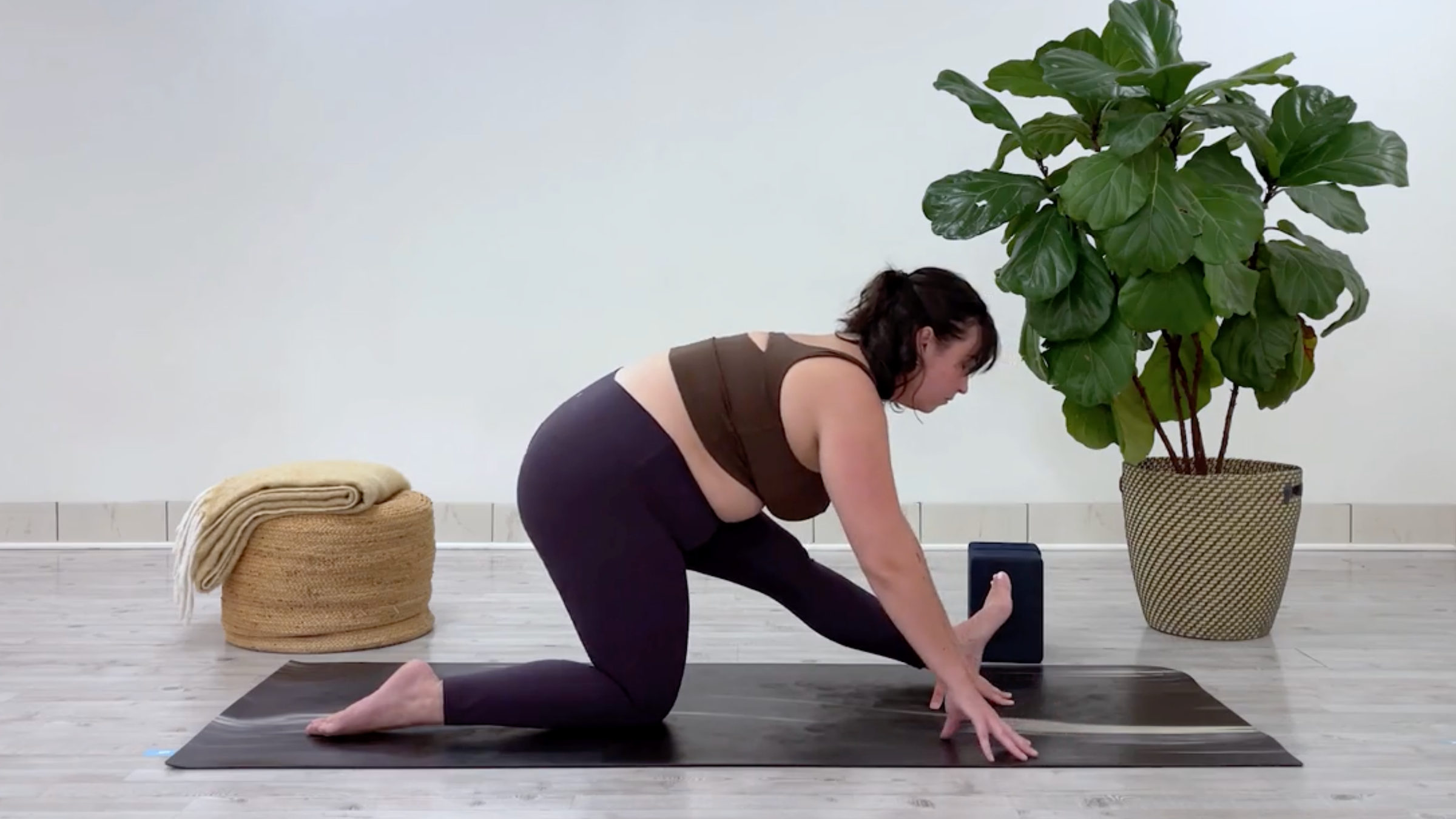
Move into a Tabletop position, ensuring your shoulders are stacked over your wrists and hips over your knees. Elevate the left knee and perform three large, slow circles to lubricate the hip joint. Transition from these circles by stepping your left foot to the outside of your left hand, entering Lizard Pose. This deep hip opener is essential for those who spend long hours sitting at desks, as stress is often held physically in the psoas and hip flexors.
5. Spinal Rotation: Thread the Needle Variation
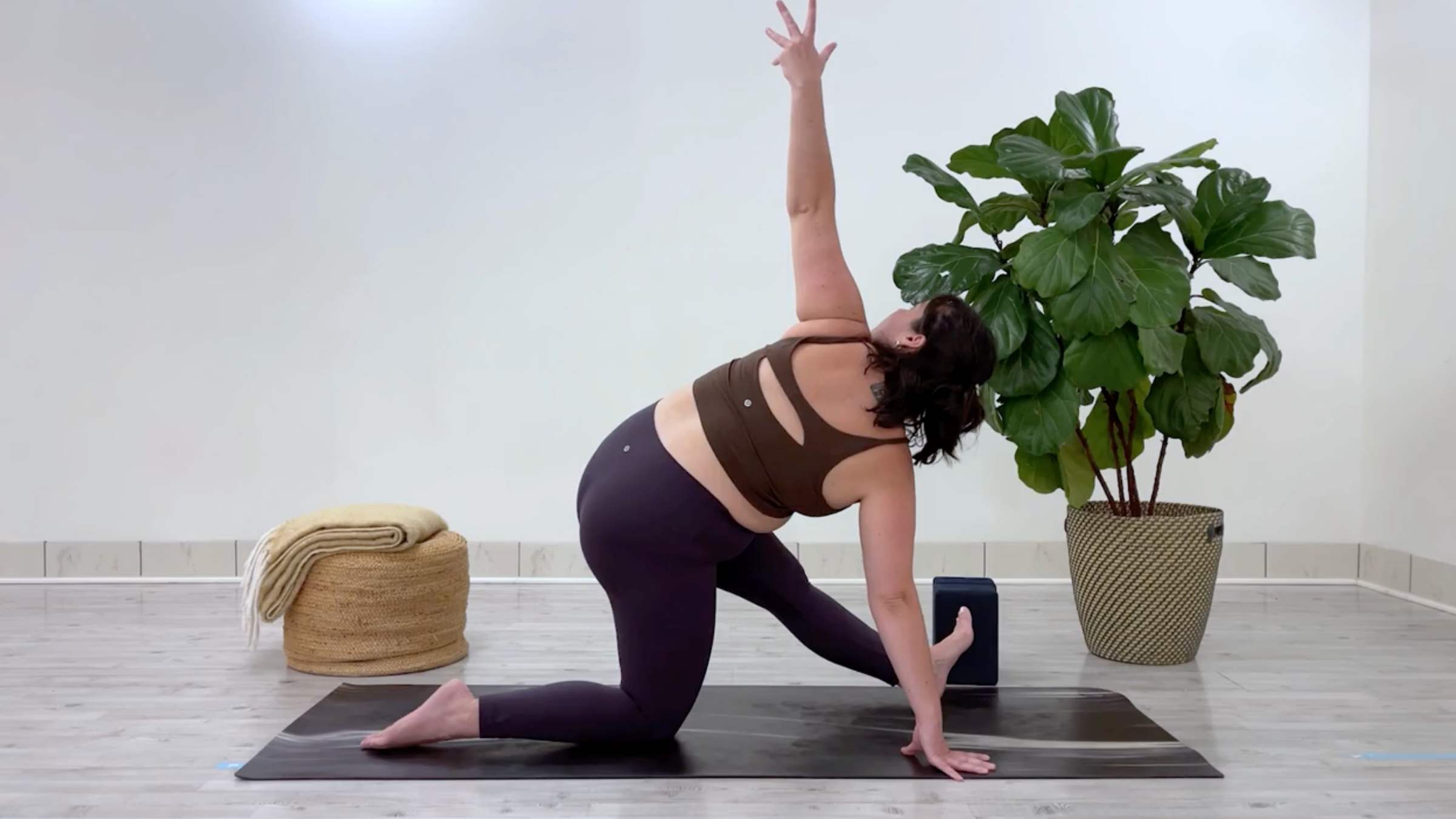
While in the lunge, inhale and reach your left arm toward the sky, opening the chest. As you exhale, "thread" the left arm under your chest and behind the right arm. Repeat this cycle three times. This movement facilitates spinal rotation, which can help alleviate tension in the upper back and shoulders.
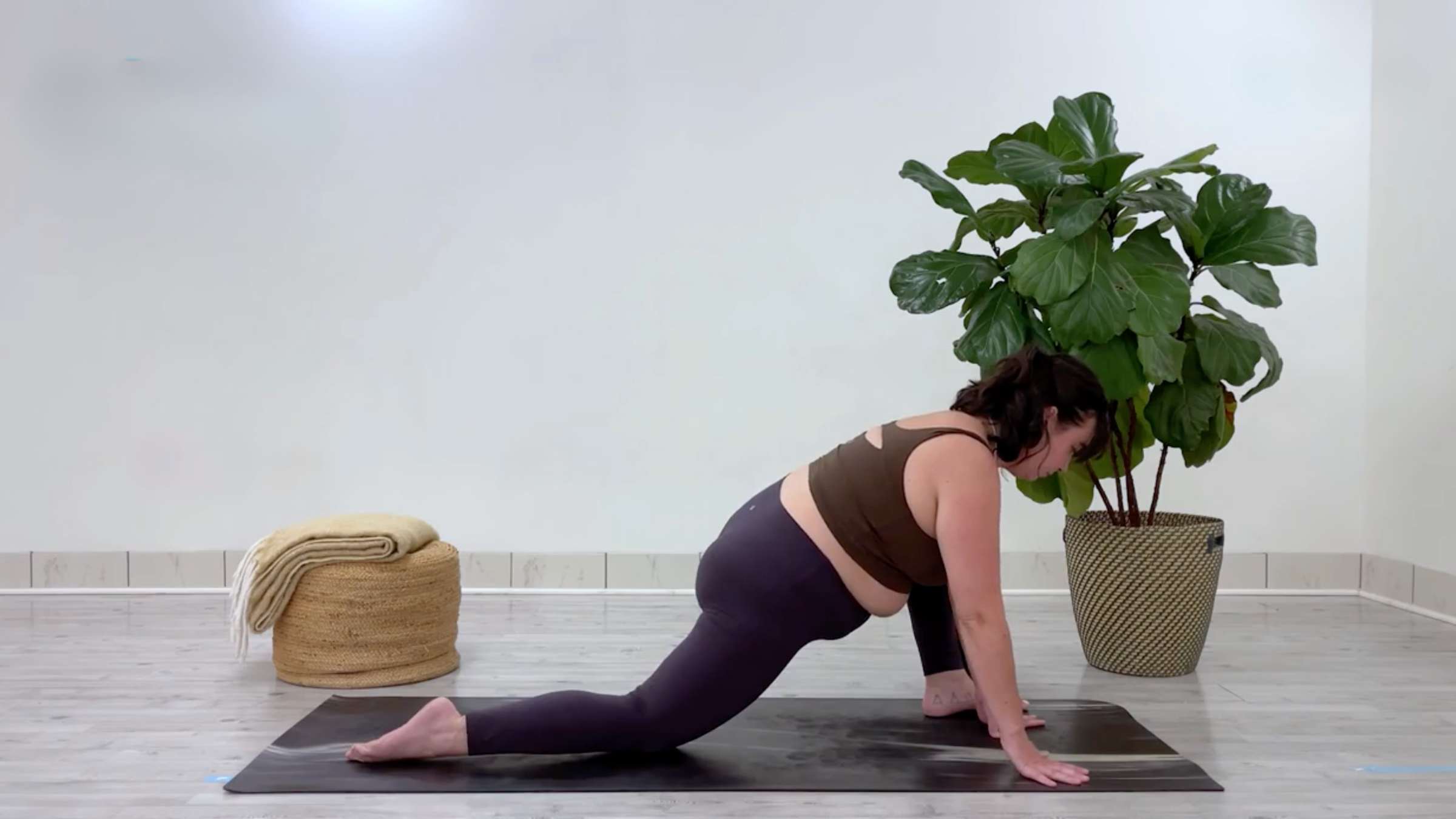
6. Deep Stretching: Half Splits
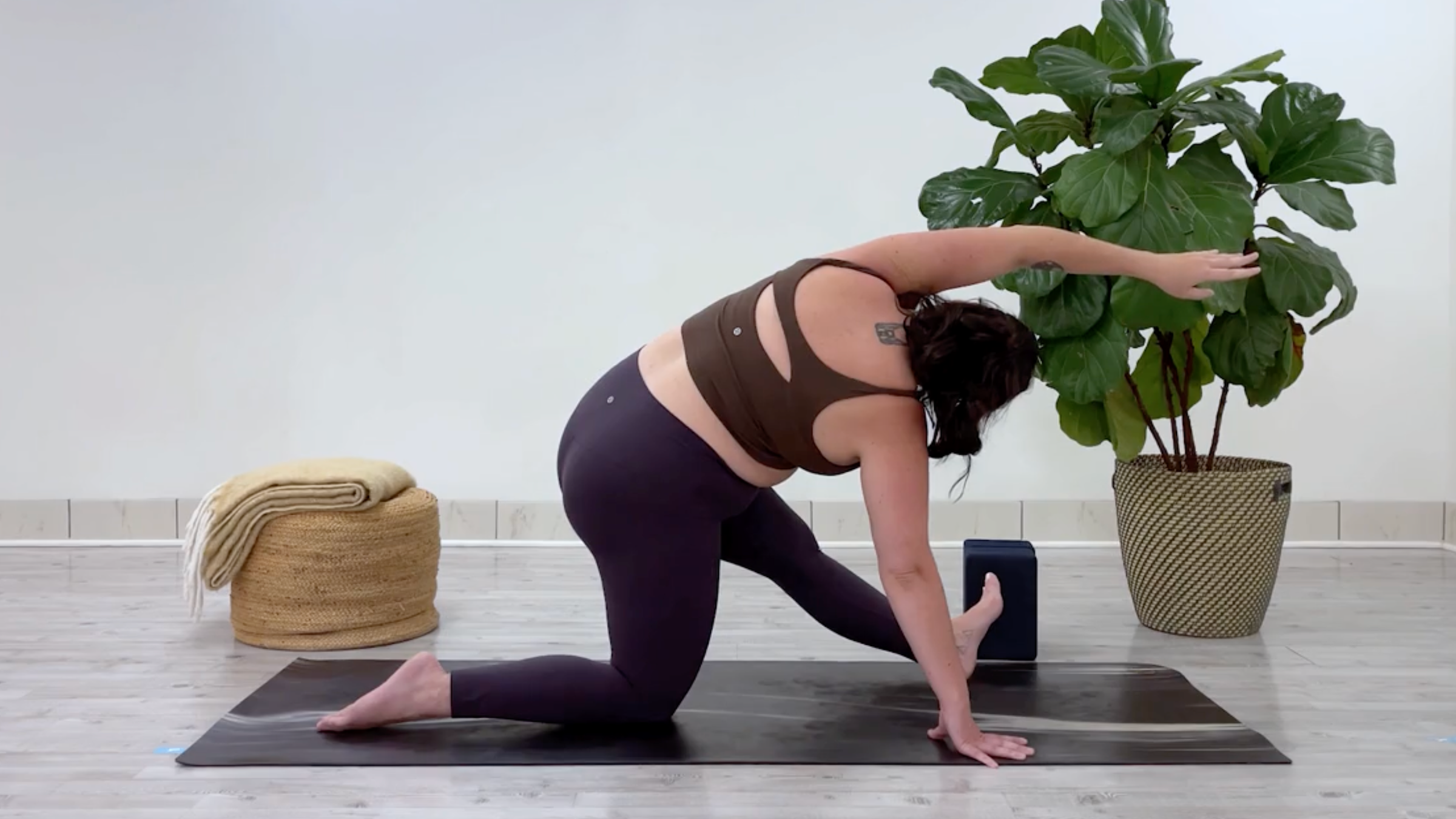
Transition from your lunge into Half Splits by straightening the left leg and flexing the foot. This targets the hamstrings. To deepen the experience, you may again reach your left arm upward or sweep it overhead to stretch the side body. Hold for three full, deep breaths.
7. The Revolved Sequence
Return to a Low Lunge, reaching the left arm back. Then, transition into a Wide-Legged Standing Forward Bend, followed by a Revolved Wide-Legged Forward Bend, where the right arm reaches toward the ceiling while the left hand stays planted. This sequence aids in lymphatic drainage and improves overall blood flow.
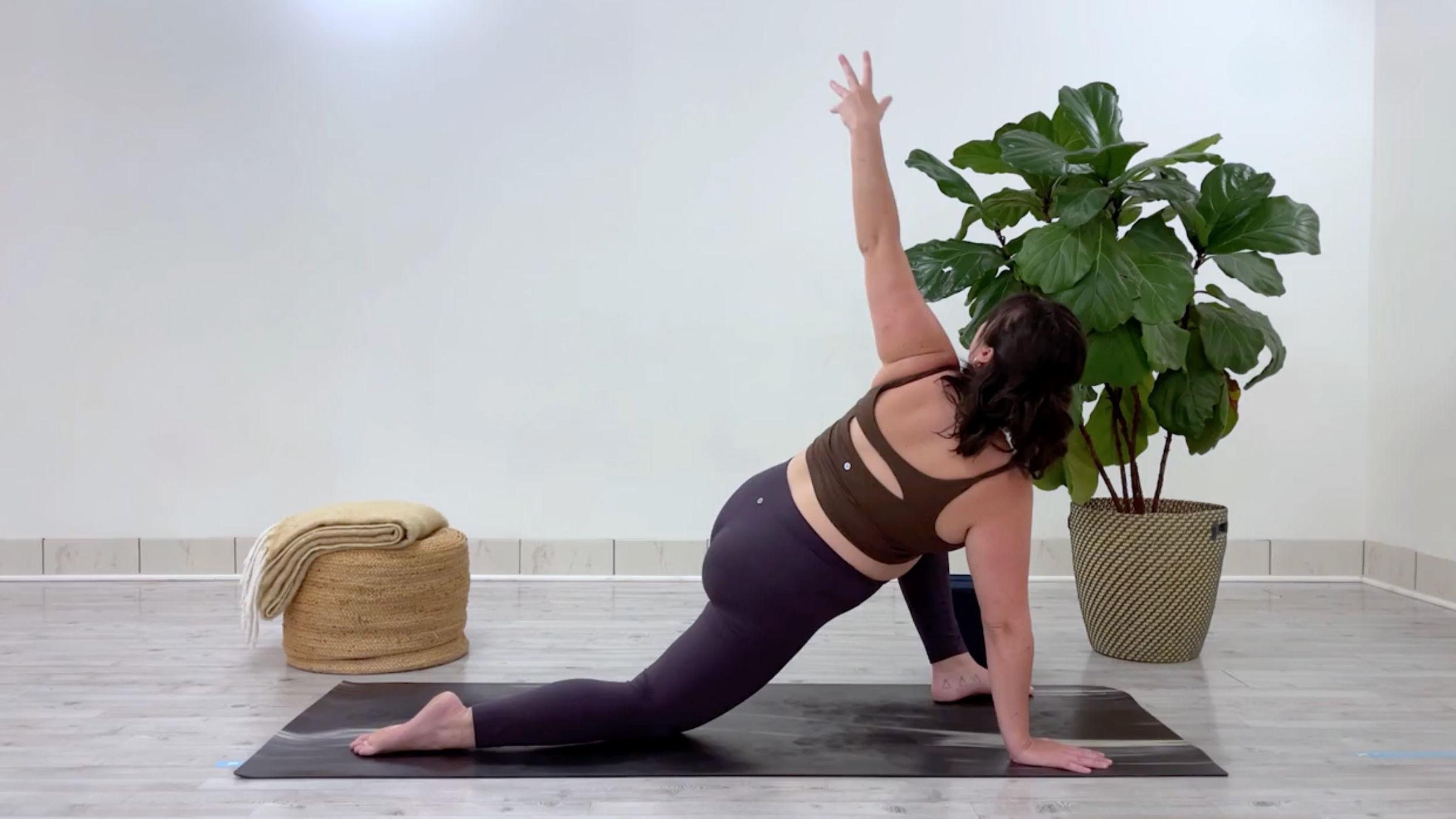
8. Full Body Integration: Downward-Facing Dog
Transition into Downward-Facing Dog. Use these three breaths to press into the palms and stretch the posterior chain, lengthening the entire back of the body.
9. Bilateral Balancing: Torso Twists
Return to a kneeling position. Perform Torso Twists by placing your fingertips on your shoulders and twisting from side to side for five full breaths. Once finished, repeat the entire sequence (Steps 4 through 8) on the right side of the body to ensure bilateral symmetry.
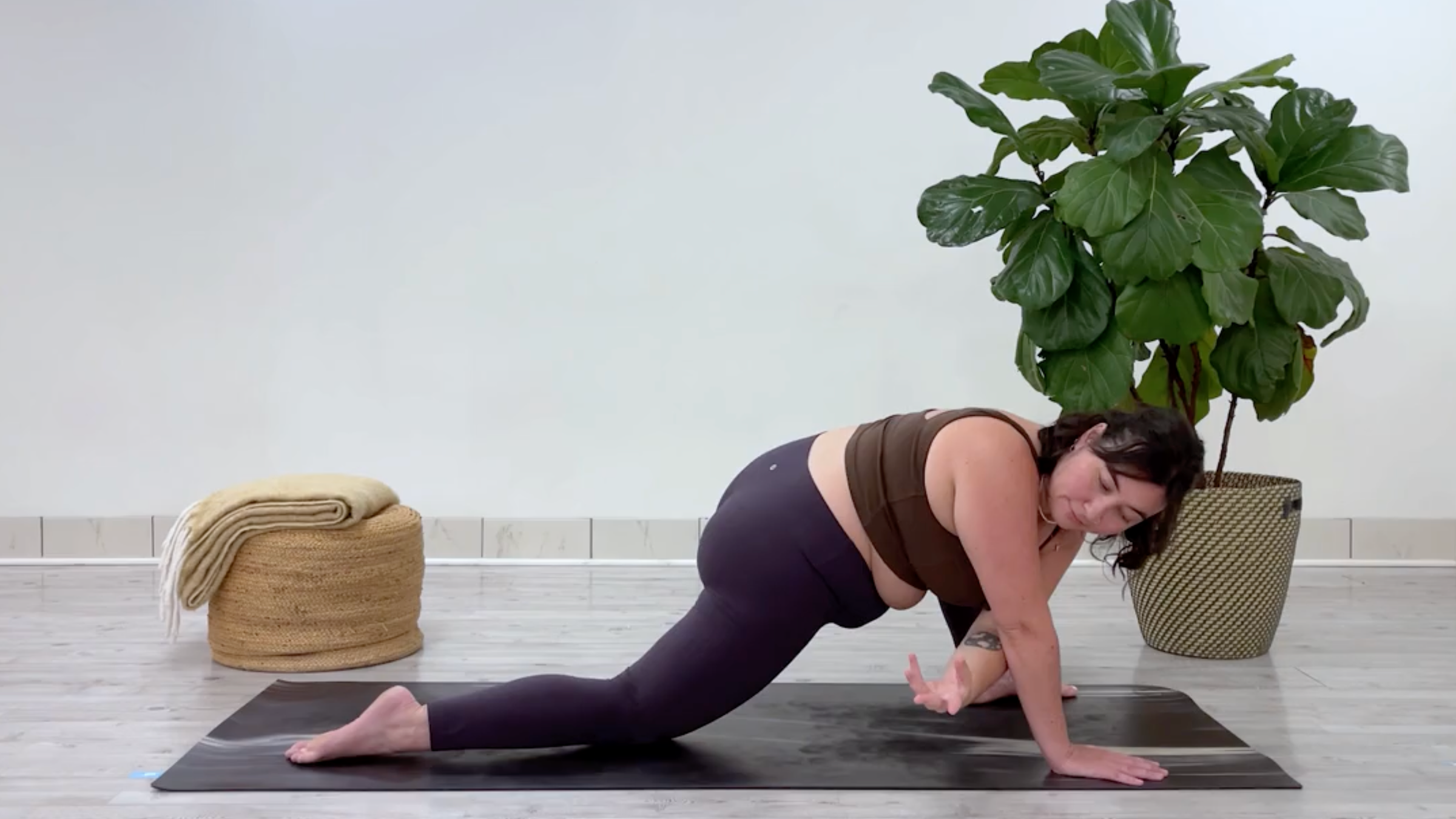
10. The Closing: Humming Breath
Finish the practice back in the seated Thunderbolt Pose. Perform three "Humming Breaths" (Bhramari Pranayama). With lips sealed, inhale through the nose and exhale while making a soft, steady humming sound. This vibration acts as a natural sedative for the nervous system. Conclude by bringing your hands to heart center in a prayer position, acknowledging the time you have carved out for your own well-being.
Supporting Data and Evidence-Based Benefits
The efficacy of this specific flow lies in its integration of asana (posture), pranayama (breath control), and dharana (concentration). Clinical studies on brief yoga interventions have shown:
- Reduction in HPA-Axis Activation: Short sequences reduce the body’s production of cortisol, the primary stress hormone.
- Cognitive Flexibility: By shifting focus from work-related tasks to the mechanics of movement, the brain experiences a "cognitive offloading" effect, which can lead to increased productivity once the session is complete.
- Pain Reduction: Regular, short-duration hip and spinal mobility exercises are statistically linked to lower incidences of chronic lower back pain among office workers.
Official Perspectives: The Role of Mindfulness in Modern Productivity
Industry experts in corporate wellness emphasize that "wellness" should not be viewed as a luxury, but as a performance-enhancing necessity. Dr. Helena Vance, a consultant in workplace psychology, notes, "We see a significant drop in burnout rates when employees or students integrate ‘micro-breaks’ into their day. It isn’t about being perfectly still; it’s about being intentionally present."
Educational institutions are also beginning to recognize these benefits. With many universities and high schools now offering dedicated "wellness rooms," the integration of yoga into the daily routine is shifting from a counter-culture practice to a mainstream tool for success.
Implications for the Future
As we navigate an increasingly digital and high-pressure world, the ability to "find one’s center" becomes a critical life skill. This 10-minute sequence serves as a blueprint for those looking to reclaim their autonomy in a chaotic environment.
The primary implication of this approach is a shift in mindset: by treating the mat as a sanctuary rather than a chore, the individual gains a sense of control. When we learn to breathe through the discomfort of a deep stretch, we build the resilience necessary to breathe through the discomfort of a difficult meeting, a challenging deadline, or a demanding academic schedule.
In conclusion, the back-to-school season does not have to be a period of depletion. By dedicating just 600 seconds a day to this practice, you can transform your relationship with stress, turning potential chaos into a manageable, and perhaps even serene, experience. The mat is waiting—and it is the most efficient office tool you have.