In the world of athletic performance and everyday movement, the hip adductors—the group of muscles running along the inner thigh—are often overlooked until they fail. Whether you are a weekend warrior attempting a sudden sprint on the soccer field or an individual recovering from a persistent nagging ache, the integrity of your pelvic stability is paramount. A newly popularized 10-minute exercise routine, designed by certified personal trainer Amber Yang and featured in The Epoch Times on August 28, 2026, aims to demystify hip health by focusing on the crucial "braking" function of these muscles.
The Mechanics of Injury: Why Inner Thighs Fail
To understand why groin strains occur, one must first understand the biomechanical role of the hip adductors. Contrary to the popular belief that these muscles merely pull the legs inward, they function primarily as the body’s "braking system."
During high-velocity movements—such as cutting, pivoting, kicking a ball, or rapid acceleration—the hip adductors must lengthen under significant tension to decelerate the leg. This eccentric loading is a sophisticated physiological dance: as the leg swings or moves laterally, the adductors act as a counterbalance to the larger muscle groups of the outer hip and core, stabilizing the pelvis and ensuring a smooth transition of force.
When the demand placed on these muscles exceeds their current capacity for force production or readiness, the structural integrity of the tissue is compromised. The result is often the classic "groin strain," characterized by varying degrees of pain, tightness, localized swelling, or even visible bruising. This phenomenon is particularly prevalent among "weekend warriors"—individuals who remain sedentary throughout the work week and then engage in high-intensity, explosive athletic activities on Saturday or Sunday. Without the conditioning to support these sudden, high-torque loads, the muscles are effectively set up for failure.
A Chronology of Hip Stability
The discourse surrounding hip health has evolved significantly over the last decade. Historically, groin injuries were treated with rest and ice, with little emphasis on proactive strengthening. However, the paradigm shifted following a seminal 2015 systematic review published in the British Journal of Sports Medicine.
This review identified four critical pillars associated with the risk of groin injury:
- History of Previous Injury: A prior strain creates a "weak link" in the kinetic chain if rehabilitation did not fully restore baseline strength and neuromuscular control.
- Reduced Hip-Adductor Strength: A lack of baseline force production leaves the muscle unable to absorb the kinetic energy of sudden movements.
- High Levels of Competition: Increased professional or amateur athletic intensity places a greater burden on the pelvic stabilizer complex.
- Insufficient Sport-Specific Training: A mismatch between the conditioning performed in the gym and the movements required on the field.
While experts are quick to note that no single exercise routine can offer a 100% guarantee against injury, the consensus has moved toward the necessity of progressive loading. By gradually developing adductor strength, hip stability, and movement control, athletes and non-athletes alike can prepare their musculoskeletal systems for the unpredictable nature of physical life.
Supporting Data: The Case for Progressive Training
The strategy of "progressive training" is the cornerstone of modern physical rehabilitation and injury prevention. According to fitness experts, the goal is not to achieve maximum muscle fatigue in a single session, but to stimulate consistent, adaptive change over time.
Research into strength training for both athletes and aging populations highlights that occasional, sporadic bursts of intense exercise are often counterproductive. When the body is subjected to a massive, unexpected load, the risk of micro-tearing in the muscle fibers increases exponentially. Conversely, consistent exposure to sub-maximal loads allows the body to reinforce collagen fibers within the tendons and increase the contractile strength of the muscle tissue.
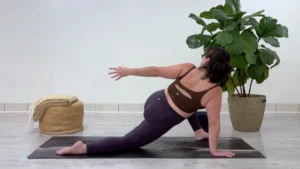
The 10-minute routine proposed by Amber Yang adopts this methodology. By utilizing accessible tools such as resistance bands, yoga blocks, and bodyweight, the program emphasizes volume and control over pure weight. Resistance bands, in particular, provide a unique form of "accommodating resistance"—the tension increases as the muscle shortens, which mimics the way the body naturally produces force during functional movement.

The 10-Move Protocol: A Detailed Breakdown
The effectiveness of the routine lies in its holistic approach. Rather than isolating the inner thigh in a vacuum, the 10 movements target the entire "hip system," which includes the outer hips, the gluteal complex, and the core.
The Introductory Phase
For those recovering from injury or beginners, the routine emphasizes a "pain-free range of motion." The movements include:
- Controlled Side Leg Raises: Focused on the abduction and adduction cycle without the use of momentum.
- Plank Transitions: These engage the core, which acts as the anchor point for the hip stabilizers.
- Yoga Block Squeezes: A static hold that teaches the adductors to fire under tension without the risk of dynamic impact.
Advanced Variations
As strength increases, the routine introduces:
- Band-Resisted Adduction: Using a resistance band anchored to a stable point to challenge the muscles throughout the full range of motion.
- Single-Leg Stability Planks: A progression that forces the hip stabilizers to work unilaterally, mirroring the requirements of running or jumping.
The golden rule, according to Yang, is that pain—not ambition—should dictate the limit. If a movement causes sharp pain or discomfort, the intensity must be dialed back. The objective is to strengthen the system, not to push through structural damage.
Implications for Public Health and Fitness
The broader implications of this 10-minute routine are significant. As the population becomes increasingly sedentary, the prevalence of lower-body imbalances is on the rise. Weakness in the hip adductors does not just cause groin pain; it often leads to compensation patterns in the lower back and knees. When the hips cannot properly stabilize the pelvis, the body relies on secondary muscles to do the job, leading to chronic issues like patellofemoral pain or lower back stiffness.
By integrating this short, structured routine into a daily or bi-weekly habit, individuals can move away from the "all-or-nothing" approach to fitness. The beauty of this protocol is its portability. Because it relies on bodyweight and inexpensive resistance bands, it removes the "I don’t have time for the gym" barrier that prevents so many from engaging in preventative care.
Professional Perspectives and Final Guidance
In reviewing the current body of literature, it is clear that moving away from individual muscle-isolation and toward "movement-based training" is the future of fitness. By focusing on how the adductors, outer hips, and core work in tandem, practitioners can develop a more robust physical foundation.
The 10-minute routine is not merely a "leg workout"; it is an insurance policy for the hips. It serves as a reminder that the body is an interconnected machine. When the "brakes" of the hip adductors are well-maintained, the entire system functions with greater efficiency, agility, and longevity.
For those interested in starting, the recommendation remains consistent: start slow, maintain a steady cadence, and prioritize the quality of the movement over the quantity of the repetitions. Whether you are an athlete looking to shave milliseconds off your pivot or a professional looking to alleviate the aches of a sedentary work week, the path to hip health is built one controlled movement at a time.
Summary of Key Principles for Injury Prevention:
- Consistency Over Intensity: Daily, moderate sessions are superior to weekly, high-intensity bouts.
- Integrative Training: Focus on the synergy between the core and the hips, rather than isolating individual muscles.
- Range of Motion: Always operate within a pain-free range to avoid exacerbating existing inflammation.
- Equipment Utility: Utilize tools like resistance bands to provide progressive, safe tension that can be adjusted as strength improves.
Note: Individuals currently dealing with acute injury or chronic pain should consult with a physical therapist or healthcare provider before beginning any new exercise regimen to ensure the movements are appropriate for their specific clinical situation.