




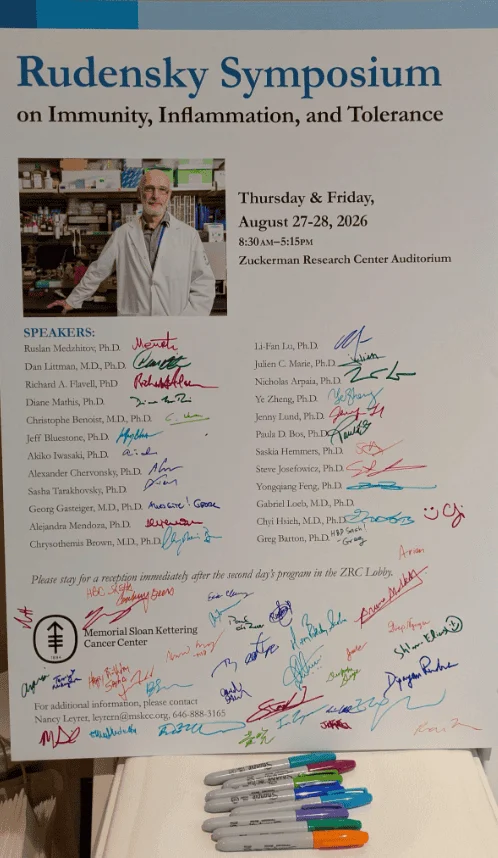
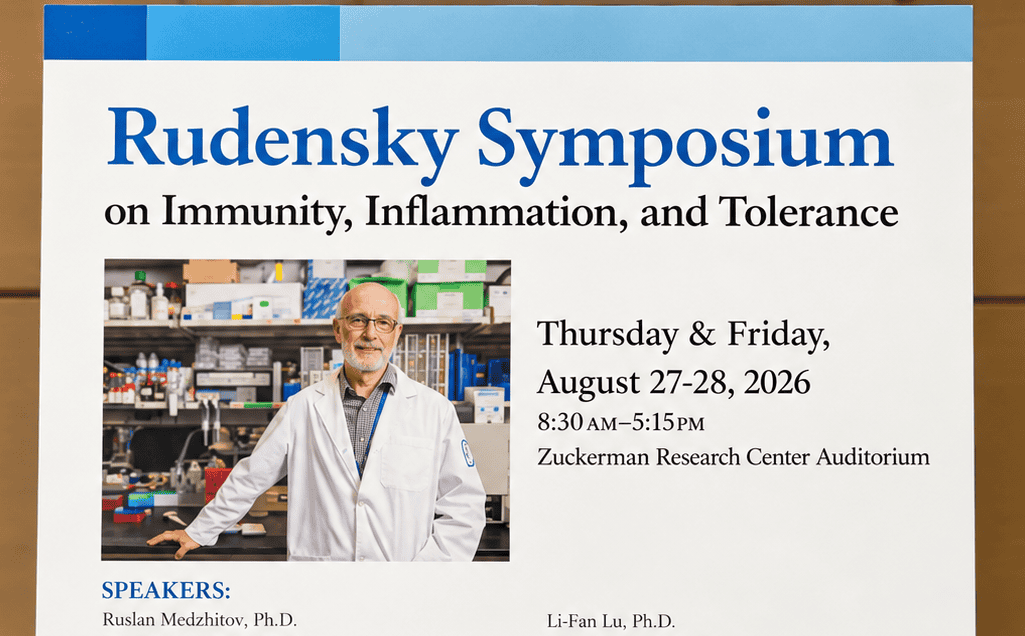
On August 27–28, 2026, the scientific community gathered for the Rudensky Symposium on Immunity, Inflammation, and Tolerance. While ostensibly held to commemorate the 70th birthday of Dr. Alexander “Sasha” Rudensky of the Memorial Sloan Kettering Cancer Center, the two-day event served a far more profound purpose: it acted as a living archive of the last three decades of immunological progress.
The symposium was not merely a retrospective; it was a synthesis of how fundamental questions regarding the immune system’s “off-switch” have evolved into the next generation of cancer immunotherapies. By bringing together former trainees, lifelong collaborators, and peers, the event underscored that the most significant breakthroughs in medicine are rarely solitary achievements—they are the results of deep mentorship, decades of collaboration, and a relentless commitment to curiosity-driven science.
The Legacy of Mentorship: A Foundation for Innovation
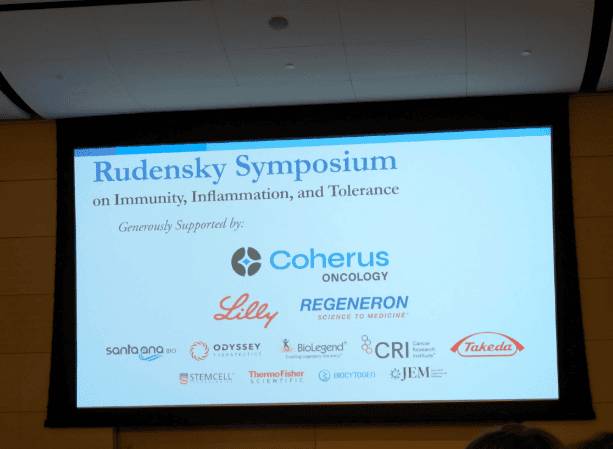
The Cancer Research Institute (CRI) has been a steadfast patron of Dr. Rudensky’s work for over two decades. This partnership is grounded in the belief that one cannot conquer cancer without first understanding the intricate, often paradoxical, mechanics of the immune system.
Dr. Rudensky’s seminal work on regulatory T cells (Tregs)—the immune system’s specialized controllers that prevent autoimmunity—earned him the prestigious CRI William B. Coley Award in 2015. His lab has since served as a training ground for over a dozen CRI-funded fellows, many of whom have gone on to lead their own laboratories, further propagating a culture of rigorous, high-impact inquiry.
"The symposium was a testament to the ripple effect of intellectual generosity," noted one attendee. The gathering of these "generations" of scientists highlighted that the impact of a researcher is measured not just in citations, but in the scientific lineage they foster.
Chronology of Discovery: From Tissue Homeostasis to Oncology
The symposium’s agenda was structured to reflect the journey of immunological discovery. It moved from the foundational maintenance of healthy tissues to the complex, tumor-adjacent microenvironments that often facilitate cancer progression.
Phase 1: Immune Cells as Tissue Guardians
The proceedings opened with an exploration of “tissue maintenance.” CRI scientist and 2003 Coley Awardee, Dr. Ruslan Medzhitov, opened the floor with a provocative thesis: immune cells are not merely sentinels against pathogens; they are, in fact, the body’s janitorial crew. Dr. Medzhitov detailed how stressed cells recruit macrophages to clear out damaged protein "garbage," a process that, when disrupted, likely contributes to the chronic inflammation that precedes malignant transformation.
This theme of specialized immune function continued with Drs. Diane Mathis and Christophe Benoist (both 2024 CRI Coley Awardees). Their presentations highlighted that Tregs possess "functional versatility." Dr. Mathis demonstrated that specific Treg populations are critical for orchestrating muscle repair and limiting fibrosis, while Dr. Benoist’s work elucidated how the specific molecular signals recognized by a Treg dictate its unique behavior. These insights are vital for future clinical applications, as they suggest that we may one day be able to tune Treg function to promote tissue healing or dampen cancer-promoting inflammation.
Phase 2: The Pre-Tumor Landscape
The afternoon sessions pivoted toward the critical question of "early intervention." Dr. Richard A. Flavell (2012 CRI Coley Awardee) presented groundbreaking work on how the immune system monitors intestinal stem cells. By studying mouse models with the BRAF mutation, Dr. Flavell’s team observed that the immune system actively engages in “immunosurveillance” long before a visible tumor forms. When these mutant cells lose the ability to communicate effectively with T cells, they gain a competitive advantage, allowing them to colonize stem cell niches. This suggests that the immune system is a silent arbiter of survival during the earliest stages of oncogenesis.
Dr. Julien C. Marie contributed to this narrative by discussing the TGF-β signaling pathway. His research showed that the disruption of this signal can force Th17 cells into a pathological, inflammatory state, which creates a "niche" that encourages DNA damage and tumor development. Critically, he noted that this state is not necessarily permanent; restoring signaling could potentially "reset" the inflammatory environment, offering a new potential avenue for cancer prevention.
Supporting Data: The Wider Ecosystem of the Tumor
The final segments of the symposium focused on the "neighborhood" of the tumor—a multifaceted ecosystem involving the microbiome, structural cells, and the physical architecture of the tumor itself.
The Microbiome Connection
Dr. Dan Littman (2016 CRI Coley Awardee) provided a compelling look at the gut-tumor axis. His work demonstrates that the composition of the gut microbiome directly influences how T cells are “trained,” which in turn dictates the efficacy of systemic checkpoint immunotherapies. This highlights the systemic nature of cancer; a patient’s response to therapy may be pre-conditioned by the microbial flora in their digestive tract.
Remodeling the Microenvironment
Dr. Paula D. Bos presented experimental evidence that Tregs don’t just suppress T cells; they alter the physical structure of the tumor environment. By transiently depleting Tregs in mouse models of breast cancer, her team successfully shifted macrophages toward a tumor-suppressive phenotype and broke down the dense collagen fibers that act as "highways" for cancer metastasis.
Similarly, Dr. Nicholas Arpaia explored how fibroblasts—the cells that provide structure to tissue—are co-opted by tumors to build "suppressive neighborhoods" that wall off the tumor from the immune system. His collaboration with CRI Lloyd J. Old STAR awardee Dr. Tal Danino has led to the development of engineered bacteria capable of delivering immunomodulatory payloads directly into these dense, hard-to-reach tumor sites.
Implications: The Future of Precision Immunology
The overarching takeaway from the Rudensky Symposium is that the distinction between “basic science” and “clinical application” is increasingly porous. The processes that regulate tissue repair, manage gut inflammation, and maintain homeostasis are the same processes that cancer exploits to thrive.
The implications for medicine are profound:
- Targeting the Microenvironment: Instead of broad-spectrum immunosuppression or systemic stimulation, the next generation of therapies will focus on modulating specific local environments (e.g., re-engineering macrophages or disrupting collagen scaffolds).
- Early Detection and Prevention: By understanding how the immune system detects pre-malignant cells, we may be able to develop diagnostics that identify "at-risk" tissue environments before a tumor is even clinically visible.
- Combination Therapies: The work of Dr. Littman and others suggests that microbiome-modulating therapies could be used to prime patients for better responses to existing immunotherapies.
Official Perspective: The CRI Commitment
The Cancer Research Institute’s long-standing support for Dr. Rudensky and his contemporaries is an investment in a philosophy of science that prizes long-term, fundamental discovery over quick-fix solutions.
As the symposium concluded, the room was filled with the signed posters and shared anecdotes of a "research family" that has spent decades in the trenches of immunology. The event was a poignant reminder that while technology, sequencing, and AI have accelerated our progress, the engine of discovery remains the same: the human capacity to mentor, to collaborate, and to look at a biological mystery and ask, "Why?"
"CRI has always understood that the cure for cancer will not come from a single eureka moment," a spokesperson for the institute remarked. "It will come from the collective, sustained effort of scientists who are willing to follow the data wherever it leads, from the basic biology of a single cell to the complex ecosystem of a patient’s body."
As the scientific community looks toward the next decade, the legacy of the Rudensky Symposium serves as a beacon. The path forward is clear: to conquer cancer, we must continue to unravel the elegant, balanced, and sometimes flawed mechanisms of the human immune system. The symposium proved that we are not just closer to those answers than ever before—we are building the next generation of researchers capable of finding them.