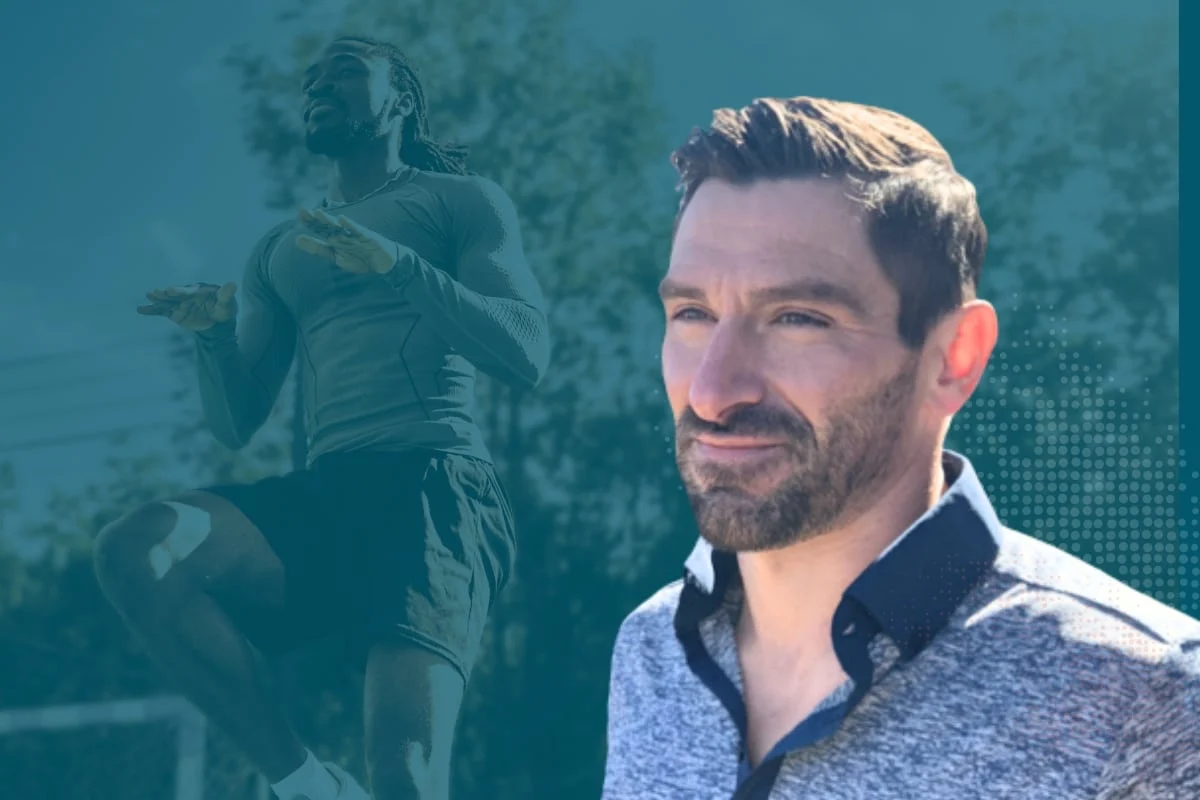
In an industry increasingly defined by hybrid models and digital scalability, fitness professionals are facing a critical pivot point. The traditional "time-for-money" model—where income is strictly tied to the number of hours spent on the gym floor—is being rapidly replaced by systems-based operations. To address this shift, industry veteran and business growth strategist Nick Clayton, MBA, MS, has spearheaded a comprehensive educational initiative titled From Sessions to Systems: How to Use Program Builder to Grow Your Fitness Business.
This program focuses on the strategic deployment of IDEA’s "Program Builder" platform, a tool designed to help trainers bridge the gap between manual program design and automated, scalable service delivery. As fitness professionals seek to diversify their income streams, the integration of technology into the coaching process has transitioned from an optional enhancement to an operational necessity.
Main Facts: Bridging the Gap Between Coaching and Commerce
The central thesis of the From Sessions to Systems initiative is that the most successful fitness professionals are not necessarily those with the most certifications, but those with the most efficient systems.
Nick Clayton’s methodology emphasizes three core pillars:
- Efficiency in Design: Reducing the time spent manually writing programs through the use of template-based systems.
- Value-Added Delivery: Enhancing the client experience by providing professional-grade, digitized workout plans that can be accessed anytime, anywhere.
- Revenue Diversification: Moving away from reliance on hourly sessions by incorporating hybrid and remote coaching models that scale without a linear increase in workload.
By leveraging IDEA’s Program Builder, trainers are taught how to codify their expertise into reusable modules. This allows for a "plug-and-play" approach to training that maintains a high standard of personalization while significantly reducing the administrative burden on the trainer.
Chronology: The Evolution of the Hybrid Fitness Model
The trajectory of the fitness industry over the last five years has necessitated a shift in how personal trainers view their value proposition.
- Pre-2020: The industry was dominated by face-to-face, in-person training. Scaling was physically limited by the number of hours a trainer could spend on the floor.
- 2020–2022: The global pandemic forced a sudden, mandatory migration to virtual coaching. This period acted as an industry-wide "proof of concept" for remote training, proving that results could be achieved without constant physical supervision.
- 2023–2024: The current era is characterized by "Hybridization." Professionals are now refining the lessons learned during the pandemic to create sustainable, long-term business models that combine the best of in-person connection with the convenience of digital delivery.
- June 17, 2024: The hosting of From Sessions to Systems marked a milestone in this transition. The webinar served as a technical and strategic deep dive into how tools like Program Builder are not just "nice to have," but are the architecture of the modern fitness business.
Supporting Data: The Efficiency Deficit
Industry data consistently highlights the "administrative drag" that prevents fitness professionals from scaling their income. According to recent surveys within the fitness coaching sector:
- Time Allocation: The average independent trainer spends approximately 12–15 hours per week on non-billable tasks, including program design, email communication, and scheduling.
- The Scalability Ceiling: Without digitized systems, a trainer’s income typically plateaus once they reach 30–35 sessions per week. To exceed this, they must either raise prices—which may alienate current clients—or transition to a leveraged model.
- Client Retention: Research indicates that clients who receive professional, digitized workout programs with video support exhibit a 22% higher retention rate compared to those receiving hand-written or informal text-based plans.
By implementing the systems advocated by Clayton, trainers can theoretically reclaim 5–8 hours of their work week. When applied to a standard hourly rate, this time recovery represents a significant increase in potential revenue, either through taking on more clients or dedicating that time to business development and marketing.
Official Perspectives: Expert Insights on Systems
Nick Clayton, whose background blends advanced business education (MBA) with clinical exercise science (MS), offers a unique perspective on the intersection of commerce and health.
"The trap most trainers fall into," Clayton notes, "is thinking that ‘more coaching’ equals ‘more success.’ In reality, success is a function of the quality of your systems. If you are manually rebuilding every workout from scratch for every client, you are not a business owner; you are a technician. To grow, you must shift your identity to that of a system architect."
Clayton argues that the Program Builder platform is not about replacing the trainer’s expertise, but about "productizing" that expertise. By building a library of high-quality, pre-vetted programs, trainers can ensure that every client receives a premium experience, regardless of whether the trainer is currently in a session, on vacation, or asleep. This shift from "session-centric" to "system-centric" is what Clayton identifies as the fundamental requirement for long-term survival in an increasingly crowded market.
Implications: The Future of the Fitness Professional
The implications of adopting a systems-first approach are profound for the future of the fitness industry.
1. The Death of the "Burnout" Cycle
The fitness industry has historically struggled with high attrition rates among professionals. Many trainers leave the field within three years due to physical exhaustion and burnout. By automating the administrative and design-heavy aspects of the job, the From Sessions to Systems approach provides a pathway to professional longevity.
2. Democratization of Elite Coaching
Through digital platforms, high-quality, scientifically sound programming is no longer reserved for the ultra-wealthy who can afford 1-on-1 personal training five days a week. Trainers can now offer "tier-based" pricing:
- Tier 1: Full in-person coaching.
- Tier 2: Hybrid coaching (one session a week plus digital programming).
- Tier 3: Remote programming (delivered via Program Builder).
This tiered approach allows trainers to serve a broader market segment while maintaining healthy profit margins.
3. The Need for Tech Literacy
The primary barrier to this evolution is the "tech gap." Many highly skilled trainers are hesitant to adopt digital tools, fearing they will lose the "human touch." However, the evidence suggests that the opposite is true. By offloading the logistical work to a system, the trainer actually frees up more mental bandwidth to provide better emotional support, accountability, and coaching to their clients.
4. Competitive Differentiation
In a market saturated with fitness influencers and generic workout apps, the professional trainer’s competitive advantage lies in their ability to provide customized solutions at scale. Using a platform like Program Builder allows a trainer to offer a bespoke feel—personalized progress tracking, expert exercise selection, and professional delivery—that a generic app cannot replicate.
Conclusion: A Call to Strategic Action
The webinar From Sessions to Systems was more than a technical training session; it was a manifesto for the next generation of fitness leaders. While registration for the live event has concluded, the principles discussed remain highly relevant.
For the modern trainer, the choice is clear: continue to trade time for money in a model that is inherently capped, or invest in the systems that allow for growth, sustainability, and greater reach. The transition from "session" to "system" is not merely an operational upgrade; it is the evolution of the fitness profession from a fragmented trade into a sophisticated, scalable, and highly efficient industry.
As Nick Clayton emphasizes, the tools to build that future already exist. The question is no longer whether fitness professionals can use these tools, but whether they are willing to shift their mindset to do so. In an industry where health is the product, the systems used to deliver that product must be as robust, scalable, and efficient as the results they promise to provide.