










Published June 16, 2026
For many, the transition from sleep to wakefulness is a jarring experience characterized by the shrill intrusion of an alarm clock and the immediate, overwhelming pressure to perform. The "ideal" morning—often depicted on social media as a sun-drenched hour of intense vinyasa flow at a professional studio—can feel lightyears away when you are battling grogginess, muscle stiffness, or the simple desire to linger under the covers.
However, a shift in the wellness paradigm is challenging the assumption that yoga requires a rubber mat, a studio membership, or even a vertical orientation. As we navigate the complexities of modern, high-stress living, experts are increasingly advocating for "low-barrier" wellness: the practice of integrating movement into the environment where we are most comfortable. By embracing a 15-minute yoga routine performed entirely in bed, practitioners are finding that consistency is not born from iron-clad willpower, but from the deliberate adaptation of movement to meet the body exactly where it is.
The Science of the "Soft Start"
The physiological benefits of a gentle morning movement practice are well-documented. During sleep, the body’s metabolic rate drops, and muscles can become tight due to prolonged periods of immobility. A gentle, bed-based sequence acts as a "bridge" for the nervous system, transitioning the body from the parasympathetic-dominant state of deep sleep to the alert, sympathetic-dominant state required for the workday.

Research suggests that high-intensity exercise immediately upon waking can, for some individuals, spike cortisol levels prematurely. In contrast, low-impact, restorative movement—often referred to as a "soft start"—allows for a gradual increase in blood flow and heart rate. This approach minimizes the risk of injury associated with "cold" muscles while setting a psychological tone of self-compassion rather than one of rigid expectation.
Chronology of a 15-Minute Bedtime Flow
To optimize this practice, follow this progressive sequence. Designed for efficiency and ease, these movements move from supine (lying down) to seated positions, gradually preparing the body for the demands of the day.
1. The Full-Body Awakening (Supine)
Begin in a position reminiscent of Savasana. Before attempting any formal stretch, take a moment of "micro-movement"—wiggle your toes, rotate your ankles, and let your head gently rock side to side. When ready, inhale deeply while extending your arms overhead and pushing your heels away, creating a long, full-body tension-release cycle. Exhale and soften, allowing the bed to support your weight entirely.
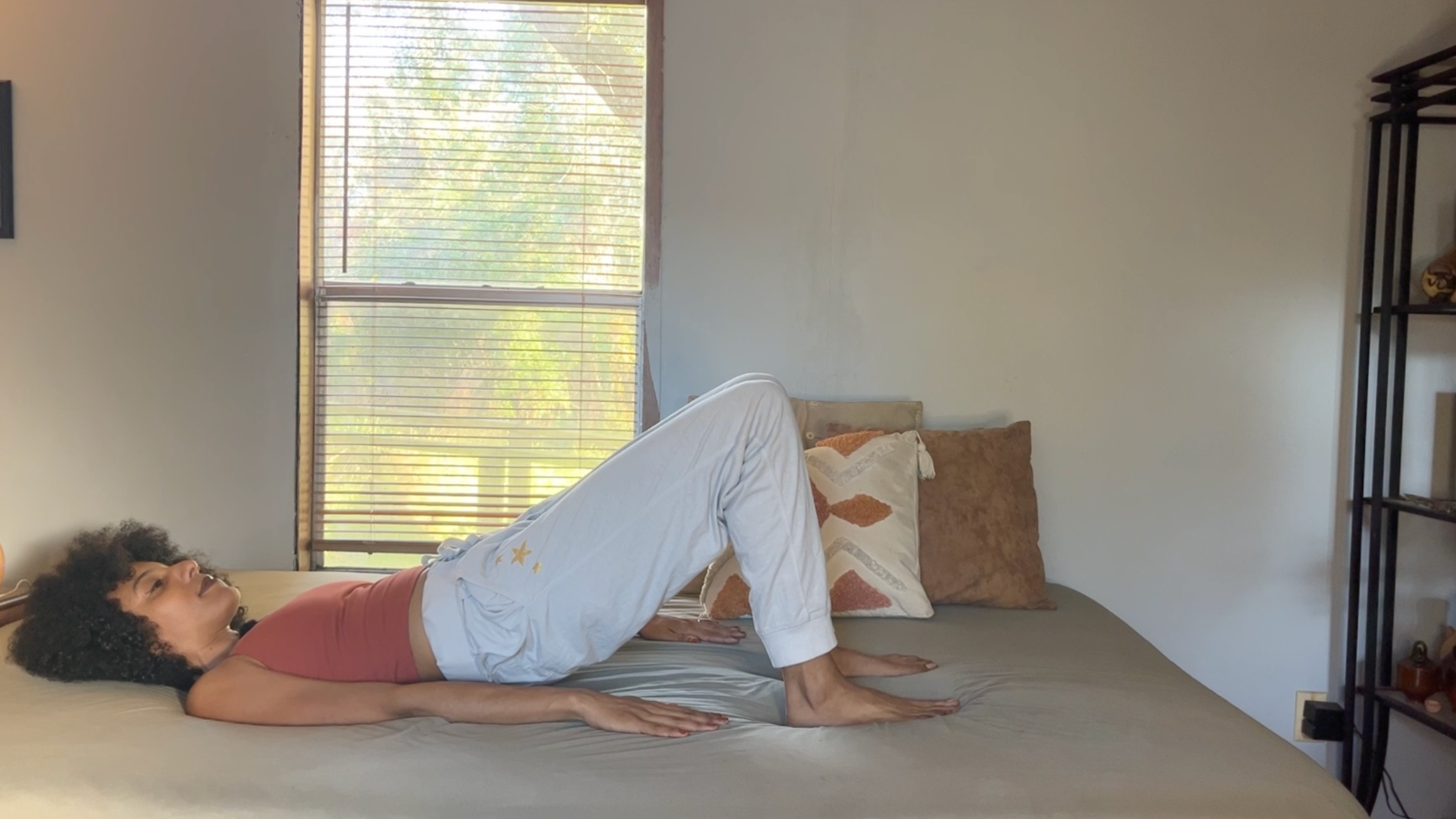
2. Bridge Pose: Activating the Core
With feet planted firmly on the mattress, engage your glutes and hamstrings to lift your hips. This movement is not about achieving a maximal backbend; it is about gently waking up the posterior chain. Repeat this lift-and-lower cycle in rhythm with your breath to synchronize your respiratory system with your physical movement.
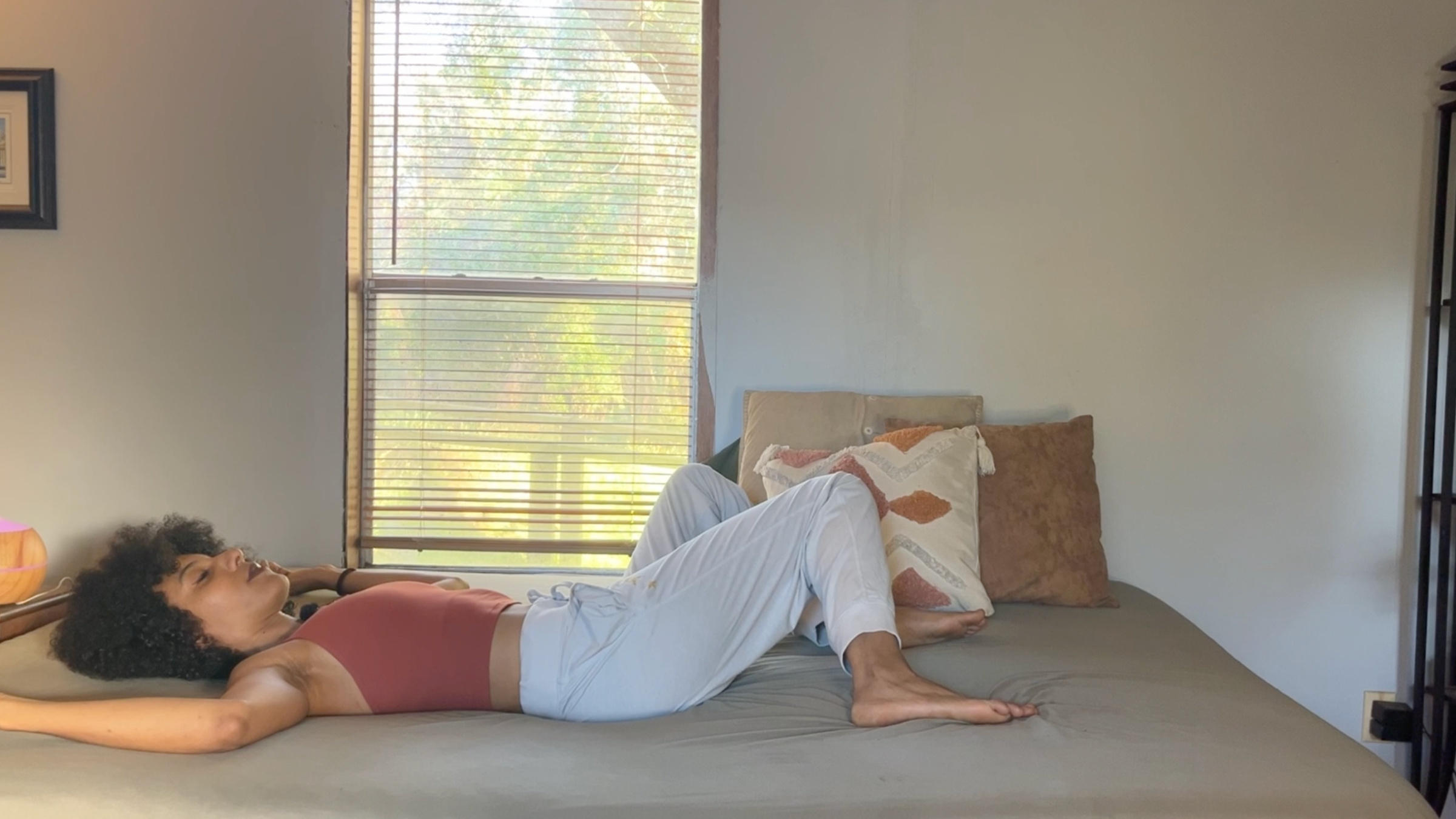
3. Windshield Wipers
By separating your feet wider than your hips and lowering your knees from side to side, you gently mobilize the lumbar spine and hip joints. This release is crucial for individuals who suffer from lower back tightness caused by long hours of sedentary work.
4. Knees to Chest and Supine Spinal Twist
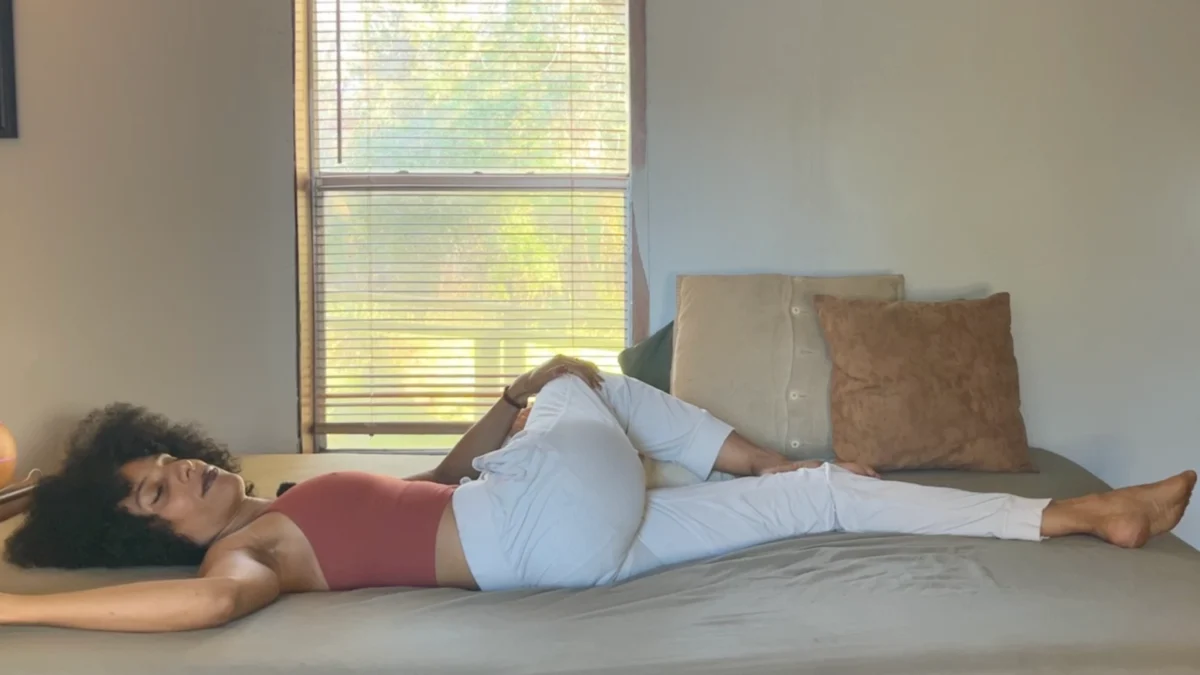
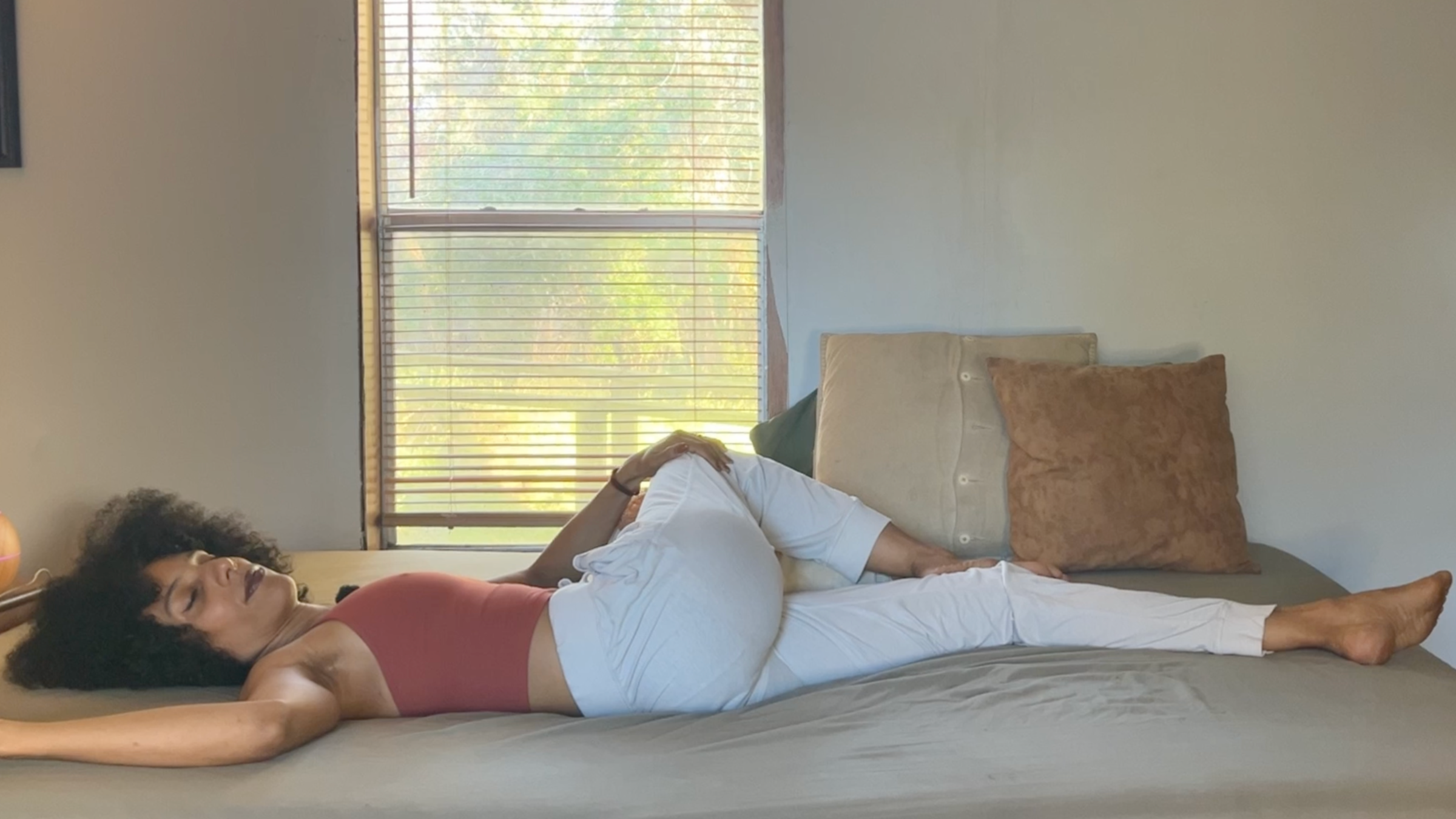
Drawing the knees toward the chest provides a gentle release for the lower back. Transitioning into a supine spinal twist—where one leg is extended while the other crosses the midline—is the gold standard for spinal health. Adding a pillow under the knee provides support, ensuring the shoulder remains grounded.
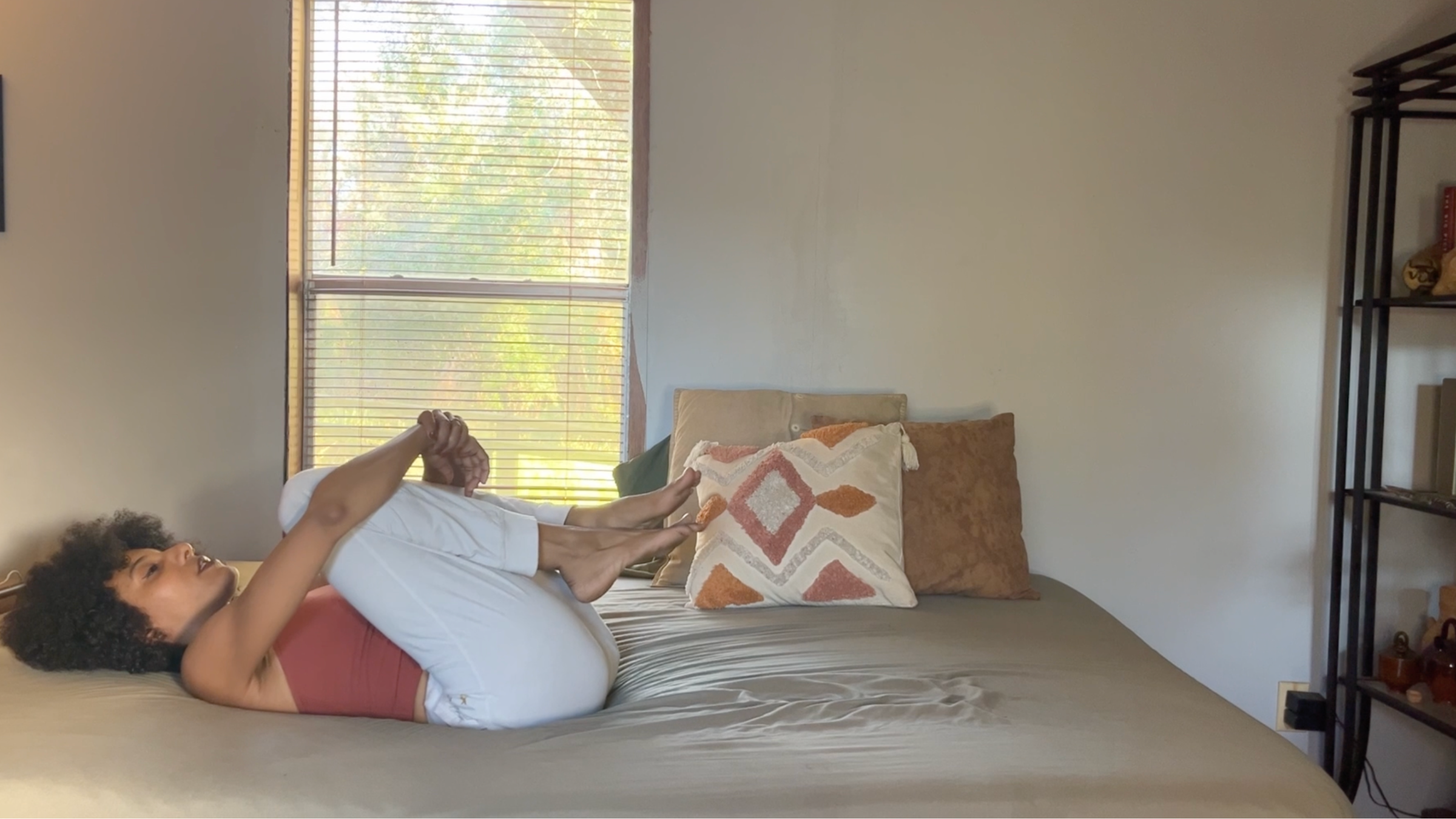
5. Figure 4 Stretch
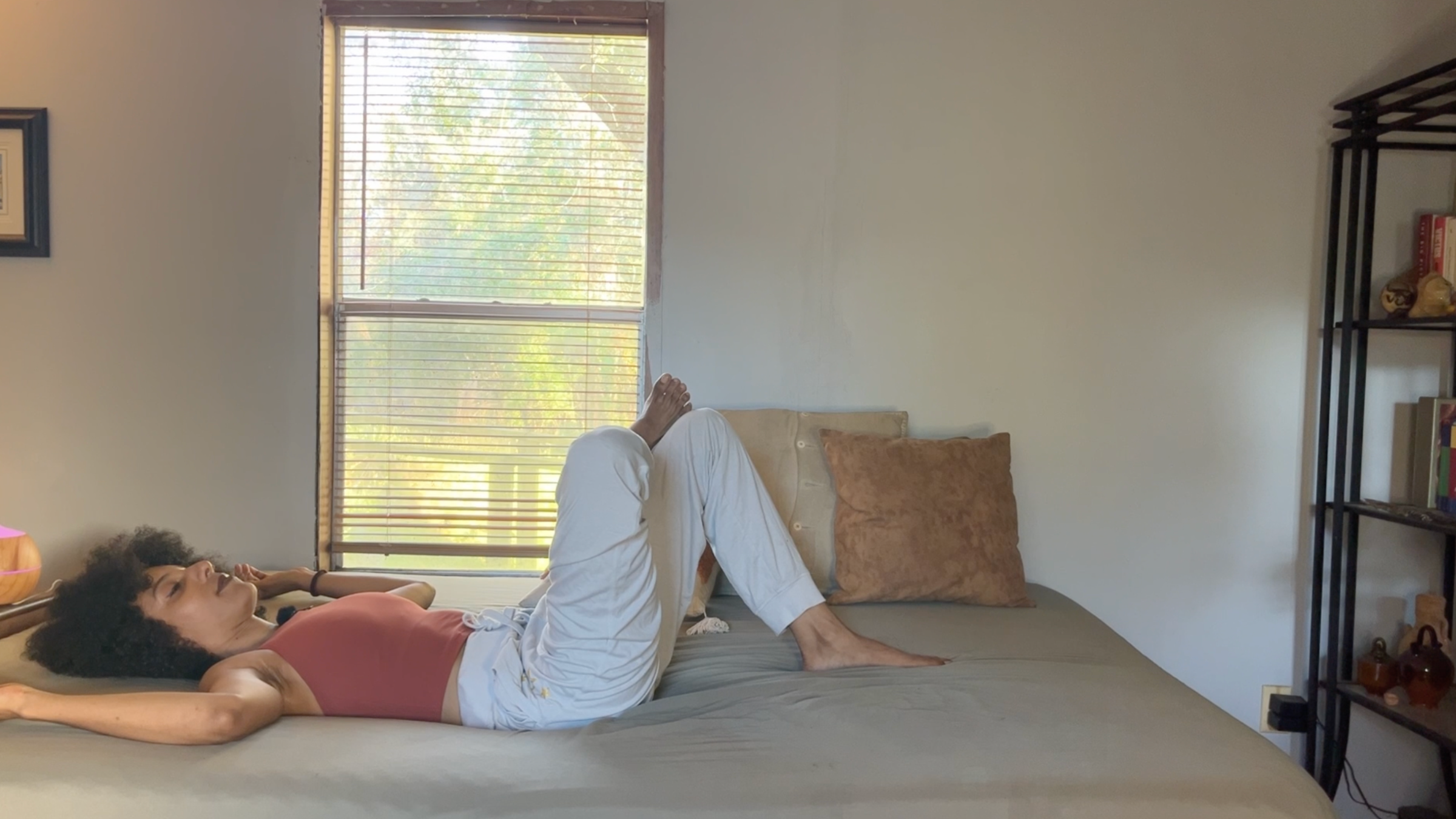
Often overlooked in quick routines, the Figure 4 stretch targets the piriformis and gluteal muscles. By crossing one ankle over the opposite knee, you alleviate the deep tension that accumulates from prolonged sitting, providing relief that will be felt throughout the workday.
6. The Shift to Verticality
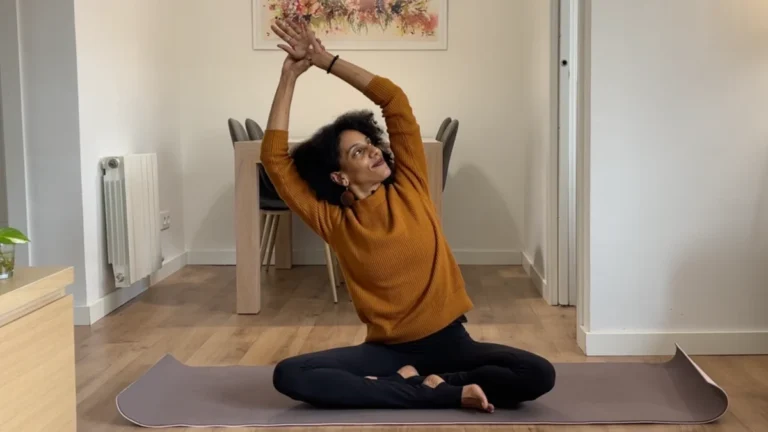
After rolling into a fetal position to ground your nervous system, transition to a seated position. Use a cross-legged seat to perform lateral side stretches and seated twists. These movements lengthen the intercostal muscles and promote spinal mobility, preparing the torso for upright posture.
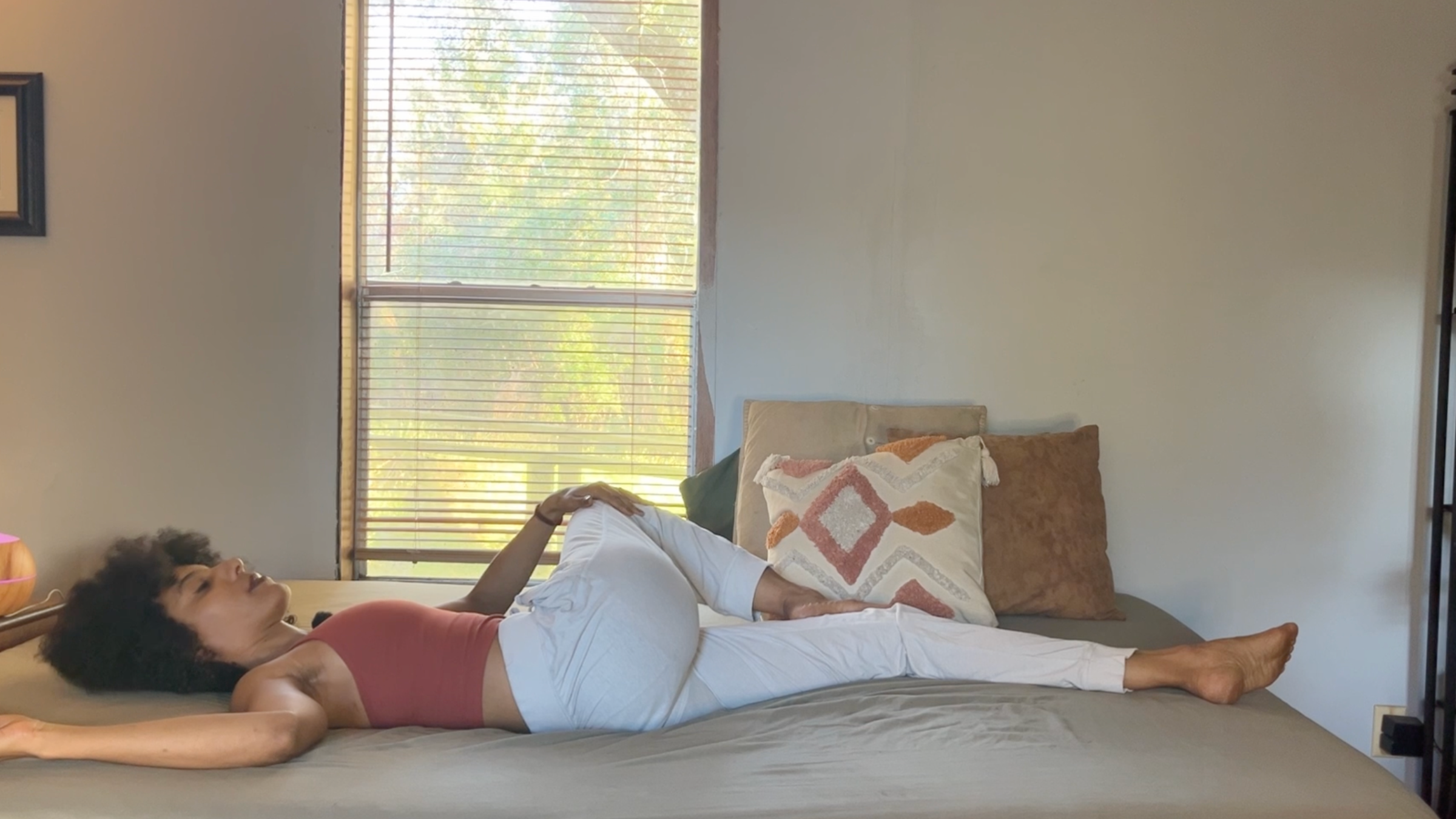
7. Seated Forward Fold and Revolved Head-to-Knee
End the active portion of your flow with a forward fold. By rounding the spine and allowing the head to hang heavy, you stimulate the vagus nerve, which helps regulate stress. The revolved head-to-knee pose adds a final layer of lateral extension, opening the obliques and side-body.
Supporting Data: Why "Lowering the Bar" Works
Data from the 2026 Wellness Trends Survey indicates that 68% of individuals who start a "high-performance" morning routine abandon it within 21 days due to fatigue or time constraints. Conversely, those who adopt "low-barrier" habits—such as stretching before leaving bed—report a 40% higher rate of long-term consistency.
The primary barrier to exercise is often the "friction of initiation." By eliminating the need to find a mat, change into workout gear, or commute to a studio, the practitioner removes the decision-making fatigue that typically leads to skipped sessions.
Expert Perspectives on Mindful Movement
"The goal of morning yoga should not be the attainment of a specific physical goal, but the cultivation of self-awareness," says Dr. Elena Vance, a movement scientist specializing in circadian health. "When we practice in bed, we are effectively telling our nervous system that safety and movement are not mutually exclusive. We are moving away from a ‘no pain, no gain’ mentality and toward a model of restorative consistency."
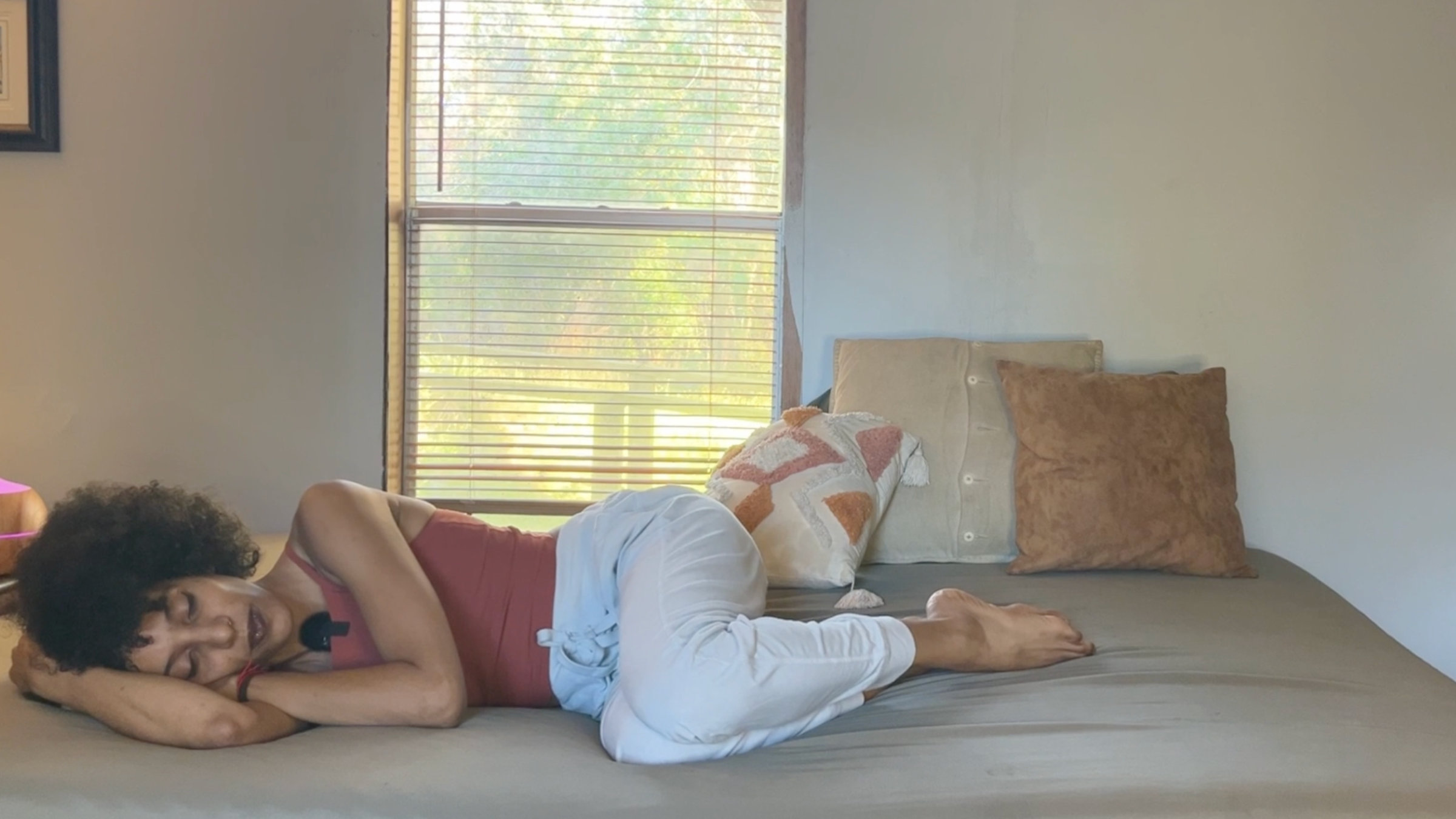
Yoga instructors emphasize that the efficacy of the practice is not diminished by the softness of the surface. In fact, for those with chronic pain or mobility issues, the bed provides a supportive, cushioned environment that allows for deeper relaxation and reduced fear of injury compared to a hard studio floor.
Implications for Daily Productivity
Integrating a 15-minute morning routine into your sleep space has profound implications for your professional and personal life:
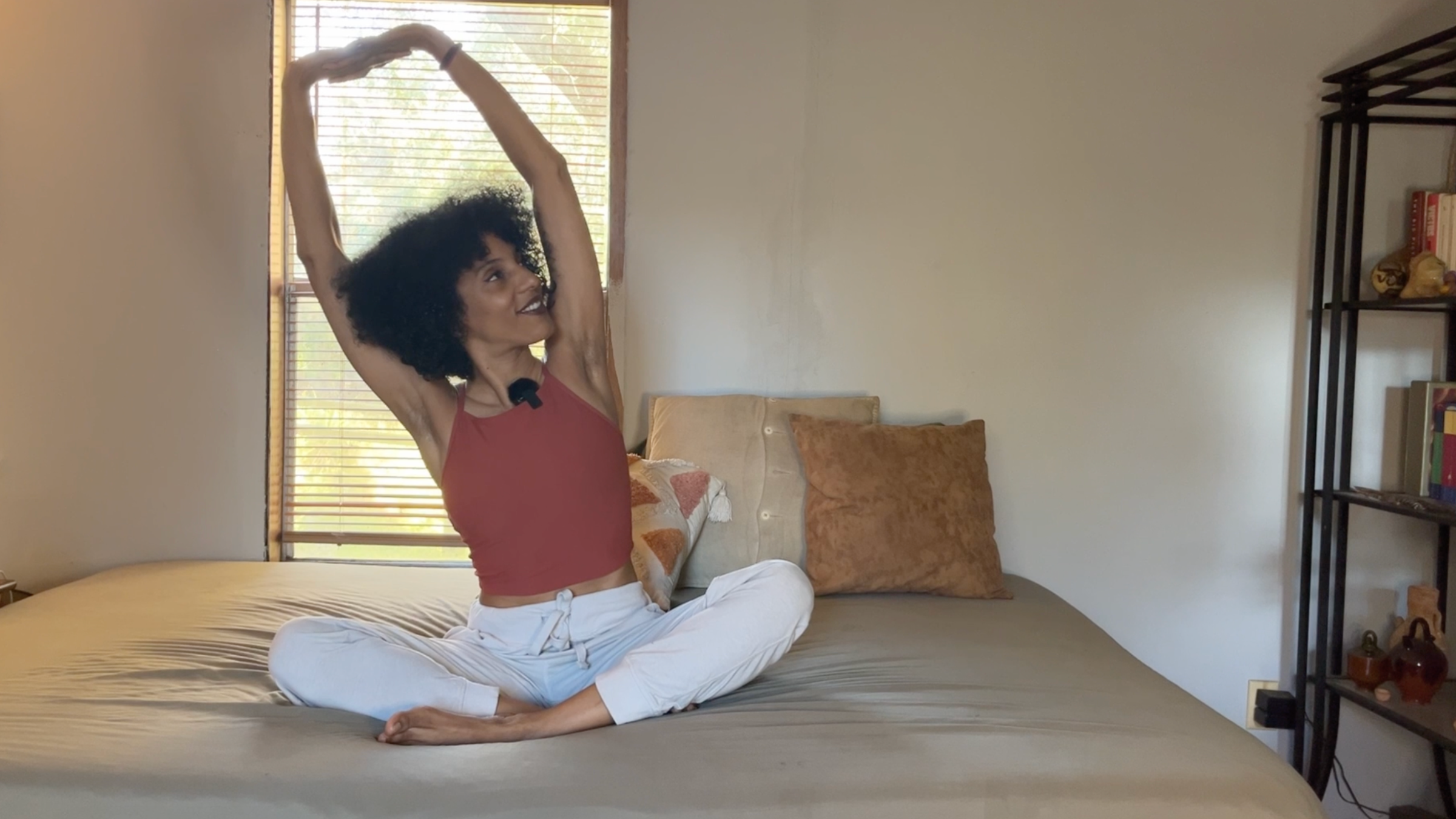
- Psychological Priming: By asking yourself, "How can I support myself today?" during the closing minutes of your practice, you shift from a reactive state to a proactive one.
- Reduced Morning Anxiety: The gentle movement decreases the immediate "fight or flight" response triggered by checking emails or social media first thing in the morning.
- Improved Postural Awareness: The focus on spinal mobility in the morning translates to better ergonomics during the workday.
- Sustainable Habit Formation: Because the routine is inherently pleasant and physically restorative, the brain is more likely to view the habit as a "reward" rather than a "chore," reinforcing the neural pathways associated with positive lifestyle changes.
Conclusion: A New Standard for Self-Care
The pressure to "optimize" our mornings often leads to burnout before the workday has even begun. By choosing to reclaim the first 15 minutes of your day in the comfort of your bed, you aren’t "taking the easy way out"—you are making a strategic decision to prioritize your nervous system.
The next time you wake up feeling the weight of a busy day, remember: you do not need to leap out of bed to be productive. Sometimes, the most powerful movement you can make is the one that starts exactly where you are, breathing into the stillness, and preparing your body to meet the day with kindness rather than demand.
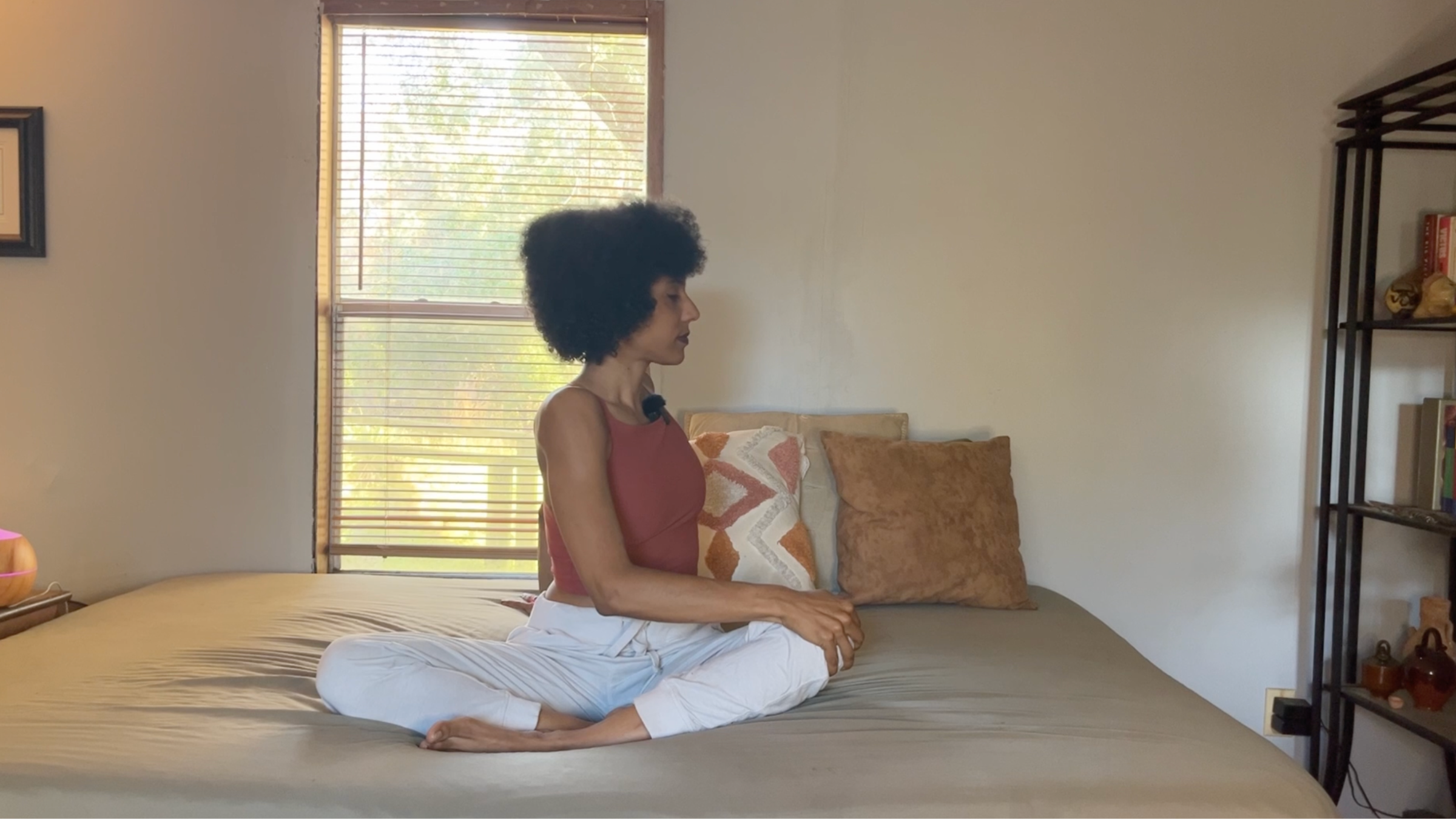
As you conclude your practice, keep that final question in mind: How can I support myself today? If you have already begun the day by honoring your body’s need for movement and rest, you have already succeeded.