




In the complex landscape of regenerative medicine, one of the most persistent hurdles has been accessibility. While scientists have successfully engineered sophisticated scaffolds capable of coaxing damaged cells back to life, the delivery of these materials often requires invasive surgery, high-risk injections, or direct contact with delicate, traumatized tissue.
Now, a pioneering team at the University of California San Diego has unveiled a breakthrough that shifts the paradigm: a biomaterial designed to navigate the bloodstream like a precision-guided therapeutic, arriving at the site of injury to calm inflammation and trigger self-repair. This "inside-out" approach, first detailed in Nature Biomedical Engineering, offers a transformative potential for treating myocardial infarction (heart attack) and, potentially, a host of other inflammatory conditions ranging from traumatic brain injury to pulmonary hypertension.
The Chronology of an Engineering Breakthrough
The journey toward this injectable solution began years ago with the development of "VentriGel," a hydrogel derived from the natural scaffolding of cardiac muscle tissue—the extracellular matrix (ECM). That initial iteration, while promising, faced a significant clinical bottleneck: it required direct, transendocardial injection. This meant that physicians had to wait until a patient was stable enough to undergo a catheter-based procedure to inject the gel directly into the heart muscle.
"We sought to design a biomaterial therapy that could be delivered to difficult-to-access organs and tissues, and we came up with the method to take advantage of the bloodstream—the vessels that already supply blood to these organs and tissues," explains Martin Spang, the study’s lead author and a graduate of the Shu Chien-Gene Lay Department of Bioengineering at UC San Diego.
By 2019, the team had successfully completed a Phase 1 human clinical trial for the earlier, injection-based VentriGel, proving it was safe for patients with left ventricular dysfunction. However, the limitation remained: you cannot inject a needle into a heart in the immediate, volatile aftermath of a heart attack without risking further damage.
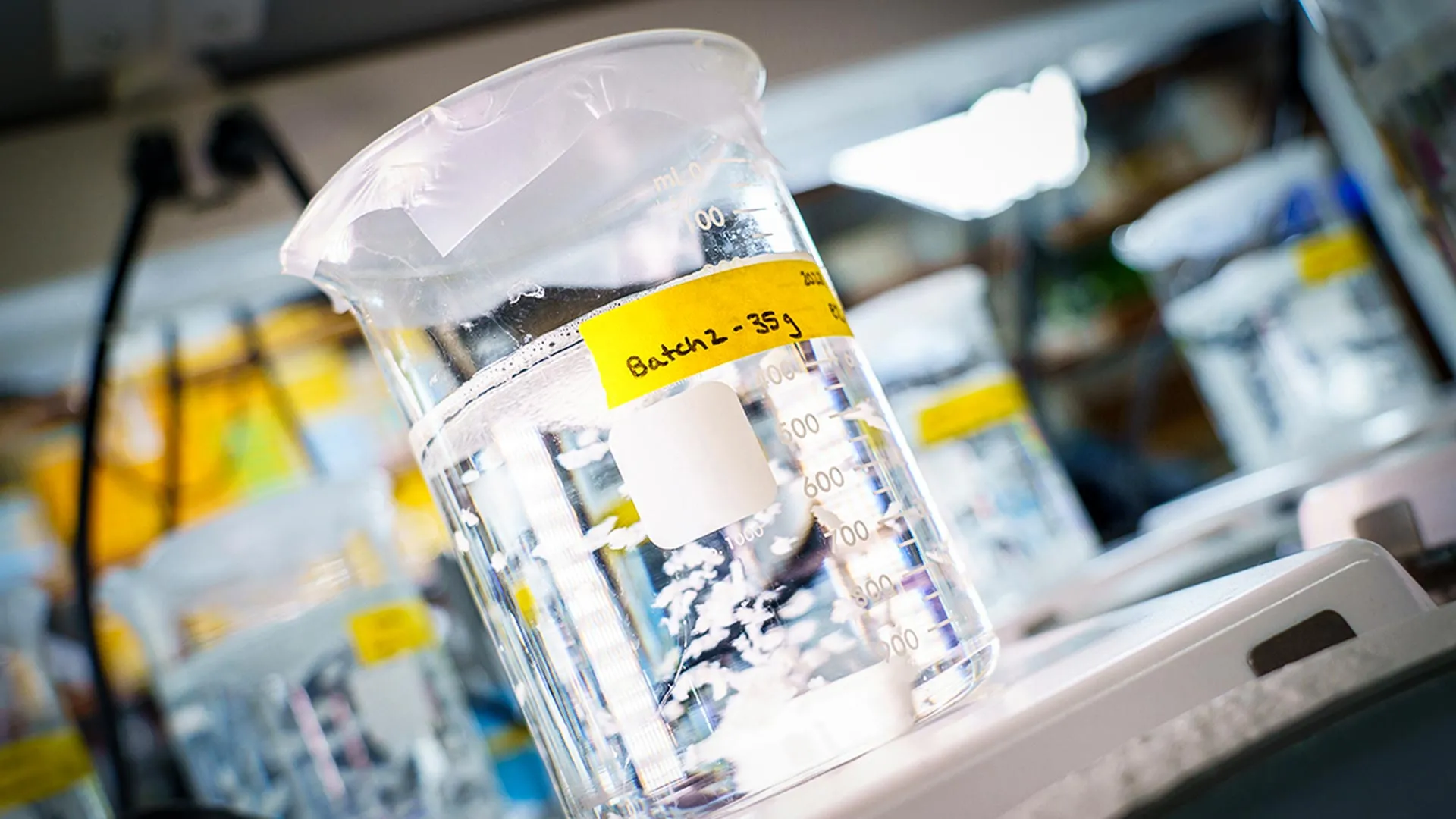
The researchers spent the subsequent years refining the material. The challenge was size. To travel through the circulatory system and localize at the injury site, the particles had to be reduced to a nano-scale. Through a process of centrifugation, dialysis, and freeze-drying, Spang and his colleagues transformed the liquid precursor into a shelf-stable powder. When reconstituted with sterile water, it becomes a liquid infusion that can be delivered via IV or during a standard angioplasty procedure.
Supporting Data: Healing the Heart from the Inside
The efficacy of this nano-biomaterial was validated through rigorous animal studies. In rodent models, researchers expected the material to merely pass through the gaps created by leaky blood vessels—a common symptom of acute inflammation—and accumulate in the damaged tissue.
Instead, they observed a more active biological response. The biomaterial adhered to the endothelial cells lining the blood vessels, effectively "patching" the gaps and accelerating the healing of the vasculature itself. By repairing the vessel walls, the material dampened the systemic inflammatory response that often turns a localized injury into permanent scarring.
Data from porcine models further reinforced these findings. After inducing acute myocardial infarction and administering the material via intracoronary infusion, the researchers noted:
- Reduced left ventricular volumes: A key metric in preventing the progression toward heart failure.
- Improved wall motion scores: Indicating that the heart muscle was contracting more effectively.
- Positive gene expression: Molecular analysis showed a shift in gene expression profiles toward tissue repair and away from chronic inflammatory pathways.
More recently, a 2025 study published in Nature Communications provided an even deeper look at the mechanism of action. Using spatial transcriptomics and single-nucleus RNA sequencing, the researchers observed how these ECM-based materials promote immune modulation, stimulate the growth of new blood vessels and lymphatic networks, and even encourage neurogenesis—the growth of nerve cells—within the damaged heart.
Official Responses and Clinical Perspectives
The medical community has reacted with cautious optimism. Dr. Ryan R. Reeves, a physician in the UC San Diego Division of Cardiovascular Medicine, emphasizes the massive public health burden that this technology seeks to address.
"Coronary artery disease, acute myocardial infarction, and congestive heart failure continue to be the most burdensome public health problems affecting our society today," Dr. Reeves stated. "As an interventional cardiologist, who treats patients with these conditions on a daily basis, I would love to have another therapy to improve patient outcomes and reduce debilitating symptoms. One major reason we treat severe coronary artery disease is to prevent left ventricular dysfunction and progression to congestive heart failure. This easy-to-administer therapy has the potential to play a significant role in our treatment approach."
Karen Christman, the professor of bioengineering who leads the laboratory, views this as a foundational shift in the field. "This biomaterial allows for treating damaged tissue from the inside out," Christman said. "It’s a new approach to regenerative engineering."
Implications for Modern Medicine
The implications of this discovery extend far beyond the cardiac ward. The beauty of the "vascular delivery" model is its universality. Because every organ in the human body is supplied by a network of blood vessels, the ability to target these vessels via a liquid infusion opens the door to treating conditions that were previously considered "inaccessible."
Beyond the Heart
Early proof-of-concept experiments have already suggested that the biomaterial could be adapted for:
- Traumatic Brain Injury (TBI): By leveraging the unique way the blood-brain barrier is disrupted during an injury, the material could theoretically reach neural tissues to mitigate secondary inflammation.
- Pulmonary Arterial Hypertension (PAH): A condition characterized by the thickening and stiffening of blood vessels in the lungs, which could potentially be addressed by the material’s ability to remodel vascular cells.
The Path to Human Trials
While the technology is currently experimental, the roadmap toward human clinical use is taking shape. Ventrix Bio, Inc., the startup co-founded by Christman, is already navigating the complexities of bringing cardiac ECM technology to the clinic. While a separate clinical trial for intramyocardial injection is currently exploring the use of VentriGel in pediatric patients with hypoplastic left heart syndrome, the focus for the newer, intravascularly infused version is on securing FDA authorization for safety and efficacy trials.
The hurdle for any such therapy is not just biological, but practical. To be adopted by cardiologists, the material must be easy to administer during existing procedures, such as stent placement or diagnostic catheterization. By turning a life-saving intervention into a "add-on" therapy during a standard procedure, the researchers hope to ensure that the treatment is not just revolutionary, but also highly accessible to the average patient.
The Future of Regenerative Engineering
We are entering an era where medicine is moving away from purely pharmacological interventions—which often involve systemic side effects—toward "instructive" materials that guide the body to heal itself. By using the extracellular matrix, researchers are providing the body with the same "blueprint" it uses during fetal development to grow and repair tissues.
However, the team remains grounded. They acknowledge that while the animal data is robust, the complexity of the human heart—especially in patients with multiple comorbidities—will present unique challenges. The upcoming human trials will be tasked with determining whether the material can maintain its structural integrity and signaling efficacy in the human bloodstream, which is significantly more complex than the models used in the lab.
As the scientific community watches these developments, the vision of Dr. Christman and her team remains clear: to transform the treatment of heart attacks from a process of "damage control" into a process of "tissue regeneration." Should this intravascular approach succeed, it will provide clinicians with a powerful new tool to stop the progression of heart failure before it ever truly begins, effectively changing the trajectory of patient lives from the inside out.