











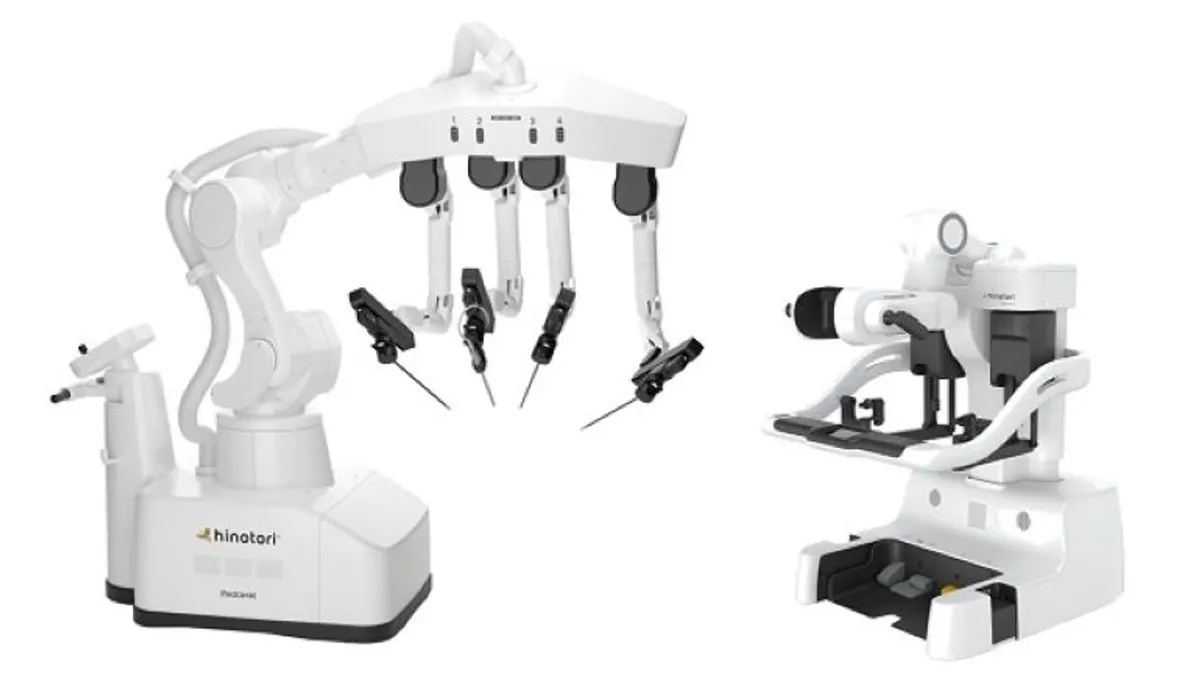
The landscape of robot-assisted surgery, long dominated by industry giants like Intuitive Surgical, is witnessing a period of profound diversification. Among the most significant challengers to this hegemony is Medicaroid Corporation, a high-profile joint venture between Japanese industrial titans Kawasaki Heavy Industries and Sysmex Corporation. After establishing a formidable foothold in the Asia-Pacific region, Medicaroid is now pivoting toward the European market, marking a critical phase in its strategy to transform the global surgical robotics landscape.
The Core Objective: Challenging the Status Quo
Medicaroid’s flagship innovation, the Hinotori Surgical Robot System, represents a fusion of precision robotics and clinical diagnostic expertise. By leveraging Kawasaki’s legacy in industrial automation and Sysmex’s deep roots in clinical laboratory diagnostics, the Hinotori system has been engineered to provide surgeons with unprecedented dexterity, ergonomic support, and data-driven insights.
As the company prepares for its European debut, the medical device sector is closely watching. Industry analysts view Medicaroid as a legitimate disruptor, a sentiment echoed by Intuitive Surgical, which has publicly identified the company as a key competitor. With roughly 20,000 surgical procedures successfully performed globally using the Hinotori system, the platform has moved past the “proof of concept” phase and into a period of mature, evidence-based adoption.
A Chronology of Strategic Growth
The trajectory of Medicaroid is a masterclass in methodical, region-by-region scaling. Unlike competitors that seek rapid global saturation, Medicaroid has prioritized regulatory rigor and localized clinical training.
- 2013: The joint venture between Kawasaki and Sysmex is officially established, setting the stage for the development of Japan’s first domestic surgical robot.
- 2020: Recognizing the need for a global footprint, the company establishes a European base of operations in Germany. This move was not merely administrative; it was a foundational step to navigate the complex CE mark certification process and establish local clinical partnerships.
- 2020–2022: Initial rollout and clinical adoption within Japan. The system gains traction in urological and gastrointestinal procedures, building a robust database of clinical outcomes.
- 2023: A banner year for regional expansion, as the Hinotori system secures regulatory approval in Singapore.
- 2024: Continued momentum in Southeast Asia, with regulatory milestones achieved in Malaysia.
- Early 2025: Expansion into Vietnam marks the company’s increasing influence in emerging Asian markets.
- March 2025: The critical filing for the European CE mark certification is submitted, signaling that the company is prepared to meet the stringent safety and performance standards of the European Union.
Supporting Data and Technical Capabilities
The Hinotori system is designed to address the "ergonomic fatigue" often reported by surgeons during long, complex laparoscopic procedures. By utilizing a "telesurgery-ready" architecture—though currently deployed for intra-hospital use—the system emphasizes high-fidelity haptic feedback and a modular design that integrates seamlessly into existing operating room workflows.
The system’s performance metrics are currently backed by a growing corpus of clinical data. With 20,000 procedures completed, the reliability of the robotic arms and the latency of the control interface have been stress-tested across a variety of clinical environments. This data serves as the backbone for their European regulatory filings, proving that the Hinotori system can match the high performance benchmarks required by European hospital networks.
Official Responses and Corporate Strategy
In recent correspondence, Medicaroid executives underscored that the move into Europe is a strategic milestone in their broader mission.
"Entry into the European market represents a significant milestone for Medicaroid in continuing to contribute to global healthcare through medical robots," the company stated. This sentiment reflects a corporate culture that views the "Hinotori" (Japanese for "Phoenix") as a symbol of rebirth in surgical precision—a tool that is intended to evolve alongside the needs of the surgeon.
While the European focus dominates current headlines, the company remains deliberately cagey regarding the United States. In response to inquiries from MedTech Dive, Medicaroid confirmed that it continues to evaluate the U.S. market. The regulatory hurdle in the U.S. is notoriously high, requiring significant investment in FDA De Novo or 510(k) clearance processes. However, the company is already building the infrastructure for such a move. In May, Kawasaki opened a state-of-the-art development hub in San Jose, California. This facility is not just a branch office; it is a collaborative ecosystem involving heavyweights like Nvidia, Analog Devices, Microsoft, and Fujitsu. The hub’s primary directive is to explore the intersection of artificial intelligence, advanced semiconductor processing, and robotic surgery, ensuring that the next generation of Hinotori will be "AI-ready."
Implications for the Future of MedTech
The entry of Medicaroid into the European theatre has several profound implications for the medical robotics sector:
1. Increased Competitive Pricing
For years, the high cost of robotic surgery systems has been a barrier to entry for smaller hospitals. With new players entering the market, health systems are likely to gain more leverage in negotiations. The competition between Intuitive, Medtronic, and now Medicaroid is expected to drive down the total cost of ownership, making robotic surgery more accessible to a broader range of facilities.
2. The Rise of the "Connected Operating Room"
Kawasaki’s focus on integrating Nvidia’s AI capabilities suggests that Medicaroid is looking beyond simple mechanical assistance. The future of the Hinotori system likely includes real-time surgical guidance, automated tissue recognition, and predictive analytics that can alert a surgeon to potential complications before they occur. By partnering with tech giants like Microsoft and Fujitsu, Medicaroid is positioning its hardware as the central node of a data-rich digital health network.

3. Collaborative Research Ecosystems
The partnership between Kawasaki and the IRCAD (a world-renowned surgical research institute in France) is a vital strategic maneuver. By aligning with academic and research powerhouses, Medicaroid ensures that its technology is not just bought by hospitals, but understood and advocated for by the leading surgeons of tomorrow. This "education-first" approach is essential for breaking the habit-forming nature of existing robotic platforms.
4. Globalizing Japanese Industrial Precision
Japan has long been synonymous with high-end robotics in the automotive and electronics sectors. Medicaroid is effectively exporting the "Japanese standard" of quality control and precision engineering to the medical field. If they succeed in Europe, it will confirm that Japanese engineering is as capable of disrupting healthcare as it was of transforming global manufacturing in the 20th century.
Conclusion: The Road Ahead
As Medicaroid stands on the precipice of its European launch, the challenges remain significant. The European market is fragmented, with varying reimbursement policies and hospital procurement processes that differ wildly between nations. Furthermore, the incumbent players have decades of entrenched relationships with surgeons and hospital procurement boards.
However, the foundation is robust. With a clear regulatory strategy, a high-tech development pipeline, and the backing of two of Japan’s most powerful industrial entities, Medicaroid is well-equipped for the long game. Whether they can achieve the same level of market penetration as their Western counterparts will depend on their ability to prove not just that their robots work, but that they provide a superior, more intelligent, and more cost-effective clinical outcome.
For now, the medical community waits for the official word on the CE mark. Should that hurdle be cleared, the Hinotori system will move from being a Japanese domestic success story to a formidable global contender, fundamentally altering the way surgeries are performed across the continent. The era of the "Phoenix" is just beginning, and the global healthcare market will be the primary beneficiary of this rising competition.