







In the complex ecosystem of a malignant tumor, cancer cells are not merely passive victims of their environment; they are active architects. New, groundbreaking research from the University of Oklahoma (OU) has unveiled a sinister mechanism by which triple-negative breast cancer (TNBC)—one of the most aggressive and treatment-resistant forms of the disease—literally rewires the body to support its own survival.
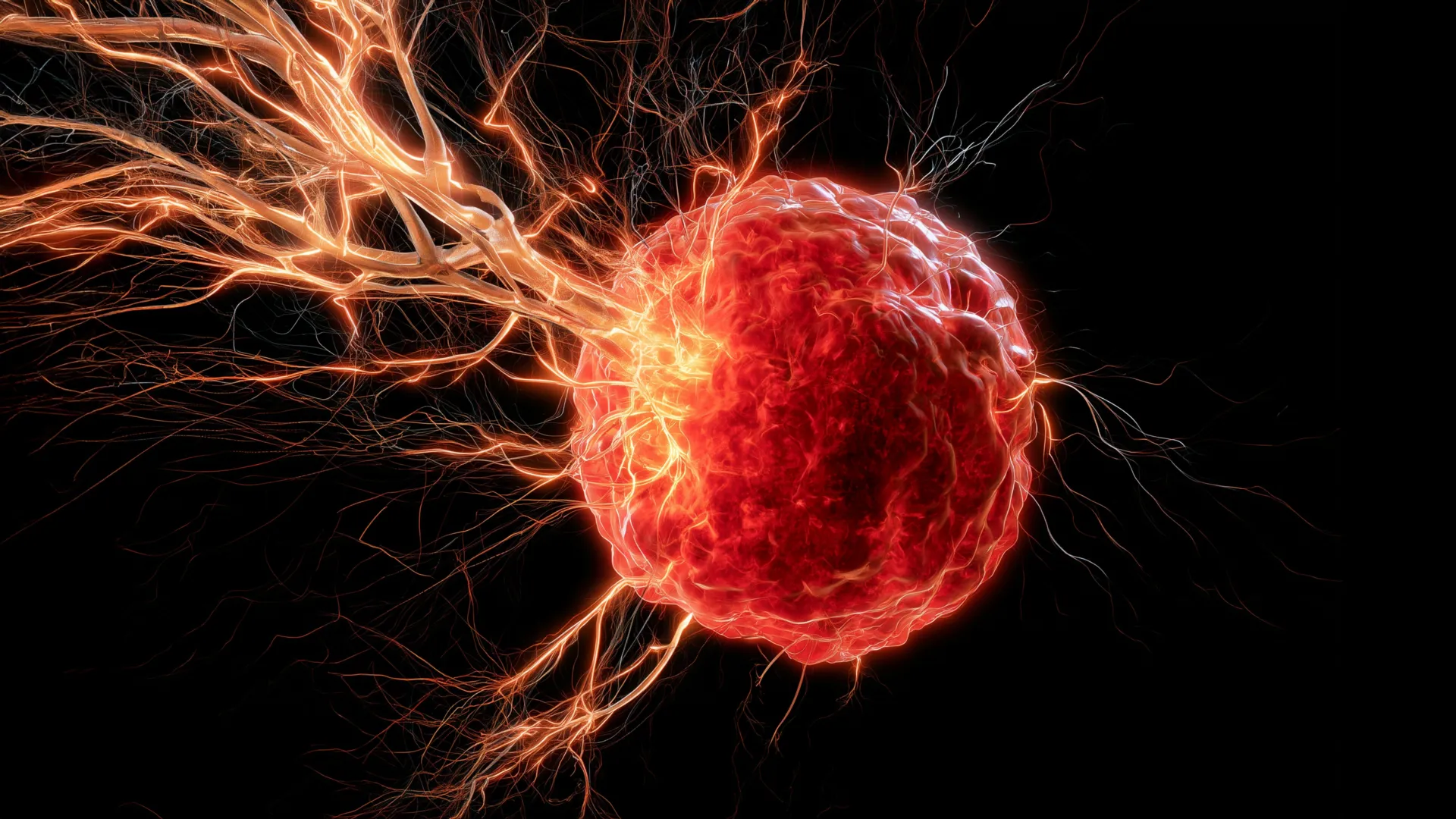
The study, published in the journal Cell Death & Differentiation, reveals that these tumors manipulate the immune system to attract nerves, effectively building a “nervous system” that fosters tumor growth and potentially shields the cancer from the body’s natural defenses.
The Architectural Mystery of Solid Tumors
For decades, oncologists have observed a curious phenomenon: solid tumors are frequently laced with extensive networks of nerves. While the presence of these nerves has been documented, the mechanism behind their recruitment remained one of oncology’s most persistent mysteries. How does a mass of proliferating cancer cells exert enough influence to pull nerve fibers from the surrounding healthy tissue into its own core?
The OU research team, led by Maureen Cox, Ph.D., an assistant professor in the Department of Microbiology and Immunology at the OU College of Medicine, has finally provided a compelling explanation. Their findings suggest that TNBC tumors do not work alone; they conscript the body’s own “clean-up crew” to perform this heavy lifting.
Chronology of the Discovery: A Collaborative Effort
The journey to this discovery began with an observation of the tumor microenvironment—the complex soup of cells, molecules, and blood vessels that surround a tumor.
- Phase One: Identifying the Players. The researchers focused on macrophages, a type of white blood cell that is vital to the innate immune system. Under normal conditions, macrophages are the body’s frontline responders, engulfing pathogens and clearing away cellular debris.
- Phase Two: The Hijacking. Through sophisticated analysis, the team discovered that TNBC cells release specific chemical signals that recruit macrophages into the tumor site. Once embedded within the tumor, these macrophages are "re-educated" to perform a task entirely antithetical to their normal role.
- Phase Three: The BDNF Link. The research identified that these hijacked macrophages secrete a protein known as brain-derived neurotrophic factor (BDNF). While BDNF is historically celebrated for its role in maintaining nerve health in the brain, in the context of cancer, it acts as a powerful beacon, drawing nerves into the tumor mass.
- Phase Four: Validation. The team corroborated their lab findings by analyzing data from human patients. They found that tumors with high concentrations of both macrophages and BDNF correlated strongly with lower survival rates, confirming that this "hijacking" process is not just a laboratory curiosity, but a clinical reality that worsens patient outcomes.
Supporting Data: From Mice to Human Patients
To understand the functional impact of this nerve recruitment, Dr. Cox and her colleagues utilized mouse models to test a therapeutic intervention. They employed a pharmacological agent designed to block BDNF signaling.
The results were striking. When the BDNF signal was successfully inhibited, the physical infiltration of nerves into the tumors ceased. Consequently, the tumor growth was significantly stunted. This provided a direct causal link between the presence of nerves within the tumor and the aggressive expansion of the cancer itself.
Furthermore, the team examined clinical data from triple-negative breast cancer patients. By mapping the presence of macrophages and the expression of the BDNF gene within tumor samples, they established a clear, statistically significant correlation: patients whose tumors exhibited high levels of this specific signaling pathway faced a more difficult prognosis. This bridge between preclinical models and human patient data provides a robust foundation for the development of future targeted therapies.
Official Responses and Scientific Perspective
The implications of these findings have sent ripples through the oncology community. Dr. Maureen Cox, a research member of the OU Health Stephenson Cancer Center, emphasized the irony of the immune system’s role in this process.
"Macrophages are the critical source for drawing nerves into the tumor," Dr. Cox explained. "Although macrophages typically play a positive role in the body, they are facilitating a negative function in this scenario of breast cancer. It is a subversion of the body’s innate healing mechanism."
The research has also garnered attention for its potential to repurpose existing drugs. Because the scientific community already has access to compounds that can block BDNF signaling, the path to human clinical trials may be shorter than that of a brand-new, experimental drug.
"It looks really promising that we can use this drug, which is already on the market, to target BDNF," Dr. Cox noted. "We believe that the nerves are immunosuppressive, so if we can stop the nerves from growing in the first place, maybe we can boost the immune response to help fight the cancer."
Implications: A New Frontier in Cancer Therapy
The discovery opens a new frontier in how we approach the treatment of aggressive cancers. Current standard-of-care treatments for TNBC—such as chemotherapy and immunotherapy—often struggle because the tumor microenvironment is effectively “fortified” against them.
Reversing Immunosuppression
One of the most exciting implications is the potential to "turn back on" the immune system. Dr. Cox and her team suspect that the presence of nerves within a tumor creates an immunosuppressive environment, effectively hiding the cancer from T-cells and other anti-tumor agents. By severing the connection between the nerves and the tumor, clinicians may be able to render the tumor "visible" to the immune system once again.
Metastasis and Nutrient Supply
Beyond simple growth, the study poses critical questions about how nerves facilitate cancer progression. The team is currently investigating two primary theories:
- Nutrient Facilitation: The nerves may be stimulating the formation of new blood vessels (angiogenesis), which act as a highway for the delivery of oxygen and glucose, fueling the tumor’s rapid metabolism.
- Metastatic Pathways: Cancer cells are known to exploit existing bodily structures to migrate. Evidence suggests that tumor cells may "crawl" along nerve fibers to escape the primary site and colonize distant organs, a process known as perineural invasion.
Expanding the Scope
The success of this research in breast cancer models has led the team to look toward other malignancies. Plans are already underway to test this intervention in high-grade ovarian cancer, a disease that, like TNBC, is notoriously difficult to treat and often presents late in its progression.
Funding and Research Support
This research serves as a testament to the importance of sustained investment in basic science. The project was supported by the National Institute of General Medical Sciences of the NIH (award numbers P20GM103447 and P20GM103639).
Furthermore, the work was bolstered by significant local and state-level support, including the Oklahoma Tobacco Settlement Endowment Trust (TSET), which serves as a primary funder of the Stephenson Cancer Center. The Oklahoma Shared Clinical and Translational Resources, through an Institutional Development Award from the National Institute of General Medical Sciences (grant no. U54GM104938), provided the necessary infrastructure to facilitate this high-level investigation.
Conclusion: The Path Forward
The battle against cancer is often framed as a war between two entities, but the research from the University of Oklahoma reminds us that it is also a battle of biological manipulation. By identifying how triple-negative breast cancer forces the immune system to work against the patient, Dr. Cox and her team have identified a clear, actionable target.
"Ultimately, we want to turn the anti-tumor immunity back on in cancer patients so their own immune systems can reject the tumors," Dr. Cox concluded.
As the scientific community moves toward human clinical trials, the prospect of turning off the "nerve-growth signal" offers a beacon of hope for patients facing the most challenging forms of cancer. By stripping the tumor of its hijacked support system, we may finally be able to tip the balance in favor of the patient’s own healing mechanisms.