Honoring the Architects of Immunity: Cancer Research Institute Announces 2026 Scientific Achievement Awards
on
NEW YORK, NY – The Cancer Research Institute (CRI), the world’s leading nonprofit organization dedicated exclusively to harnessing the immune system to conquer cancer, has officially announced the recipients of its prestigious 2026 Scientific Achievement Awards. This year, the institute honors two luminaries whose work has redefined the landscape of immunology: Dr. Eric Vivier and Dr. Joseph Sun.
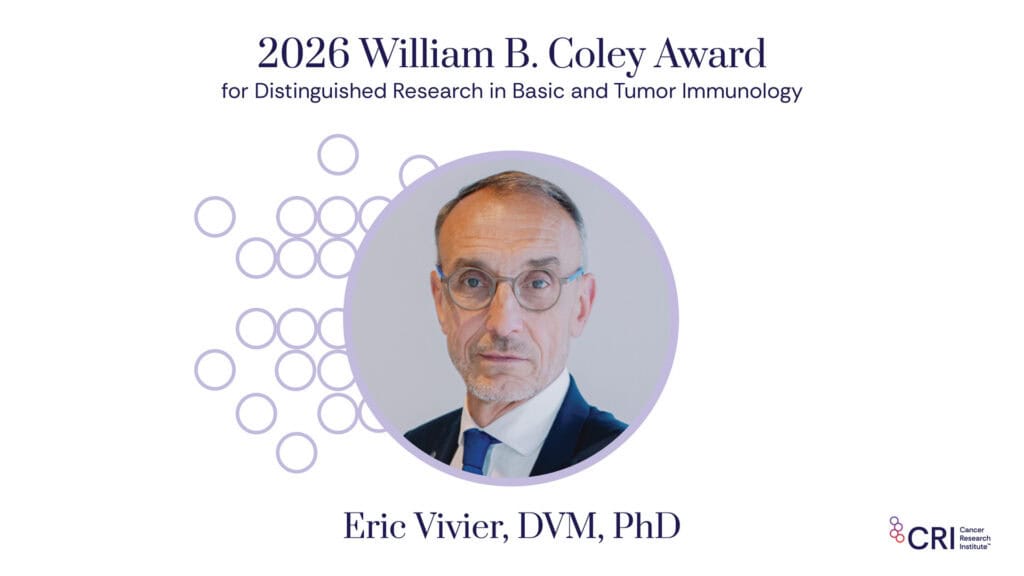
These awards serve as a testament to the rigorous pursuit of scientific truth and the transformative power of basic research. Dr. Vivier, a pioneer in the study of natural killer (NK) cells, has been named the recipient of the William B. Coley Award for Distinguished Research in Basic and Tumor Immunology. Dr. Joseph Sun, whose research has revolutionized our understanding of immunological memory, will receive the Frederick W. Alt Award for New Discoveries in Immunology.
The awards will be formally presented at the CRI Annual Awards Gala, scheduled for Tuesday, October 20, 2026, at the historic Guastavinos in New York City. This gala will bring together the global scientific community to celebrate the milestones that continue to push the boundaries of cancer immunotherapy.
The 2026 Laureates: Profiles in Scientific Excellence
Dr. Eric Vivier: Decoding the Innate Immune Arsenal
Dr. Eric Vivier, DVM, PhD, is a titan in the field of innate immunity. Serving as a Professor of Immunology at Marseille Medical School and leading the Innate Lymphoid Cells laboratory at the Centre d’Immunologie de Marseille-Luminy, Dr. Vivier has spent his career unraveling the complex “language” of natural killer cells.
NK cells are the body’s first line of defense, acting as sentinels that patrol for signs of cellular distress. Dr. Vivier’s research has provided the definitive roadmap for how these cells identify and eradicate cancerous threats. His work did not merely remain in the laboratory; it bridged the critical gap between bench and bedside. As a co-founder of Innate Pharma, Dr. Vivier has been instrumental in translating his foundational discoveries into clinical trials, moving novel therapeutics from theoretical concepts to tangible options for patients.
A Highly Cited Researcher since 2015, Dr. Vivier’s accolades are numerous. He is a member of the French National Academy of Medicine and the European Molecular Biology Organization (EMBO). His receipt of the Coley Award—named in honor of Dr. William B. Coley, the "father of immunotherapy"—cements his status as a foundational figure in modern oncology.
Dr. Joseph Sun: Redefining the Mechanics of Memory
Dr. Joseph Sun’s career trajectory is a remarkable success story that resonates with the core mission of the Cancer Research Institute. Currently a Member of the Immunology Program at Memorial Sloan Kettering Cancer Center and a Professor at Weill Cornell Medical College, Dr. Sun has fundamentally altered the scientific community’s understanding of immunological memory.
Early in his career, Dr. Sun served as a CRI Irvington Postdoctoral Fellow (2007–2009) in the laboratory of Dr. Lewis Lanier at UCSF. During this period, he performed groundbreaking experiments demonstrating that NK cells—long thought to be limited to “innate” or non-specific responses—actually possess adaptive immune features. He proved that these cells could undergo clonal expansion and develop long-lived memory after viral infections.
This discovery effectively bridged the artificial divide between innate and adaptive immunity, providing a new framework for how the body remembers and responds to pathogens and, by extension, tumor antigens. Today, his lab continues to investigate the molecular pathways that dictate immune cell longevity, providing the blueprints for the next generation of cancer immunotherapies.
Chronology of Discovery: A Legacy of Innovation
The history of the Cancer Research Institute’s awards is a timeline of the greatest breakthroughs in modern medicine. The Coley Award, in particular, has a history of recognizing research that later earns Nobel Prizes.
2007–2009: Dr. Joseph Sun begins his tenure as a CRI Irvington Postdoctoral Fellow. His work in the Lanier lab begins to challenge the dogma that only T and B cells exhibit memory.
2015: Dr. Eric Vivier is officially recognized as a Highly Cited Researcher, reflecting the global impact of his work on NK cell biology.
2026 (June): The Cancer Research Institute announces the 2026 awardees, signaling a focus on innate immunity and its role in long-term cancer surveillance.
2026 (October 20): The Annual Awards Gala at Guastavinos will honor both scientists, acknowledging their lifetime achievements and the potential for future collaboration.
2026 (November 4–8): Dr. Eric Vivier is scheduled to deliver the prestigious 2026 Coley Lecture at the Society for Immunotherapy of Cancer (SITC) Annual Meeting in Phoenix, Arizona, specifically on Sunday, November 8.
Supporting Data: Why Innate Immunity Matters
The significance of these awards cannot be overstated. Modern immunotherapy, particularly checkpoint inhibitors, has revolutionized the treatment of solid tumors. However, resistance and relapse remain persistent challenges.
Dr. Vivier’s work addresses the "innate" component of the immune system, which can often bypass the resistance mechanisms that tumors develop against traditional T-cell-focused therapies. By focusing on NK cells, researchers are developing therapies that can target cancer cells that lack the specific markers required for T-cell recognition.
Similarly, Dr. Sun’s research into immune memory addresses the issue of durability. One of the primary goals of immunotherapy is not just to clear the tumor, but to ensure that the immune system remains vigilant against recurrence. By identifying the molecular switches that drive T-cell and NK-cell memory, Dr. Sun is helping to engineer therapies that offer "vaccine-like" protection against cancer relapse.
Official Responses and Perspectives
The announcement of these awards has been met with widespread acclaim from the global research community.
Dr. Lewis Lanier, a member of the CRI Scientific Advisory Council and the mentor who oversaw Dr. Sun’s formative postdoctoral years, expressed deep pride in the selection:
"Dr. Sun has been an absolute leader in his field, and I’m so happy that we’re going to acknowledge him as being one of the superstars that launched their careers with his CRI Irvington Fellowship."
This sentiment underscores the importance of the Cancer Research Institute’s fellowship programs. By identifying and supporting young talent, the institute creates a pipeline of innovation that eventually leads to major breakthroughs like those recognized today.
The leadership at CRI emphasized that both Vivier and Sun represent the future of the field. Their work, though distinct in its focus, shares a common thread: the relentless pursuit of understanding the fundamental mechanisms of the immune system to turn the tide against cancer.
Implications: The Future of Cancer Immunotherapy
The implications of the work conducted by Dr. Vivier and Dr. Sun are vast. As we move into the latter half of the decade, the focus of oncology is shifting toward personalized, multi-pronged approaches.
Bridging Innate and Adaptive Therapies
By validating the role of NK cells as "memory-capable" entities, Dr. Sun’s work suggests that we may soon be able to engineer "hybrid" cell therapies. These therapies would combine the immediate, high-intensity cytotoxic power of NK cells with the long-term, specific memory of T cells, potentially creating a "super-immune" response that is both fast-acting and enduring.
Clinical Translation
Dr. Vivier’s success with Innate Pharma serves as a gold standard for academic-industry collaboration. His award highlights the necessity of bringing laboratory scientists into the boardroom and the clinic. As more research moves toward commercialization, the model established by Dr. Vivier—where basic biological discovery dictates clinical trial design—will be essential for reducing the time it takes for a breakthrough to reach the patient’s bedside.
A New Era of Cancer Prevention
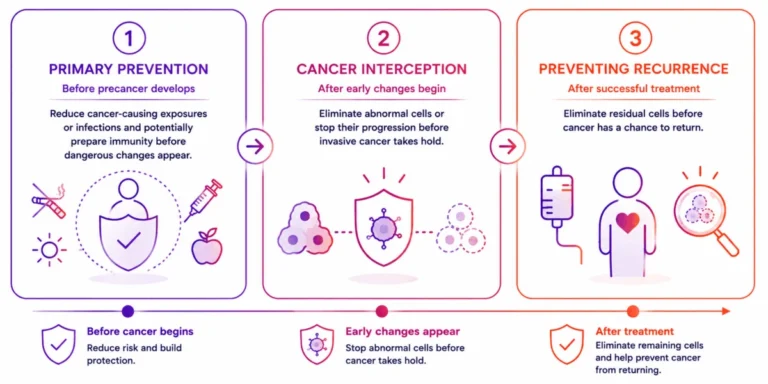
Ultimately, the work of these two scientists moves us closer to a world where cancer is not just treated, but managed or even prevented. Through the lens of immunological memory, the field is beginning to ask whether we can "train" the immune system to recognize cancer cells early, much like we train it to recognize influenza or other pathogens.
As the scientific community prepares for the upcoming Gala in New York and the SITC meeting in Phoenix, the mood is one of optimism. In the words of the Cancer Research Institute, these scientists have not only expanded our understanding of immune cell biology; they have opened the door to a new generation of treatments that promise to make cancer a manageable, or even curable, disease for patients around the world.