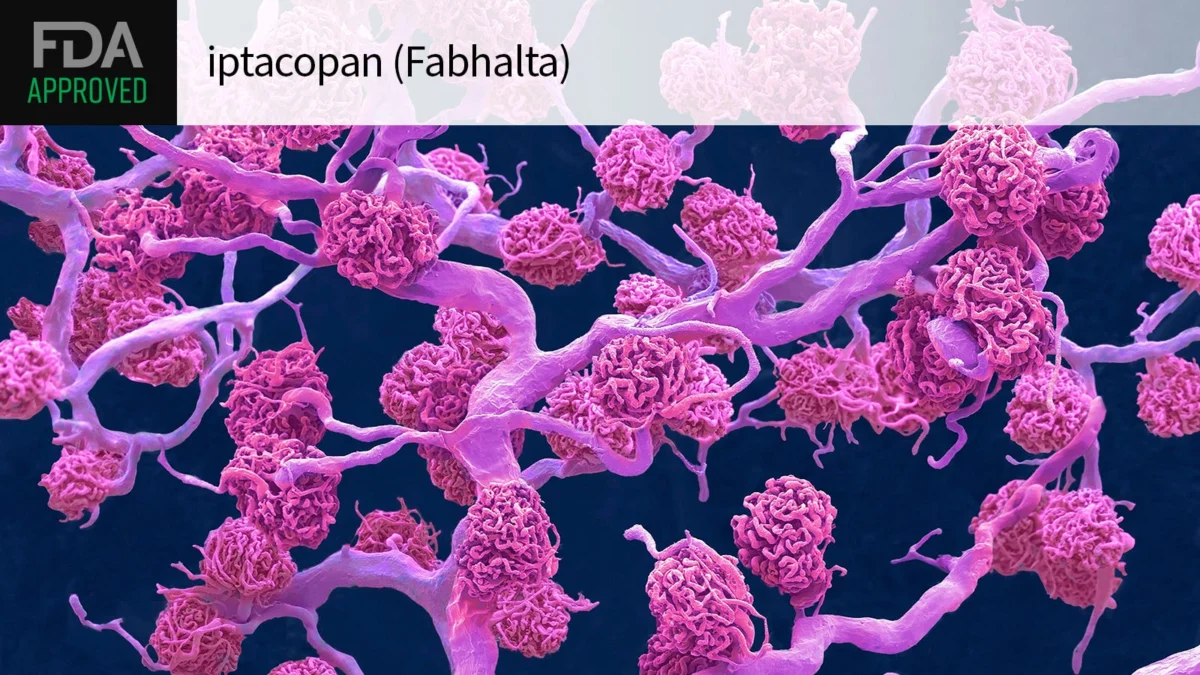
July 17, 2026 — In a major development for the nephrology community, the U.S. Food and Drug Administration (FDA) has granted traditional approval to iptacopan (brand name Fabhalta) for the treatment of adults with primary immunoglobulin A nephropathy (IgAN) who are at risk of disease progression. This transition from accelerated approval marks a significant milestone, as iptacopan becomes the first and only complement inhibitor specifically indicated to slow the decline of kidney function in this challenging patient population.
The decision, announced by Novartis on Friday, follows a rigorous review of clinical data demonstrating that the drug does more than just reduce biomarkers; it provides meaningful preservation of long-term renal health.
The Core Clinical Breakthrough: Findings from APPLAUSE-IgAN
The foundation for this traditional approval is the pivotal phase III APPLAUSE-IgAN trial. For patients suffering from IgAN—a disease that often strikes in the prime of young adulthood—the primary clinical objective is to delay the inevitable slide toward end-stage renal disease (ESRD).
The trial yielded compelling results: over a 24-month period, patients treated with iptacopan experienced a 48% reduction in the rate of estimated glomerular filtration rate (eGFR) decline compared to those receiving a placebo. Quantitatively, the treatment group showed an annualized mean change in eGFR of -3 mL/min/1.73 m², compared to -5.7 mL/min/1.73 m² in the placebo cohort.
These results were not isolated to a specific subset of patients; the therapeutic benefit remained consistent across all pre-specified subgroups. This suggests that the drug’s mechanism of action—targeting the alternative complement pathway—is effective across a broad spectrum of IgAN presentations.
Understanding the Mechanism: Targeting the Alternative Complement Pathway
To understand why this approval is being lauded by clinicians, one must look at the pathophysiology of IgAN. The disease is characterized by the abnormal accumulation of IgA antibodies in the kidney’s glomeruli. This buildup triggers a cascade of inflammatory responses, leading to proteinuria, progressive scarring, and ultimately, renal failure.
Iptacopan acts as a first-in-class Factor B inhibitor. By selectively targeting the alternative complement pathway, the drug interrupts a critical driver of glomerular inflammation. Unlike broader immunosuppressants that might leave a patient vulnerable to widespread infection or systemic side effects, iptacopan’s targeted approach addresses the specific "fire" fueling the damage within the nephron.
This specificity is what makes the drug’s success in the APPLAUSE-IgAN trial so noteworthy. By quieting the overactive complement system, the drug essentially "buys time" for the kidneys, slowing the rate at which they lose their ability to filter blood.
Chronology of a Regulatory Success
The path to this approval reflects the FDA’s evolving approach to complex, progressive autoimmune kidney diseases.
- Initial Clinical Development: Novartis initiated the global clinical program for iptacopan, identifying it as a potential candidate for several complement-mediated diseases, including paroxysmal nocturnal hemoglobinuria (PNH) and C3 glomerulopathy (C3G).
- The APPLAUSE-IgAN Trial: This phase III study was designed specifically to provide the "confirmatory" evidence required for full, traditional approval. Unlike studies that rely solely on proteinuria reduction (a surrogate marker), this trial tracked the clinical gold standard: eGFR decline.
- Accelerated Approval Phase: Early data indicated a strong signal in proteinuria reduction, allowing for an accelerated approval pathway. This provided patients with early access to the therapy while the final stages of the study continued.
- The July 2026 Milestone: Following the completion of the 24-month study endpoints, the FDA reviewed the final eGFR data. Finding that the drug met its primary endpoint for slowing kidney function decline, the agency granted full, traditional approval.
The Landscape of IgAN Treatment
The arrival of iptacopan adds a sophisticated tool to a growing, albeit still limited, arsenal for nephrologists. IgAN is a notoriously difficult disease to manage, often requiring a delicate balance between controlling inflammation and managing the risks of long-term therapy.
Iptacopan joins a small group of FDA-approved therapies for IgAN, including the corticosteroid budesonide (Tarpeyo) and the dual endothelin/angiotensin II receptor antagonist sparsentan (Filspari). While these agents operate through different pathways—budesonide via localized steroid action and sparsentan via dual receptor blockade—iptacopan is the first to specifically inhibit the complement system in this setting.
The field is currently in a state of rapid innovation. Several other agents are currently navigating the regulatory pathway, including:
- Atrasentan (Vanrafia): An endothelin receptor antagonist.
- Sibeprenlimab (Voyxact): A blocker of the proliferation-inducing ligand (APRIL).
- Atacicept (Trutakna): A dual APRIL/BAFF blocker.
While these agents have also shown promise through proteinuria reduction, the nephrology community remains focused on the "hard" clinical endpoints—preventing dialysis and kidney transplantation—which is exactly what the traditional approval of iptacopan has now solidified.
Expert Perspectives and Clinical Implications
Dr. Dana Rizk of the University of Alabama at Birmingham, a lead investigator in the APPLAUSE-IgAN trial, emphasized the paradigm shift this approval represents. "The ability to significantly slow kidney function decline is a critical treatment goal," Dr. Rizk stated in a press release. "This approval of Fabhalta reinforces the importance of targeting underlying disease mechanisms, including complement activation, to help preserve kidney health."
For practicing nephrologists, the clinical implication is clear: physicians now have a data-driven choice to intervene earlier in the disease cycle, potentially preventing or significantly delaying the need for renal replacement therapy.
However, the drug is not without its caveats. The safety profile, while consistent with prior trials, includes reports of abdominal pain, dizziness, and nausea. Furthermore, because it modulates the complement system—a vital part of the immune response—it carries a boxed warning regarding the increased risk of infections caused by encapsulated bacteria (such as Neisseria meningitidis). Consequently, its use is strictly regulated under a Risk Evaluation and Mitigation Strategy (REMS) program, which mandates that patients receive appropriate vaccinations prior to beginning treatment.
The Socio-Economic Impact of IgAN
To appreciate the significance of this approval, one must understand the human cost of the disease. IgAN is diagnosed in approximately 2.5 per 100,000 adults annually worldwide. It is a chronic, progressive, and often silent condition.
In the 10 to 20 years following a diagnosis—which often occurs in the early years of a patient’s career and family life—roughly half of all patients will progress to end-stage renal disease. The economic and social burden of dialysis or the lifelong requirements of a kidney transplant are immense.
By providing a therapeutic option that can "bend the curve" of eGFR decline, iptacopan offers more than just a reduction in lab-measured proteinuria. It offers the prospect of prolonged independence and a better quality of life for a population that has historically had few options beyond generic blood pressure medications.
Looking Toward the Future
As the medical community digests the full implications of this approval, the conversation is already shifting toward long-term real-world evidence. Will the 48% reduction in eGFR decline hold up in diverse patient populations? How will it interact with other emerging therapies in combination regimens?
The approval of iptacopan is a testament to the power of precision medicine. By identifying the specific molecular drivers of a disease—in this case, the alternative complement pathway—researchers have moved beyond the "one size fits all" approach to kidney disease.
For now, the nephrology community celebrates a win for patient care. The transition from accelerated to traditional approval for iptacopan is not merely a bureaucratic checkbox; it is a validation of a therapy that has proven its worth where it matters most: in the preservation of the kidney’s vital function. As patients and physicians begin to incorporate this therapy into their treatment plans, the focus will remain on the ongoing mission to turn a once-progressive, life-altering diagnosis into a manageable condition.