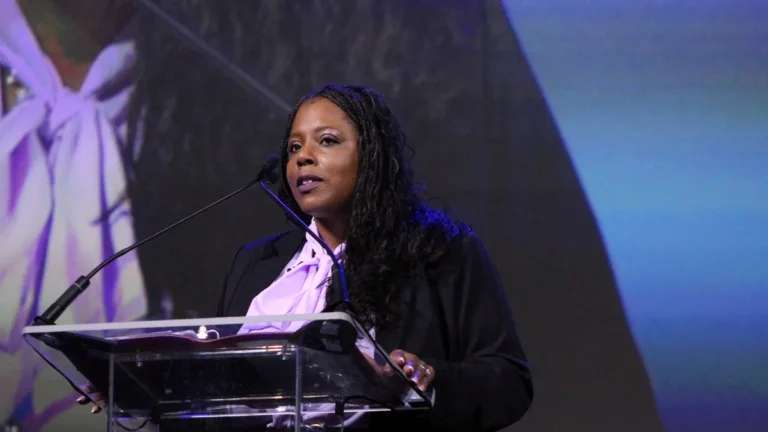
The landscape of American nonprofit healthcare is undergoing a significant transformation, and at the center of this shift is Risant Health. In a major leadership development, Risant Health has announced the departure of its inaugural Chief Executive Officer, Dr. Jaewon Ryu. The news marks a pivotal moment for the organization, which was established by Kaiser Permanente to redefine the scale and scope of nonprofit health systems through strategic acquisitions.
As Risant moves into this transitional period, Dale Maxwell—a veteran executive with deep roots in regional healthcare management—has been tapped to serve as the interim leader. The search for a permanent successor is now underway, signaling a period of internal assessment for a company that has, in a very short timeframe, become a financial and operational powerhouse in the healthcare sector.
Main Facts: The Transition at a Glance
The transition comes less than a year after Risant Health officially launched in 2024. Dr. Jaewon Ryu, who was instrumental in the organization’s foundational strategy, leaves behind a company that has already begun to reshape the industry’s consolidation map.
- Outgoing CEO: Dr. Jaewon Ryu, the architect of Risant’s operating model and former CEO of Geisinger Health.
- Interim Successor: Dale Maxwell, the former long-term leader of Presbyterian Healthcare Services in New Mexico, who retired earlier this year.
- The Mission: Risant Health, a nonprofit entity owned by Kaiser Permanente, is designed to acquire and invest in nonprofit community health systems to improve care quality, efficiency, and financial sustainability.
- Current Portfolio: Under Ryu’s leadership, the organization successfully integrated Geisinger Health and initiated the acquisition of Cone Health.
- The Path Forward: The board of directors has initiated a national search for a permanent CEO to carry out the next phase of Risant’s ambitious growth strategy.
Chronology: The Rise of Risant Health
To understand the weight of this leadership change, one must look at the rapid chronology of Risant’s development.
2019–2023: The Geisinger Foundation
Before the birth of Risant, Dr. Jaewon Ryu served as the CEO of Geisinger. During his tenure, he became a prominent figure in value-based care, positioning Geisinger as a national leader in clinical innovation. His work at Geisinger caught the attention of Kaiser Permanente, setting the stage for a unique corporate synergy.
Early 2024: The Launch
Kaiser Permanente officially closed its acquisition of Geisinger, a move that served as the catalyst for the formation of Risant Health. The strategy was clear: Kaiser would own Risant, and Risant would operate as a distinct, nonprofit organization that would acquire other regional systems to scale best practices across the country.
Mid-2024: Expanding the Footprint
Under Ryu’s guidance, Risant Health announced its intention to acquire Cone Health, a North Carolina-based nonprofit system. This move confirmed that Risant was not intended to be a single-entity project, but a platform for a national network of nonprofit systems.
Late 2024: The Leadership Shift
Following a period of intense growth and operational integration, the organization announced that Dr. Ryu would be stepping down. The appointment of Dale Maxwell as interim leader was announced simultaneously, ensuring that the organization’s strategic momentum would not falter during the leadership search.
Supporting Data: Financial Impact and Strategic Value
Risant Health’s impact on Kaiser Permanente’s balance sheet has been substantial, underscoring the success of the acquisition model Ryu championed.
According to financial disclosures, the inclusion of acquired systems has provided a significant boost to Kaiser’s bottom line. In the last fiscal year alone, the consolidation added approximately $12 billion in operating revenue to Kaiser’s financial statements. This financial windfall has sparked industry debate regarding the "nonprofit" nature of such mega-mergers. Critics and analysts are closely watching whether these billions are being reinvested into patient-facing clinical services or if they represent a concentration of market power that could potentially stifle competition.
For Risant, the data points to a model of "scale-as-a-service." By providing the acquired systems with the backing of a larger entity like Kaiser, Risant claims to offer smaller nonprofit systems the capital and technical resources to invest in technology, care coordination, and administrative efficiency—all while maintaining the acquired systems’ original nonprofit tax status.
Official Responses and Stakeholder Perspectives
The corporate messaging surrounding the leadership change has focused on stability and continuity.
"Risant Health remains committed to its core mission of expanding access to high-quality, value-based care through our nonprofit network," a spokesperson for the organization stated. "With Dale Maxwell’s extensive background in hospital administration and his deep understanding of nonprofit health systems, we are confident in our ability to navigate this transition while continuing to integrate our current portfolio members."
Industry experts have also weighed in on the transition. Dr. Ryu, who has long been a vocal advocate for the "value-based" payment model—where providers are paid for patient outcomes rather than the volume of services—is widely expected to remain a consultant or advisor in the healthcare space. His move to step down is viewed by some analysts as a "natural conclusion" to the startup phase of Risant, with the organization now needing a different type of leadership—perhaps one more focused on long-term operational scaling rather than initial acquisition and integration.
Implications for the Future of Healthcare
The departure of Dr. Ryu and the appointment of an interim successor at Risant Health carries several implications for the broader healthcare industry:
1. The Consolidation Trend
Risant represents a unique "hub-and-spoke" model for nonprofit health systems. Unlike traditional for-profit hospital acquisitions, which often prioritize cost-cutting and layoffs, Risant’s model promises to preserve the local identity of health systems while injecting them with Kaiser’s operational expertise. The success of this model depends entirely on the leadership’s ability to prove that this consolidation actually improves patient outcomes.
2. The Role of the "Interim" Executive
The appointment of Dale Maxwell, a retired veteran, suggests that Risant is not looking to pivot its strategy in the short term. Maxwell is a "steady hand" choice. His role is to ensure that the integration of Cone Health remains on track and that the existing relationship with Geisinger remains harmonious. The organization is signaling to stakeholders that the "Risant experiment" is working and that the next permanent leader will be tasked with continuing, not disrupting, the current course.
3. Regulatory Scrutiny
As Kaiser Permanente continues to grow through Risant, regulatory bodies and antitrust watchdogs will likely intensify their scrutiny. The $12 billion revenue increase is a double-edged sword: while it proves the financial viability of the model, it also invites questions about market dominance and the potential impact on local pricing for medical services.
4. The Future of Nonprofit Health Systems
The broader nonprofit sector is currently facing existential pressure due to rising labor costs, inflation, and the post-pandemic burnout of medical staff. Risant’s model offers a lifeline to systems that may struggle to survive independently. If the organization can successfully recruit a successor to Ryu who maintains the trust of both the parent company (Kaiser) and the acquired systems (Geisinger and Cone), it may provide a blueprint for how nonprofit healthcare can survive in an era dominated by large-scale consolidation.
Conclusion
The transition at Risant Health is more than just a change in the executive suite; it is a critical juncture for an organization designed to save the nonprofit hospital model. As Dr. Jaewon Ryu moves on from the project he helped birth, the industry turns its attention to the effectiveness of the Risant operating system.
With Dale Maxwell steering the ship through the interim period, the board of directors has provided the necessary time to find a leader who can balance the clinical mission of nonprofit care with the financial realities of modern, large-scale healthcare systems. Whether Risant continues to act as a growth engine for Kaiser or evolves into a broader, more decentralized network will largely be determined by the leadership choices made in the coming months. For now, the healthcare world watches to see if the "Risant model" can outlast its primary architect.