For millions of people, the night is not a sanctuary of rest but a battlefield of interrupted breathing, oxygen deprivation, and fragmented cycles. Obstructive Sleep Apnea (OSA) is a pervasive, chronic condition that often goes undiagnosed, lurking behind symptoms like daytime fatigue, irritability, and heavy snoring. As medical science advances, the need for accessible, reliable screening tools has become paramount. Enter the STOP-BANG questionnaire—a deceptively simple yet clinically validated instrument that serves as a primary gateway to identifying those at risk for sleep-disordered breathing.
The Landscape of Sleep Health: Why Screening Matters
Obstructive Sleep Apnea occurs when the muscles in the back of the throat fail to keep the airway open during sleep, leading to repeated pauses in breathing. These interruptions force the brain to briefly wake the sleeper to restart breathing, a cycle that can repeat hundreds of times in a single night. Left untreated, the implications are severe: increased risk of hypertension, heart disease, stroke, type 2 diabetes, and dangerous daytime drowsiness.
Because many individuals remain unaware of their nocturnal habits, they often suffer in silence. This is where the STOP-BANG questionnaire enters the clinical equation. It is not a diagnostic tool in itself; rather, it is a sophisticated "red flag" system designed to alert both patients and providers that a deeper investigation—such as a formal sleep study—is warranted.
The Mechanics of the STOP-BANG Questionnaire
The acronym STOP-BANG stands for eight critical parameters used to evaluate risk. Each "yes" answer earns one point, with a maximum score of eight.
The STOP Component: The Primary Symptoms
- S (Snoring): Do you snore loudly (loud enough to be heard through closed doors or enough to annoy your bed partner)?
- T (Tired): Do you often feel tired, fatigued, or sleepy during the daytime?
- O (Observed): Has anyone observed you stop breathing, gasp, or choke during your sleep?
- P (Pressure): Do you have or are you being treated for high blood pressure (hypertension)?
The BANG Component: The Physical Indicators
- B (BMI): Is your Body Mass Index greater than 35 kg/m²? Obesity is a significant mechanical factor in airway collapse.
- A (Age): Are you older than 50 years? As we age, muscle tone in the throat tends to decrease, increasing risk.
- N (Neck Circumference): Is your neck circumference greater than 40 centimeters (16 inches)? A larger neck often indicates increased tissue around the airway.
- G (Gender): Are you male? Statistically, men are at a higher risk for developing sleep apnea compared to pre-menopausal women.
A Chronological Perspective: The Evolution of Sleep Screening
The development of the STOP-BANG questionnaire was not an overnight success but a result of rigorous clinical evolution. Historically, sleep medicine relied heavily on expensive, time-consuming in-lab polysomnography (PSG). As the prevalence of obesity and sleep disorders rose globally in the late 20th and early 21st centuries, the medical community recognized an urgent need for a triage tool that could be administered in a primary care setting.
The questionnaire was pioneered by Dr. Frances Chung and her colleagues at the University Health Network (UHN). Published in its validated form in 2008, it was specifically designed to be more sensitive than existing tools like the Berlin Questionnaire or the Epworth Sleepiness Scale. Over the last decade and a half, it has become the gold standard for perioperative screening—helping anesthesiologists identify patients at high risk of airway complications before they ever enter the operating room.
Supporting Data: Validating the Tool
The efficacy of the STOP-BANG questionnaire is backed by extensive clinical research. Studies published in journals such as Anesthesiology have demonstrated that the tool possesses a high sensitivity for detecting moderate to severe sleep apnea.
For instance, clinical trials have shown that when a patient scores 3 or higher, the likelihood of having moderate-to-severe OSA is significantly elevated. A score of 5 to 8 is considered "high risk," often triggering an immediate referral to a sleep medicine specialist. The beauty of the tool lies in its high "negative predictive value"—meaning that if you score low (0–2), it is highly unlikely you have severe sleep apnea, providing peace of mind for many patients.
However, researchers caution that while sensitivity is high, specificity can vary. This is why the questionnaire remains a screening tool rather than a diagnostic one. It functions much like a blood pressure cuff at a pharmacy; it tells you that something might be wrong, but it doesn’t explain the underlying pathology.
Official Responses and Clinical Guidelines
Major medical organizations, including the American Academy of Sleep Medicine (AASM) and the American Society of Anesthesiologists (ASA), have recognized the STOP-BANG as a vital tool in the physician’s toolkit.
The consensus among professionals is clear: the questionnaire should be used as a conversation starter. If a patient presents with a high score, the primary care provider is encouraged to discuss symptoms, review the patient’s medical history, and, if necessary, order a Home Sleep Apnea Test (HSAT) or a laboratory-based polysomnogram.
The AASM emphasizes that accreditation matters. When a patient is referred for testing, they should ideally seek care at an AASM-accredited sleep center. These facilities adhere to rigorous standards of practice, ensuring that the technology used for monitoring brain waves, oxygen saturation, and respiratory effort meets the highest clinical benchmarks.
The Implications: Moving from Screening to Treatment
What happens after you get your score? This is the most critical phase of the process.
- The Consultation: If your score indicates high risk, the first step is to consult with your physician. They will assess your physical anatomy, review your medications, and check for comorbidities like diabetes or heart rhythm issues.
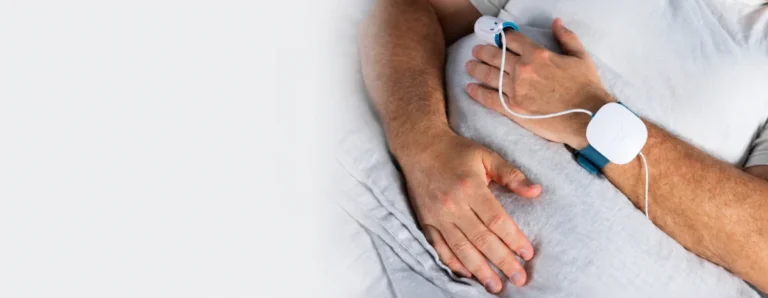
- The Diagnostic Test: You may be offered a home sleep apnea test. These devices are user-friendly and allow you to record your breathing patterns in your own bed. If the home test is inconclusive or if you have complex medical needs, an in-lab study is the next logical step.
- The Treatment Plan: If you are diagnosed with OSA, the treatments are highly effective. Continuous Positive Airway Pressure (CPAP) therapy remains the gold standard, acting as a "pneumatic splint" to keep the airway open. Other options include oral appliances, positional therapy, or, in some cases, surgical interventions.
Beyond the Score: Improving Quality of Life
The implications of ignoring a high STOP-BANG score are profound. Untreated sleep apnea acts as a "silent killer," contributing to systemic inflammation and cardiovascular strain. Conversely, successful treatment can be transformative. Patients often report a "fog lifting" after starting treatment—mood stabilizes, productivity increases, and the risk of motor vehicle accidents (often caused by microsleeps) drops significantly.
It is important to remember that the questionnaire is not a static measurement. As you lose weight or change your lifestyle, your risk factors may shift. The tool is designed to be a living document that tracks your health journey.
Conclusion: Taking Control of Your Sleep
Sleep is not a luxury; it is a biological necessity. If you find yourself nodding off at your desk, waking up with a dry mouth, or if a partner has complained about your snoring, you are not alone. The STOP-BANG questionnaire is a simple, non-invasive, and evidence-based way to bridge the gap between "feeling tired" and "getting help."
By taking the time to answer these eight questions, you are taking the first step toward reclaiming your health. Visit the official STOP-BANG website to use their interactive tool and, more importantly, schedule an appointment with your healthcare provider to discuss your results.
Frequently Asked Questions
- Can I diagnose myself using STOP-BANG? No. This tool is for screening only. Only a qualified physician can provide a formal diagnosis based on objective test data.
- Is it accurate for everyone? While highly accurate, the tool is primarily validated for adults. Children and adolescents require different screening criteria due to different physiological drivers of apnea.
- What if my score is high but I feel fine? You should still consult a doctor. Sleep apnea often develops slowly, and the body may compensate for years before a "crash" occurs. Early detection is always preferable to late-stage intervention.
Medical review by Katherine Moawad, DO. The STOP-BANG questionnaire is owned by Dr. Frances Chung and UHN. For clinical licensing or official use, please visit the official portal.