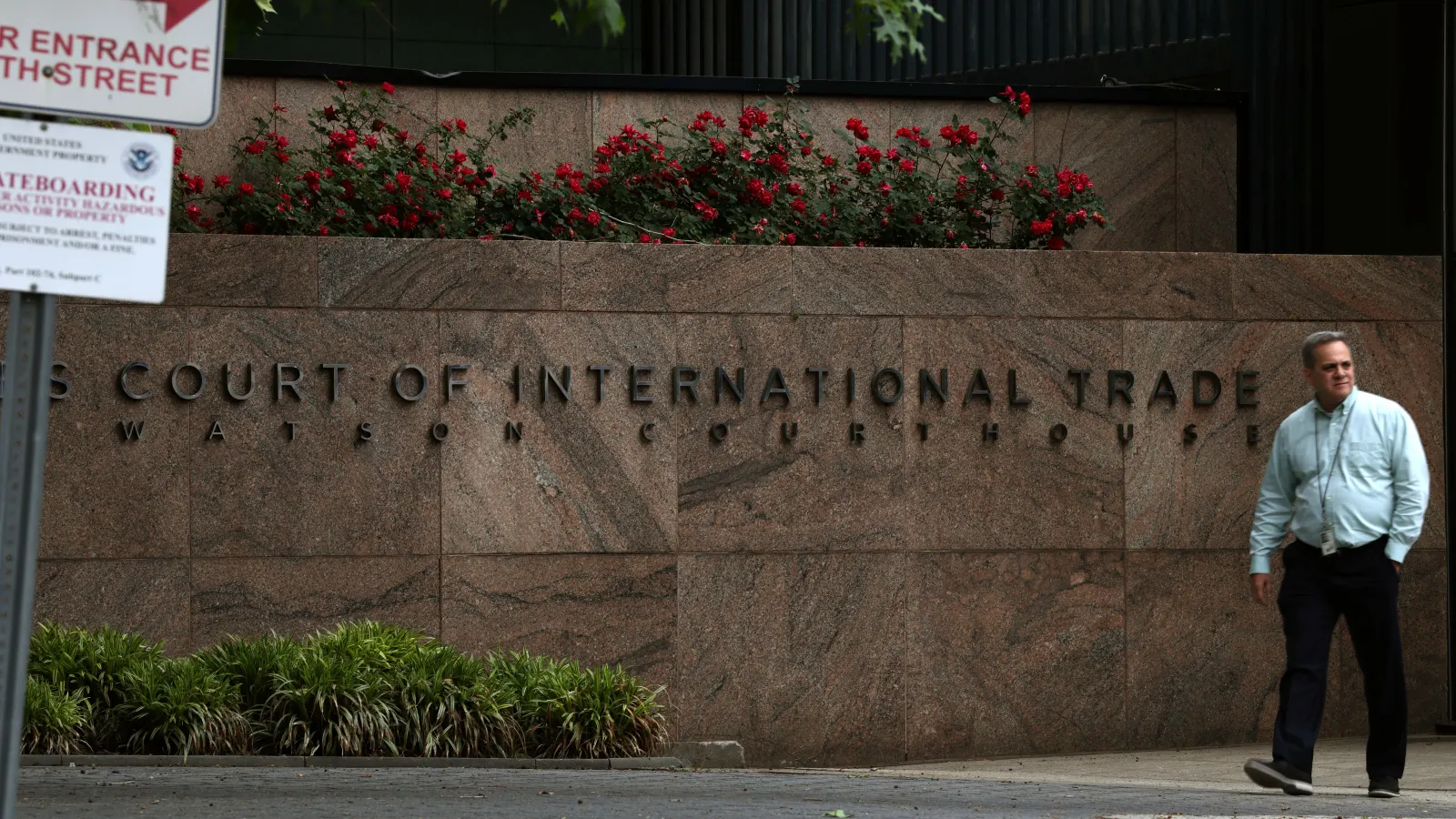
In a significant judicial rebuke to the executive branch’s aggressive trade policy, the U.S. Court of International Trade (CIT) has ruled that the temporary 10% global tariff implemented by President Donald Trump earlier this year is illegal. In a decisive slip opinion issued this Thursday, the court declared that the proclamation used to enact these levies is "invalid" and that the tariffs themselves are "unauthorized by law."
This ruling represents a major escalation in the ongoing legal battle between the administration’s use of broad executive powers to reshape trade relations and the judiciary’s interpretation of statutory limits. By rejecting the administration’s application of Section 122 of the Trade Act of 1974, the court has signaled that it will not permit the executive branch to transform long-standing, narrow trade statutes into "universal tariff bazookas."
The Core Facts: A Statute Misapplied
The legal controversy centers on the administration’s invocation of Section 122 of the Trade Act of 1974. Historically, this provision was designed to allow the President to impose temporary import surcharges to address severe balance-of-payments deficits. However, the CIT found that the Trump administration’s rationale for the 10% global levy failed to meet the rigorous criteria established by the statute.
In its ruling, the court criticized the administration’s interpretation as an "expansive reading" of the law. "The Government’s preferred interpretation of the statute must therefore be disfavored," the court wrote. The judiciary’s stance is clear: Section 122 is not an all-encompassing tool for economic restructuring, but rather a narrow mechanism intended for specific, extreme financial exigencies—a threshold the court determined was not met by the administration’s current trade strategy.
Chronology of a Trade Conflict
The trajectory of these tariffs has been marked by rapid implementation and immediate, widespread legal pushback.
- February 2025: President Trump officially announces the 10% global tariff, citing broad economic authority under Section 122 of the Trade Act of 1974.
- March 2025: The immediate impact of the tariffs triggers a wave of litigation. Spice brand Burlap and Barrel and toy manufacturer Basic Fun file suit, arguing that the financial burden of the tariffs is crippling their supply chains.
- March 2025: A coalition of more than 20 states joins the legal fray, filing a collective lawsuit seeking a permanent injunction against the collection of the duties, arguing that the economic harm to their respective industries and state-funded institutions is irreparable.
- Late March – Mid-Year 2025: Throughout the spring and summer, importers grapple with the logistical nightmare of the new levies, leading to a surge in protests and administrative challenges filed with Customs and Border Protection (CBP).
- Thursday, [Current Date]: The U.S. Court of International Trade issues its slip opinion, invalidating the Section 122 tariffs while granting specific, limited injunctive relief to the plaintiffs who could prove immediate financial harm.
Supporting Data and the Scope of Relief
While the court’s ruling is a clear victory for the plaintiffs, it is not a blanket nationwide injunction. The court’s decision to limit relief reflects a cautious approach to judicial intervention.
To qualify for an immediate halt in tariff payments, plaintiffs were required to provide concrete evidence of financial injury—specifically, proof that they were already paying the duties or would be forced to do so imminently. Burlap and Barrel and Basic Fun met this evidentiary threshold by demonstrating they had shipments scheduled to arrive in the U.S. during the 150-day window the tariffs were originally intended to cover.
The cohort of states, however, found less success. Because most of the states were unable to prove direct, immediate harm to their own fiscal interests, the court denied their request for relief, with one notable exception: the State of Washington. Washington successfully argued that its public institution, the University of Washington, faced direct costs from the tariffs on its international imports. This specific inclusion allowed the state to secure injunctive relief, highlighting that even in a broad trade war, judicial remedies remain tethered to direct, demonstrable economic impact.
The Broader Implications: A Pattern of Judicial Resistance
This decision is the latest in a series of legal defeats for the current administration’s trade regime. Earlier this year, the Supreme Court invalidated a separate set of global and reciprocal tariffs that had been enacted under the International Emergency Economic Powers Act (IEEPA).
The fallout from that Supreme Court ruling was significant. The government was forced to launch the "Consolidated Administration and Processing of Entries" (CAPE) portal to manage the massive influx of refund claims for the invalidated levies. Now, with the CIT invalidating Section 122 tariffs, the administrative burden on the government is set to grow exponentially.
Industry experts warn that this creates a "massive potential refund and reliquidation issue." For importers already struggling with the complex, often opaque processes associated with CAPE submissions, protests, and reconciliation, this new ruling adds another layer of uncertainty.
"The court appears increasingly uninterested in turning every old trade statute into a universal tariff bazooka," said Pete Mento, director of global trade advisory services at Baker Tilly. "It raises another massive potential refund and reliquidation issue for importers already drowning in CAPE submissions, protests, offsets, and reconciliation problems."
Official Responses and the Road Ahead
The administration has yet to issue a formal statement detailing its next steps, but legal analysts almost universally expect the government to appeal the CIT’s ruling. The administration’s reliance on executive power to bypass traditional legislative trade processes has been a hallmark of its policy, and it is unlikely to abandon this strategy without exhausting all judicial avenues.
For businesses caught in the middle, the situation remains precarious. While the court has signaled that the current application of Section 122 is illegal, the question of "universal injunctive relief"—whether the court can stop the collection of these tariffs for all importers, not just those who sued—remains an open and debated issue.
The uncertainty surrounding the future of these duties is, in many ways, more damaging to the supply chain than the tariffs themselves. Companies rely on predictability to set prices, manage inventory, and enter into long-term contracts. With the legal landscape shifting beneath their feet, importers are left in a state of limbo.
"Of course, this is almost certainly headed to appeal," Mento added. "Nothing in trade law is ever simple."
Conclusion
The U.S. Court of International Trade’s decision to invalidate the Section 122 tariffs serves as a powerful reminder of the checks and balances inherent in the American system of government. By asserting that the executive branch cannot unilaterally expand the scope of trade statutes to suit broad economic objectives, the court has reasserted the primacy of statutory law over executive decree.
However, the road ahead is fraught with complexity. With potential appeals looming, a backlog of refund claims, and a business community desperate for stability, the resolution of this trade dispute is far from over. As the administration prepares for what is sure to be a protracted legal fight, the broader implications for U.S. trade policy and the power of the presidency to influence global commerce will continue to be a subject of intense national debate.
For now, the ruling stands as a significant barrier to the current tariff strategy, providing a glimmer of relief to the specific plaintiffs involved while leaving the rest of the import market to navigate a landscape defined by legal volatility and administrative gridlock.