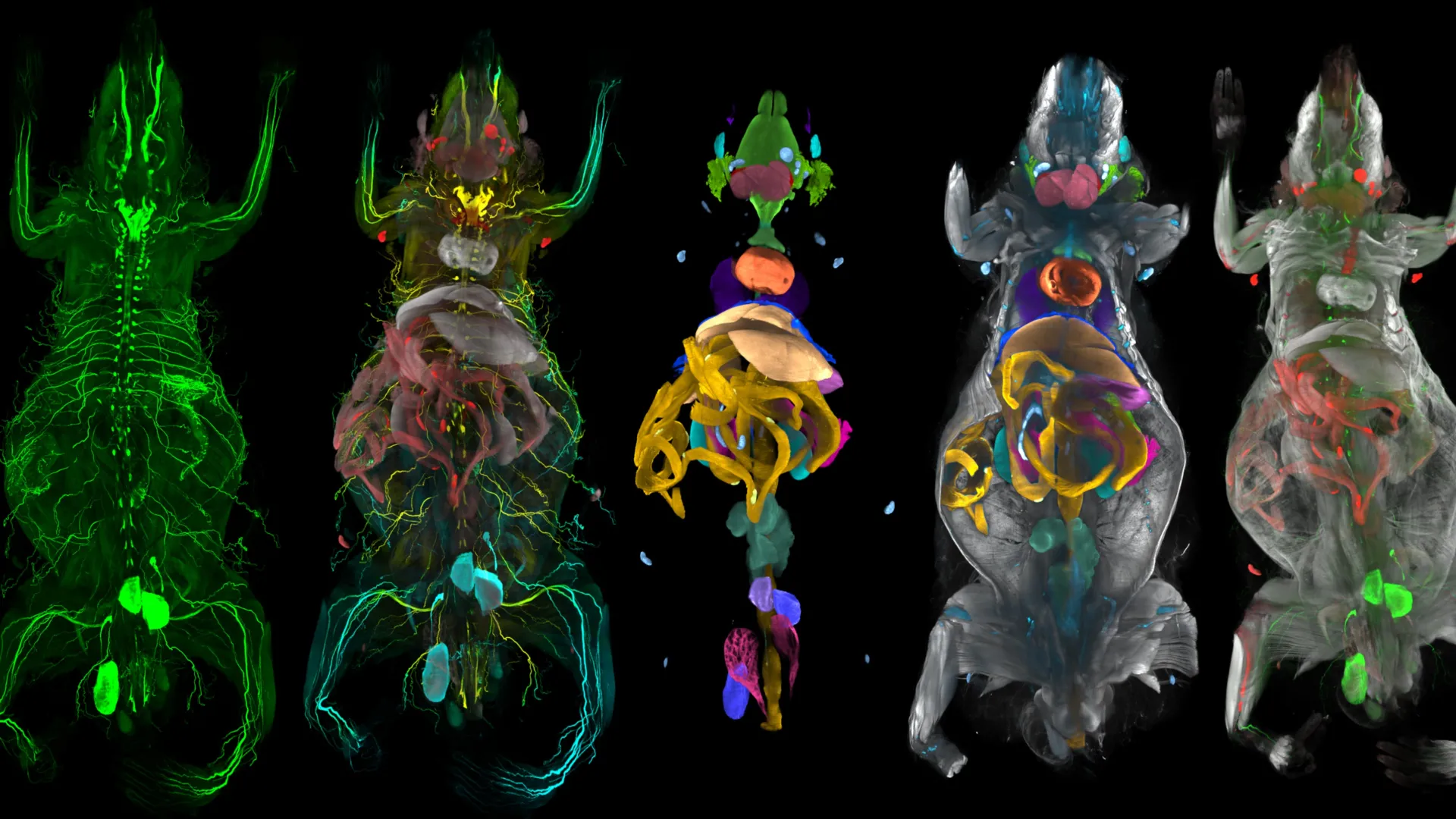
In a landmark study that bridges the gap between whole-organism biology and artificial intelligence, researchers at Helmholtz Munich and Ludwig Maximilians University (LMU) have unveiled "MouseMapper"—a revolutionary AI-powered platform capable of mapping disease-related physiological changes across an entire mouse body at cellular-level resolution. This breakthrough, recently published in the journal Nature, provides a transformative lens through which scientists can finally observe the systemic, interconnected impact of chronic conditions like obesity, which were previously studied in isolated, fragmented silos.
The research team, led by Professor Ali Ertürk, has successfully demonstrated that obesity is not merely a metabolic issue localized to fat tissue or the liver; it is a systemic "body-wide" event. By utilizing MouseMapper, the researchers identified widespread inflammation and previously unknown nerve damage—specifically within the facial trigeminal nerve—that mirrors molecular patterns found in human tissue. This finding suggests that the neurological degradation observed in mice is likely a pervasive, under-recognized component of human obesity-related pathology.
The Genesis of MouseMapper: A Chronology of Innovation
For decades, the standard approach to medical research has been reductionist: scientists have historically focused on one organ at a time—the liver, the heart, or the brain—to understand the progression of disease. While effective for localized pathologies, this method fails to capture the complex, cascading effects of systemic diseases that alter the immune system, endocrine function, and neurological integrity simultaneously.
From Tissue Clearing to Digital Mapping
The journey to MouseMapper began with the challenge of "seeing" through an intact organism. The team utilized advanced tissue-clearing techniques, a process that renders biological samples transparent while preserving the integrity of fluorescent markers tagged to specific nerves and immune cells. By effectively turning a mouse into a "glass" specimen, researchers could peer deep into the anatomy without the destructive process of slicing tissues into thin, two-dimensional sections.
Once the samples were cleared, the team employed high-resolution light-sheet microscopy to capture three-dimensional data. This generated gargantuan datasets—tens of millions of cellular structures—that would be impossible for human researchers to analyze manually.
The AI Leap
The integration of a foundation-model-based deep learning framework was the final, critical step. Unlike traditional AI tools that are constrained by narrow training parameters, MouseMapper’s foundation model allows it to generalize, identifying 31 distinct organs and tissue types automatically. This architectural shift from "targeted imaging" to "whole-body analysis" allowed the researchers to identify disease hotspots—such as inflammatory clusters and neural degradation—without needing to pre-select regions of interest.
Supporting Data: The Hidden Cost of Obesity
To validate the platform, the team introduced a high-fat diet to a cohort of mice, inducing obesity and metabolic syndrome. The subsequent data revealed a sobering landscape of systemic damage.
The Trigeminal Nerve Discovery
One of the most profound findings was the degeneration of the trigeminal nerve, the primary cranial nerve responsible for facial sensation. In obese mice, the researchers observed a significant retraction in nerve branches and a depletion of nerve endings. This structural decline was not merely morphological; behavioral testing confirmed that the obese mice displayed a diminished response to sensory stimulation compared to their lean counterparts.
Spatial Proteomics and Human Correlation
The researchers did not stop at structural imaging. By applying spatial proteomics to the trigeminal ganglion—the hub of facial sensory neurons—they identified specific molecular signatures indicative of chronic inflammation and nerve remodeling. Crucially, when these researchers analyzed tissue samples from human patients with obesity, they discovered the same molecular patterns. This validation provides a vital link between animal models and human clinical outcomes, suggesting that facial sensory decline could be a diagnostic marker or a neglected symptom of long-term metabolic distress.
Official Perspectives: The Vision for "Digital Twins"
The researchers behind the study emphasize that MouseMapper is more than just a diagnostic tool; it is a fundamental shift in the philosophy of biological research.
"MouseMapper is built on a foundation model, which means it generalizes far beyond the data it was originally trained on," explains Ying Chen, co-first author of the study. This generalization capability is what sets the platform apart, enabling it to adapt to different disease models beyond obesity, including cancer, autoimmune disorders, and neurodegenerative diseases.
A Quest for the "Digital Twin"
Professor Ali Ertürk, Director of the Institute for Biological Intelligence (iBIO) at Helmholtz Munich, views the current study as the foundation for a much larger, more ambitious project. His long-term vision is the creation of "digital twins"—fully interactive, high-fidelity computer simulations of an organism in both healthy and diseased states.
"Our goal is to create a comprehensive framework for understanding how diseases affect the body as an interconnected system," Prof. Ertürk states. "Our long-term vision is to build truly realistic digital twins of mice in health and disease: cell-level atlases that we can query, perturb, and screen in silico computationally. That would let us pinpoint the earliest changes a disease causes, design interventions to prevent them, and accelerate the discovery of new treatments while reducing the number of physical experiments we need to run."
Dr. Doris Kaltenecker, a senior scientist at the Institute for Diabetes and Cancer (IDC) and first author of the study, notes the unprecedented clarity this provides. "We revealed previously unknown structural and molecular changes in the trigeminal ganglion and its facial branches, and the same molecular signature was conserved in human tissue. This kind of finding simply cannot emerge from studying one organ at a time."
Implications for Modern Medicine
The implications of the MouseMapper platform are wide-ranging, potentially altering how we approach drug development and disease monitoring.
1. Holistic Therapeutic Targets
By revealing how obesity triggers a domino effect across various organ systems, MouseMapper allows researchers to identify therapeutic targets that address the "root" of the systemic cascade rather than just the symptoms of a single organ. For instance, if nerve damage is identified as a secondary effect of metabolic inflammation, treatments could be designed to protect neural health earlier in the progression of obesity.
2. Reducing Animal Use
Ethical considerations in research are paramount. By transitioning toward "in silico" (computer-based) testing using digital twins, the scientific community can significantly reduce the number of animal models required to test drug efficacy. If an AI can predict how a drug interacts with an entire organism, the necessity for iterative, large-scale animal testing may diminish.
3. Open Science and Global Collaboration
In a move to accelerate discovery, the research team has made their whole-body datasets publicly available. This open-access policy invites researchers worldwide to explore the interconnectedness of disease across different organs, fostering a collaborative environment where data is not trapped within a single institution.
4. A New Era of Precision Medicine
The ability to see the "big picture" of a disease—from the immune cell infiltration in the liver to the nerve fiber density in the face—provides a blueprint for precision medicine. As the technology matures, it may enable clinicians to understand the specific "systemic signature" of a patient’s disease, allowing for more personalized, targeted therapeutic interventions.
Conclusion: A Paradigm Shift in Understanding
The development of MouseMapper marks the end of an era where biologists were forced to look at the body through a keyhole. By integrating deep learning with advanced whole-body imaging, the team at Helmholtz Munich and LMU has effectively widened the aperture of biomedical research.
The discovery of obesity-linked trigeminal nerve damage is likely just the beginning. As the platform is applied to other complex diseases—from the metastasis of cancer to the systemic spread of neurodegeneration—the "digital twin" of the mouse may eventually become the most powerful instrument in the quest to map, understand, and ultimately cure the diseases that define the modern human condition. Through the marriage of AI and biological imaging, the invisible threads that connect our organs are finally coming into focus.
The study was supported by a wide consortium of international and German institutions, including the European Research Council (ERC), the German Research Foundation (DFG), and the Novo Nordisk A/S Programme for Diabetes Research in Europe, among others.