












Main Facts: The Academic Pressure Cooker
As the academic semester draws to a close, millions of students across the globe face what is colloquially known as "Finals Week"—a period characterized by a concentrated surge in examinations, cumulative projects, and high-stakes grading. While academic rigor is a staple of the educational experience, the modern "finals" environment has evolved into a significant mental health challenge.
According to Theo Kertesz, a mental health advocate and co-founder of the wellness platform StayMindful, the primary issue is not the material itself, but the sheer volume of simultaneous demands. "Finals week can feel like everything hitting at once," Kertesz notes. The convergence of multiple exams and vast amounts of material creates a "perfect storm" of pressure, often leading to a breakdown in cognitive function, an increase in procrastination, and a dangerous de-prioritization of mental well-being.
The core facts are stark: student anxiety peaks during the last three weeks of the semester. This stress is not merely emotional; it is physiological, affecting sleep cycles, nutritional intake, and long-term memory retention. To combat this, experts are moving away from traditional "grit" narratives, instead advocating for tactical, science-backed interventions that prioritize the nervous system’s regulation alongside academic performance.
Chronology: The Lifecycle of Finals-Induced Stress
The escalation of stress during finals season follows a predictable, yet destructive, chronological path. Understanding this timeline is essential for implementing timely interventions.
The Anticipatory Phase (Weeks 12–14)
In the weeks leading up to the final period, stress begins as a low-level background noise. Students receive final project prompts and "review sheets." At this stage, the primary psychological barrier is "syllabus shock"—the realization of the distance between current knowledge and the requirements for the exam.
The Peak Compression (Finals Week)
Once the week begins, the "marathon mentality" takes over. Students often attempt 10-to-12-hour study sessions, sacrificing REM sleep for rote memorization. This is the period where "mental friction" is at its highest. As Kertesz explains, when students look at a monolithic task like "Review all of History," the brain’s executive function often freezes, leading to "freeze-state" procrastination.

The Post-Exam Exhaustion
The cycle concludes with a period of burnout. Even after the exams are finished, the high cortisol levels sustained during the week can lead to a "crash," leaving students vulnerable to illness and emotional volatility during their break periods.
Supporting Data: The Science of Calm and Productivity
To address this chronological decline, Kertesz and other experts advocate for methods rooted in physiological and psychological data.
The Efficacy of the "Cyclic Sigh"
One of the most potent tools in a student’s arsenal is the "cyclic sigh." This is not merely a relaxation technique; it is a neurological reset.
- The Method: A deep inhalation through the nose, followed by a second, shorter "pop" of air to fully inflate the lung’s alveoli, and a long, slow exhalation through the mouth.
- The Data: Research conducted at Stanford University’s Huberman Lab found that structured breathing practices, specifically the cyclic sigh, are more effective at reducing acute anxiety than even traditional mindfulness meditation. The sigh rapidly lowers the heart rate and clears carbon dioxide from the bloodstream, signaling to the brain that the immediate "threat" has passed.
StayMindful’s Empirical Findings
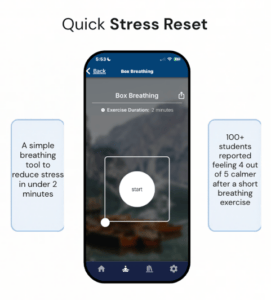
Theo Kertesz’s work with StayMindful has provided localized data on these interventions. In controlled testing with a cohort of over 100 students, the application of guided breathing exercises yielded significant results. On a scale of 1 (not calm) to 5 (extremely calm), participants reported an average post-exercise calmness rating of 4. This suggests that even brief, five-minute interventions can provide a 60-80% improvement in perceived stress levels.
The Myth of the Marathon Study Session
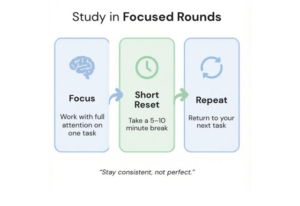
Data on "spaced repetition" and "interleaving" suggests that the "marathon" study session is the least efficient way to learn. Cognitive load theory indicates that the human brain can only maintain peak focus for approximately 25 to 50 minutes before performance begins to decay. By breaking work into "focused rounds," students can maintain a higher baseline of retention while preventing the "cognitive burnout" associated with four-plus hour sessions.
Official Responses: Institutional and Expert Perspectives
The conversation around finals stress is no longer confined to dorm rooms; it has reached the highest levels of academic administration and mental health advocacy.
The Active Minds Initiative
Active Minds, a leading non-profit organization dedicated to student mental health, has been vocal about the need for a cultural shift in how we view grades. Their official stance emphasizes that "students are more than their academic performance." This institutional response is a reaction to the rising rates of depression and anxiety linked to "achievement culture." Active Minds encourages universities to implement "Wellness Days" and provides resources that decouple self-worth from GPA.
The Tech-Wellness Intersection
Platforms like StayMindful represent a new wave of official responses: the digital intervention. By sending daily motivational content and structured tools directly to a student’s mobile device, these apps provide "just-in-time" support. "The goal is not to eliminate stress completely," says Kertesz, "but to make it manageable so you can keep moving forward." This pragmatic approach acknowledges that stress is an inherent part of the academic process but argues that it should not be debilitating.
Faculty and Administrative Shifts
Many universities have begun "Reading Periods"—days with no classes or exams—to allow for the "chunking" of study materials. However, experts argue that without teaching students how to use that time (e.g., using breathing resets and avoiding "doom-scrolling" during breaks), these periods can simply become longer windows for anxiety to build.
Implications: The Long-Term Impact on Student Development
The way students handle finals week has implications that extend far beyond a single letter grade.
The Professional Transition
The habits formed during finals week—whether they are healthy (chunking tasks, breathing resets) or unhealthy (caffeine abuse, sleep deprivation)—often carry over into the professional world. Students who learn to manage high-pressure environments through nervous system regulation are better equipped for the "burnout" culture often found in high-stakes industries like medicine, law, and technology.
The Mental Health Crisis
If the current trajectory of finals-related stress is not mitigated, the implications for the broader mental health crisis are severe. Chronic stress during the formative years of late adolescence and early adulthood can lead to long-term changes in the brain’s amygdala and prefrontal cortex, potentially predisposing individuals to clinical anxiety disorders.
Redefining Success
The ultimate implication of the work being done by Kertesz and organizations like Active Minds is a redefinition of what "success" looks like in education. A student who achieves an ‘A’ at the cost of their mental health and physical well-being is increasingly viewed as a failure of the system, rather than a success story. The move toward "mindful productivity" suggests a future where academic rigor and mental health are not seen as a zero-sum game, but as mutually reinforcing pillars of a successful life.
Conclusion: A Call for Tactical Wellness
As Theo Kertesz concludes in his advocacy work at Scarsdale High School and through StayMindful, the solution to finals stress is not a "perfect routine." Instead, it is the accumulation of small, tactical wins:
- Micro-Targeting: Reducing "mental friction" by breaking "Study Biology" into "Review Chapter 4 Diagrams."
- Physiological Resets: Using the cyclic sigh to override the "fight or flight" response.
- Structured Recovery: Treating breaks as true resets (stretching, hydration) rather than opportunities for digital overstimulation.
By integrating these science-backed habits, students can navigate the crucible of finals week not just with their grades intact, but with their mental health preserved. The evidence is clear: when the brain is calm, it performs; when the student is supported, they succeed.
About the Author/Source Context:
Theo Kertesz is a junior at Scarsdale High School and the co-founder of StayMindful. His work focuses on bridging the gap between clinical psychological research (such as the Stanford breathing studies) and the daily lived experience of the modern student. Through StayMindful, Kertesz provides practical, accessible mental health tools to help peers manage the unique pressures of the 21st-century academic environment.