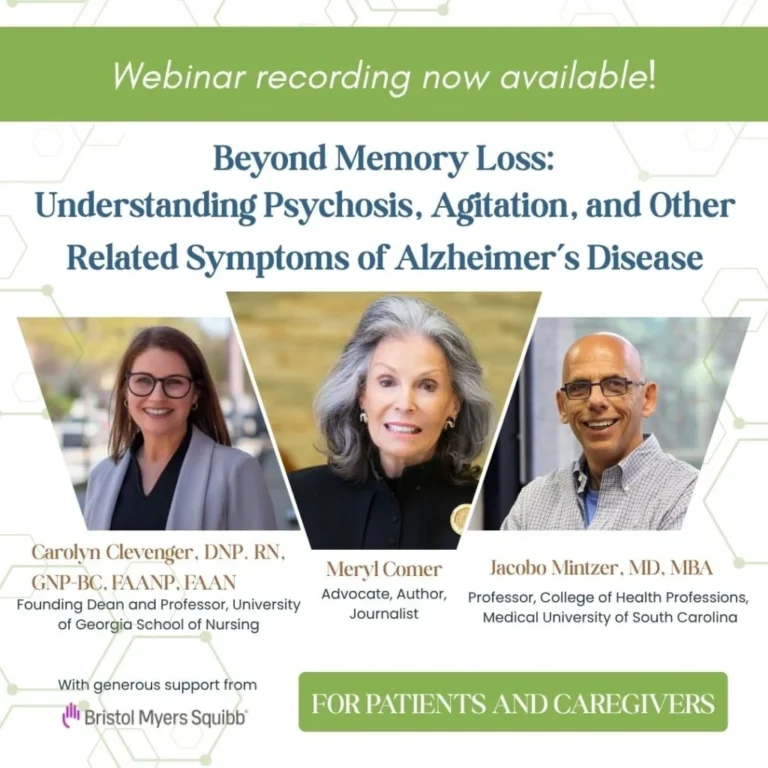
As we observe Alzheimer’s Awareness Month this June, the national conversation often centers on the clinical realities of memory loss and the search for disease-modifying therapies. However, for the millions of families living with the day-to-day progression of Alzheimer’s disease and related dementias, the most profound challenges are often not found in a laboratory, but in the living room.
The Alliance for Aging Research emphasizes that while recognizing symptoms is critical, we must also make space for the complex, often painful emotional realities that accompany the journey. When a loved one receives a diagnosis, it triggers a cascade of uncertainty. The symptoms, often abstract on a clinical checklist, suddenly become the lived reality of families—and navigating them requires more than just medical management; it requires grace, compassion, and a fundamental shift in perspective.
The Invisible Spectrum: Understanding Neuropsychiatric Symptoms (NPS)
While memory loss is the hallmark of Alzheimer’s, it is rarely the only symptom. Neuropsychiatric symptoms (NPS) represent a wide, often distressing spectrum of behavioral and psychological manifestations that can appear alongside or even precede cognitive impairment.
These symptoms include:
- Agitation and Anxiety: Heightened states of distress that can lead to physical or verbal outbursts.
- Depression and Apathy: A loss of interest in previously enjoyed activities and an emotional withdrawal that can be mistaken for simple aging.
- Sleep Disturbances: Changes in circadian rhythms that exacerbate daytime confusion and caregiver exhaustion.
- Wandering: A significant safety concern that requires constant vigilance.
- Personality Changes: Shifts in mood or social behavior that alter the fundamental essence of a loved one.
Because these behaviors often overlap with the stressors of everyday life, they are frequently misidentified as "normal" aging or situational stress. However, as the Alliance noted in their recent webinar, “Caring Together: Empowering Families and Health Professionals with Tools for Better Neuropsychiatric Symptom Care,” early identification is the key to improving the quality of life for both the patient and the caregiver.
The Chronology of Care: From Denial to Resolve
The trajectory of an Alzheimer’s diagnosis is rarely linear. It typically follows an emotional chronology that begins with the initial shock and moves through stages of denial, guilt, and, hopefully, a recalibrated sense of purpose.
The Burden of Hindsight
One of the most pervasive emotions reported by caregivers is guilt. When a loved one’s personality shifts or they become withdrawn, family members often look back at months or years of subtle behavioral changes. They feel the weight of "should have known" or "could have done better." Experts, however, caution against this self-reproach. These symptoms are insidious; they mimic normal life stresses. Recognizing that these behaviors are clinical symptoms of a progressive disease is the first step in shedding the burden of guilt.
The Onset of Grief
As the disease advances, families face a unique form of "ambiguous loss." This is the grief experienced when a loved one is physically present but emotionally or cognitively fading. Conversations shift, routines disappear, and the familiar spark of a personality may flicker. This process of mourning the person someone was while trying to care for the person they are is perhaps the most difficult aspect of the journey.
The Pivot to Resolve
The final, and most crucial, stage in this emotional journey is the transition to resolve. This is not about accepting the loss of a loved one, but rather choosing to adapt to the new reality with intention. It is the moment when caregivers stop measuring the present against the past and begin to look for the "remains"—the lingering strengths, the moments of connection, and the capacity for joy that still exist.
Supporting Data: The Caregiver’s Reality
The human cost of Alzheimer’s is substantiated by stark data. Research consistently shows that caregivers are at a high risk for physical and emotional exhaustion.
- Emotional Burnout: A vast majority of family caregivers report high levels of stress and burnout. The constant, 24/7 nature of managing NPS can lead to long-term health consequences for the caregiver.
- The Power of Education: Studies demonstrate that caregivers who receive formal education on how to manage behavioral symptoms report lower levels of distress. Knowing why a loved one is acting a certain way—and having a toolkit to respond—reduces the helplessness that often leads to burnout.
- Clinical Intervention: Dr. Brent Forester, Psychiatrist-in-Chief at Tufts Medical Center, notes that clinical guidance is essential. When caregivers view their role as part of a support system rather than a solo mission, the sustainability of care improves dramatically.
Expert Perspectives: A New Approach to Caregiving
Dr. Brent Forester, a leading voice in geriatric psychiatry, argues that we must change how we define "successful" care. In his book, The Complete Family Guide to Dementia, Dr. Forester advocates for working "smarter, not harder."

This philosophy encourages families to:
- Prioritize What Remains: Instead of obsessing over lost cognitive abilities, focus on what the patient can still do and enjoy.
- Normalize Seeking Help: Asking for support from community resources, respite care, or clinical professionals is not an admission of failure; it is a necessary strategy for long-term survival.
- Build Systems of Connection: Create care strategies around moments of success. If a specific activity or environment calms a loved one, that becomes the foundation of their daily routine.
"The goal," Dr. Forester suggests, "is to minimize the distress of the patient while protecting the well-being of the caregiver." This requires a shift from reactive care—simply putting out fires—to proactive, structured support.
Implications for the Future: A Call to Action
The implications of these findings are clear: we need to expand our definition of Alzheimer’s care. Clinical support must be paired with emotional support.
For Health Professionals
Clinicians must do more than prescribe medication. They must provide caregivers with the language and the strategies to interpret neuropsychiatric symptoms. The conversation during a medical visit should be as much about the caregiver’s mental health as it is about the patient’s cognitive decline.
For Families and Networks
The "not alone" mantra is not just a sentiment; it is a vital public health requirement. Families need to be encouraged to build support networks early. Whether it is through local support groups, online forums, or partnerships with organizations like the National Alliance for Caregiving, the isolation of the disease must be countered with community.
For Society
As the population ages, the number of people impacted by Alzheimer’s-related NPS will rise. We must prioritize policies that fund caregiver support, respite services, and public education campaigns that demystify dementia. By normalizing the discussion around behavioral symptoms, we can reduce the stigma and help families seek help sooner.
Conclusion: Finding Hope in Resilience
The Alzheimer’s journey is undoubtedly one of the most challenging experiences a family can face. It is marked by uncertainty, frustration, and the profound sadness of watching a loved one change. However, it is also a testament to the resilience of the human spirit.
When families embrace the shift from guilt to resolve, they find that they are capable of incredible acts of compassion. By focusing on the present, utilizing available tools, and refusing to face the burden in isolation, caregivers can find moments of peace and connection even in the face of a difficult diagnosis.
If you are navigating this journey, remember that your feelings—the grief, the exhaustion, and the occasional flicker of hope—are valid. You are part of a community that understands the depth of your sacrifice. As the Alliance for Aging Research continues its work, our primary message remains: you are not walking this path alone. Education, support, and the grace to be kind to yourself are the most powerful tools you have.
Lauren Belsky is the Development Coordinator at the Alliance for Aging Research, a non-profit organization dedicated to accelerating the pace of scientific discovery and improving the lives of older adults.