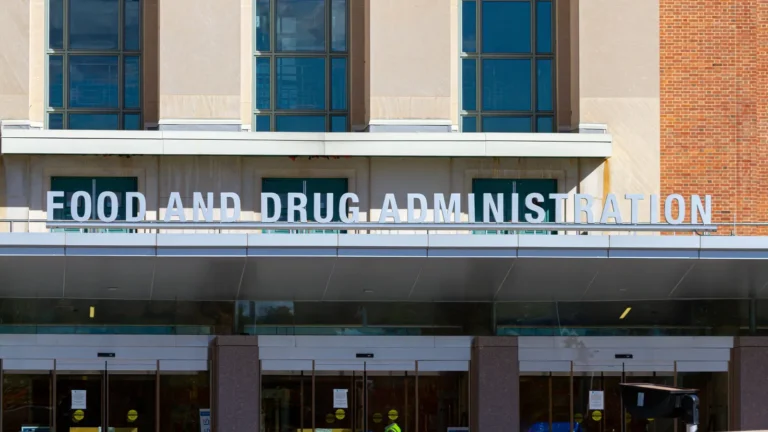
The confirmation hearing for Dr. Heidi Overton, President-elect Donald Trump’s nominee to lead the Food and Drug Administration (FDA), has set the stage for a high-stakes confrontation between scientific traditionalism and a shifting political landscape. As the agency charged with overseeing the safety and efficacy of the nation’s food and drug supply, the FDA occupies a precarious position—one that is currently being scrutinized with unprecedented intensity.
During yesterday’s Senate confirmation hearing, Overton faced a gauntlet of pointed questions regarding her commitment to institutional independence. Her performance, characterized by a strategy of procedural deference, left many lawmakers and public health advocates wondering whether the FDA under her leadership would remain a bulwark of empirical science or become increasingly susceptible to political directives from the White House and the Department of Health and Human Services (HHS).
The Need-to-Know: The Landscape of the Confirmation
The FDA stands at a crossroads. With incoming HHS Secretary Robert F. Kennedy Jr. signaling a desire to restructure major public health agencies, the role of the FDA commissioner has arguably never been more fraught with potential for conflict. Senators on both sides of the aisle sought clarity on how Overton would handle the intersection of public health mandates and the populist skepticism that has defined much of the recent political discourse surrounding vaccines and reproductive health.
The central tension of the hearing was not merely about policy specifics, but about the nature of the role itself: Is the FDA commissioner a policy-maker tasked with executing the President’s agenda, or is the position a guardian of scientific integrity meant to operate with a degree of insulation from political pressure?
A Chronology of the Hearing: Strategic Evasion
The hearing proceeded as a series of tests, with senators attempting to pin Overton down on high-profile wedge issues. Throughout the proceedings, Overton maintained a disciplined adherence to established regulatory frameworks.
- Early Morning (Opening Statements): Overton emphasized her commitment to "evidence-based decision-making" and the "unwavering safety of the American public." Her opening remarks were designed to project stability and continuity, framing her potential tenure as a period of stewardship rather than radical transformation.
- Mid-Morning (The Vaccine Question): When pressed by senators regarding the rise of vaccine skepticism and the potential influence of anti-vaccine rhetoric from leadership, Overton declined to engage in direct commentary on political figures. Instead, she repeatedly cited the existing FDA approval process and the robust body of clinical data that supports the current immunization schedule.
- Afternoon (Reproductive Health): The issue of abortion access, particularly regarding the availability of mifepristone, proved to be a major hurdle. When asked if she would commit to keeping the drug accessible despite potential political pressure to restrict it, Overton pointed to the FDA’s statutory obligations, stating that the agency’s decisions would be predicated on "the best available science and current law," effectively dodging a definitive pledge of defiance against a potential executive order.
- Late Afternoon (The China Factor): As the hearing touched upon global supply chains—a topic currently being reported on the ground in Shanghai by STAT—Overton addressed the complexities of pharmaceutical manufacturing. She noted that the FDA’s reliance on international facilities necessitates a delicate balance of oversight and cooperation, though she offered few specific policy shifts regarding how the agency would handle the increasing scrutiny of Chinese manufacturing hubs.
Supporting Data: The Weight of Institutional Oversight
The FDA’s scope is massive, overseeing approximately $2.8 trillion in consumer goods, including food, drugs, cosmetics, and medical devices. Data provided by the agency’s budget offices suggests that the regulatory burden has increased by over 30% in the last decade, even as staff turnover rates hit record highs during the post-pandemic period.
Behind the political rhetoric lies a practical reality: the agency is currently dealing with a backlog of drug applications and a supply chain crisis that has left hospitals facing shortages of critical medications. Experts suggest that the next commissioner will have to manage these logistical realities while navigating a political environment that is increasingly hostile to federal regulatory authority. The data suggests that any move to prioritize political agendas over standard review protocols could lead to a significant decline in industry trust, potentially delaying the approval of life-saving therapeutics.
Official Responses: The Senate Divide
The response to Overton’s testimony was sharply polarized along partisan lines.
Senate Democrats expressed profound frustration with what they termed "evasive answers." Senator Patty Murray (D-Wash.) noted in a follow-up interview that the nominee’s failure to commit to the autonomy of the FDA’s review processes was "deeply troubling." The concern among Democratic members is that Overton’s reliance on "existing law" is a shield that will be discarded the moment a formal directive arrives from the executive branch.

Conversely, Republican senators praised her "professional restraint." Senator Bill Cassidy (R-La.) remarked that the commissioner’s role is not to be a political activist but to serve the executive branch’s policy goals. "She understands the chain of command," one GOP staffer noted, highlighting that the Republican strategy is to empower the Secretary of HHS to exert more direct control over the agencies under his purview.
Implications for the Future of Public Health
The confirmation of Dr. Overton carries profound implications for the American healthcare system. If she is confirmed, the FDA will enter a period of unprecedented administrative scrutiny.
1. The Erosion of Agency Autonomy
If the commissioner’s office is seen as merely an extension of the HHS Secretary’s political office, the "gold standard" of FDA review may suffer. Industry leaders fear that if drug approvals become viewed as political, rather than scientific, international markets may lose confidence in American-made pharmaceuticals, potentially leading to a decline in foreign investment.
2. The Impact on Clinical Research
The biotech sector, currently grappling with a volatile funding environment, relies on the predictability of the FDA’s regulatory pathways. If the agency begins to shift its requirements based on changing political whims, the cost and time required to bring new drugs to market will increase. This, in turn, could stifle innovation, particularly in rare diseases where the patient populations are smaller and the financial margins thinner.
3. Public Trust in Science
Perhaps the most significant implication is the public’s perception of the FDA. The agency’s power is derived from its credibility. If the public perceives that the FDA is prioritizing the political agenda of the administration over the health of the populace, compliance with public health recommendations could plummet. The "dodging" of questions regarding vaccines and reproductive health already suggests a defensive posture, which may signal to the public that the agency is no longer the neutral arbiter of science they once relied upon.
4. International Supply Chain Realities
With China playing a critical role in the production of Active Pharmaceutical Ingredients (APIs), the FDA’s ability to conduct inspections in that region is paramount. Overton’s reticence on this topic leaves the industry guessing. Will the FDA tighten restrictions on imports, or will it seek a path of diplomatic compromise to ensure domestic supply? The uncertainty itself is a risk factor for the healthcare industry.
Conclusion: A Delicate Balance
As the Senate prepares for the final confirmation vote, the focus remains on whether Dr. Heidi Overton can reconcile the demands of her political sponsors with the scientific responsibilities of the FDA commissioner. Her performance in the hearing suggests a nominee who is acutely aware of the political danger of speaking out of turn. However, the American public, the medical community, and the pharmaceutical industry are looking for more than just caution; they are looking for a leader who will stand for the integrity of the science that defines the agency’s mission.
Whether this caution serves as a strategic survival mechanism or a precursor to a subservient leadership style remains to be seen. What is clear, however, is that the FDA is entering a new era, one where the traditional boundaries between politics and medicine are being aggressively redrawn. For Dr. Overton, the confirmation process is merely the first in a long series of tests that will determine not just the future of her career, but the future of the nation’s health policy for years to come.