Published: June 16, 2026
In an era defined by accelerating ecological shifts, the physical toll of climate change is increasingly matched by a profound psychological burden. As unnatural disasters become routine and the markers of a warming planet—from early spring blooms to record-breaking temperature spikes—become impossible to ignore, many are finding themselves in a state of emotional paralysis. Addressing this "unmooring" of the human spirit is the focus of a new body of work by best-selling author and climate scholar Dr. Katharine K. Wilkinson. Her latest book, Climate Wayfinding: A Spiritual Practice for an Age of Climate Disruption, serves as both a manual for emotional regulation and a manifesto for reclaiming agency in the face of existential threat.
The Intersection of Climate and Mental Health
For years, the climate movement focused almost exclusively on carbon reduction, policy lobbying, and technological innovation. However, as the impacts of climate change penetrate the daily lives of global citizens, a critical shift is occurring: the integration of mental health into the climate conversation.
Dr. Britt Wray, a leading expert on the intersection of climate and psychology, has long argued that feelings of anxiety, grief, shame, and indignation are not symptoms of a disorder. Rather, they are rational, healthy responses to a world in crisis. Dismissing these emotions as "catastrophizing" only serves to isolate individuals, preventing them from channeling their energy into meaningful action.
Dr. Wilkinson’s work builds upon this foundation, positing that our emotional reactions are, in fact, "essential navigation tools." By acknowledging these feelings, individuals can move from a state of immobilized distress toward a state of "broken-open" awareness, where grief acts as a catalyst for deeper commitment to planetary healing.
A Chronology of the Eco-Anxiety Movement
The rise of "Climate Wayfinding" did not happen in a vacuum. It is the result of a decade-long evolution in how society treats the emotional fallout of the Anthropocene.
- 2015–2018 (The Awakening): As the Paris Agreement set global goals, the focus remained on macro-data. However, grassroots groups began forming "climate cafes" to discuss the personal toll of reading daily headlines about species loss and extreme weather.
- 2019–2021 (The Academic Turn): Researchers like Dr. Panu Pihkala began formalizing the study of eco-anxiety. Pihkala’s groundbreaking work on a "taxonomy of climate emotions" provided a vocabulary for the amorphous dread many felt, helping to distinguish between anxiety, solastalgia (distress caused by environmental change in one’s home), and ecological grief.
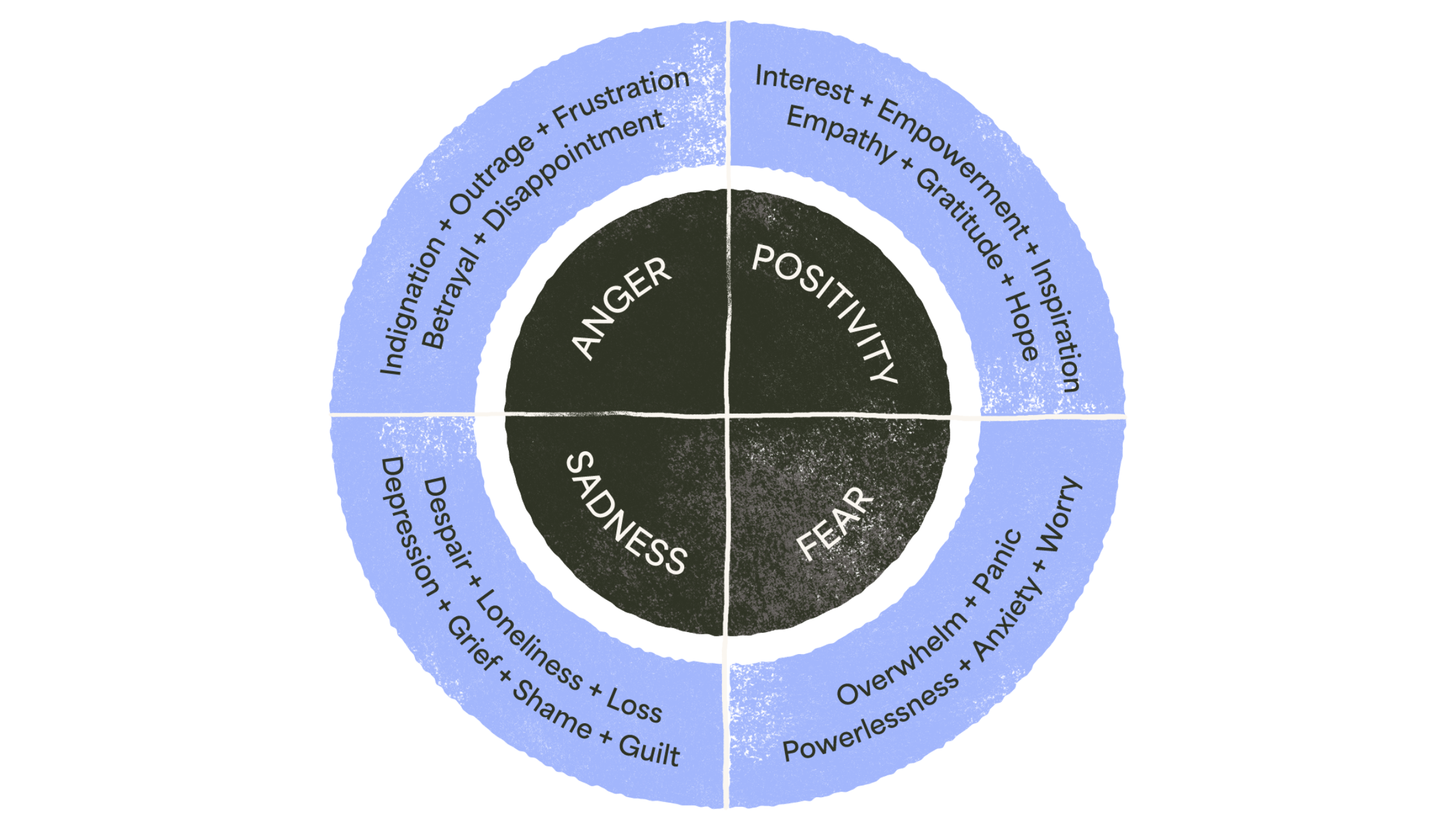
- 2022–2024 (Collaborative Mapping): The Climate Mental Health Network and various journalists, including Anya Kamenetz, collaborated to visualize these emotions. The resulting "Climate Emotions Wheel" became a standard tool for therapists and activists alike, helping individuals identify that their feelings were part of a larger, collective experience.
- 2026 (The Wayfinding Era): With the release of Dr. Wilkinson’s Climate Wayfinding, the discourse has shifted from mere identification to active, spiritual, and community-based integration. The current focus is on building "harbors"—small, intentional groups that allow people to hold space for their grief without losing the capacity for action.
Supporting Data: Mapping the Human Response
The "Climate Emotions Wheel" is more than a psychological curiosity; it is a diagnostic tool for emotional regulation. The wheel categorizes reactions to the climate crisis into several quadrants, ranging from "Distress" and "Indignation" to "Inspiration" and "Gratitude."

Data from the Climate Mental Health Network suggests that the primary barrier to climate action is not apathy, but "overwhelm." When the brain is flooded with existential dread, the nervous system often defaults to "freeze" or "flight" responses.
- The Grief Threshold: Research shows that when individuals deny their grief, they become prone to burnout or cynical detachment.
- The Power of Community: Longitudinal surveys indicate that those who participate in structured, climate-aware support groups report a 40% higher sense of agency compared to those who process climate news in isolation.
- The Regenerative Potential: The data suggests that once grief is expressed—through writing, meditation, or collective action—the physiological stress response diminishes, allowing for higher cognitive functioning related to creative problem-solving and long-term advocacy.
Official Perspectives: The Experts Speak
The transition toward emotional literacy in climate discourse is gaining traction among experts. Dr. Wilkinson emphasizes that the goal is not to "fix" our feelings, but to utilize them.
"If we don’t go into the depth of the pain, we will opt for feel-good gestures that simply do not create the real change we need," Wilkinson notes in her book. She highlights the perspective of Penobscot author Sherri Mitchell (Weh’na Ha’mu Kwasset), who suggests that difficult emotions are "a sign of something being righted within us."
This reframing turns the "climate burden" on its head. Instead of viewing eco-anxiety as a personal failing, it is now being positioned as a sign of empathy and alignment with the natural world. "The first time I heard [Mitchell] say that," Wilkinson writes, "I experienced the release that comes from feeling seen by clear, kind eyes."
Implications for Future Advocacy
The implications of this shift are profound for the environmental movement. If the climate movement is to remain sustainable, it must accommodate the human heart. This has several key impacts:
1. The Rise of "Climate-Aware" Therapy
Mental health professionals are increasingly seeking specialized training to work with clients experiencing climate-related distress. This means moving away from traditional "pathologizing" models of therapy and toward models that validate the client’s concern for the planet.
2. A New Standard for Activist Burnout
For decades, the "hero" archetype in climate activism was one of endless endurance—a tireless machine that never stops. The "Wayfinding" framework introduces a more regenerative model: one that prioritizes rest, community, and the acceptance of grief as a necessary component of the work.
3. Redefining "Action"
Under the old model, action meant protests, lobbying, and policy change. While these remain vital, the new framework includes "internal action"—the work of building emotional resilience, fostering local community connections, and nurturing the capacity to hold hope alongside destruction.
4. Regenerative Leadership
As we look toward the latter half of the 2020s, effective leadership will require a blend of "tenderness and fire." The ability to sit with the reality of ecological loss while maintaining the vision to build something new is the hallmark of the emerging climate leader.
Conclusion: Toward a Broken-Open Heart
The core thesis of Dr. Wilkinson’s Climate Wayfinding is that we must allow ourselves to be "broken open" by the state of the world. A heart that is merely "broken" remains stagnant, trapped in the cycle of trauma and despair. A heart that is "broken open" is fluid, capable of holding the simultaneous truths of systemic destruction and regenerative possibility.
By utilizing resources like meditation, connecting with nature, and finding a community of "two or more," individuals can transform their heaviest emotions into fuel. This is not about achieving a state of perpetual happiness, but about maintaining the wakefulness required to participate in the healing of our planet.
As the climate crisis continues to reshape our world, the most radical act may be our willingness to feel—fully, honestly, and together. In doing so, we reclaim our capacity to act, not just as individuals, but as members of a planetary community determined to grow anew upon the ruins.
For those seeking to explore these practices further, Dr. Wilkinson’s book offers a series of journal prompts, contemplative exercises, and essays designed to guide the reader through their own emotional geography. It serves as a reminder that even in an age of disruption, there is a path forward—provided we have the courage to find it.