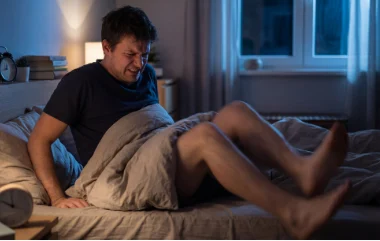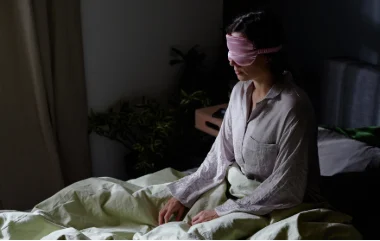
For millions of people worldwide, the transition from day to night is not a relief, but a source of profound anxiety. Chronic insomnia—a condition characterized by persistent difficulty falling or staying asleep—affects roughly 10% to 30% of the adult population, with some estimates reaching as high as 50% depending on the demographic.
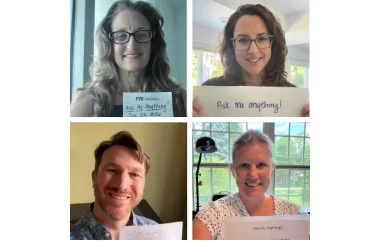
To address this global public health challenge, the American Academy of Sleep Medicine (AASM) and the Society of Behavioral Sleep Medicine (SBSM) recently hosted their annual "Insomnia Awareness Night." This year’s campaign took a modern approach to outreach, moving beyond traditional clinical pamphlets to engage directly with the digital public via a Reddit "Ask Me Anything" (AMA) session. A panel of preeminent sleep experts—Drs. Spencer Dawson, Sarah Honaker, Monica Kelly, and Jennifer Martin—spent hours dissecting the myths, science, and behavioral realities of the sleep-deprived.
The State of Sleep: Defining the Crisis
Chronic insomnia is defined by the clinical community as difficulty sleeping that impairs daytime functioning, occurs at least three times per week, and persists for more than three months. It is not merely an inconvenience; it is a significant physiological and psychological burden that links to increased risks of cardiovascular disease, depression, cognitive decline, and metabolic disorders.
The Reddit AMA provided a rare, unvarnished look at the questions plaguing the modern sleeper. From the efficacy of wearables to the complex world of sleep supplementation, the experts aimed to demystify a process that should be biological but has become, for many, a complex mechanical chore.
Chronology of the Conversation: A Deep Dive into Sleep Science
The conversation began by addressing the "weekend warrior" approach to sleep—the common belief that one can "make up" for a five-day sleep deficit by sleeping in on Saturday and Sunday.
Dr. Jennifer Martin addressed this head-on, noting that while "catching up" is marginally better than not doing so at all, it is an incomplete solution. "Some studies show that catching up on sleep on weekends is better than not catching up at all," she explained. "However, getting seven or more hours of sleep on a regular basis is best for long-term health and well-being."
The dialogue then shifted to the role of technology. As the market for sleep-tracking wearables—such as Apple Watches and Oura rings—explodes, users are becoming increasingly data-obsessed. Dr. Sarah Honaker offered a nuanced perspective on this trend. She suggested that while these devices can be effective motivators for creating consistent sleep hygiene, they also carry the risk of "orthosomnia"—an unhealthy preoccupation with achieving "perfect" sleep data. "In some cases, sleep tracking can make sleep worse by causing stress or anxiety about sleep," Honaker noted. "The most important indicator is how you feel the next day."
Supporting Data: Supplements and the Placebo Effect
One of the most pressing questions raised by the community concerned the surge in sleep aids, specifically the combination of microdosed THC and melatonin. The panel’s response was a sobering reminder of the gap between marketing claims and clinical evidence.
Dr. Martin highlighted that the sleep supplement industry is evolving at a rate that outpaces scientific validation. "It’s almost impossible to know what works and what may be a placebo effect," she said. She explained that supplements often provide a psychological benefit: by taking a pill, a patient feels they have "done something" to control their sleep, which in turn reduces the performance anxiety that keeps them awake.
Regarding melatonin, the experts clarified a common misconception: melatonin is not a sedative. It is a chronobiotic, meaning it is most effective for shifting the timing of the body’s internal clock, such as when dealing with jet lag or delayed sleep phase syndrome, rather than treating general insomnia. For true insomnia, the panel unanimously pointed toward Cognitive Behavioral Therapy for Insomnia (CBT-I) as the gold-standard treatment, a therapy that targets the cognitive and behavioral patterns that sustain sleep loss.
Official Expert Responses: Addressing Specific Sleep Disorders
The AMA also tackled complex, individual cases, such as "hyperarousal"—a state where the body remains in a heightened state of alertness even during sleep. A user reported waking up every two minutes, according to a clinical sleep study. Dr. Martin emphasized the necessity of a medical pathway for such cases. "Frequent arousals during sleep can be a sign of a sleep disorder," she noted. "If you have not yet seen a sleep medicine specialist, ask for a referral so the full range of potential causes can be discussed."
Similarly, the phenomenon of "early morning awakening" was dissected by Dr. Spencer Dawson. For those waking at 4:00 a.m. unable to drift back off, Dr. Dawson offered a counterintuitive piece of advice: don’t force it. "In general, if you want to be able to sleep later, we recommend that you don’t start your day until the time you want to be awake. Giving yourself an opportunity to fall back asleep can help, as long as you don’t force it."
Implications for Public Health
The insights shared during the Insomnia Awareness Night AMA have profound implications for how we treat sleep disorders in the 21st century.
1. The Shift Toward Behavioral Interventions
The panel’s emphasis on CBT-I signals a necessary departure from the reliance on pharmaceuticals. By focusing on behavioral changes—such as stimulus control and sleep restriction—patients can often retrain their brains to associate the bed with sleep rather than frustration.
2. The Danger of "Data Overload"
As wearable tech becomes standard, public health messaging must evolve to warn against the psychological toll of hyper-vigilance. Experts now suggest that if a device is causing anxiety, it is failing its primary purpose. The subjective feeling of restfulness is becoming the primary metric of success, superseding the raw data generated by wrist-worn sensors.
3. The Need for Scientific Literacy
The popularity of binaural beats and supplements underscores a desperate public searching for "hacks" to cure insomnia. The experts’ balanced view—that while some tools might provide a relaxing distraction (similar to a podcast), they are not replacements for clinical care—serves as a reminder that sleep is a complex physiological process that cannot always be bypassed by auditory or chemical shortcuts.
Conclusion: A Call for Consistency
As the conversation concluded, the consensus among the experts was clear: there is no single "magic bullet" for insomnia. The path to better sleep is paved with consistency, patience, and, when necessary, professional clinical support.
Insomnia Awareness Night serves as a vital reminder that sleep is not a luxury; it is a fundamental pillar of health. By engaging with experts, utilizing evidence-based therapies like CBT-I, and letting go of the anxieties associated with sleep tracking and "perfect" sleep metrics, individuals can begin to reclaim their nights.
The digital nature of this year’s event highlights the power of open dialogue. By bringing these discussions into the public sphere, the American Academy of Sleep Medicine and the Society of Behavioral Sleep Medicine are helping to break the stigma surrounding insomnia, encouraging those suffering in silence to seek help and move toward a healthier, more restful future.
For those looking to explore the full breadth of the expert advice provided, the archived Reddit AMA session remains a rich resource, serving as a beacon for anyone struggling to turn out the lights and find the rest they deserve.