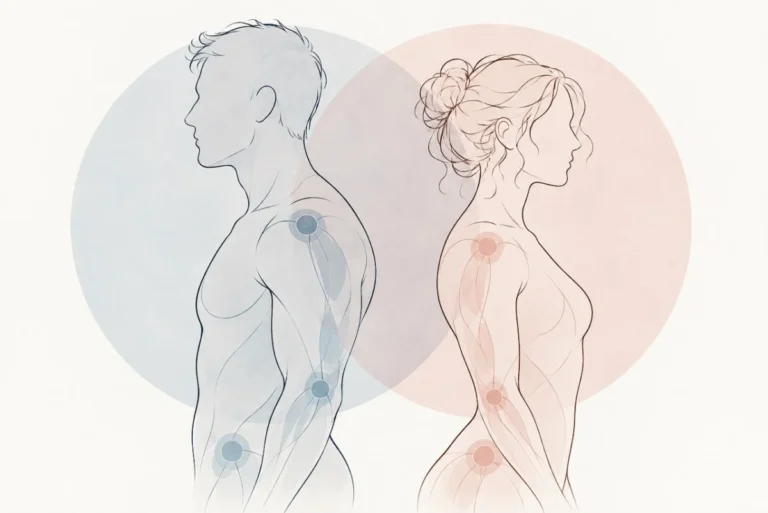









For many individuals living with Ehlers-Danlos Syndrome (EDS), the professional world presents a unique set of paradoxes. EDS, a group of connective tissue disorders characterized by joint hypermobility, skin hyperextensibility, and tissue fragility, is inherently unpredictable. When coupled with common comorbidities like dysautonomia (such as POTS) and Mast Cell Activation Syndrome (MCAS), the traditional "nine-to-five" office environment can become a gauntlet of physical and systemic barriers.
As of 2026, the conversation around workplace inclusivity has shifted from mere compliance to the proactive design of "accessible ecosystems." Under the Americans with Disabilities Act (ADA) and similar international mandates, employers are legally obligated to provide reasonable accommodations to qualified employees with disabilities. However, the path to obtaining these accommodations requires more than just a medical diagnosis; it requires a strategic understanding of how to bridge the gap between clinical need and workplace functionality.
The Spectrum of EDS: A Complex Clinical Reality
To understand the necessity of workplace accommodations, one must first appreciate the breadth of the EDS spectrum. With 13 distinct types, the condition manifests differently in every patient. Some individuals may experience mild joint subluxations, while others face severe, life-altering chronic pain and systemic organ involvement.
The clinical reality of EDS is rarely isolated. Research indicates that a significant percentage of the EDS population deals with secondary conditions. Dysautonomia, particularly Postural Orthostatic Tachycardia Syndrome (POTS), can cause debilitating dizziness and tachycardia upon standing. MCAS, meanwhile, can lead to hypersensitivity to environmental triggers like scents, chemicals, or temperature fluctuations. Because these conditions fluctuate in severity, the "static" nature of traditional employment—defined by rigid schedules and fixed workstations—is often fundamentally incompatible with the needs of an EDS patient.
Chronology of the ADA: From Discrimination to Integration
The legal framework for workplace accommodations in the United States is rooted in the Americans with Disabilities Act (ADA) of 1990. Over the last three decades, the interpretation of this law has evolved significantly:
- 1990: The ADA is signed into law, prohibiting discrimination against individuals with disabilities in all areas of public life, including jobs.
- 2008: The ADA Amendments Act (ADAAA) broadens the definition of "disability," making it easier for individuals with chronic conditions—including those with episodic symptoms like EDS—to qualify for protection.
- 2020–2025: The shift toward remote and hybrid work models, accelerated by the global pandemic, inadvertently created a blueprint for disability-inclusive work. For the EDS community, this proved that productivity is not tethered to a physical office desk.
- 2026 and Beyond: We are currently in an era where "reasonable accommodation" is being redefined. It is no longer just about ramps and wider doorways; it is about cognitive load, sensory regulation, and the integration of adaptive technology.
Supporting Data: The Impact of Accommodations
Data from disability advocacy groups suggests that the cost of providing reasonable accommodations is often negligible compared to the cost of turnover. According to the Job Accommodation Network (JAN), the majority of employers report that the cost of providing an accommodation is less than $500.
For the EDS population, the return on investment (ROI) is profound. Employees who are supported through ergonomic adjustments, flexible scheduling, and environmental modifications demonstrate:
- Increased Retention: Employees who feel their health needs are acknowledged are significantly more likely to stay with an organization, reducing the high costs associated with recruitment and training.
- Higher Productivity: By removing the "background noise" of chronic pain and symptom management, employees can direct their cognitive energy toward their professional objectives.
- Enhanced Morale: Accommodative cultures foster psychological safety, which is essential for neurodivergent and chronically ill workers.
Prioritizing Physical Safety and Comfort: The Ergonomic Imperative
For those with EDS, the desk is not just a workstation—it is a site of potential injury. Hypermobility requires constant vigilance against joint dislocations and subluxations.
Recommended Accommodations:
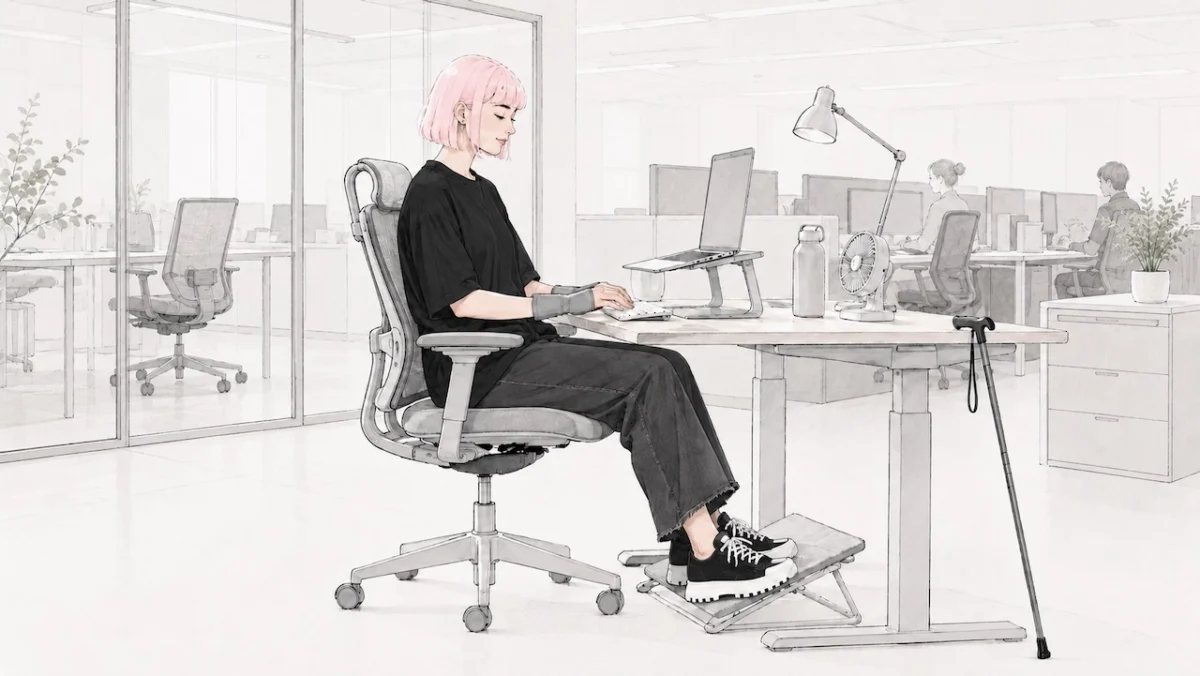
- Dynamic Seating: Moving beyond the standard task chair, many EDS patients require chairs with advanced lumbar support, adjustable armrests, and the ability to tilt or recline to prevent static loading.
- Adaptive Hardware: Vertical mice, mechanical keyboards with low-actuation force, and trackballs can prevent repetitive strain injuries in the wrists and fingers.
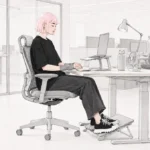
- Footrests and Leg Elevation: For those with POTS, the ability to elevate the legs or use a footrest can manage blood pooling and reduce the fatigue associated with prolonged sitting.
- Mobility Aid Integration: Employers must ensure that office layouts accommodate canes, walkers, or crutches, providing clear pathways and storage solutions for these essential tools.
Flexibility as a Strategic Asset
Flexibility is perhaps the most critical, yet often the most contested, accommodation. EDS flares are not scheduled. A patient may be entirely functional on Tuesday and completely incapacitated by a subluxation or dysautonomic episode on Wednesday.
Strategic Flexibility Models:
- Asynchronous Work: Allowing employees to complete tasks based on energy levels rather than a rigid 9-to-5 clock.
- Telecommuting: Remote work eliminates the physical toll of commuting—a significant hurdle for those with mobility issues or chronic fatigue.
- Extended Breaks: Short, frequent breaks to stretch, perform physical therapy exercises, or manage a spike in pain can prevent long-term absenteeism.
Creating an EDS-Friendly Environment: Beyond Ergonomics
For individuals with comorbid MCAS or sensory processing issues, the "environment" is a clinical factor.
- Sensory Control: The ability to adjust lighting (e.g., using floor lamps instead of harsh fluorescent overheads) can reduce migraine triggers.
- Fragrance-Free Policies: Since many EDS patients have heightened reactivity to chemicals, implementing fragrance-free office policies is a necessary health accommodation.
- Temperature Regulation: Because dysautonomia affects thermoregulation, the ability to use a personal fan or space heater is essential for maintaining systemic stability.
Official Responses and Legal Implications
Under the ADA, "reasonable" is the operative word. Employers are not required to provide an accommodation if it imposes an "undue hardship"—defined as significant difficulty or expense. However, the legal threshold for "undue hardship" is exceptionally high for most companies.
Legal experts emphasize that the interactive process is the core of ADA compliance. When an employee requests an accommodation, the employer is legally required to engage in a good-faith dialogue. This is not a request for a favor; it is a collaborative problem-solving session. Failure to engage in this process, or unilateral denial of an accommodation without clear evidence of hardship, can expose an employer to litigation and reputational damage.
Implications for the Future of Work
The future of inclusive employment lies in "universal design." By designing workplaces that cater to the most vulnerable—those with EDS, dysautonomia, and chronic pain—we create environments that are inherently better for all employees.
The move toward outcome-based performance management is the final piece of the puzzle. If an employer focuses on what is produced rather than how many hours an employee spends in a chair, the barriers to success for the EDS community begin to dissolve.
Key Takeaways for Employees and Employers
- For Employees: Document your needs clearly. Connect specific symptoms to specific job functions. You do not need to disclose your full medical history, but you must provide enough information to demonstrate how an accommodation will enable you to perform your essential job duties.
- For Employers: Education is your best tool. Misunderstanding EDS often leads to discriminatory practices. By normalizing the request for accommodations, you create a culture of transparency and loyalty.
- For Both: The "interactive process" is a journey, not a one-time event. Re-evaluate accommodations periodically as your health or job responsibilities change.
Helpful Resources
The path to workplace success is rarely traveled alone. The following organizations provide frameworks, legal guidance, and community support for those navigating EDS in the professional world:
United States:
- The Job Accommodation Network (JAN): The gold standard for A-to-Z accommodation ideas. AskJAN.org
- The Ehlers-Danlos Society: Provides patient-centered resources and advocacy tools. Ehlers-Danlos.com
- EEOC (Equal Employment Opportunity Commission): For information on rights under the ADA. EEOC.gov
United Kingdom:
- Access to Work: A government program providing practical and financial support for employees with disabilities. Gov.uk/access-to-work
Canada:
- The Canadian Human Rights Commission: Offers guidance on duty to accommodate and human rights in the workplace. CHRC-CCDP.gc.ca
Final Thoughts
Living with EDS requires resilience that the average person never has to call upon. Bringing that same level of strategic thinking to the workplace can be empowering. You are not a liability; you are a professional with a unique set of needs that, when met, allow you to contribute your skills effectively. By educating your employer and advocating for your rights, you are not just helping yourself—you are paving the way for a more inclusive, accessible, and human-centric future for the entire workforce.