Introduction: The CAR T-Cell Revolution
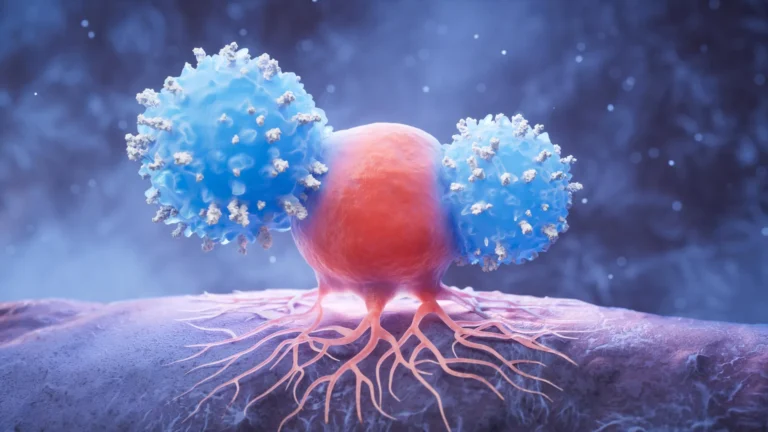
Chimeric antigen receptor (CAR) T-cell therapy has fundamentally altered the landscape of hematologic oncology, offering a beacon of hope for patients with relapsed or refractory lymphoma. By genetically reprogramming a patient’s own immune system to recognize and eliminate malignant cells, this "living drug" has turned once-hopeless diagnoses into success stories. However, despite its clinical efficacy, the current paradigm of CAR T-cell therapy—relying on autologous (patient-derived) cells—is fraught with logistical, financial, and temporal bottlenecks.
Dr. Andrew Jallouk, MD, PhD, a physician-scientist at Vanderbilt University Medical Center, is at the forefront of a movement to dismantle these barriers. Supported by a prestigious Career Development Award, Dr. Jallouk is pioneering a new approach to "off-the-shelf" allogeneic CAR T-cell therapies. His work aims to overcome the primary obstacle currently limiting the widespread adoption of universal donor therapies: immune rejection.
The Bottleneck of Autologous Therapy
To understand the significance of Dr. Jallouk’s research, one must first appreciate the constraints of current CAR T-cell treatment. Under the standard autologous model, the process is labor-intensive:
- Leukapheresis: T-cells are harvested from the patient.
- Manufacturing: Cells are shipped to a specialized facility, where they are genetically engineered to express CAR receptors.
- Expansion and Quality Control: The cells are expanded to therapeutic doses, a process that can take several weeks.
- Infusion: The cells are returned to the patient.
During this waiting period, a patient’s lymphoma may continue to progress aggressively. Furthermore, the manufacturing process is bespoke for every individual, leading to high costs and significant variability. As Dr. Jallouk notes, the "expensive and time-consuming" nature of these therapies often restricts access, leaving many patients unable to benefit from these potentially curative treatments.
The Allogeneic Solution: Promises and Pitfalls
The industry has increasingly turned its focus toward "off-the-shelf" or allogeneic therapies. These treatments utilize T-cells harvested from healthy donors, which can be engineered, banked, and ready for infusion the moment a patient requires them.
However, the human immune system is evolved to recognize and destroy foreign tissue. When allogeneic cells are infused into a patient, the recipient’s own immune system often views the donor T-cells as invaders, leading to rapid rejection. This renders the treatment ineffective.
"My project tests a new strategy to prevent this rejection by specifically targeting the immune cells most responsible for it," Dr. Jallouk explains. By identifying the precise molecular mechanisms that trigger this host-versus-graft response, his team is developing strategies to "cloak" the donor cells, allowing them to persist long enough to eradicate the lymphoma without being neutralized by the patient’s immune system.
Chronology of a Career: From Washington University to Vanderbilt
Dr. Jallouk’s trajectory toward becoming a leading investigator in lymphoma research was not accidental; it was a deliberate synthesis of clinical care and laboratory inquiry.
His journey began during his graduate and medical training at Washington University in St. Louis, Missouri. It was there that he first encountered the nascent potential of engineered cellular therapies. At the time, the field was in its infancy, yet the promise of manipulating the immune system to achieve long-term remissions captivated him.
Key Milestones:
- Graduate Training (Washington University): Development of foundational knowledge in cellular immunology and clinical oncology.
- The Pivot to Research: Realizing that clinical practice alone could only manage disease, Dr. Jallouk committed to translational science to drive innovation.
- The Lymphoma Scientific Research Mentoring Program (2023): Joining this initiative served as a catalyst for his career. The program provided a structured environment for networking, mentorship, and grant development.
- Career Development Award (Current): This award represents the next phase of his research, allowing him to scale his laboratory experiments into preclinical models that test the viability of his immune-evasion strategies.
The Symbiosis of Clinic and Laboratory
One of the most compelling aspects of Dr. Jallouk’s work is his refusal to choose between being a clinician and a researcher. In modern medicine, the "bench-to-bedside" model is often cited, but rarely executed with such intention.
"I greatly enjoy working with patients to develop a treatment plan specific to their particular type of lymphoma," Dr. Jallouk says. This patient-facing experience is the primary engine of his research. When he sees the limitations of current therapies in the clinic—the patients who cannot wait for manufacturing, or those whose tumors have evolved to escape treatment—he takes those questions back to the laboratory.
His research is a direct feedback loop: the laboratory informs the clinic, and the clinic provides the urgent impetus for scientific discovery. This dual focus ensures that his work remains grounded in the tangible needs of the lymphoma community.
Supporting Data and Technical Implications
The efficacy of allogeneic T-cells depends on three factors: potency, persistence, and safety. Dr. Jallouk’s research focuses on the "persistence" variable.
Current technical hurdles include:
- Graft-versus-Host Disease (GvHD): The risk that donor cells will attack the recipient’s healthy tissues.
- Host-versus-Graft (HvG): The risk that the recipient will reject the donor cells.
By utilizing CRISPR/Cas9 or other gene-editing tools, Dr. Jallouk’s project aims to delete specific genes in donor cells that are recognized by the patient’s immune system. If successful, this would allow for a "universal donor" cell line, significantly lowering the cost of treatment and making CAR T-cell therapy available in hospitals that do not currently have the infrastructure for complex autologous processing.
Official Perspectives: The Value of Mentorship
The Lymphoma Scientific Research Mentoring Program has played a pivotal role in the success of researchers like Dr. Jallouk. By connecting early-career scientists with established experts in the field, the program ensures that the next generation of oncologists is well-equipped to handle the complex regulatory and scientific challenges of modern oncology.
"This program was an amazing experience that solidified my commitment to a career in lymphoma research," Dr. Jallouk reflects. For the Foundation, investing in Dr. Jallouk is an investment in the long-term future of lymphoma care. The Career Development Award is designed specifically to provide the time and resources necessary to bridge the gap between initial discovery and clinical trial readiness.
Implications for the Future of Lymphoma Treatment
If Dr. Jallouk’s research succeeds, the implications for patients are profound. The current "wait-and-see" approach for patients undergoing autologous manufacturing could be replaced by an immediate-access model.
Potential Benefits:
- Reduced Mortality: Patients with rapidly progressive disease can receive treatment without the delay of manufacturing.
- Economic Accessibility: Standardizing the production of "off-the-shelf" cells could lower costs, potentially making the therapy more affordable for healthcare systems and insurance providers.
- Increased Equity: Allogeneic therapies could be distributed to regional hospitals, expanding access beyond major academic medical centers.
Conclusion
The work being conducted by Dr. Andrew Jallouk at Vanderbilt University Medical Center is more than just a research project; it is a vital step toward democratizing high-tech cancer care. By tackling the immune rejection of donor cells, Dr. Jallouk is working to ensure that the promise of CAR T-cell therapy is not restricted to a privileged few, but is available to all who need it.
As he continues his work with the support of the Foundation, the oncology community will be watching closely. His commitment to combining laboratory innovation with patient-centered clinical care serves as a model for the future of medicine—a future where lymphoma is not just a treatable condition, but one that is consistently and efficiently cured.