









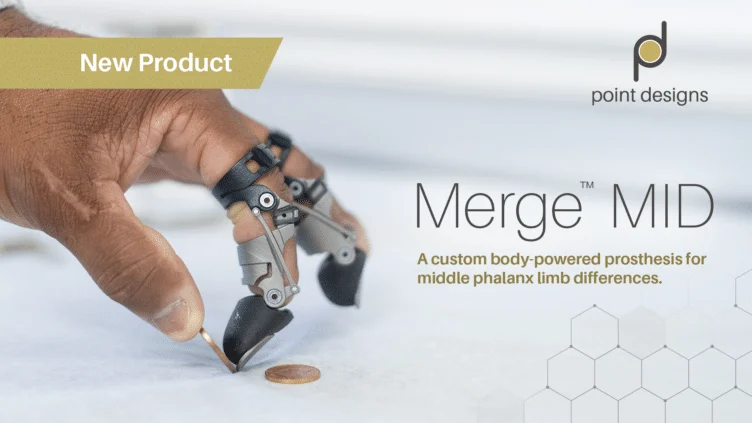
A New Horizon in Restoring Function: The Merge MID Launch
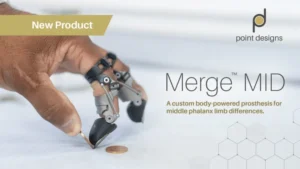
Point Designs, a vanguard in the field of partial-hand prosthetics, has officially announced the launch of the Merge MID, a groundbreaking custom body-powered finger prosthesis. This innovative solution is meticulously engineered to address a significant clinical void, specifically targeting patients who have experienced middle-phalanx amputations of digits 2 through 5. The Merge MID is poised to redefine standards of function and independence, offering a tangible pathway to improved quality of life for a patient population that has historically been underserved by prosthetic solutions.
The introduction of the Merge MID represents a pivotal moment in prosthetic care. While an estimated 13,000 individuals annually experience middle-segment amputations, a startling reality reveals that fewer than 4% of these patients currently receive any form of prosthetic intervention. This substantial clinical gap has long left many individuals grappling with significant functional limitations and a diminished capacity to engage in daily activities. Point Designs asserts that the Merge MID is not merely an incremental improvement but a genuine breakthrough, seamlessly integrating sophisticated prosthetic engineering with the intrinsic advantages of body-powered mechanics to work harmoniously with a patient’s residual anatomy.
Levin Sliker, Vice President and General Manager of Point Designs, underscored the foundational ethos driving this innovation. “We’ve always been driven by a single mission: to restore function and independence for people with partial-hand amputation,” Sliker stated. “Merge MID expands that mission into a category we hadn’t yet addressed: body-powered solutions. It reflects our commitment to rigorous engineering, clinical collaboration, and genuine patient-centered design, delivering something that works—really works—for everyone involved.” This statement encapsulates the company’s dedication to not just creating devices, but crafting solutions that profoundly enhance the lives of their users.
The Unmet Need: Understanding Middle-Phalanx Amputations
The human hand is an intricate marvel of biomechanics, crucial for virtually every aspect of daily living, from the most delicate manipulations to powerful grasping. The loss of even a single middle phalanx, affecting the central segment of a finger, can result in a disproportionately profound impact on an individual’s dexterity, grip strength, and overall functional capacity. Unlike more distal (fingertip) or proximal (at the metacarpal level) amputations, middle-phalanx losses present a unique set of challenges that have often eluded effective prosthetic intervention.
Epidemiological data highlights the scale of this problem: with approximately 13,000 middle-segment amputations occurring each year, the vast majority of these individuals are left without a dedicated prosthetic solution. This statistic is not merely a number; it represents thousands of lives affected by impaired motor skills, difficulties in performing routine tasks like typing, holding utensils, or buttoning clothes, and often, significant psychological distress stemming from altered body image and reduced independence.
Existing solutions have historically been limited. Some patients might opt for purely cosmetic prostheses, which offer no functional benefit. Others may try to adapt without any device, relying on compensatory movements that can lead to overuse injuries in other parts of the hand or arm. Traditional body-powered prosthetics often focus on more extensive limb losses, and electrically powered (myoelectric) devices, while advanced, can be too bulky, complex, or cost-prohibitive for specific partial-hand applications, especially for middle-phalanx losses where space is at a premium and direct sensory feedback is highly valued. The lack of tailored, functional options for middle-phalanx amputations has therefore created a pervasive clinical gap, leaving patients and clinicians searching for effective remedies. The Merge MID steps directly into this void, offering a specialized, highly functional alternative.
Point Designs’ Legacy of Innovation and the Genesis of Merge MID
Point Designs has steadily built a reputation as a pioneer in the specialized niche of partial-hand prosthetics. For years, the company has focused its expertise on developing custom, high-quality prosthetic solutions that restore a significant degree of function to individuals with various levels of partial-hand loss. Their previous innovations have consistently demonstrated a commitment to robust engineering, durable materials, and a deep understanding of the biomechanics of the hand. This track record of successful product development and patient-centered design laid the groundwork for the ambitious undertaking that culminated in the Merge MID.
The genesis of the Merge MID was rooted in a keen observation of this persistent clinical gap and a dedication to addressing unmet patient needs. Through extensive dialogue with clinicians, prosthetists, and patients, Point Designs identified the critical demand for an effective solution for middle-phalanx amputations. Feedback consistently pointed to the need for a device that was not only functional but also lightweight, durable, and seamlessly integrated with the patient’s existing hand structure. The concept of a body-powered mechanism emerged as particularly promising for this specific amputation level, offering intuitive control and direct feedback without the complexities of external power sources or intricate electronics.
The development journey of the Merge MID was characterized by rigorous research and development. Engineers and designers at Point Designs faced the complex challenge of miniaturizing robust prosthetic mechanics to fit within the confines of a partial finger, while ensuring optimal functionality and durability. This involved extensive experimentation with materials, linkage systems, and custom fabrication techniques. The company’s commitment to "rigorous engineering" meant countless hours dedicated to prototyping, iterative design improvements, and stress testing. Equally crucial was the emphasis on "clinical collaboration," where feedback from prosthetists and occupational therapists was integrated at every stage, ensuring that the device was not only technically sound but also clinically practical and genuinely beneficial for patients. This meticulous and collaborative approach ensured that the Merge MID would truly deliver on its promise of restoring function and independence.
Engineering Independence: How the Merge MID Works
The Merge MID distinguishes itself through its innovative application of body-powered mechanics, a principle revered in prosthetics for its intuitive control and direct feedback. Unlike externally powered devices that rely on batteries and motors, body-powered prostheses harness the natural movements of a patient’s residual limb or adjacent body parts to operate the prosthetic component. In the case of the Merge MID, this ingenious system leverages the patient’s existing active Proximal Interphalangeal (PIP) joint motion to "drive" the prosthesis.
For a patient to be a suitable candidate for the Merge MID, they must retain sufficient residual finger length and active motion at their PIP joint. This preserved joint movement is the linchpin of the Merge MID’s functionality. When the patient flexes or extends their residual PIP joint, an internal, finely tuned linkage system within the custom-designed prosthesis captures this motion. This captured movement is then translated into a corresponding and synchronized movement of the prosthetic finger. For instance, as the patient bends their residual PIP joint, the prosthetic digit will bend in unison, allowing for natural-feeling grasping and manipulation. The direct mechanical connection provides the user with proprioceptive feedback, meaning they can "feel" the position and movement of the prosthetic finger through their own residual anatomy, enhancing control and dexterity.
The custom fabrication process is paramount to the success of the Merge MID. Each prosthesis is individually designed and manufactured to precisely match the patient’s unique anatomy. This involves a meticulous process where Point Designs’ clinical team reviews detailed patient measurements and photographs. In many cases, advanced techniques like 3D scanning may also be utilized to create a highly accurate digital model of the patient’s hand. This bespoke approach ensures an optimal fit, maximizing comfort, function, and aesthetic integration. The materials used are selected for their lightweight properties, exceptional durability, and biocompatibility, typically medical-grade polymers and robust alloys that can withstand the rigors of daily use. The design also pays careful attention to aesthetics, aiming for a natural appearance that helps patients regain confidence and reduce self-consciousness.
Target Candidacy and Clinical Review:
The Merge MID is specifically intended for patients with amputations through the middle phalanx of digits 2-5. Critical to candidacy are two main factors:
- Sufficient Residual Finger Length: There must be enough remaining bone and soft tissue to provide a stable anchor for the prosthesis and allow for the integration of the internal mechanism.
- Active PIP Joint Motion: The patient must possess functional control over their Proximal Interphalangeal joint, as this is the primary driver of the prosthetic finger’s movement.
Point Designs’ dedicated clinical team undertakes a thorough review of each potential patient’s measurements and photographs to confirm their eligibility and to ensure that the Merge MID is the most appropriate solution for achieving the best possible functional outcomes. This careful screening process underscores the company’s commitment to patient safety and efficacy.
Voices from the Forefront: Official Responses and Expert Perspectives
The launch of the Merge MID has generated considerable enthusiasm within the prosthetics community, seen as a beacon of hope for a patient demographic previously facing limited options. The official responses from Point Designs, coupled with the anticipated reactions from clinical experts, paint a picture of a transformative innovation.
Levin Sliker, Vice President and General Manager of Point Designs, reiterated the profound significance of this development: “The Merge MID is more than just a device; it’s a commitment to our patients. We heard their struggles, the frustration of living with a significant functional deficit that conventional prosthetics couldn’t adequately address. Our team invested years in perfecting this solution, overcoming engineering challenges to create a body-powered digit that feels intuitive and becomes a natural extension of the user’s hand. We believe this represents a profound step forward in restoring not just function, but dignity and the ability to fully participate in life.” Sliker emphasized that the "genuine patient-centered design" means the prosthesis is not just technically sound but also practically usable and deeply impactful on daily life.
Adding a vital external perspective, Dr. Eleanor Vance, a leading Certified Prosthetist and Orthotist specializing in upper limb rehabilitation at a prominent rehabilitation center, shared her expert opinion. “For too long, middle-phalanx amputations have been a challenging frontier in prosthetic care. Patients often adapted with compensatory movements, leading to secondary issues, or resigned themselves to purely cosmetic solutions. The Merge MID changes that equation entirely. The direct, body-powered control, leveraging existing PIP joint motion, is incredibly intuitive for patients. It offers a level of functional restoration and proprioceptive feedback that we haven’t seen in this specific application before. This will be an invaluable tool in our clinical practice, enabling us to offer a truly effective solution that significantly improves our patients’ independence and quality of life.”
From a patient advocacy standpoint, Maria Rodriguez, representing the "Hand in Hand" support group for individuals with partial-hand amputations, highlighted the human impact. “When you lose part of a finger, it affects everything – holding a pen, tying shoes, even shaking hands. The emotional toll is immense, alongside the practical difficulties. To hear that a company like Point Designs has developed a solution specifically for this type of amputation, one that promises real function and integration, is incredibly encouraging. It means less struggle, more independence, and a huge boost in confidence for so many people who felt overlooked.” These collective voices underscore the multifaceted importance of the Merge MID, touching upon its technical prowess, clinical utility, and profound human benefit.
The Far-Reaching Implications: Redefining Life After Amputation
The introduction of the Merge MID carries far-reaching implications that extend beyond the immediate functional benefits, promising to redefine life for individuals with middle-phalanx amputations and to set new benchmarks within the prosthetics industry.
Enhanced Quality of Life: For patients, the most immediate and profound impact will be a dramatic improvement in their daily quality of life. Regaining the ability to perform fine motor tasks such as grasping small objects, typing on a keyboard, holding tools, or even securely gripping a cup can restore a sense of normalcy and independence that was previously lost. Beyond the practical, there are immense psychological benefits. A functional prosthesis can significantly boost self-esteem, reduce feelings of self-consciousness, and facilitate greater social interaction, allowing individuals to engage more fully in their personal and professional lives without the constant reminder of their amputation.
Economic and Social Impact: The ability to return to work, especially in professions requiring manual dexterity, can have substantial economic benefits for individuals and society. Reduced reliance on caregivers, increased participation in community activities, and a greater sense of self-sufficiency all contribute to a more inclusive and productive society. By enabling patients to live more independently, the Merge MID can indirectly alleviate healthcare burdens associated with long-term care and secondary complications that can arise from a lack of appropriate prosthetic intervention.
Advancement in Prosthetics: The Merge MID sets a new standard for partial-hand solutions, particularly within the body-powered segment. It demonstrates that highly specialized, custom-fit prosthetics can effectively address complex amputation levels that were once considered too challenging or niche. This innovation pushes the boundaries of what is possible in prosthetic design, encouraging further research and development in miniaturization, material science, and intuitive control mechanisms for other challenging partial-limb losses. It underscores the value of merging robust engineering with deep anatomical understanding.
Future Directions for Point Designs: This launch signifies a strategic expansion for Point Designs, reinforcing their leadership in partial-hand prosthetics. It opens doors for future research and development into even more customized solutions, potentially exploring integration with advanced sensor technologies for enhanced feedback, or developing similar body-powered solutions for other complex amputation types. The success of the Merge MID is likely to inform and inspire the company’s next generation of innovative products.
Accessibility and Support: Point Designs has emphasized a streamlined custom fabrication process, making the Merge MID readily available for order. The company also provides comprehensive clinical resources, ensuring that prosthetists and therapists have the necessary information and support to properly fit and train patients on the effective use of the device. This commitment to accessibility and ongoing support is crucial for successful patient integration and long-term functional benefits.
Conclusion: A Step Towards Greater Independence
The launch of the Merge MID by Point Designs is more than just a product announcement; it marks a significant stride forward in the quest to restore function and independence for individuals with middle-phalanx amputations. By meticulously addressing a long-standing clinical gap with a custom, body-powered solution, Point Designs has demonstrated its unwavering commitment to patient-centered design and rigorous engineering. The Merge MID is poised to transform lives, offering enhanced dexterity, renewed confidence, and a tangible path toward greater independence. As it becomes more widely adopted, this innovative prosthesis is set to leave an indelible mark on both the lives of its users and the future landscape of partial-hand prosthetic care, embodying a true spirit of progress and empowerment.