






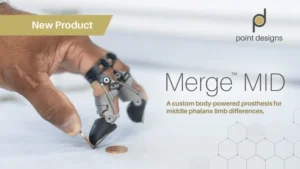



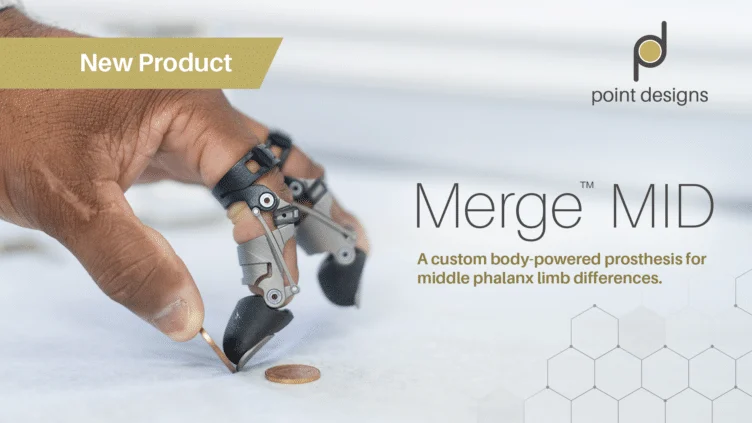
BOULDER, CO – [Insert Date of Publication] – Point Designs, a leader in prosthetic innovation, has announced the groundbreaking launch of the Merge MID, a custom body-powered finger prosthesis specifically engineered to restore vital function and independence for individuals living with middle-phalanx amputations of digits two through five. This development marks a significant stride in addressing a long-underserved segment of the amputee population, where an estimated 13,000 patients annually experience middle-segment amputations, yet fewer than four percent currently receive a suitable prosthetic solution. The Merge MID is poised to bridge this critical clinical gap, leveraging proven prosthetic engineering to deliver a seamlessly integrated, body-powered device that works in concert with a patient’s residual anatomy.
Main Facts: A New Horizon in Prosthetic Innovation
The introduction of the Merge MID by Point Designs represents a pivotal moment in the evolution of partial-hand prosthetics. At its core, the Merge MID is a custom-fabricated, body-powered finger prosthesis designed with meticulous precision for patients who have experienced an amputation through the middle phalanx of their index, middle, ring, or pinky fingers (digits 2-5). This highly specialized device is not merely an aesthetic replacement but a sophisticated biomechanical tool engineered to restore crucial gripping, pinching, and stabilizing functions essential for daily living and occupational tasks.
The significance of the Merge MID cannot be overstated, particularly when viewed against the backdrop of current clinical realities. The statistic that approximately 13,000 individuals annually endure middle-segment finger amputations, with a startlingly low prosthetic adoption rate of under four percent, underscores a profound unmet need within the healthcare system. For decades, patients with these specific types of partial-hand losses have often been presented with limited options, frequently relegated to purely cosmetic solutions or cumbersome, ill-fitting devices that fail to deliver meaningful functional restoration. Point Designs has directly confronted this challenge, channeling its expertise in prosthetic engineering to develop a solution that is both clinically effective and genuinely patient-centric.
The Merge MID’s design philosophy centers on integrating seamlessly with the patient’s existing anatomical structure. Unlike some more complex, externally powered systems, the Merge MID harnesses the natural motion of the patient’s residual finger and hand, specifically the active motion of the proximal interphalangeal (PIP) joint. This body-powered mechanism offers several distinct advantages, including intuitive control, enhanced proprioception (the sense of the limb’s position), and a reduced reliance on external power sources, contributing to greater reliability and ease of maintenance. By focusing on a custom fit, Point Designs ensures that each Merge MID prosthesis is tailored to the individual, maximizing comfort, stability, and functional outcomes, thereby offering a real breakthrough for those seeking to regain control and independence after partial-hand amputation.
The Chronology of a Breakthrough: From Concept to Clinical Reality
The journey to the Merge MID’s launch is a testament to persistent innovation, driven by a deep understanding of patient needs and a commitment to engineering excellence. This section traces the developmental trajectory, highlighting the stages that transformed an identified clinical void into a tangible, life-changing solution.
Identifying the Unmet Need
The problem of partial-hand amputations, particularly those involving the middle phalanx, has long presented a complex challenge for the prosthetics industry. While whole-hand or full-finger amputations often receive more focused attention and dedicated prosthetic solutions, mid-segment amputations have historically fallen into a "gap" where off-the-shelf devices are inadequate and custom solutions are scarce or prohibitively expensive. Clinicians and patients alike have expressed frustration over the lack of effective options that genuinely restore function for these specific losses. The implications extend beyond the physical, impacting psychological well-being, professional capabilities, and overall quality of life. Point Designs recognized this persistent clinical imperative, identifying it as a critical area ripe for innovation.
Point Designs’ Legacy and Evolution
Point Designs has established itself as a pioneering force in the realm of specialized prosthetics, particularly for individuals with partial-hand amputations. The company’s prior successes, often centered on robust, custom-engineered solutions for distal finger amputations, laid a strong foundation of expertise in biomechanics, materials science, and patient-specific design. Their reputation for durable, functional devices that integrate seamlessly with residual anatomy positioned them uniquely to tackle the more complex requirements of middle-phalanx amputations. The Merge MID represents a natural, yet significant, expansion of their mission, leveraging their core competencies while venturing into the body-powered domain, an area with distinct design and functional considerations.
Research and Development Phase
The development of the Merge MID was a multi-faceted process, likely involving extensive research, iterative design, and rigorous testing. The engineering team at Point Designs would have delved deeply into the biomechanics of the hand, analyzing how residual finger length and active PIP joint motion could be harnessed to power a prosthetic digit. This would have involved:
- Biomechanical Modeling: Creating detailed models to understand force transmission, joint kinematics, and optimal leverage points within the residual limb.
- Material Science Exploration: Identifying advanced materials that offer a balance of strength, lightweight properties, durability, and biocompatibility, capable of withstanding the daily stresses of use.
- Design Iteration: Developing numerous prototypes, each refined based on engineering analysis and early clinical feedback, focusing on factors like fit, articulation, gripping mechanics, and aesthetic integration.
- Patient Feedback Integration: Collaborating with clinicians and potential users to understand real-world needs, challenges, and preferences, ensuring the design was truly patient-centered from its inception.
The transition from purely passive or externally powered solutions to a body-powered mechanism for middle-phalanx amputations required a particular focus on minimizing friction, optimizing leverage, and ensuring intuitive control through natural body movements.
Clinical Validation and Efficacy Assurance
While the article does not detail specific clinical trials, the rigorous engineering and patient-centered design philosophy of Point Designs strongly suggest a robust validation process. This would typically involve:
- Benchtop Testing: Simulating millions of cycles of use to assess durability and functional reliability under various conditions.
- Biomechanical Analysis: Quantifying the prosthesis’s ability to restore specific functions, such as grip strength, pinch force, and range of motion.
- User Feedback and Performance Evaluation: Working with a select group of patients and prosthetists to gather qualitative and quantitative data on comfort, usability, functional improvements, and overall satisfaction. This phase is crucial for fine-tuning the design and confirming that the device "really works," as emphasized by Point Designs’ leadership.
The Official Launch
The announcement of the Merge MID’s availability marks the culmination of years of dedicated effort. Point Designs has made the prosthesis accessible through a streamlined custom fabrication process, ensuring that clinicians can easily order and fit the device for eligible patients. This launch is not just about introducing a new product; it is about unveiling a new standard of care and expanding the possibilities for functional restoration in partial-hand amputation.
Supporting Data and Clinical Imperatives
The decision to develop the Merge MID was not arbitrary; it was driven by compelling statistical data and a profound understanding of the clinical and psychosocial burdens faced by individuals with middle-phalanx amputations. The information provided by Point Designs highlights a critical disparity that the Merge MID aims to rectify.
The Epidemiology of Partial-Hand Amputations
The statistic of approximately 13,000 patients experiencing middle-segment amputations annually is a sobering figure. These injuries can stem from a multitude of causes, often categorized as:
- Traumatic Injuries: The most common cause, frequently resulting from industrial accidents (e.g., machinery, presses), domestic incidents (e.g., power tools, kitchen accidents), vehicle collisions, or agricultural accidents.
- Medical Conditions: Less common but can include severe infections, vascular diseases leading to tissue necrosis, or certain types of tumors requiring surgical amputation.
- Congenital Anomalies: In some cases, individuals are born with partial digit deficiencies.
Regardless of the cause, the loss of even a portion of a finger profoundly impacts dexterity, grip strength, and the ability to perform bimanual tasks. The middle phalanx is particularly crucial as it forms a significant portion of the finger’s length and contributes to the lever arm necessary for effective flexion and extension. Its absence dramatically compromises the finger’s ability to curl and grasp objects effectively, often leaving the remaining proximal phalanx too short to function independently for many tasks.
The Psychosocial Impact of Amputation
Beyond the evident physical limitations, partial-hand amputations, especially those lacking effective prosthetic solutions, carry a heavy psychosocial toll. Patients often report:
- Loss of Independence: Struggling with basic Activities of Daily Living (ADLs) such as dressing, eating, personal hygiene, and household chores.
- Occupational Challenges: Difficulty returning to work, especially in professions requiring fine motor skills, manual labor, or precise manipulation. This can lead to unemployment, underemployment, and significant financial strain.
- Body Image Issues: Feelings of self-consciousness, embarrassment, or disfigurement, impacting social interactions and intimate relationships.
- Psychological Distress: Increased rates of depression, anxiety, grief, and post-traumatic stress disorder (PTSD) stemming from the trauma of injury and the ongoing challenges of adaptation.
- Phantom Limb Pain: Persistent pain perceived in the absent part of the limb, which can be debilitating.
- Reduced Quality of Life: A general decline in overall well-being and participation in hobbies, sports, and social activities.
The Merge MID directly addresses these impacts by offering a tangible means of restoring function, which in turn can lead to greater independence, improved self-esteem, and a more fulfilling quality of life.
Limitations of Existing Solutions (or Lack Thereof)
The statistic that fewer than four percent of middle-segment amputees receive a prosthetic solution highlights systemic challenges. Several factors contribute to this significant gap:
- Lack of Suitable Options: Many standard prosthetic fingers are designed for full digit replacement, or they are too bulky or complex for partial-finger amputations, especially when significant residual finger length remains.
- Cost and Reimbursement: High costs associated with custom prosthetics, coupled with often inconsistent insurance reimbursement policies, can make access prohibitive for many.
- Cosmetic vs. Functional Focus: Historically, some partial-hand prostheses prioritized aesthetics over functionality, offering a lifelike appearance but little practical use. Patients often prefer functional utility over pure cosmesis if they cannot have both.
- Fitting Complexity: The unique anatomical variations of partial-hand amputations require highly skilled prosthetists and specialized fabrication techniques, which may not be universally available.
- Patient Awareness: Many patients and even some clinicians may be unaware that effective, functional solutions like the Merge MID exist for these specific amputation levels.
The Merge MID directly challenges these limitations by offering a custom, functional, and purpose-built solution.
The Biomechanics of Body-Powered Prostheses
The "body-powered" nature of the Merge MID is a key differentiator. Unlike myoelectric (muscle-signal controlled) or externally powered (motorized) prostheses, body-powered devices leverage the patient’s own musculature and skeletal movements to operate the prosthesis. In the case of the Merge MID, it specifically utilizes the active motion of the proximal interphalangeal (PIP) joint of the residual finger.
Here’s how it generally works:
- Anchoring: The prosthesis is securely attached to the residual finger, typically over the proximal phalanx.
- Leverage System: Internal linkages and mechanisms within the prosthesis are designed to translate the remaining PIP joint motion into movement of the prosthetic digit. As the patient actively flexes (bends) their PIP joint, this motion is captured and transmitted, causing the prosthetic finger to articulate, often mimicking the natural closing motion of a finger.
- Intuitive Control: This direct mechanical linkage provides intuitive control. The patient feels a direct connection between their effort and the prosthesis’s movement, offering a degree of proprioception that is often lacking in externally powered systems.
- No External Power: There are no batteries, motors, or electronic components, which simplifies maintenance, reduces weight, and eliminates the need for charging. This makes the device highly reliable and suitable for various environments, including those where water or dust might be an issue for electronic components.
Advantages of this approach include: increased durability, lower maintenance, direct sensory feedback, and often a lighter weight. While cosmesis can be a challenge for some body-powered devices, the Merge MID’s custom design aims to integrate as seamlessly as possible.
Customization and Patient-Centric Design
The "custom" aspect of the Merge MID is paramount for its success. The human hand is incredibly complex, and each amputation is unique. A one-size-fits-all approach is simply ineffective for partial-hand prostheses. Point Designs’ process involves:
- Detailed Measurements: Clinicians take precise measurements of the residual finger and surrounding anatomy.
- Photographic Documentation: High-quality photographs provide additional visual context for the design team.
- Clinical Team Review: Point Designs’ clinical team, composed of experts in prosthetics and hand biomechanics, meticulously reviews each case to confirm candidacy and ensure the optimal design parameters. This collaborative approach between the prosthetist, the patient, and Point Designs’ specialists ensures the best possible outcomes in terms of fit, function, and patient satisfaction.
This level of customization is crucial for achieving comfort, preventing skin irritation, ensuring proper biomechanical alignment, and ultimately maximizing the functional capabilities of the prosthesis.
Official Responses and Corporate Vision
The launch of the Merge MID is not merely a product announcement; it reflects Point Designs’ deeply ingrained corporate philosophy and its unwavering commitment to improving patient lives. Levin Sliker, Vice President and General Manager of Point Designs, articulates this vision with clarity and conviction.
Levin Sliker’s Vision: Mission-Driven Innovation
Sliker’s statement, “We’ve always been driven by a single mission: to restore function and independence for people with partial-hand amputation,” encapsulates the core ethos of Point Designs. This mission goes beyond simply selling devices; it’s about enabling individuals to reclaim essential aspects of their lives that have been compromised by injury. For patients with partial-hand amputations, restoring "function" means the ability to grasp, pinch, stabilize objects, and perform bimanual tasks that are often taken for granted. "Independence" translates into being able to perform Activities of Daily Living (ADLs) without assistance, return to meaningful work, engage in hobbies, and participate fully in social life. The Merge MID directly expands this mission by addressing a previously underserved category, demonstrating the company’s continuous effort to innovate where the need is greatest.
Commitment to Rigorous Engineering and Clinical Collaboration
Sliker emphasizes that the Merge MID "reflects our commitment to rigorous engineering, clinical collaboration, and genuine patient-centered design." This tripartite commitment is fundamental to Point Designs’ operational model:
- Rigorous Engineering: This implies a deep investment in research and development, employing advanced materials, sophisticated biomechanical principles, and meticulous manufacturing processes. It means designing for durability, reliability, and optimal functional performance, ensuring the prosthesis can withstand the demands of daily use while providing precise and effective movement. Every component, from the linkage mechanisms to the custom socket, is likely subjected to stringent quality control and performance testing.
- Clinical Collaboration: Point Designs understands that the best prosthetic solutions are born from a symbiotic relationship between engineers and clinicians. This involves working closely with prosthetists, occupational therapists, and hand specialists who are on the front lines of patient care. Their insights into patient anatomy, functional deficits, rehabilitation protocols, and real-world challenges are invaluable, informing the design process and ensuring the device is practical and effective in a clinical setting. This feedback loop is crucial for iterative improvements and for validating the prosthesis’s utility.
- Genuine Patient-Centered Design: This principle ensures that the ultimate user – the patient – is at the heart of every design decision. It involves understanding their specific needs, aspirations, and limitations, and designing a device that not only restores function but also integrates comfortably and intuitively into their lives. The custom fabrication process, the focus on body-powered intuitive control, and the emphasis on a seamless fit are all manifestations of this patient-centered approach, ensuring that the Merge MID "really works" for the individual.
Addressing the Clinical Gap
Sliker’s statement explicitly positions the Merge MID as a direct response to the documented clinical gap. By expanding into body-powered solutions, Point Designs is not just adding another product to its catalog; it is strategically filling a void that has long left thousands of patients without viable options. This proactive approach underscores a market leadership philosophy that prioritizes unmet patient needs over purely commercial drivers. The company’s commitment to addressing the low adoption rate for middle-phalanx amputations demonstrates a profound sense of responsibility to the amputee community.
Implications for Patients, Clinicians, and the Prosthetics Industry
The launch of the Merge MID is set to have far-reaching implications, creating positive ripple effects across the lives of patients, the practices of clinicians, and the broader landscape of the prosthetics industry.
Enhanced Quality of Life for Patients
For the thousands of individuals with middle-phalanx amputations, the Merge MID offers a tangible pathway to a significantly improved quality of life. The ability to restore even partial finger function can translate into:
- Improved Grip and Dexterity: Enhanced capacity for grasping, pinching, and stabilizing objects, which are fundamental for countless daily tasks.
- Increased Independence in ADLs: Easier performance of activities like dressing, eating, cooking, writing, and personal hygiene.
- Return to Work and Hobbies: Greater potential to resume professional activities, particularly those requiring fine motor skills or manual dexterity, and to re-engage in beloved hobbies and recreational pursuits.
- Reduced Pain and Secondary Complications: By providing a functional digit, the Merge MID can help redistribute forces during grip, potentially reducing compensatory strains on other fingers or the wrist, and may contribute to better management of phantom limb pain through active use.
- Psychological Well-being: The restoration of function and a more complete body image can lead to significant improvements in self-esteem, confidence, and overall mental health, reducing feelings of frustration, isolation, and depression. The psychological benefit of simply having a functional digit can be profound.
Empowering Prosthetists and Occupational Therapists
The Merge MID provides clinicians with a powerful new tool in their arsenal for rehabilitation.
- Expanded Treatment Options: Prosthetists now have a specialized, custom-fabricated solution for a previously challenging amputation level, allowing them to offer more effective interventions.
- Streamlined Process: Point Designs’ "streamlined custom fabrication process" aims to simplify the ordering and fitting process, enabling prosthetists to efficiently deliver high-quality solutions.
- Enhanced Rehabilitation Potential: For occupational therapists, the Merge MID opens new avenues for targeted therapy. Patients can be trained to maximize the use of their body-powered prosthesis, improving coordination, grip strength, and overall hand function. This can lead to more successful rehabilitation outcomes and greater patient satisfaction.
- Professional Development: The introduction of such a specialized device encourages clinicians to deepen their expertise in partial-hand prosthetics, fostering a more specialized and skilled workforce.
Advancing the Field of Partial-Hand Prosthetics
The Merge MID sets a new benchmark for specialized prosthetics, encouraging further innovation across the industry.
- Focus on Underserved Needs: It highlights the importance of addressing specific, often overlooked, amputation levels rather than solely focusing on broader categories.
- Validation of Body-Powered Technology: The success of the Merge MID can reinforce the value and potential of body-powered prostheses, prompting further investment in this technology for other types of amputations.
- Emphasis on Customization: The product reinforces the critical role of custom design and patient-specific solutions, especially for complex anatomical challenges like partial-hand loss.
- Catalyst for Research: It may stimulate further research into materials, biomechanics, and human-machine interfaces specifically tailored for partial-limb prostheses.
Economic and Societal Impact
The broader implications extend to the economy and society at large.
- Reduced Healthcare Costs: By preventing secondary complications, improving patient independence, and facilitating return to work, the Merge MID can indirectly reduce long-term healthcare expenditures.
- Increased Productivity: Empowering individuals to re-enter or remain in the workforce contributes to economic productivity and reduces reliance on disability benefits.
- Social Inclusion: Greater independence and participation in society foster a more inclusive environment for individuals with disabilities.
Future Outlook for Point Designs
The launch of the Merge MID solidifies Point Designs’ position as an innovator in the partial-hand prosthetics market. This success could pave the way for:
- Continued Product Expansion: Development of similar specialized solutions for other unique amputation levels or different body-powered mechanisms.
- Global Reach: Expanding distribution and access to the Merge MID and other products in international markets where similar unmet needs exist.
- Technological Advancements: Further investment in R&D to integrate new materials, design methodologies, or even hybrid power systems that combine body-powered control with subtle electronic enhancements.
Challenges and Opportunities
While the Merge MID represents a significant leap forward, challenges remain. Raising awareness among both patients and clinicians about the availability and efficacy of such specialized solutions is crucial. Ensuring broad insurance reimbursement for custom, high-functioning prostheses will also be vital for widespread adoption. However, these challenges also present opportunities for education, advocacy, and strategic partnerships to ensure that this transformative technology reaches every patient who can benefit from it.
In conclusion, the Merge MID is more than just a new prosthetic device; it is a symbol of hope and progress. It embodies Point Designs’ commitment to rigorous engineering, clinical partnership, and patient-centered care, promising to redefine the standard of living for thousands of individuals with middle-phalanx amputations and ushering in a new era of functional independence.