











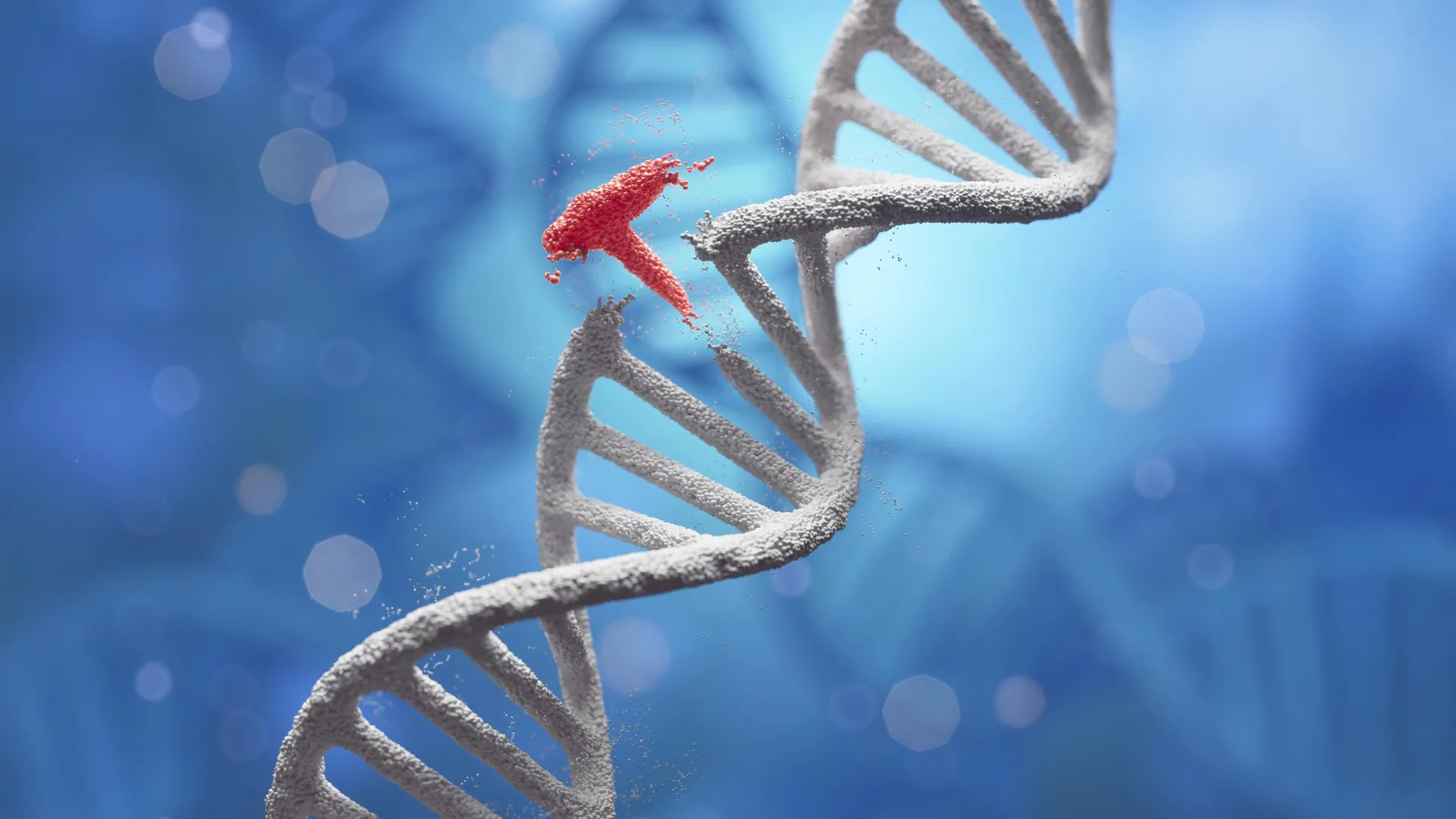
In the rapidly advancing field of synthetic biology, the ability to "cut and paste" genetic code with surgical precision is the cornerstone of innovation. From the development of life-saving mRNA cancer vaccines to the creation of resilient, climate-adapted crop strains, genetic engineering relies on our capacity to manipulate DNA sequences with high fidelity. However, traditional methods have long been constrained by the limitations of biological tools.
A breakthrough study published in Nucleic Acids Research has introduced a transformative approach to this challenge: the use of silver nanoparticles to cleave and reconnect DNA. By bypassing the rigid requirements of conventional restriction enzymes, this Japanese research team has achieved DNA assembly efficiencies two to five times higher than existing industry standards, opening the door to a new era of genome-scale synthesis.
The Main Facts: Bridging the Gap in Synthetic Biology
DNA, the fundamental blueprint of life, is composed of long, complex molecular chains. To modify these chains, scientists typically rely on "restriction enzymes"—proteins that act as biological scissors, cutting DNA at specific, pre-determined sequences. Once cut, the fragments are joined using enzymes called ligases.
While these tools have served science well for decades, they are far from perfect. Restriction enzymes are highly selective, meaning they can only cut at specific sites, often limiting the flexibility of the designer. Furthermore, they frequently produce "sticky ends"—the overhanging single-stranded sequences that allow DNA to bind together—that are too short to be stable or efficient. This inefficiency creates a bottleneck in the assembly of long, complex genetic constructs.
The team, led by Professor Hiroshi Abe and Assistant Professor Masahito Inagaki at Nagoya University, in collaboration with Professor Natsuhisa Oka of Gifu University, has developed a chemical alternative. By utilizing silver nanoparticles as a catalyst, the researchers can achieve precise, programmable DNA cleavage that allows for significantly longer, more stable sticky ends. This method not only increases the efficiency of the assembly process but also improves the overall recovery rate of the synthesized genetic material, solving a decades-old hurdle in molecular biology.
Chronology: From Chemical Concept to Nanoscale Solution
The path to this discovery was not linear; it was a journey of refining historical chemical reactions to meet modern biological needs.
The Initial Pursuit
The research began with the team revisiting a series of chemical reactions documented between 1990 and 1992. These earlier studies observed that silver ions were capable of cutting 3′-thiol-modified DNA at specific locations. Intrigued by the potential, the researchers tested these ions to see if they could produce the sticky ends required for modern assembly techniques.
The initial results were mixed. While the silver ions were highly effective at cutting the DNA, they presented a significant drawback: the ions tended to attach nonspecifically to the DNA molecules, causing precipitation. This resulted in a DNA recovery rate of only 14%—a catastrophic loss for any practical laboratory or industrial application.
The Nanoparticle Pivot
Recognizing that the core reaction was sound but the delivery system was flawed, the team pivoted toward silver nanoparticles. By transitioning from free ions to nanoparticle-bound silver, they gained the ability to separate the catalyst from the reaction mixture through centrifugation. This allowed them to isolate the desired DNA fragments from the silver-coated reaction byproduct.
Optimization and Stability
The early experiments with nanoparticles yielded cleavage efficiencies of 50% at 70°C and near-perfect results at 95°C. However, these temperatures posed a threat to the integrity of long DNA molecules, which are notoriously heat-sensitive. To bridge this gap, the researchers coated the silver nanoparticles with polyethylene glycol (PEG), a biocompatible polymer.
The PEG coating acted as a stabilizer, preventing the nanoparticles from clumping and ensuring they remained dispersed in the solution. This modification was the "silver bullet" the team needed. It allowed the reaction to occur at a much gentler 50°C, achieving a cleavage efficiency of over 91% within just two hours.
Supporting Data: Why Longer Overhangs Matter
The true power of the silver nanoparticle method lies in its ability to generate longer sticky ends. In conventional methods, the short, 4-base overhangs produced by standard restriction enzymes are prone to instability, leading to lower ligation (joining) success rates.
The Efficiency Advantage
The research data provides a compelling comparison:
- 4-base overhang (Traditional): Achieved an 8% joining efficiency.
- 18-base overhang (Silver Nanoparticle Method): Achieved a 44% joining efficiency.
This represents a fivefold increase in efficiency. By allowing for longer, more stable "sticky" sequences, the researchers ensured that the DNA fragments could find and bind to each other with much higher probability.
Furthermore, the "built-in" purification effect of the nanoparticles—whereby unwanted DNA fragments remain tethered to the particles while the target sequence is released into the solution—boosted the final DNA recovery rate from the dismal 14% seen in early tests to a remarkable 98%. This high recovery rate is essential for the scaling of genetic synthesis, where every microgram of material is precious.
Official Responses and Validation
To validate the biological viability of their method, the researchers performed a functional test. They assembled a DNA fragment designed to encode Green Fluorescent Protein (GFP)—a standard "reporter" molecule used in biology to signal successful gene expression.
After assembling the GFP-encoding DNA using the silver nanoparticle technique, the team introduced the construct into human HeLa cells. The cells successfully produced the protein, glowing under fluorescent light. This confirmed that the chemical process did not damage the genetic instructions, and the resulting DNA was fully functional within a complex biological environment.
"We believe this technology will be useful for synthesizing genomic DNA," said Assistant Professor Masahito Inagaki. The team’s focus now shifts toward scalability. While they have proven that two fragments can be joined seamlessly, the next frontier is "multiplexing"—joining several fragments simultaneously to build entire synthetic genomes.
Implications: The Future of Synthetic Biology
The implications of this technology are vast, touching on nearly every sector of modern biotechnology.
mRNA Libraries and Cancer Vaccines
As seen during the COVID-19 pandemic, the ability to rapidly synthesize mRNA is critical for modern medicine. The silver nanoparticle method could allow for the faster, more efficient creation of mRNA libraries, facilitating the development of personalized cancer vaccines that target the unique genetic mutations of a patient’s tumor.
Artificial Protein Drugs
Many modern pharmaceuticals, such as insulin or monoclonal antibodies, are produced by biological organisms. By improving the efficiency of DNA assembly, scientists can design more complex synthetic genes, leading to the production of novel artificial proteins that could treat previously incurable diseases.
Genome Crops and Sustainable Agriculture
As the global climate changes, the need for crops that can withstand drought, salinity, and pests is increasing. The ability to assemble larger and more precise genetic constructs allows researchers to introduce complex traits—such as multigene pathways for stress resistance—into agricultural crops with higher speed and accuracy than ever before.
Looking Toward Genome-Scale Construction
The ultimate goal of synthetic biology is the construction of entirely artificial genomes. Currently, this process is laborious, expensive, and limited by the efficiency of DNA joining. If the Nagoya University team succeeds in their goal of multi-fragment assembly, the time and cost associated with synthetic genomics could drop significantly. This would democratize research, allowing smaller laboratories to contribute to the field of synthetic life and bio-manufacturing.
A Collaborative Achievement
This breakthrough was made possible through the support of several key organizations, including the Japan Science and Technology Agency (JST) and the Japan Agency for Medical Research and Development (AMED). The project also received recognition from the Tanaka Kikinzoku Memorial Foundation, highlighting the intersection of precious metal research and life sciences.
As the scientific community looks to the future, the work of Abe, Inagaki, and Oka serves as a prime example of how revisiting foundational chemistry—when combined with modern nanotechnology—can solve the most persistent problems in biology. By replacing the biological limitations of restriction enzymes with the tunable precision of silver nanoparticles, we are one step closer to a future where we can design and build life-saving genetic technology with the ease of writing a computer program.