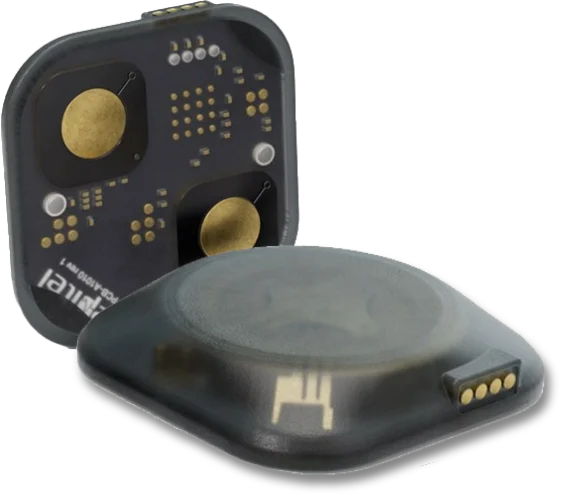









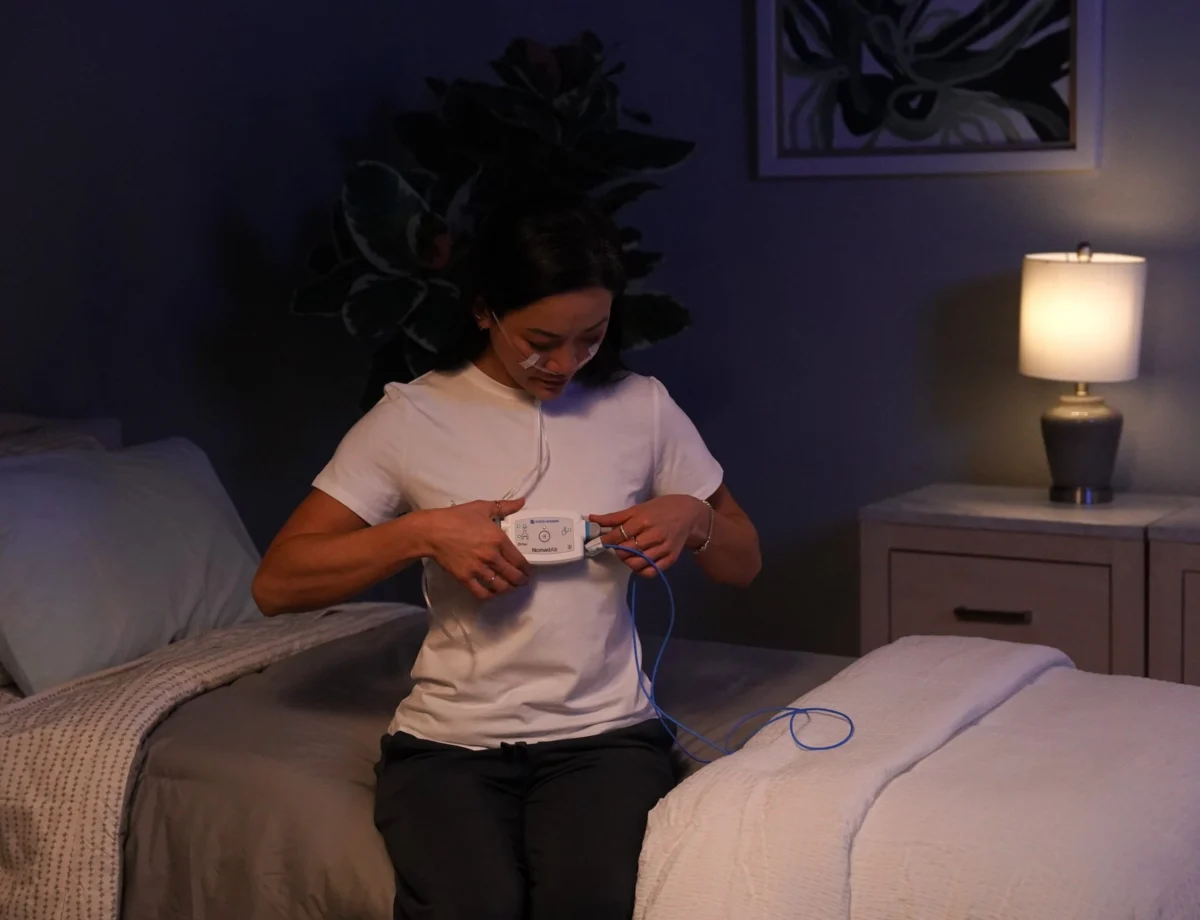
The landscape of home sleep apnea testing (HSAT) is undergoing a significant transformation. Neurotronics, a subsidiary of the medical technology giant Nihon Kohden, recently announced that the U.S. Food and Drug Administration (FDA) has granted 510(k) clearance for its innovative Sleep Analysis Module (SAM). This artificial intelligence-based "software as a medical device" (SaMD) promises to bridge the gap between convenient home testing and the diagnostic accuracy typically reserved for in-lab polysomnography.
By leveraging existing photoplethysmography (PPG) signals—commonly captured by simple pulse oximeters—SAM provides an automated estimate of total sleep time (TST). This development addresses a long-standing challenge in sleep medicine: the tendency of home testing to overestimate sleep duration by failing to distinguish between time asleep and time spent awake, thereby potentially skewing the severity metrics of sleep-disordered breathing.
Main Facts: Redefining the Home Sleep Study
At its core, the Sleep Analysis Module is designed to refine the clinical interpretation of sleep study data. Traditionally, diagnosing obstructive sleep apnea (OSA) requires calculating the apnea-hypopnea index (AHI), which is the frequency of respiratory events occurring per hour of sleep.
The inherent limitation of most home sleep testing solutions is their reliance on "total recording time" rather than "total sleep time." Because standard home devices lack the sensors required for sleep staging—such as electroencephalography (EEG) for brain activity, electrooculography (EOG) for eye movement, and electromyography (EMG) for muscle tone—clinicians often have to assume the patient was asleep for the duration of the recording.
SAM disrupts this workflow by utilizing advanced algorithms to analyze PPG data. This allows the software to identify periods of sleep and wakefulness without requiring the patient to wear additional, cumbersome sensors. For the patient, this means the same lightweight, non-invasive experience; for the clinician, it means a more precise denominator for the AHI calculation, leading to more accurate assessments of OSA severity.
Chronology of Development: From Concept to Clearance
The road to FDA clearance for SAM was not an overnight success but the result of a multi-year, multi-disciplinary effort. The project represents a synthesis of signal processing, clinical validation, and rigorous regulatory adherence.
The Research and Development Phase
The development of SAM began with the recognition that the PPG signal—a common metric in clinical environments—held untapped diagnostic potential. Neurotronics engineers focused on developing an algorithm capable of detecting subtle physiological markers of sleep onset and arousal. This necessitated a massive data-collection effort, utilizing existing datasets from laboratory-based polysomnography to train and refine the AI model.
Clinical Validation
Before submission to the FDA, the technology underwent extensive validation to ensure that its TST estimations correlated significantly with the gold standard of manual sleep staging. By comparing SAM’s output against the findings of trained sleep technologists, the team was able to demonstrate that the software could reliably discern wakeful periods, thus proving its utility in a diagnostic setting.
The Regulatory Pathway
Following the successful validation studies, the company navigated the 510(k) clearance process. This pathway is intended for medical devices that are "substantially equivalent" to legally marketed devices. By demonstrating that SAM provided added value to existing diagnostic hardware without introducing new safety risks, Neurotronics successfully cleared the regulatory hurdles, culminating in the official FDA announcement under reference number K261521.
Supporting Data: Why Accuracy Matters in AHI
To understand the necessity of SAM, one must look at the mathematical impact of miscalculating TST.
In clinical diagnostics, the AHI is calculated as:
AHI = (Number of Apneas + Hypopneas) / Total Sleep Time (in hours)
If a patient is hooked up to a home sleep monitor for eight hours, but they only actually sleep for six hours, the "Total Recording Time" used in the denominator is eight. If that patient experiences 60 respiratory events throughout the night, the current HSAT methodology would result in an AHI of 7.5 (60/8).
However, if the true sleep time of six hours is utilized, the AHI rises to 10 (60/6). This shift in severity—from mild to moderate—can fundamentally alter the treatment plan, insurance coverage, and the patient’s clinical outcome. By providing an automated estimate of TST that removes the "wake" time from the equation, SAM ensures that the AHI reflects the patient’s actual physiological stress during sleep, rather than their presence in bed.
Official Responses: A Strategic Milestone
The release of SAM marks a turning point for Neurotronics, signaling a strategic shift toward software-led innovation. Jake Johnson, president and CEO of Neurotronics, LLC, emphasized that this clearance is the culmination of years of integrated work.
"FDA clearance of the Sleep Analysis Module is a defining milestone for Neurotronics," Johnson stated in a recent press release. "SAM demonstrates how validated software can provide new clinical information from physiological signals already being collected, without requiring additional hardware. This achievement reflects years of collaboration across engineering, clinical validation, quality, and regulatory disciplines and establishes a foundation for continued innovation in software-driven medical technology."
The integration of SAM into the existing Polysmith diagnostic software and the NomadAir testing solution signifies that the company is prioritizing seamless adoption. By embedding the AI module into existing workflows, Neurotronics minimizes the friction typically associated with adopting new diagnostic tools.
Implications for the Future of Sleep Medicine
The introduction of SAM has profound implications for both healthcare providers and the broader sleep diagnostic industry.
Enhanced Diagnostic Precision
As the prevalence of sleep-disordered breathing continues to rise globally, the demand for high-quality diagnostic solutions has never been greater. SAM allows for a "middle-ground" diagnostic tool: it offers more precision than traditional HSATs while remaining more accessible and less costly than a full in-lab overnight sleep study.
Patient Compliance and Experience
Patient compliance is a persistent challenge in sleep medicine. Devices that are less intrusive lead to higher patient satisfaction and lower attrition rates during the testing process. Because SAM works behind the scenes on data already being collected, it does not add a single gram of weight or an extra cable to the patient’s setup, ensuring that the user experience remains optimal.
Regulatory and Ethical Considerations
It is essential to note that the FDA has cleared SAM with specific parameters. It is a prescription-only device and is not intended to replace human oversight. The software serves as an aid to clinicians rather than a standalone diagnostic arbiter. Furthermore, the company explicitly states that SAM is not intended for use when full sleep-staging signals (EEG/EOG/EMG) are available, nor is it the sole basis for diagnosis. This reflects a responsible approach to AI integration—one that maintains the physician as the ultimate decision-maker while providing them with the advanced analytical tools necessary to make better-informed choices.
The Rise of AI in "Software as a Medical Device" (SaMD)
This clearance is part of a broader trend of FDA approvals for AI-based medical software. As healthcare systems seek to reduce costs and improve diagnostic speed, the ability to extract high-value insights from existing data streams—such as pulse oximetry—will likely become the standard. Neurotronics has set a precedent for how legacy diagnostic companies can modernize their portfolios through software innovation.
Conclusion
The clearance of the Sleep Analysis Module by the FDA represents a significant leap forward in the efficiency and accuracy of sleep medicine. By solving the "denominator problem" inherent in home sleep apnea testing, Neurotronics has provided a tool that enhances clinical confidence without increasing the burden on the patient.
As the industry moves toward more data-driven and software-centric models, the integration of AI modules like SAM into existing diagnostic platforms will likely become the norm rather than the exception. For the millions of individuals suffering from undiagnosed or misclassified sleep apnea, this technological evolution promises a future of more accurate diagnoses and, ultimately, more effective, personalized treatment plans. With a strong foundation in clinical validation and a clear regulatory path, Neurotronics is well-positioned to lead the next generation of sleep diagnostic advancements.